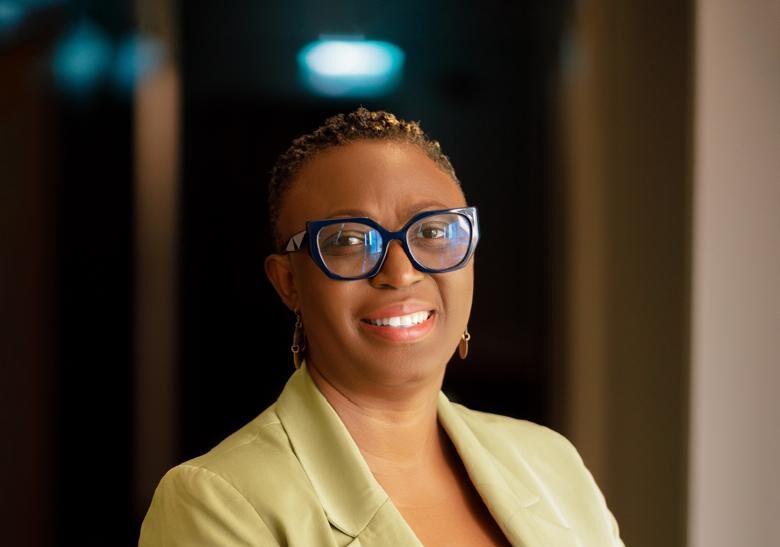
In the bustling corridors of Ghana’s corporate landscape, where brand narratives can make or break businesses in the digital age, few leaders have demonstrated the remarkable ability to transform organizational storytelling quite like Sophia Kudjordji. Her journey from a young journalism graduate with dreams of reading the evening news to becoming one of Ghana’s most influential corporate communication strategists represents a masterclass in adaptability, passion, and strategic thinking.
For over three decades, Sophia has been at the forefront of Ghana’s communication revolution, witnessing and driving the transformation from traditional media relations to sophisticated digital brand management. Her career trajectory spans some of the country’s most prestigious institutions, from the Ghana News Agency to the British High Commission, from the pioneering UT Bank to her current role as Chief Corporate Communications Officer at the diversified Jospong Group of Companies.
“I went into Public Relations and communication by God’s own design,” Sophia reflects on her career path. “Growing up, I used to admire newscasters, so that’s all I wanted to do: be a journalist so I can get the opportunity to read the news one day. However, I loved listening to Public Relations and Communication professionals speak for their organizations. It was so beautiful listening to them own the companies’ narratives and standing up for their companies.”
This early fascination with narrative ownership would become the cornerstone of her professional philosophy, driving her to become one of Ghana’s most respected voices in corporate communication.
THE FOUNDATION YEARS: BUILDING CREDIBILITY THROUGH STORYTELLING
Sophia’s communication journey began in 1991 when she completed her Diploma in Journalism at the Ghana Institute of Journalism. Like many young professionals in the early 1990s, she faced significant challenges entering the workforce during a period of employment restrictions. Her national service at the Ghanaian Times newspaper and later at the Ghana News Agency provided crucial foundational experience, but it was her willingness to extend her service and work as a freelance correspondent that demonstrated the persistence that would define her career.
Her first major breakthrough came through a DANIDA-sponsored project with the Volta Region Community Water and Sanitation Agency (VRCWSA), where she served as a Public Relations Consultant. This role introduced her to the power of strategic communication in development work, creating educational materials and newsletters that reached audiences across Ghana, Denmark, and other countries. The quarterly newsletter “WATSAN NEWS” received international recognition, including mention in the Hague-based SOURCE magazine for its in-depth reporting on guinea worm eradication efforts.
The transition from journalism to corporate communication came through what Sophia describes as divine intervention and professional networking. A colleague’s recommendation led her to the British High Commission in 2020, where she initially served as a Website Editor before expanding her role to include media and police relations. This position would prove transformative, both in terms of skill development and professional recognition.
“I built the first website of the British High Commission, Accra, which won an ‘A’ rating in the last website review in 2005,” Sophia recalls. More significantly, she received a letter of commendation and bonus from the Foreign and Commonwealth Office at 10 Downing Street, London, for developing exceptional relationships between the High Commission and Ghana Police.
CORPORATE TRANSFORMATION: THE UT BANK EXPERIENCE
The next chapter of Sophia’s career began in December 2006 when she joined Unique Trust Financial Services, which would later transform into UT Bank. This decade-long journey provided her with front-row seats to one of Ghana’s most significant corporate transformation stories, from a small financial services company to a diversified group encompassing banking, property, logistics, private security, debt collection, and life insurance.
Starting as Assistant Manager for Marketing and Public Relations, Sophia quickly demonstrated her ability to build brands and manage complex stakeholder relationships. Her strategic communication efforts contributed to UT Bank winning the Best Bank award at the Ghana Banking Awards in two consecutive years. The bank’s Corporate Social Responsibility platform, which she helped develop, earned first runner-up recognition at the 2011 Ghana Banking Awards.
“At UT, my CEO Captain Prince Kofi Amoabeng believed so much in me and my work, and that really built my confidence,” Sophia explains. This supportive leadership environment allowed her to flourish, leading media campaigns for corporate identity changes, successful Initial Public Offerings, and stock exchange listings.
The experience at UT Bank taught Sophia valuable lessons about managing communication during periods of rapid growth and transformation. She learned to balance multiple stakeholder interests while maintaining consistent brand messaging across diverse business units. These skills would prove invaluable in her current role at the even more complex Jospong Group.
MASTERING COMPLEXITY: LEADERSHIP AT JOSPONG GROUP
In 2016, Sophia joined the Jospong Group as Group Head Corporate Communication, later advancing to her current role as Chief Corporate Communications Officer. The Jospong Group represents one of Ghana’s most diversified business conglomerates, presenting unique challenges for strategic communication leadership.
“It is as complex as the Group itself, particularly because of the level of diversification,” Sophia acknowledges. “There is always the tendency to favor one business over the other. But I do a lot of consultation with my colleagues both within and outside to see what works.”
Her approach to managing communication for such a diversified portfolio involves extensive stakeholder consultation and careful balance. She recognizes that while communication principles remain consistent, their application must be tailored to different industries, audiences, and regulatory environments.
A typical day for Sophia begins at 6 AM with environmental scanning and urgent issue management. Her workday extends well beyond traditional office hours, reflecting her understanding that effective communication requires constant vigilance in today’s digital environment. “I don’t see my work as an 8-5 job,” she explains. “It starts way before 8 AM and the closing time is based on whether I am done with my plan for the day.”
NAVIGATING THE DIGITAL REVOLUTION
Throughout her career, Sophia has witnessed and adapted to the dramatic transformation of the communication landscape. From the early days of print media and radio to today’s AI-powered digital platforms, she has consistently evolved her strategies to remain effective.
“Corporate Communication is evolving rapidly,” she observes. “The emergence of the digital age, Artificial Intelligence, and other similar platforms has disrupted the way things are done. One cannot afford to remain at the same place using the same strategies that were being used 10, 15, 20 years ago, you will be left behind.”
Her approach to digital transformation emphasizes the importance of speed and authenticity. She recognizes that AI and social media have accelerated the pace of communication while simultaneously creating new vulnerabilities for brand reputation. “AI and social media has brought such speed that one needs to run to maintain their position,” she notes.
The digital revolution has also democratized communication tools, enabling more internal content creation and empowering individuals without traditional communication training. This shift has required Sophia to continuously update her skills and approaches, embracing new technologies while maintaining the fundamental principles of effective communication.
CRISIS COMMUNICATION IN THE DIGITAL AGE
Perhaps nowhere is Sophia’s expertise more evident than in her approach to crisis communication and reputation management. Her philosophy combines proactive strategy with spiritual grounding, recognizing both the technical and human elements of effective crisis response.
“In today’s fast-paced and complex digital world, brand reputation management calls for more than just strategy; it calls for having all arsenals on guard, including prayers,” she explains. “All you need is one misstep or an individual’s beef against your brand, and that is all it takes for you to be taken to the gutters.”
Her crisis communication methodology emphasizes environmental scanning and early intervention. She advocates for 24-hour strategic monitoring, proactive narrative control, and rapid response capabilities. However, she also acknowledges the limitations of control in the digital age, recognizing that some crises cannot be prevented regardless of preparation.
“One key thing is to keep scanning the environment for any budding issues and nip it in the bud before it blows up into a crisis,” she advises. “Get your strategy ready, do your simulations, own narratives and be ready all the time, but also keep it at the back of your mind that you can’t have control over all, not in this digital age.”
INTERNATIONAL RECOGNITION AND GLOBAL PERSPECTIVE
Sophia’s expertise has earned recognition beyond Ghana’s borders, most notably through her role as a judge for the International Public Relations Association’s Golden World Awards. This global platform has provided her with invaluable insights into communication best practices across different cultures and markets.
“Having the opportunity to judge Public Relations and Communication activities and campaigns across the globe is quite humbling,” she reflects. “The perspectives that these colleagues bring on board are very enriching.”
The judging process involves multiple rounds of evaluation, from initial online assessments to final in-person deliberations in different countries. This experience has broadened her understanding of effective communication strategies while reinforcing the universal principles that drive successful campaigns.
Her international perspective has also informed her mentoring activities, working with young professionals from Ghana, Nigeria, Kenya, and Romania. This cross-cultural mentoring demonstrates her commitment to developing the next generation of communication leaders across Africa and beyond.
THE PSYCHOLOGY OF EFFECTIVE COMMUNICATION
Sophia’s academic background in sociology and psychology has profoundly influenced her communication style and strategic approach. She recognizes that effective communication must address both rational and emotional dimensions of human behavior.
“It has helped me in my networking and stakeholder engagement,” she explains. “It has also been useful in my nurturing and building of teams, by treating them as individuals but helping them harness their potentials for greater impact.”
This psychological insight informs her approach to team building, stakeholder management, and campaign development. She understands that successful communication requires deep empathy for audience perspectives and motivations, moving beyond mere message delivery to genuine engagement and relationship building.
Her worldview, shaped by social sciences education, enables her to formulate campaigns that resonate across diverse demographic and cultural segments. This capability has been particularly valuable in Ghana’s multicultural environment and in her work with international organizations.
MEASURING IMPACT AND DRIVING RESULTS
While Sophia acknowledges that impact measurement remains an area for improvement in her practice, she has developed various approaches to assess communication effectiveness. Her methods include social media analytics, media monitoring, and periodic surveys of communication activities.
“This one area that I will say has not been one of my strongest, because focus has often been social media algorithms, media monitoring and once a while undertake surveys to assess some of our communication activities,” she admits with characteristic honesty.
This transparency about professional development areas reflects her commitment to continuous learning and improvement. She recognizes that effective measurement requires more structured approaches and is working to develop more sophisticated assessment frameworks.
MENTORSHIP AND LEGACY BUILDING
Throughout her career, Sophia has benefited from mentorship relationships that shaped her professional development. From her parents, who taught her the value of hard work and authenticity, to professional mentors who helped her develop leadership skills and strategic thinking, she recognizes the crucial role of guidance in career success.
“Mentorship has played a major role in making me who I am today,” she acknowledges. “Professionally, I have learnt from great personalities within and outside the communication profession. From some I learnt how to articulate my case, some leadership skills, some owning my brand narrative and still others having a developmental mindset.”
Her commitment to paying forward these benefits drives her extensive mentoring activities with young professionals across Africa and beyond. She focuses on helping emerging leaders develop authentic communication styles, strategic thinking capabilities, and the resilience required for long-term success in the field.
CONTINUOUS LEARNING AND ADAPTATION
Sophia’s approach to professional development emphasizes practical application over theoretical accumulation. She pursues educational opportunities that directly enhance her ability to serve clients and stakeholders effectively.
“I often say, I go to school to find the theoretical context for what I do,” she explains. “Once I get it, it boosts my confidence that I am on the right path. It also makes it easier to impart and impact the next generation as I share my experiences with them.”
Her learning methodology combines formal education with practical experimentation, online courses with peer learning, and individual study with collaborative projects. This comprehensive approach ensures that her skills remain current in rapidly evolving communication landscape.
LOOKING TOWARD THE FUTURE
As Ghana and Africa continue their economic development journey, Sophia sees tremendous opportunities for communication professionals to drive positive change. She recognizes that the continent’s young population and growing digital connectivity create unprecedented possibilities for impactful communication.
“Corporate communication is evolving to redefine itself to remain formidable in the face of sustainability conversations, building trust, reputation management and what I call authentic communication,” she observes. “Real stories based on truth and built around founders and real human interventions for personalization.”
Her vision for the future emphasizes authenticity, sustainability, and human-centered communication. She believes that successful organizations will differentiate themselves through genuine storytelling and meaningful stakeholder engagement rather than purely promotional messaging.
WISDOM FOR THE NEXT GENERATION
Sophia’s advice to emerging communication professionals reflects her deep understanding of both the opportunities and challenges in the field. She emphasizes the importance of authentic passion, strategic thinking, and resilience in building successful careers.
“This is a beautiful industry that functions everywhere: home, office, school, etc. It’s about people,” she advises. “Fall in love with the brand you decide or get the opportunity to work for. Be authentic, be passionate about what you do and know that it is a calling to serve not a position to occupy.”
Her guidance extends beyond technical skills to encompass personal development and life balance. She recognizes that sustainable success requires attention to health, family, and personal well-being alongside professional achievement.
“Every profession has its hazard and just as a military man could lose his life on the battlefield one can lose their own hard-earned reputation in defending the reputation of their brand, but still be yourself and work passionately,” she counsels. “Life is not all about work! Love yourself enough to care about your health, your family and make time to have fun!”
A LEGACY OF AUTHENTIC LEADERSHIP
As Sophia reflects on her career journey and looks toward the future, her definition of success transcends traditional metrics of achievement. She measures her impact through the organizations she has served, the professionals she has mentored, and the positive change she has facilitated through strategic communication.
“I see every institution I worked with as an assignment,” she explains. “I fell in love with my brands and passionately poured myself into the brands! I was not afraid to be vulnerable and I above all, one who just loved and cared about people and brands!”
Her legacy extends beyond individual accomplishments to encompass the broader transformation of Ghana’s communication landscape. Through her leadership roles, international recognition, and mentoring activities, she has elevated the profession’s standards and created pathways for future leaders.
The recognition she has received, from secondary school awards to prestigious international honors, represents external validation of her consistent excellence. However, she views these accolades as encouragement to continue pushing boundaries and setting higher standards.
“It gives me the confidence that I might be doing something right, because as I often say ‘it is in lifting others that you will also be lifted,’” she reflects. “It also puts a lot more responsibility on me to keep doing more, and keep pushing because I have become someone’s standard!”
CONCLUSION: THE CONTINUING JOURNEY
Sophia Kudjordji’s career represents more than individual success; it embodies the evolution of strategic communication in Ghana and across Africa. Her journey from journalism student to corporate communication leader demonstrates the power of adaptability, authentic passion, and strategic thinking in building a meaningful career.
As Africa continues its economic transformation and digital revolution, leaders like Sophia provide essential guidance for navigating complex communication challenges while maintaining ethical standards and authentic relationships. Her example shows that effective communication leadership requires both technical expertise and genuine care for people and organizations.
The future of corporate communication in Ghana and Africa will be shaped by professionals who understand both global best practices and local contexts, who can leverage technology while maintaining human connection, and who can drive business results while contributing to societal development. Sophia Kudjordji’s career provides a roadmap for achieving this balance, demonstrating that principled leadership and strategic excellence can create lasting impact across decades of professional service.
Her story continues to unfold, inspiring the next generation of communication leaders to embrace authenticity, pursue excellence, and use their skills to create positive change in their organizations and communities. In a world where narrative control has become increasingly important, Sophia’s example reminds us that the most powerful stories are those built on truth, passion, and genuine commitment to serving others.