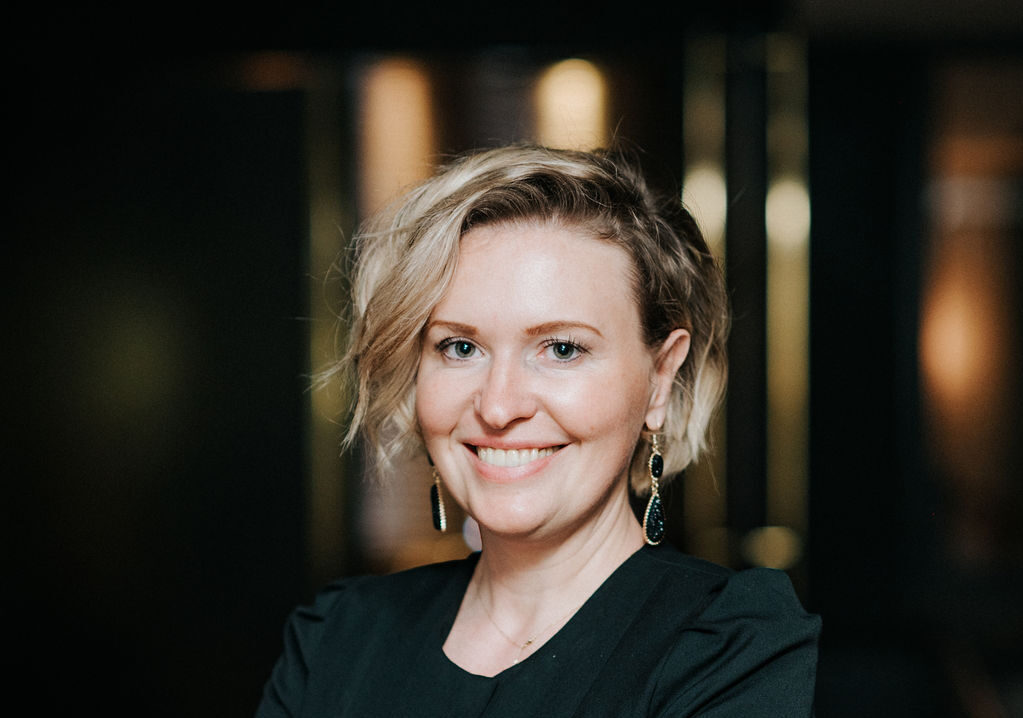
In the gleaming towers of Boston Consulting Group and Oliver Wyman, Tetiana George witnessed something that would fundamentally shape her entrepreneurial journey. Behind the polished presentations and strategic recommendations lay an uncomfortable truth: one of the world’s most critical industries was drowning in inefficiency, managing compliance with Excel sheets and armies of paper-chasing professionals.
“On paper it looked glamorous, but what I really saw was an industry weighed down by inefficiency,” Tetiana reflects on her consulting years. “Compliance and regulation, the very things meant to protect customers, were being managed with Excel sheets and armies of people chasing paper.”
This revelation sparked a transformation that would take her from the prestigious corridors of strategy consulting to the unforgiving arena of startup entrepreneurship. Today, as the Co-Founder and CEO of Curium, she leads a Sydney-based insurtech venture that’s redefining how the insurance industry approaches compliance, resilience, and customer protection.
Founded in 2021, Curium has already earned the trust of insurers, managing general agents (MGAs), and brokers across Australia, with ambitious plans for global expansion. But Tetiana’s journey to this point represents more than just another successful pivot from corporate to entrepreneurship. It embodies a fundamental reimagining of what financial resilience means in an era of climate disasters, cyber threats, and unprecedented market volatility.
THE PERSONAL FOUNDATION OF PROFESSIONAL MISSION
For Tetiana, the concept of resilience extends far beyond corporate balance sheets and regulatory frameworks. Her understanding is deeply personal, shaped by a childhood spent moving between countries and cultures, often without traditional safety nets.
“Resilience is personal to me,” she explains. “I grew up moving between countries and cultures, often without safety nets. I know what it feels like to be unprotected. Insurance is supposed to provide that safety, but when compliance breaks down, trust collapses, and whole communities are left exposed.”
This personal understanding of vulnerability drives her professional mission. Financial resilience, in Tetiana’s view, isn’t merely about capital reserves or actuarial calculations. It’s about people having confidence that their insurer will be there when catastrophe strikes. And that confidence can only exist when the system operates with transparency, fairness, and robust regulation.
The timing of Curium’s mission feels particularly urgent. Climate disasters are intensifying, affordability pressures are mounting, and customer skepticism toward financial institutions continues to grow. “If we don’t fix the plumbing, the compliance and governance that underpin the industry, resilience will remain a buzzword,” Tetiana warns.
Her solution is elegantly simple in concept yet sophisticated in execution: make compliance automatic, consistent, and transparent. When insurers and brokers achieve compliance excellence, they’re not just protecting their own interests. They’re safeguarding customers, communities, and the stability of the entire financial system.
REDEFINING RESILIENCE IN THE DIGITAL AGE
Tetiana’s vision of “next-gen financial resilience” represents a fundamental shift from reactive to proactive risk management. The traditional model of holding adequate capital reserves and purchasing sufficient reinsurance, while still necessary, is no longer sufficient for the challenges ahead.
“Next-gen financial resilience is about moving from static to dynamic,” she explains. “The old model was: hold enough capital, buy enough reinsurance, and hope you’re covered. That’s still necessary, but it’s not enough.”
The new paradigm leverages artificial intelligence and automation to identify risks early and intervene before they escalate. It creates compliance systems with transparent, machine-readable data that regulators can trust. Perhaps most importantly, it democratizes access to sophisticated compliance capabilities, ensuring that smaller brokers and MGAs have the same protective tools as industry giants.
This approach addresses a critical market reality: the shocks facing the insurance industry are both larger and faster than ever before. Climate events, cyberattacks, and economic volatility operate at speeds that make traditional quarterly review cycles obsolete. Real-time resilience has become not just an advantage but a necessity.
At Curium, this philosophy translates into technology that can detect issues instantly, map them to regulatory obligations, and suggest appropriate next steps. “That’s not just efficiency,” Tetiana emphasizes. “That’s resilience in action.”
THE TECHNOLOGY REVOLUTION IN INSURANCE
Having witnessed the insurance industry’s technological stagnation firsthand during her consulting years, Tetiana brings a unique perspective to the current wave of digital transformation. For decades, the industry remained trapped in operational approaches designed for the previous century: paper files, siloed systems, and processes that prioritized institutional convenience over customer experience.
“For decades, insurance was stuck in the dark ages,” she observes. “That meant slow service, constant errors, and frustrated customers.”
The emergence of AI and automation has finally created opportunities for meaningful change. Curium’s auto-detect tool exemplifies this potential, flagging breaches and complaints before they escalate into major problems. The technology can scan legal documents, identify specific regulatory violations, and suggest corrective actions in real time, capabilities that were impossible just five years ago.
But Tetiana’s excitement extends beyond current applications to what she terms “agentic AI.” This represents a fundamental shift in how work gets accomplished, moving from human interpretation and decision-making to technology-assisted analysis and recommendations.
“For thousands of years, humans manually interpreted rules, reviewed documents, and decided what to do next,” she explains. “Now, technology can take on huge parts of that work faster and more accurately. That doesn’t replace people; it frees them to focus on empathy, judgment, and strategy.”
The ultimate outcome transcends operational efficiency. Faster claims processing, clearer customer guidance, and earlier issue resolution build something that technology alone cannot deliver: trust. And in an industry built on promises about future performance, trust remains the fundamental currency.
THE ENTREPRENEUR’S CRUCIBLE
The transition from prestigious consulting firm to startup founder subjected Tetiana to a complete professional identity transformation. The contrast could hardly be more stark: from the security of established brand names, analytical teams, and unlimited resources to the isolation of entrepreneurship with nothing but vision and mounting expenses.
“The transition was brutal,” she recalls candidly. “In consulting, you’ve got a brand name, an army of analysts, and endless resources behind you. As a founder, you’ve got nothing except a big idea and a stack of bills you can’t ignore. And let me tell you: not having the money to pay the bills is the greatest motivator of all.”
The rhythm of failure also required complete adjustment. In corporate consulting, failures are rare and often insulated by organizational structures. In startups, failure becomes a weekly occurrence: rejected pitches, malfunctioning features, invalidated assumptions. Survival depends on rapid adaptation and the ability to extract learning from constant setbacks.
Perhaps most challenging was the shift from speaking to listening. Consulting rewards expertise and articulation; entrepreneurship demands market responsiveness and customer education. “In consulting, you’re paid to talk,” Tetiana notes. “In a startup, you have to shut up and listen when the market speaks. Your clients are your best teachers.”
The loneliness of innovation added another layer of difficulty. While corporate innovation can remain theoretical, startup innovation must be lived daily. Curium often found itself building solutions before markets fully understood the problems they addressed. This required simultaneous client education, resistance management, and market creation while operating under extreme financial constraints.
“Hard? Yes,” Tetiana reflects. “Worth it? Absolutely.”
THE FUNDING PHILOSOPHY THAT CHANGED EVERYTHING
Among the pivotal moments that shaped Tetiana’s leadership approach, the fundraising process stands out as particularly transformative. After spending nearly a year pitching to venture capitalists across Australia, she discovered that most conversations never progressed beyond basic industry education.
“Most of the time went into explaining what insurance even is to fresh grads sitting across the table,” she remembers. “We rarely made it far enough for them to understand the problem I was actually solving.”
When term sheets finally materialized at the moment of maximum financial pressure, the victory felt hollow. The potential investors demonstrated little understanding of Curium’s mission or market. If they couldn’t comprehend the vision, meaningful alignment would prove impossible.
The situation crystallized during a conversation with her husband shortly after their daughter’s birth. “Is this the life you want?” he asked. The answer was unequivocal: no.
Tetiana made the counterintuitive decision to walk away from available capital and pursue a more difficult path: building on her own terms with complete team, partner, and investor alignment.
“That moment shaped my leadership forever,” she explains. “People matter more than capital. You can’t build something transformative unless your team, partners, and investors are 100% aligned with the mission.”
This philosophy led to a radically different funding approach. Rather than playing the traditional numbers game of pitching to hundreds of potential investors, Tetiana focused on quality relationships. Her eventual investors were clients first, using Curium’s products and working with the team before any financial discussions began.
“My investors weren’t strangers; they were my clients first,” she explains. “They used the product, saw the value, and worked with my team before a dollar was on the table. They understood the mission from the inside out.”
REGULATION AS INNOVATION BLUEPRINT
In an industry where most companies view regulation as a constraint on innovation, Tetiana has developed a fundamentally different perspective. At Curium, regulatory requirements serve as the design blueprint rather than implementation obstacles.
“Insurance is one of the most regulated industries on the planet,” she acknowledges. “Most see that as a brake on innovation. At Curium, we see it as the design blueprint.”
This approach recognizes that regulation exists primarily to protect customers: their money, identity, and privacy. Rather than treating compliance as a burden, Curium innovates to stay ahead of regulatory requirements because customer protection remains central to their mission.
The technology reflects this philosophy. Curium’s obligations library maps regulatory requirements line by line. Reporting tools generate machine-readable outputs designed for regulatory review. Compliance isn’t added as an afterthought; it forms the foundation of every system.
Beyond implementation, Tetiana actively participates in shaping future regulatory frameworks through ASIC’s Digital Finance Advisory Panel, a forum where regulators and industry professionals collaborate on next-generation rules.
“For us, balancing innovation and regulation isn’t compromise,” she emphasizes. “It’s integration. The deeper compliance is embedded in our technology, the more trust we earn from clients, regulators, and customers.”
DATA AS THE DEMOCRATIZER OF INSURANCE
In Tetiana’s vision, data represents the difference between assumption-based decision-making and evidence-driven action. Without robust data analysis, compliance becomes a matter of opinion. With it, systemic issues become clearly visible and actionable.
Complaints data exemplifies this potential. Proper analysis reveals patterns that might indicate confusing product features or problematic advisory processes. Addressing these patterns benefits thousands of customers rather than just individual cases.
Data analysis also illuminates affordability gaps and identifies underserved populations, guiding insurers toward better product design. When reporting becomes machine-readable and consistent, regulators can respond more quickly and equitably.
“At Curium, we make that possible,” Tetiana explains. “By turning messy compliance inputs into structured, auditable data, we give insurers and brokers the ability to act early and act fairly. Data makes inclusion real, not just an aspiration.”
LEADERSHIP THROUGH UNCERTAINTY
Tetiana’s approach to leadership during uncertain times rests on three fundamental principles, each refined through the challenges of building a company in a highly regulated industry during a global pandemic.
The first principle is radical transparency. “I share challenges with my team as openly as successes,” she explains. “People rally when they feel trusted.” This approach builds organizational resilience by ensuring everyone understands both opportunities and obstacles.
The second principle centers on customer obsession. When decisions become complex or conflicting priorities emerge, Tetiana applies a simple test: “What’s best for the client and their customers?” This framework typically clarifies the optimal path forward and aligns team decision-making.
The third principle treats failure as data rather than defeat. “I see failure as data, not defeat,” she notes. “Every mistake is a lesson on how to do better.” This perspective enables rapid learning cycles and prevents setbacks from becoming organizational paralysis.
Perhaps most uniquely, Curium operates under what they call “the obligation to dissent.” Every team member has not just the right but the duty to challenge leadership when they identify risks. “It keeps us honest, and it keeps us sharp,” Tetiana explains.
GLOBAL TRENDS SHAPING THE FUTURE
From her vantage point at the intersection of technology and insurance, Tetiana identifies several global trends that particularly excite her about the industry’s future direction.
The first involves a fundamental shift in how leading companies view compliance. “The recognition that compliance is no longer a burden; it’s a competitive advantage,” she observes. “The smartest players understand that transparency and fairness don’t slow you down, they attract customers. Compliance done right builds trust, and trust is the real currency of this industry.”
The second trend addresses the urgent need to close protection gaps in developing markets. In countries like India or Malaysia, insurance remains an unfamiliar concept for most people. Limited access, misunderstood products, and inadequate education leave entire communities vulnerable to financial shocks.
“That gap is both a challenge and an opportunity,” Tetiana notes. “Technology can make insurance accessible, understandable, and affordable at scale, not just for the wealthy, but for millions of people who have never had that safety net.”
Climate change adds urgency to these trends. Insurers are evolving from passive risk carriers to active resilience partners, helping communities prepare for, adapt to, and recover from climate-related disasters. “That’s not just a business trend,” Tetiana emphasizes. “It’s a social necessity.”
ADVICE FOR THE NEXT GENERATION
When addressing women aspiring to leadership positions in technology or finance, Tetiana’s advice combines encouragement with unflinching realism about the competitive nature of these industries.
“Don’t wait for permission,” she begins. “Build deep expertise, because credibility is power. Surround yourself with mentors and allies who push you forward, not hold you back.”
She emphasizes that diversity represents much more than symbolic representation. “Diversity isn’t a checkbox. It’s a competitive edge. Different perspectives lead to better decisions and better businesses.”
However, Tetiana also delivers a harder truth about the realities of leadership in these sectors. “Leadership is a game. You need to understand how it works, and be honest with yourself about whether you want to play it. If you do, then get clear on what your competitive edge is, the thing that makes you sharper, faster, or more resilient than the rest. Because leading in tech or finance isn’t cozy. It’s competition, and it’s brutal and ongoing.”
STAYING GROUNDED AMID THE INTENSITY
Despite the demanding nature of building a technology company in a highly regulated industry, Tetiana maintains clear priorities that keep her grounded and provide creative balance to entrepreneurial intensity.
Family comes first without exception. “My kids keep me grounded in ways no boardroom ever could,” she shares. “I love teaching them languages. It’s not just about words; it’s about opening their eyes to different cultures and ways of thinking.”
Artistic pursuits provide creative counterbalance to the analytical demands of business leadership. Painting serves as both passion and discipline, with annual participation in the Archibald Prize for portraits serving as a personal growth commitment. “Not because I expect to win, but because it forces me to keep growing as an artist,” she explains.
Travel continues to provide both appreciation and inspiration. By age 27, Tetiana had visited 50 countries before stopping her count. Each journey delivers two valuable outcomes: “A deep appreciation for the life I’ve built, and fresh ideas for what I could do better as a leader, as a parent, as a person.”
THE VISION AHEAD
As Curium prepares for global expansion, Tetiana’s mission extends far beyond building a successful technology company. Her vision encompasses systemic transformation of how the insurance industry approaches compliance, customer protection, and financial resilience.
The immediate focus involves scaling Curium’s technology to serve international markets while maintaining the deep client relationships that have driven their Australian success. But the longer-term vision addresses fundamental questions about how financial services can better serve society.
In an industry where technology often prioritizes institutional efficiency over customer outcomes, Tetiana’s approach consistently centers on end-user benefit. Whether detecting compliance issues before they affect customers, making regulatory requirements transparent and actionable, or democratizing access to sophisticated risk management tools, every innovation serves the ultimate goal of strengthening trust between institutions and the communities they serve.
“When insurers and brokers get compliance right, they’re not just protecting themselves,” she explains. “They’re protecting customers, communities, and the stability of the financial system. That’s what resilience looks like.”
As climate risks intensify and global economic uncertainty persists, leaders like Tetiana George represent a new generation of entrepreneurs who understand that successful businesses must serve broader societal needs. Her journey from strategy consulting to insurtech innovation demonstrates that the most transformative solutions often come from those willing to bridge the gap between identifying problems and building solutions.
The future of financial resilience will be shaped by leaders who combine deep technical expertise with unwavering ethical commitment, and who understand that true innovation serves not just shareholders but all stakeholders in our interconnected global economy. Tetiana George and Curium are writing that future, one line of code and one client relationship at a time.