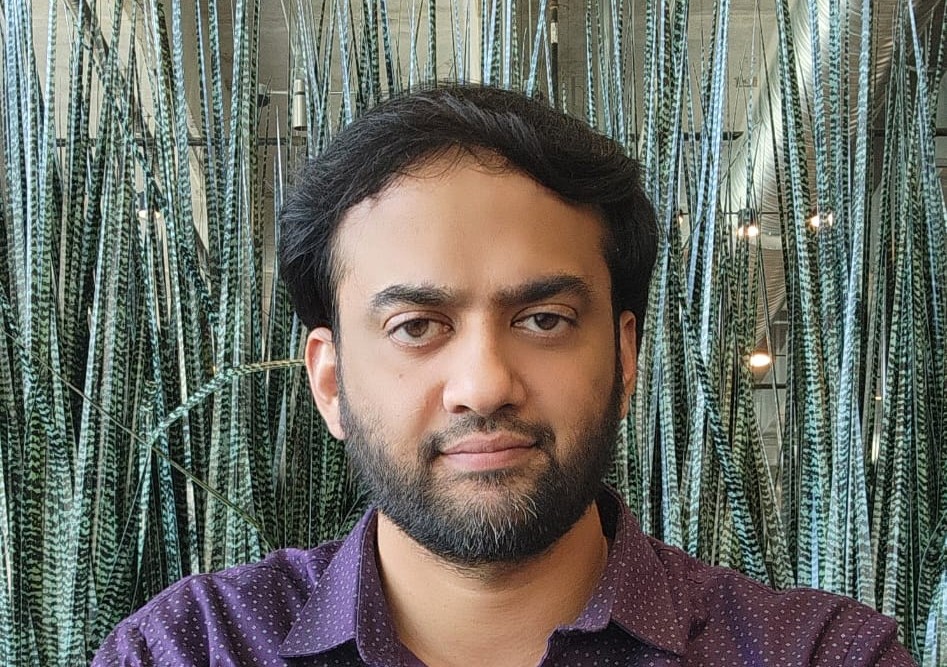
In the unforgiving world of financial services, where regulatory deadlines loom like storm clouds and auditability can make or break institutions, Mohammed Afzal Khan has spent over a decade transforming organizational chaos into streamlined intelligence. His journey from wrestling with “messy, human-heavy workflows, spreadsheets, emails, and brittle scripts” to architecting cloud-native decisioning platforms represents more than technical evolution—it embodies the very essence of digital transformation.
At Reputed Bank in Plano, Texas, Mohammed stands as a testament to what happens when deep technical expertise meets unwavering commitment to measurable business outcomes. His work doesn’t just automate processes; it reimagines how large-scale organizations can think, decide, and act with unprecedented speed and precision.
“My career started with rules and workflows; today it’s about intelligent, cloud-native decisioning platforms that play nicely with LLMs, streaming data, and microservices without sacrificing governance or explainability,” Mohammed reflects, capturing the remarkable trajectory that has defined his professional evolution.
THE FOUNDATION: BUILDING ON SOLID GROUND
Mohammed’s approach to Business Process Management through Pega began with a fundamental realization that would shape his entire methodology. Starting with Pega 7.1 and evolving through the 8.x ecosystem, he discovered that successful transformation required more than technical prowess—it demanded a deep understanding of business intent at every decision point.
His signature question, “What is the business trying to achieve at each milestone?” became the cornerstone of his stage-based case management philosophy. This seemingly simple inquiry unlocks complex business processes, transforming them into intelligible frameworks that serve both business stakeholders and engineering teams.
The results speak volumes. In one particularly challenging fraud workflow project, Mohammed encountered a bank struggling with scattered Excel checks, manual handoffs, and inconsistent rules. The situation represented everything wrong with traditional approaches: inefficiency, inconsistency, and impossibility to scale. His solution—a unified Pega platform incorporating event-triggered cases, real-time scoring, and LLM-assisted evidence summarization—delivered a 60% reduction in review time while simultaneously improving accuracy and creating clearer audit trails.
ARCHITECTURAL PHILOSOPHY: WHERE DISCIPLINE MEETS INNOVATION
Mohammed’s technical architecture philosophy centers on a principle that has served him throughout his career: separation of concerns that enables evolution. His layered class design approach, distinguishing between enterprise frameworks and implementation specifics, creates systems that remain stable and scalable years after initial deployment.
“I define stable keys, clear persistence rules, and predictable naming conventions, because those three decisions determine how easy your system is to debug, upgrade, and scale five years later,” he explains, highlighting the forward-thinking approach that distinguishes sustainable architecture from quick fixes.
This disciplined foundation enables Mohammed to embrace cutting-edge innovations without compromising system integrity. His recent integration of LLM-assisted decision support and summarization into case lifecycles demonstrates how thoughtful architecture creates space for revolutionary capabilities. Investigators, underwriters, and operations teams now spend less time on repetitive review tasks and more time on high-value judgment calls—exactly the kind of human-AI collaboration that defines the future of work.
THE AGILE TRANSFORMATION LEADER
In his role as technical lead and solution architect, Mohammed has redefined how Agile methodologies apply to complex Pega implementations. His approach goes beyond traditional sprint planning to encompass what he calls “Pega-sized stories”—user stories that align with the platform’s capabilities while delivering tangible business value.
His commitment to transparency and measurable progress transforms Agile from process into philosophy. Every sprint concludes with working software that business stakeholders can evaluate, ensuring that technical progress translates into business advancement. This approach has proven particularly valuable in regulated environments where requirements traceability isn’t just helpful—it’s mandatory.
Mohammed’s emphasis on “short, focused design workshops” and “testable acceptance criteria” reflects his understanding that successful transformation requires both technical excellence and stakeholder alignment. By keeping architectural decisions public and versioned, he ensures that complex enterprise projects remain coordinated despite distributed teams and multiple vendors.
SCALING INTELLIGENCE: FROM CONFIGURATION TO COGNITION
Perhaps nowhere is Mohammed’s evolution more evident than in his approach to problem-solving. His preference for configuration over custom code—”I’m biased toward configure over code”—reflects deep platform expertise and understanding that sustainable solutions leverage proven capabilities rather than reinventing foundational functionality.
This philosophy extends to his debugging and support strategies for large-scale applications. While he acknowledges that “the basics still matter—Tracer, Clipboard, PAL,” his approach encompasses structured logging, correlation IDs, log aggregation, and Application Performance Monitoring. Every critical incident becomes a learning opportunity, with runbooks and postmortems ensuring that solutions become patterns rather than one-off fixes.
His notification framework exemplifies this comprehensive approach. By abstracting transport mechanisms and supporting multiple channels, Mohammed creates systems that adapt to changing requirements without fundamental restructuring. Business users can modify templates and routing without technical intervention, while operations teams maintain full visibility into system performance and message delivery.
THE GOVERNANCE ADVANTAGE
Mohammed’s experience in financial services has instilled a deep appreciation for governance that extends far beyond compliance. His approach to version control and change management treats discipline as an enabler of innovation rather than a constraint upon it. By implementing “strict ruleset locking and branching discipline” combined with “automated dependency checks in CI/CD,” his teams transform deployments from high-risk events into routine operations.
This governance foundation enables the kind of experimentation that drives continuous improvement. Mohammed’s use of champion-challenger patterns for policy testing and A/B comparisons for decision rules creates controlled environments for innovation. Organizations can evolve their business logic based on data rather than intuition, measuring the impact of changes before full implementation.
MEASURING WHAT MATTERS
Mohammed’s approach to success measurement reflects his business-first philosophy. Rather than focusing solely on technical metrics, he tracks KPIs that directly correlate with business value: SLA adherence, cycle time, automation percentage, exception rates, and straight-through processing rates. These metrics appear on near real-time dashboards, enabling leadership to act rather than simply observe.
His collaboration approach with business analysts and stakeholders emphasizes continuous alignment through “daily syncs, short design workshops, and whiteboarding.” By maintaining traceability from requirements through rules to tests, Mohammed creates accountability structures that serve both business needs and regulatory requirements.
THE INTELLIGENT FUTURE
As Mohammed looks toward the future, his vision encompasses the convergence of traditional BPM with emerging technologies. His integration of LLMs into case lifecycles represents more than incremental improvement—it suggests a fundamental shift toward systems that augment human intelligence rather than simply automating manual tasks.
“Pega gives the organization a controllable, auditable decision and workflow ‘brain,’” Mohammed explains. “Couple that with cloud, streaming data, and LLM-powered summarization, and you get a platform that continuously adapts to new regulations, products, or market shocks without rebuilding everything from scratch.”
This vision of adaptive, intelligent systems that maintain governance and explainability represents the next evolution in enterprise technology. Mohammed’s work demonstrates that organizations need not choose between innovation and control—thoughtful architecture enables both.
CONTINUOUS LEARNING IN A RAPIDLY EVOLVING LANDSCAPE
Mohammed’s commitment to staying current extends beyond platform updates to encompass the broader technology ecosystem. His engagement with Pega Academy, PegaWorld, and continuous certification maintenance (including AWS) reflects understanding that expertise requires constant renewal in rapidly evolving fields.
His approach to evaluating new features—running “small POCs to test new features for security, performance, and upgrade impact before recommending them for production”—demonstrates the careful balance between innovation and stability that characterizes mature technical leadership.
THE HUMAN ELEMENT IN DIGITAL TRANSFORMATION
Throughout his career, Mohammed has maintained focus on the human dimension of technological change. His emphasis on keeping “humans in control of increasingly intelligent systems” reflects understanding that successful transformation enhances rather than replaces human capabilities.
This philosophy appears throughout his work, from designing flows that remain “intelligible to business” to creating systems where “policy owners change rules without re-deploying the whole app.” By separating policy from process and making business logic accessible to business users, Mohammed creates systems that adapt to human insight rather than constraining it.
A LEGACY OF MEASURABLE TRANSFORMATION
Mohammed Afzal Khan’s career represents the evolution of enterprise technology from automation to augmentation. His work demonstrates that truly transformative systems don’t just make processes faster—they make organizations smarter, more adaptive, and more capable of responding to unprecedented challenges.
His approach to digital transformation—grounding cutting-edge capabilities in disciplined architecture, comprehensive governance, and measurable business outcomes—provides a roadmap for organizations navigating the complex intersection of innovation and stability.
As financial services and other regulated industries grapple with accelerating technological change, leaders like Mohammed offer essential guidance on achieving transformation that enhances rather than endangers organizational capabilities. His career proves that the most sustainable innovations serve both technological advancement and business objectives. “Ship responsibly, measure everything, and keep humans in control of increasingly intelligent systems,” Mohammed concludes. “That’s how you deliver real transformation—one sprint, one policy, one measurable outcome at a time.”