In an era where leadership is often reduced to singular expertise, Dr. Carmen M. Castro represents something far more powerful: the convergence of billion-dollar infrastructure financing, academic innovation, creative artistry, and strategic entrepreneurship. Her career encompasses more than $100 billion in international project financing across the Middle East, Caribbean, Europe, Africa, and South America, while simultaneously reshaping business education across continents and building a legacy that extends from boardrooms to recording studios. As Founder and Chairwoman of Castro & Partners Private Equity Firm, International Campus Dean overseeing universities in Dubai, New York City, Spain, Italy, London, and the Caribbean, Department Chairperson for global MBA programs, published author on international business and political biography, and the artistic voice behind La Doctora Castro’s music, Dr. Castro defies the limitations of conventional leadership categories. Her upcoming venture, Tequila Castro La Inolvidable: Where Power Wears a Crown and Legacy Flows in Gold, adds another dimension to a portfolio that already spans infrastructure megaprojects, doctoral program development across four continents, and intellectual contributions that bridge finance, pharmaceuticals, and governance. “My journey has never been about choosing a single path,” Dr. Castro reflects. “It has been about honoring every dimension of who I am. Leadership is most powerful when it is whole.”
THE ARCHITECTURE OF MEGA-PROJECT LEADERSHIP
Dr. Castro’s work in international infrastructure financing reveals a leadership philosophy forged through decades of navigating billion-dollar complexities across diverse global markets. Her experience encompasses airports, universities, hospitals, and transportation systems that serve as catalysts for national transformation. “Mega project leadership is not defined by capital alone,” she explains. “It is defined by vision, governance, and the ability to align diverse global stakeholders around a shared outcome.” Several formative experiences shaped this philosophy. Working across international markets taught her that infrastructure ultimately serves people, not balance sheets. Whether structuring projects in the Middle East, negotiating in the Caribbean, or advising in Europe and Africa, she witnessed how physical systems become instruments of economic and human advancement when designed with generational impact in mind. Leading billion-dollar financing initiatives required mastering what she calls “strategic patience.” Large-scale projects demand rigorous due diligence, geopolitical awareness, and the ability to anticipate risk decades ahead. Success requires architectural thinking rather than reactive management. Her academic leadership roles reinforced the importance of building systems, not moments. As Department Chairperson for global MBA programs and International Campus Dean, she learned that sustainable development requires institutional thinking rather than transactional approaches. Her work in private equity through Castro & Partners solidified her belief that mega projects succeed when financial innovation meets ethical stewardship. Capital must be deployed with discipline, transparency, and commitment to generational value creation. “Together, these experiences shaped a leadership philosophy rooted in global perspective, structural integrity, and the unwavering belief that infrastructure is one of the most powerful tools for economic and human advancement,” Dr. Castro notes.
GEOPOLITICAL INTELLIGENCE MEETS FINANCIAL PRECISION
Operating across continents demands more than technical expertise. Dr. Castro has developed a sophisticated approach to aligning financial precision with cultural and regulatory complexity, recognizing that while numbers may be universal, the environments in which they operate are profoundly cultural, political, and human. Her methodology begins with respect. Every region possesses its own regulatory architecture, historical context, and cultural rhythm. Whether structuring projects in the Middle East, negotiating in South America, or advising in Europe or Africa, she leads with cultural intelligence. “You cannot impose a financial model onto a country,” she emphasizes. “You must integrate it into the way that nation understands development, governance, and partnership.” She relies on rigorous institutional frameworks developed through her experience as International Campus Dean, Vice President of Global Programs and Academic Affairs, and Department Chairperson for global MBA programs. Strong governance structures create clarity in environments that may otherwise be fluid or politically sensitive. Her approach maintains a dual lens: macro-level geopolitical awareness and micro-level financial discipline. Mega projects require both. Leaders must understand regional alliances, regulatory shifts, and long-term national strategies while simultaneously ensuring that every line item, covenant, and risk model maintains structural integrity. “In many parts of the world, trust is the true currency of business,” Dr. Castro observes. “When stakeholders believe in your integrity, your transparency, and your commitment to shared prosperity, even the most complex regulatory landscapes become navigable.”
CASTRO & PARTNERS: INVESTING IN GENERATIONAL TRANSFORMATION
As Founder and Chairwoman of Castro & Partners Private Equity Firm, Dr. Castro has anchored her investment strategy in principles that reflect both financial discipline and deep commitment to long-term national development. Her firm recognizes that large-scale infrastructure represents more than an asset class. It serves as a catalyst for economic transformation. Five core pillars guide the firm’s approach. First, Castro & Partners invests in projects that create generational value. Infrastructure must outlive political cycles and market fluctuations. The firm prioritizes assets that strengthen national competitiveness: transportation systems, energy grids, educational institutions, healthcare networks, and digital infrastructure. Second, the firm insists on structural integrity and governance. Mega projects succeed when the financial architecture proves as strong as the physical one. Castro & Partners conducts rigorous due diligence, stress-tests regulatory environments, and ensures every project is supported by transparent governance, sound policy alignment, and long-term operational viability. Third, geopolitical intelligence informs every investment decision. Operating across continents has taught Dr. Castro that infrastructure is inherently geopolitical. The firm evaluates regional alliances, national development agendas, and global market trends to ensure investments remain resilient, strategically positioned, and aligned with each country’s future trajectory. Fourth, Castro & Partners champions blended capital and innovative financing models. Modern infrastructure requires creativity, combining public, private, and multilateral capital to de-risk projects and accelerate execution. The firm specializes in structuring financing that proves both sophisticated and accessible, enabling nations to pursue ambitious development goals without compromising fiscal stability. Finally, the firm invests with purpose. Infrastructure ultimately serves people. Castro & Partners’ strategy prioritizes projects that expand access, strengthen communities, and elevate quality of life. Whether in the Caribbean, Africa, South America, or the Middle East, success is measured not only by returns but by lasting impact. “These principles ensure that Castro & Partners remains a trusted partner for governments, institutions, and global investors,” Dr. Castro explains, “delivering infrastructure that is financially sound, strategically aligned, and transformative in its impact.”
STRATEGIC CAPITAL: BEYOND CONVENTIONAL INVESTMENT
Dr. Castro’s philosophy distinguishes strategic capital deployment from conventional investment thinking through its treatment of capital as an instrument of long-term transformation rather than a transaction. Where conventional investment asks about returns, strategic capital asks what an investment builds, strengthens, or unlocks. Strategic deployment is anchored in systems rather than stand-alone assets, evaluating how projects fit within a nation’s broader economic architecture: its energy grid, transportation corridors, education pipeline, and long-term competitiveness. It integrates geopolitical intelligence, recognizing that infrastructure is inherently political and global. Strategic capital considers regional alliances, regulatory maturity, demographic shifts, and national development agendas that conventional investment rarely accounts for. Strategic capital prioritizes durability over immediacy. It values generational impact, operational resilience, and institutional strength. It leverages blended financing models, understanding that modern infrastructure requires public-private collaboration, multilateral partnerships, and innovative risk-sharing structures. Most importantly, strategic capital is purpose-driven. It measures success not only by financial returns but by social, economic, and structural value created. It asks whether communities are strengthened, whether access is expanded, and whether the investment contributes to national progress. “Strategic capital deployment is visionary, multidimensional, and deeply intentional,” Dr. Castro states. “It is the discipline of building the future, not simply financing the present.”
TRANSFORMING UNCERTAINTY INTO STRUCTURED OPPORTUNITY
Markets often labeled high-risk are rarely as risky as portrayed. Dr. Castro has built her career on transforming uncertainty into opportunity by imposing discipline, intelligence, and architecture where others see volatility. Her approach begins with geopolitical clarity. Uncertainty often represents incomplete information. By understanding regional alliances, national development agendas, and political trajectories, she distinguishes between perceived risk and actual structural risk, identifying opportunities others overlook. She builds frameworks before forecasts. High-risk markets require strong governance, transparent processes, and institutional alignment. She creates structure through rigorous due diligence, scenario modeling, and risk mitigation mechanisms that convert ambiguity into measurable variables. She leverages blended capital to de-risk execution. Public-private partnerships, multilateral financing, and layered capital structures allow intelligent risk distribution, transforming seemingly inaccessible markets into investable environments with clear pathways to stability and return. She prioritizes local capacity and cultural fluency. Success in emerging markets requires understanding cultural, regulatory, and historical context. She works closely with local institutions, ministries, and private partners to ensure projects remain financially sound, socially aligned, and politically durable. She looks for inflection points: moments when markets shift from potential to trajectory. High-risk markets often sit on the edge of transformation. When governance strengthens, sectors diversify, and national vision becomes coherent, structured opportunity emerges. “I convert uncertainty into opportunity by applying discipline where others apply fear, intelligence where others rely on assumptions, and long-term strategy where others seek short-term gain,” Dr. Castro explains. “That is the difference between avoiding risk and mastering it.”
REVOLUTIONIZING GLOBAL BUSINESS EDUCATION
Dr. Castro’s academic leadership addresses fundamental structural gaps that have limited global business education. As International Campus Dean overseeing universities in Dubai, New York City, Spain, Italy, London, and the Caribbean, and Department Chairperson for global MBA programs, she has designed international DBA and executive MBA programs that correct long-standing deficiencies. First, she closed the gap between academic theory and real-world global practice. Too many programs teach business in isolation from geopolitical realities, cross-border finance, and emerging market complexities. Her curricula integrate international finance, infrastructure development, AI evolution, and global strategy so executives learn to lead at the scale of nations, not just corporations. Second, she addressed the lack of cultural and regulatory fluency. Business education often assumes a Western-centric model. Her programs intentionally expose students to regulatory, cultural, and economic frameworks of the Middle East, Africa, South America, Europe, and the Caribbean. Global literacy enables global effectiveness. Third, she corrected the disconnect between academia and industry. Many doctoral and executive programs fail to prepare leaders for billion-dollar environments. She built partnerships with governments, private equity firms, multilateral institutions, and global enterprises to ensure learning is grounded in live case studies rather than outdated textbooks. Fourth, she strengthened the pipeline for senior-level leadership. Traditional programs often focus on mid-career management. Her pathways prepare executives for C-suite, boardroom, and policy-level decision-making, roles requiring strategic foresight, ethical governance, and cross-border operational capability. Finally, she addressed curriculum innovation deficits. Higher education has been slow to integrate AI, digital transformation, and global connectivity into its core. Her programs embed these elements as foundational competencies, ensuring graduates prepare for the future of work. Her executive MBA programs now extend across the Middle East, including Dubai, Abu Dhabi, Muscat, Oman, Egypt, Jordan, and Saudi Arabia, as well as the United Kingdom and Bosnia. Her international DBA programs operate across the Middle East, Europe, Asia, Africa, and the United States. “I designed international DBA and executive MBA programs to build leaders who are globally competent, strategically sophisticated, and capable of shaping the next era of business, governance, and economic development,” she states.
GLOBAL FINANCE RESHAPING ACADEMIC FRAMEWORKS
Dr. Castro’s active participation in global finance fundamentally reshapes the way she designs academic frameworks because it keeps her grounded in the realities that future leaders must navigate. Theory alone is no longer sufficient. The world is shaped by capital flows, geopolitical shifts, technological acceleration, and cross-border interdependence. Global finance gives her a front-row view of how nations actually grow. When structuring billion-dollar projects, she sees the interplay between policy, capital, culture, and institutional capacity. She brings that lived understanding into the classroom so students learn not just what to think, but how global systems function in practice. It forces her to design curricula that are dynamic, not static. Financial markets evolve quickly. Infrastructure priorities shift. Regulatory environments transform. Because she operates in these spaces daily, she builds programs that anticipate change rather than react to it. Her students learn to lead in environments defined by volatility, innovation, and global interdependence. It elevates the importance of geopolitical literacy. International finance is inseparable from geopolitics. When she teaches leadership, she integrates the realities of regional alliances, national development agendas, and cross-border risk. Future executives must understand the world as a network of interconnected systems, not isolated markets. It reinforces the need for ethical and strategic stewardship. Managing large-scale capital teaches that decisions have generational consequences. She embeds this responsibility into her academic frameworks, emphasizing governance, transparency, and the long-term societal impact of leadership. Finally, it allows her to collapse the distance between academia and the real world. Her programs are built on live case studies, active global partnerships, and the same analytical tools used in international finance. Students learn from real transactions, real negotiations, and real geopolitical dynamics. “My participation in global finance ensures that the leaders I develop are not only academically prepared, but globally fluent, strategically sophisticated, and capable of operating at the scale the modern world demands,” Dr. Castro explains.
THE BORDERLESS FUTURE OF BUSINESS EDUCATION
Over the next decade, business education will undergo a profound transformation driven by globalization, digital acceleration, and the demands of a workforce that must operate across borders, cultures, and technologies. Dr. Castro anticipates several shifts that will redefine the academic landscape. First, business education will evolve from regional to global by default. Students will no longer study business through a single cultural or regulatory lens. Programs will integrate comparative frameworks from the Middle East, Africa, South America, Europe, and the Caribbean, preparing leaders to operate in a multipolar world where influence is widely distributed. Second, experiential learning will replace traditional instruction. Case studies will be drawn from live global transactions, cross-border negotiations, and real-time geopolitical events. Students will learn through immersion, collaborating with international institutions, private equity firms, and government agencies to solve complex, high-stakes challenges. Third, AI will become a core competency, not a specialization. Artificial intelligence will be embedded across finance, strategy, operations, and leadership curricula. Future executives must understand how AI shapes decision-making, risk modeling, global supply chains, and organizational design. Business schools that fail to integrate AI will fall behind. Fourth, credentials will become modular, stackable, and internationally portable. Executives will curate their education across institutions and continents, earning micro-credentials, global certifications, and specialized modules that reflect the realities of a borderless economy. The traditional “one institution degree” will give way to global academic ecosystems. Fifth, leadership development will prioritize cultural fluency and geopolitical literacy. The next generation of leaders must understand diplomacy, regulatory diversity, and the cultural dynamics that shape global markets. Business education will increasingly resemble international relations because modern business is inseparable from global politics. Finally, universities will become global platforms, not physical locations. Institutions will operate as interconnected hubs, offering programs that span continents, languages, and regulatory environments. The future of business education is not tied to geography; it is tied to global relevance. “The next decade will redefine business education as a borderless, technology-enabled, globally integrated system,” Dr. Castro predicts, “one that prepares leaders to navigate complexity, drive innovation, and shape the future of international enterprise.”
INTEGRATING AI WITHOUT LOSING HUMAN DEPTH
Dr. Castro’s perspective on artificial intelligence in higher education reflects her dual expertise in technology integration and human-centered leadership. She believes AI should refine human judgment rather than replace it, creating a partnership between human and machine intelligence that elevates leadership. AI must be treated as a strategic instrument, not an academic shortcut. She embeds AI into curricula as a tool for analysis, simulation, forecasting, and decision support. Students learn to interrogate AI outputs, question assumptions, and understand algorithmic limitations. This preserves critical thinking while enhancing analytical power. Educational institutions must teach AI literacy alongside ethical responsibility. Future leaders need to understand how AI systems are built, what data they rely on, and how bias, privacy, and governance intersect with technology. Human judgment becomes more important when decisions are AI-augmented. Leadership development must remain deeply human. Empathy, negotiation, cultural fluency, moral courage, and strategic intuition cannot be automated. Her academic frameworks separate what AI can optimize from what only humans can embody. AI models scenarios, but human leaders make value-based decisions. AI should globalize education without homogenizing it. Used correctly, AI exposes students to diverse markets, regulatory environments, and geopolitical scenarios in real time. It simulates cross-border negotiations, infrastructure planning, and crisis management. Human educators contextualize these experiences and anchor them in wisdom. Finally, institutions must lead by example. Universities should integrate AI into their own governance, operations, and research while maintaining transparency, accountability, and human oversight. This models for students what responsible AI-enabled leadership looks like. “AI belongs at the center of modern higher education,” Dr. Castro asserts, “but always as a powerful instrument in the hands of principled, globally minded human leaders, not as a substitute for them.”
PUBLISHING AS INTELLECTUAL INFRASTRUCTURE
Dr. Castro’s authorship spans international business, pharmaceuticals, and political biography. Her upcoming book on the first female president of Mexico represents her latest contribution to documenting leadership in complex environments. These intellectual pursuits, while diverse in subject, share a common foundation: the study of systems, leadership, and forces that shape human progress. All her writing is grounded in structural analysis. Whether examining global finance, the pharmaceutical industry, or political biography, her focus remains on the architecture behind outcomes: the policies, institutions, incentives, and power dynamics that determine how nations and industries evolve. Each discipline reflects her commitment to understanding leadership at scale. International business reveals how leaders navigate global markets. Pharmaceuticals show how scientific innovation intersects with regulation, ethics, and public health. Political biography uncovers personal, cultural, and geopolitical forces that shape national decision-making. Her authorship bridges academia, industry, and governance. She writes to connect siloed worlds, showing how economic strategy, scientific advancement, and political vision are interdependent. Her work invites readers to see global development as an interconnected ecosystem rather than isolated sectors. These pursuits reflect her belief in education as a tool for empowerment. Whether documenting the evolution of AI in higher education, analyzing pharmaceutical leadership, or chronicling the life of a political figure, her goal remains the same: to equip future leaders with the knowledge, context, and critical thinking required to shape the world responsibly. “Global leaders have a profound responsibility to document their ideas because leadership is not only about decision-making,” Dr. Castro explains. “It is about leaving behind intellectual architecture that others can build upon. Publishing is one of the most powerful tools we have to democratize knowledge, preserve institutional memory, and guide future generations.” Publishing transforms experience into shared wisdom, creates transparency and accountability, ensures progress is not lost to time, bridges sectors that rarely communicate, and serves as an act of service to society.
LA DOCTORA CASTRO: WHERE ARTISTRY MEETS EXECUTIVE VISION
As a singer, composer, and songwriter performing as La Doctora Castro, Dr. Castro operates within a creative discipline rarely associated with global finance. Yet artistic expression proves inseparable from her executive leadership, serving as one of its greatest sources of strength. Creativity teaches strategic intuition. When composing, she listens for patterns, transitions, and emotional truth. Executive leadership requires the same skill: sensing what emerges before it becomes visible, anticipating shifts, and making decisions that are both analytical and intuitive. Music cultivates emotional intelligence. A songwriter must understand human emotion at its most nuanced level. That sensitivity translates directly into leadership: guiding teams, negotiating across cultures, and navigating environments where diplomacy, empathy, and timing matter as much as data. Artistry strengthens discipline and precision. True artistry requires structure, repetition, and mastery. The same discipline that shapes a composition also shapes billion-dollar strategies. Both demand clarity of vision and the ability to refine until the outcome merits execution. Music reinforces her global perspective. As La Doctora Castro, her music carries cultural identity, language, and storytelling. This deepens her understanding of the human dimension behind global finance, reminding her that infrastructure, policy, and capital ultimately serve people. Creativity expands her capacity for multidimensional thinking. Art allows her to hold complexity without fragmentation. It teaches integration of logic and emotion, structure and improvisation, vision and execution. “My artistic life does not compete with my executive life; it completes it,” Dr. Castro reflects. “Music gives me the clarity, humanity, and creative intelligence that make me a stronger global leader.”
TEQUILA CASTRO LA INOLVIDABLE: LEGACY IN LIQUID GOLD
Dr. Castro’s upcoming 2026 launch of Tequila Castro La Inolvidable: Where Power Wears a Crown and Legacy Flows in Gold represents an expansion into lifestyle entrepreneurship rooted in heritage, artistry, and cultural identity. The venture honors legacy. As a Latina, she understands tequila’s cultural significance: the land, the artisanship, the generational pride. This venture allows her to honor that heritage while elevating it through luxury design and global distribution. The brand embodies experiential entrepreneurship. Tequila transcends being merely a spirit; it represents moments, memories, celebrations. With its serpent-shaped bottle crowned in gold, Tequila Castro La Inolvidable represents wisdom, sensuality, and power, the same qualities defining her artistic and executive identity. The industry is evolving toward authenticity and storytelling. Consumers want brands with soul. Her background in global enterprise, creative direction, and luxury branding positions her to introduce a tequila exceptional in quality and unforgettable in presence, a true embodiment of its name. This venture reflects her multidimensional leadership. Her career spans finance, academia, global infrastructure, and the arts. Tequila Castro La Inolvidable naturally extends that multidimensionality, a convergence of culture, strategy, and creativity. She wanted to create a symbol of joy, connection, and empowerment. Every sip is designed to honor unforgettable moments and the people who define them. It is a tribute to those who reign with elegance, lead with purpose, and celebrate life with passion. “I was drawn to this industry because Tequila Castro La Inolvidable allows me to build a lifestyle brand that is luxurious, culturally grounded, and globally resonant,” she explains, “a brand where power truly wears a crown and legacy flows in gold.”
THE OPERATING SYSTEM OF EXCELLENCE
Sustaining excellence across finance, academia, publishing, and the arts requires unusual discipline. Dr. Castro’s personal operating system is built on intentionality, structure, and spiritual grounding. She approaches life as an integrated ecosystem where each discipline strengthens the others. She operates from a foundation of clarity and purpose. Every project, whether in global finance, academia, publishing, or music, must align with her long-term vision and values. If it does not serve her legacy, elevate her community, or honor her truth, it does not enter her system. She designs her days around disciplined focus, segmenting time with precision: strategic work in the morning, creative work when intuition is strongest, administrative tasks when energy shifts. This rhythm allows movement between billion-dollar strategy and artistic expression without losing coherence. She protects her mental and emotional bandwidth. She is selective about what she consumes, who she engages with, and where she invests attention. Leadership at this level requires clarity, and clarity requires boundaries. She treats her mind as an asset that must be safeguarded with intention. She relies on systems, not spontaneity. She builds frameworks for everything: decision-making, research, writing, creative direction, and enterprise management. These systems allow her to scale work across continents while maintaining excellence in every domain. She honors creativity and spirituality in her leadership. Music, prayer, and reflection are not luxuries but essential components of her operating system. They keep her grounded, intuitive, and emotionally attuned. She leads with long-range vision. She architects her life the way she architects institutions: with foresight, discipline, and commitment to generational impact. Every decision is made with the future in mind. “My operating system is a blend of discipline, structure, intuition, and purpose,” Dr. Castro states. “It allows me to sustain excellence across multiple worlds because it is built not on chaos, but on clarity; not on ambition alone, but on alignment.”
THE NEXT FRONTIER: WHERE CAPITAL MEETS TRANSFORMATION
Dr. Castro’s vision for the next frontier of international infrastructure reveals strategic foresight developed through decades of global operations. She identifies regions experiencing demographic momentum, resource expansion, and geopolitical repositioning, and industries at the intersection of energy, technology, and resilience. The Global South will lead the next wave of infrastructure expansion. Regions including the Caribbean, West Africa, East Africa, and South America, particularly countries like Guyana, Kenya, Ghana, Rwanda, and Brazil, are entering historic growth phases. These markets are investing in energy, transportation, digital connectivity, and climate-resilient systems at scales that will reshape global development. Clean energy and grid modernization will dominate capital flows. Hydrogen, advanced solar, offshore wind, battery storage, and smart grids will define the next decade. Nations that integrate renewable energy with resilient transmission systems will become global models for sustainable development. Digital infrastructure will become as essential as physical infrastructure. Data centers, fiber optic networks, AI-enabled logistics, and cross-border digital corridors will form the backbone of economic competitiveness. Countries investing in digital sovereignty and cloud infrastructure will accelerate far beyond those that do not. Climate-adaptive infrastructure will become a global priority. Coastal defenses, water security systems, resilient agriculture, and disaster preparedness infrastructure will prove critical, especially for island nations, coastal economies, and climate-vulnerable regions. The Middle East will continue its transformation into a global infrastructure hub. Saudi Arabia, the UAE, and Qatar are redefining large-scale, future-focused infrastructure through smart cities, logistics corridors, and renewable energy megaprojects. Their ambition will influence global standards. Cross-border infrastructure will reshape regional power dynamics. Rail corridors, energy interconnectors, and trade routes linking Africa, Middle East, Asia or South America, Caribbean, North America will redefine economic geography. The future belongs to regions that integrate. “The next frontier will be defined by emerging geographies with rising influence and industries that combine sustainability, technology, and resilience,” Dr. Castro predicts. “These are the spaces where capital, innovation, and global strategy will converge, and where the world’s next era of development will be built.”
LESSONS FROM EMERGING MARKETS: PATIENCE AS POWER
Emerging markets have proven to be among Dr. Castro’s greatest teachers, revealing truths about leadership that mature markets often conceal. They have shown her that growth is rarely linear, progress requires endurance, and timing represents both art and science. Emerging markets teach patience as a strategic asset. Transformation takes time. Institutions evolve slowly. Regulatory frameworks mature in cycles. Infrastructure requires years of planning, negotiation, and execution. Patience is not passive; it is the discipline to stay committed to long-term value while others chase short-term noise. They cultivate resilience in the face of volatility. Emerging markets move through political shifts, currency fluctuations, and external shocks. Instead of retreating, she has learned to build systems that absorb disruption. Resilience becomes a competitive advantage, the ability to remain steady when the environment is anything but. They sharpen instinct for timing. The most powerful opportunities often appear during moments of uncertainty. The key is knowing when a market transitions from potential to trajectory, when governance strengthens, when capital inflows stabilize, when national vision becomes coherent. Strategic timing is recognizing inflection points before they become obvious. They reinforce the importance of cultural fluency. Patience and timing are not universal concepts; they are shaped by history, identity, and local context. Emerging markets have taught her to listen deeply, respect nuance, and understand that progress must align with the rhythm of the people it serves. They reveal that greatness often emerges from places the world underestimates. Some of the most transformative opportunities she has seen came from markets labeled high-risk. Risk is often a reflection of unfamiliarity, and with the right structure, partnership, and vision, these markets become engines of extraordinary growth. “Emerging markets have taught me that patience is power, resilience is strategy, and timing is leadership,” Dr. Castro reflects. “These lessons shape not only how I invest, but how I build, how I teach, and how I lead.”
THE RISE OF MULTIDIMENSIONAL LEADERSHIP
Dr. Castro’s career challenges the idea of specialization, demonstrating that multidimensional leadership is not only the future but the new global standard. The world has become too interconnected, too fast-moving, and too complex for leaders who operate in a single lane. Multidimensional leadership reflects the reality of modern systems. Finance intersects with geopolitics. Technology shapes education. Culture influences markets. Creativity drives innovation. Leaders who understand only one dimension cannot navigate the full landscape. The future belongs to those who can think across disciplines with fluency and coherence. The next generation of leaders must be both analytical and creative. Data alone cannot solve global challenges. Neither can intuition alone. Multidimensional leadership integrates both: the precision of finance, the vision of the arts, the discipline of academia, and the strategic intelligence of enterprise. Specialization is becoming a constraint in a world that rewards adaptability. Industries are converging. Roles are evolving. Opportunities emerge at the intersections. Leaders who can move between sectors, cultures, and intellectual frameworks will shape the next era of global development. Multidimensional leadership produces deeper judgment and stronger decision-making. When you have lived in multiple worlds, global finance, higher education, creative enterprise, publishing, you bring richer perspective to every decision. You see patterns others miss. You anticipate consequences others overlook. You lead with both rigor and humanity. Multidimensional leadership is a form of legacy. It shows future generations that they do not have to choose between their gifts. They can be strategic and artistic, analytical and intuitive, global and deeply personal. They can build institutions, create art, shape policy, and still remain true to themselves. “Multidimensional leadership is not a departure from traditional models,” Dr. Castro states. “It is their evolution. It is the leadership style required for a world defined by complexity, interdependence, and global possibility.”
A LEGACY OF EXPANDING POSSIBILITY
When future leaders study Dr. Castro’s work, she hopes they recognize that her legacy was never about titles, industries, or accomplishments. It was about expanding what is possible. She wants them to see a life that proved you do not have to choose between your gifts, your cultures, or your callings. She hopes they see a legacy of courage: courage to enter rooms where no blueprint existed, courage to build systems that did not yet have names, courage to lead with both intellect and heart. She hopes they see a legacy of service. Every institution she built, every program she designed, every book she wrote, and every song she composed was rooted in the belief that leadership is a responsibility, a commitment to elevate others, democratize knowledge, and leave the world stronger than you found it. She hopes they see a legacy of multidimensional excellence. Brilliance is not linear. You can be strategic and creative, analytical and intuitive, global and deeply personal. Your gifts do not compete; they compound. She hopes they see a legacy of integrity and discipline. Her work across continents, sectors, and generations was anchored in structure, ethics, and an unwavering commitment to quality. Excellence is not an act; it is an operating system. Finally, she hopes they see a legacy of possibility. If her journey teaches anything, it is that leadership is not confined to one identity or one path. You can build empires, write stories, compose music, and still remain rooted in your truth. You can honor your culture, your faith, your intellect, and your artistry, all at once. “I hope they recognize that my legacy was a blueprint for multidimensional leadership,” Dr. Castro concludes, “a reminder that the world expands for those who dare to bring their full selves to the table, and who lead not only with power, but with purpose.”
THE BLUEPRINT CONTINUES
Dr. Carmen M. Castro’s journey represents more than a career trajectory. It represents a fundamental reimagining of what global leadership can encompass. From structuring billion-dollar infrastructure projects across continents to developing international doctoral programs that reshape business education, from publishing works that bridge industries to composing music that carries cultural identity, from building a private equity firm that deploys strategic capital to launching a luxury tequila brand that honors heritage, her work defies categorization because it was never meant to fit within existing boundaries. Her influence extends through every dimension of her engagement: the executives she trains in Dubai, Abu Dhabi, Muscat, Egypt, Jordan, Saudi Arabia, the United Kingdom, and Bosnia; the governments and institutions that partner with Castro & Partners Private Equity Firm; the readers who encounter her insights on international business, pharmaceuticals, and political leadership; the audiences who experience La Doctora Castro’s music; the future connoisseurs of Tequila Castro La Inolvidable. In each arena, she brings the same commitment to excellence, the same strategic vision, the same cultural intelligence, and the same unwavering belief that leadership must serve something larger than itself. As global systems become increasingly interconnected, as emerging markets reshape economic geography, as artificial intelligence transforms education and industry, as sustainability becomes inseparable from strategy, the world needs leaders who can navigate this complexity without losing their humanity. Leaders who understand that capital creates opportunity when deployed with purpose. That education transforms societies when designed with global perspective. That creativity strengthens strategy rather than distracting from it. That heritage and innovation can coexist and compound. Dr. Castro’s career provides the blueprint. Her legacy offers the permission. Her vision points toward the future. “My journey has never been about choosing a single path,” she reflects. “It has been about honoring every dimension of who I am. From global finance to academia, from publishing to the arts, from institution building to creative enterprise, my work reflects a belief that leadership is most powerful when it is whole.” That wholeness, that integration, that multidimensional mastery represents not just one woman’s extraordinary achievement, but a model for the next generation of global leaders who will build the institutions, infrastructure, and innovations that define our collective future. The world expands for those who dare to bring their full selves to the table. Dr. Carmen M. Castro has spent her career proving exactly that.
FROM CAPITAL TO CULTURE: THE RISE OF A GLOBAL ARCHITECT
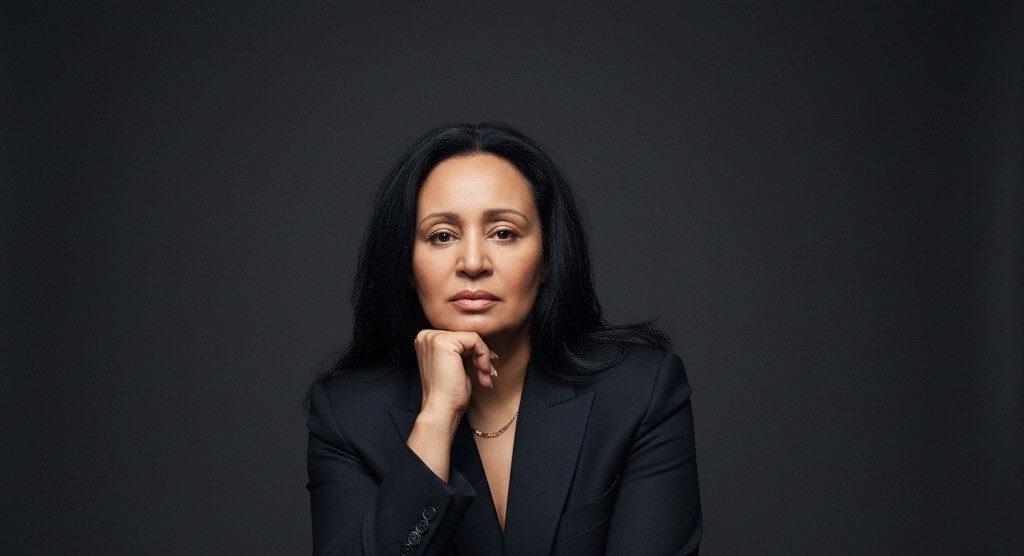
Dr. Carmen M. Castro, D.B.A., Founder & Chairwoman, Castro & Partners Private Equity, Author & Singer-Composer-Songwriter
Issue Insights
-
The Financial Reality of the AI Industry Beyond the Hype
Artificial intelligence may be changing the world, but the industry still faces one difficult…
-
Is the AI Boom Becoming the Next Dot-Com Bubble?
Every technological revolution creates extraordinary winners, but history shows that periods of excitement often…
-
Why Regulatory Affairs Leaders Need Six Sigma and ASQ Certifications
The most effective regulatory leaders don’t just ensure compliance they build systems that make…