“Industrial development is ultimately about people, not just projects, and policy success must be measured in outcomes rather than intent.”
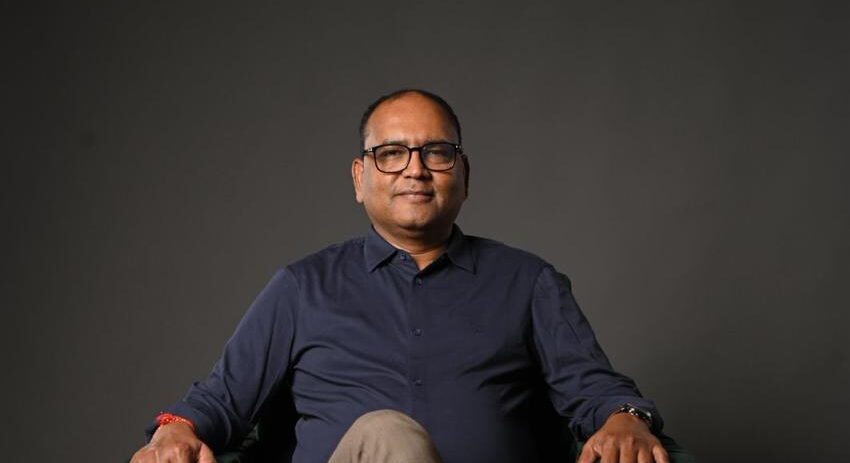
In the complex world of industrial policy and global investment, where government ambitions often collide with market realities, few professionals have mastered the delicate art of translation quite like Bhaskar Reddy. His journey represents something rare in today’s specialized professional landscape: a career built not on climbing predetermined ladders, but on identifying critical gaps where impact matters most.
Before he became synonymous with India’s electronics manufacturing renaissance, Bhaskar spent his formative years in an entirely different arena. As a teacher, trainer, and coach, he worked extensively on skill development and capacity building, engaging directly with the human side of transformation. Those years were far from a detour. They became the foundation of a philosophy that would later distinguish his approach to industrial development.
“That experience grounded me deeply in human capital, how skills are built, how institutions learn, and how meaningful transformation happens at the grassroots,” Bhaskar reflects. “It shaped my belief that industrial development is ultimately about people, not just projects, and that policy success must be measured in outcomes rather than intent.”
This people-first perspective would prove invaluable when he entered the world of infrastructure development and industrial investment. Working closely with governments, developers, and investors across multiple sectors, Bhaskar began noticing a persistent pattern. Policies were well intentioned. Global capital was available. Yet the translation of these into operating factories, sustainable jobs, and long-term industrial ecosystems remained frustratingly elusive.
The gap between policy intent and execution reality became his obsession. And it was this obsession that would eventually lead him to electronics manufacturing, a sector unforgiving of ambiguity and tolerant of nothing less than precision.
THE AWAKENING: WHEN POLICY SIGNALS STRATEGIC INTENT
The year 2012 marked a watershed moment, not just for India’s industrial trajectory but for Bhaskar’s professional focus. The release of India’s National Policy on Electronics represented something fundamentally different from previous industrial initiatives. For the first time, electronics manufacturing was articulated as a strategic national priority rather than an extension of IT services or a consumption-led market.
The policy set out a clear ambition: build domestic manufacturing capacity, reduce import dependence, generate large-scale employment, and integrate India into global electronics value chains through focused incentives, infrastructure development, and skill creation. More than a government notification, it was a signal of intent.
“The clarity of purpose embedded in the policy fascinated me,” Bhaskar recalls. “It prompted me to examine electronics manufacturing as a discipline that demanded long-term thinking, ecosystem development, and precise execution.”
He began studying global electronics models with the rigor of a researcher and the practicality of someone who understood ground realities. Taiwan’s semiconductor dominance, China’s manufacturing clusters, Southeast Asia’s component ecosystems. Each model offered lessons, but also revealed something critical: success in electronics manufacturing was never accidental. It emerged from sustained focus, institutional continuity, and the ability to align policy, capital, and execution over decades.
As Bhaskar engaged more deeply with the sector, the challenges became increasingly apparent. Electronics manufacturing is unforgiving. Margins are tight, product cycles are short, and global competition is relentless. Even small delays in approvals, logistics inefficiencies, or regulatory inconsistencies can alter investment decisions worth hundreds of millions of dollars.
“I realized that my most effective role lay at the intersection of policy and capital, acting as a bridge between governments and global investors,” he explains. This realization crystallized his specialization in foreign direct investment, the space where policy, geopolitics, capital, and execution converge most visibly.
UNDERSTANDING SUPPLY CHAIN SOVEREIGNTY: BEYOND RHETORIC TO STRATEGIC REALITY
While policymakers and commentators often invoke supply chain sovereignty in discussions about economic independence, Bhaskar brings a more nuanced understanding to this concept. His interpretation cuts through the simplistic narratives of self-sufficiency or protectionism that often cloud strategic thinking.
“Supply chain sovereignty is often misunderstood as self-sufficiency or protectionism,” Bhaskar observes. “In reality, it is about strategic control and resilience rather than isolation. True sovereignty lies in a country’s ability to secure access to critical inputs, technologies, and capabilities even during periods of global disruption.”
This definition reflects the complexity of modern electronics value chains. A single smartphone involves suppliers across multiple countries, with just-in-time logistics and stringent quality standards. Traditional manufacturing could rely on localized supply depth. Electronics requires global orchestration combined with strategic control over key nodes.
In the current geopolitical landscape, where electronics, semiconductors, energy systems, and digital infrastructure have become central to national security, sovereignty means having visibility and influence over key nodes of the value chain: design, components, manufacturing, logistics, and talent. It means remaining integrated with global trade networks while minimizing strategic vulnerabilities.
This sophisticated understanding shapes how Bhaskar approaches ecosystem development. It is never about isolation, always about positioning. Never about rhetoric, always about capability.
THE TIRUPATI TRANSFORMATION: WHERE THEORY MEETS EXECUTION
If there is a single project that validates Bhaskar’s approach to industrial development, it is the electronics manufacturing ecosystem in Tirupati, Andhra Pradesh. What emerged there was not merely a collection of factories, but a functioning cluster that demonstrated how policy precision, administrative alignment, and sustained engagement could transform investment intent into manufacturing reality.
The success of Tirupati rested on three closely interlinked factors, each reflecting lessons Bhaskar had absorbed over years of observing what works and what fails in industrial development.
First was strong political and administrative alignment. There existed a clear, shared understanding across leadership and the bureaucracy that electronics manufacturing demanded speed, responsiveness, and problem solving rather than procedural rigidity. Decisions were taken with an execution mindset, sending an early and powerful signal of seriousness to global investors evaluating India against competing destinations.
Second was a deliberate shift toward cluster-based development. Rather than pursuing isolated factory investments, the focus turned to building a comprehensive ecosystem, bringing together EMS players, component manufacturers, logistics providers, training institutions, and enabling infrastructure within a defined geography. This cluster approach significantly reduced operational friction, shortened supply chains, and improved long-term cost competitiveness for investors.
Third, and equally critical, was trust built through continuity and credibility. Engagement with investors did not end with land allotment or statutory approvals. There was consistent, hands-on follow-through to resolve operational issues, support scale-up plans, and anticipate future requirements. This created confidence that Tirupati was not a one-time destination, but a long-term manufacturing base.
Alongside these factors, sustained visibility and proactive engagement played a vital role. Continuous dialogue with investors across countries, particularly in mature electronics markets, ensured that Tirupati remained visible in global boardrooms, investment forums, and supply chain discussions. This credibility, built through consistent messaging and on-ground delivery, helped convert interest into commitment and commitments into expansion.
Over time, this combination of alignment, ecosystem thinking, and trusted engagement transformed initial investments into a resilient and growing electronics manufacturing cluster. Tirupati became proof that India could execute at the standards global electronics demanded.
THE EXECUTION GAP: WHY GOOD POLICIES OFTEN FAIL
Bhaskar’s extensive work with state governments across India has given him a clear-eyed view of where industrial policy typically breaks down. One of the most common challenges is underestimating the execution complexity of electronics manufacturing. Policies are often well drafted, but coordination across departments—power, water, customs, labour, environment—remains fragmented. Each department operates within its own procedures and timelines, rarely acknowledging that investors see these as a single, integrated experience.
Another challenge is institutional continuity. Electronics investments have long gestation periods, often spanning three to five years from commitment to full production. Investors look for stable, predictable institutions that transcend political cycles. Frequent policy reinterpretations or administrative reshuffles can undermine confidence, even when the policy framework itself remains unchanged.
There is also often an overemphasis on incentives and an underinvestment in operational readiness: logistics, vendor ecosystems, and skill development. Financial incentives can offset initial disadvantages, but they cannot compensate for unreliable power, inefficient ports, or the absence of skilled technicians.
“Governments seek employment, value addition, and exports. Investors seek predictability, scalability, and cost efficiency,” Bhaskar explains. “Policies must reward outcomes rather than inputs.”
This outcome-based thinking informs his approach to policy design. Rather than measuring success by announcements made or MoUs signed, the focus must shift to factories commissioned, employment generated, exports achieved, and ecosystems sustained. This requires transparency and clarity in regulatory processes, clearly articulated timelines, effective dispute resolution mechanisms, and adaptive frameworks that evolve with technology and market realities.
POST-INVESTMENT AFTERCARE: THE INVISIBLE DETERMINANT OF SUCCESS
While much attention focuses on attracting initial investments, Bhaskar has observed that post-investment aftercare is often the single most decisive factor in sustaining and expanding electronics manufacturing projects. Initial attraction brings a project into a location. Reinvestment and scale are determined by how effectively early-stage execution challenges are addressed.
In electronics manufacturing, the first phase after investment approval is particularly critical. Issues related to land allotment and possession, statutory and regulatory approvals, infrastructure readiness, utility connections, and site-level coordination can significantly influence project timelines and investor confidence. Delays or ambiguities at this stage often have a cascading impact on construction schedules, equipment installation, and production ramp-up.
“How quickly and predictably these issues are resolved determines whether an investor gains confidence to expand or chooses to remain cautious,” Bhaskar notes.
Effective aftercare begins much earlier than post-commissioning. It involves close handholding from the moment an investment decision is made: ensuring seamless land handover, fast-tracked approvals, coordinated infrastructure provisioning, and continuous engagement across departments. Governments that institutionalize this early-stage aftercare demonstrate seriousness of intent and reduce execution risk for investors.
Beyond the initial phase, sustained aftercare requires regular dialogue to understand investors’ medium and long-term plans, upcoming product transitions, and expansion requirements. Most large expansions in electronics manufacturing come from existing investors, not first-time entrants. When early execution experiences are smooth and predictable, investors reinvest, attract suppliers, and advocate for the location within their global networks.
Aftercare is not a reactive support mechanism. It is a strategic tool that transforms initial commitments into long-term manufacturing ecosystems.
LEARNING FROM TAIWAN AND CHINA: SEQUENCING OVER SCALE
Bhaskar’s extensive exposure to Taiwan and China has given him deep insight into mature electronics ecosystems. These are not academic observations but practical lessons absorbed through sustained engagement with how these systems actually function, how decisions get made, and how capabilities get built over time.
The most important lesson from Taiwan and China is not scale alone, but sequencing and consistency. These ecosystems were not built overnight. They evolved over decades through sustained focus on skills, supplier depth, manufacturing discipline, and continuous upgrading of capabilities. Policy stability and long-term institutional commitment played as important a role as capital investment.
“India does not need to replicate these models wholesale, nor is that realistic given differences in political systems, labor structures, and market dynamics,” Bhaskar observes. “What India can adopt, and must adopt, is the principle of specialization.”
Both Taiwan and China identified clear entry points into the global electronics value chain, built deep capabilities in those segments, and then expanded methodically into adjacent areas. Depth came before breadth. Taiwan’s semiconductor dominance emerged from decades of focused investment in specific process technologies. China’s manufacturing scale grew from systematic development of component ecosystems and supplier networks.
In the near to mid-term, India can realistically strengthen segments such as electronics manufacturing services, power electronics, EV systems, displays, and industrial electronics. These are areas where learning curves, process efficiency, and scale matter more than frontier research and where India’s domestic demand provides a strong base for growth. Building competitiveness in these segments will also attract global suppliers and catalyze downstream ecosystems.
Another critical lesson is the importance of supplier ecosystems. In both Taiwan and China, anchor firms were supported by dense networks of tier one and tier two suppliers, tooling vendors, and service providers located in close proximity. India’s focus in the coming years must therefore be on vendor development, quality discipline, and logistics integration rather than isolated large projects.
Finally, both ecosystems invested heavily in talent: technicians, engineers, and managers trained specifically for electronics manufacturing. For India, aligning skill development closely with industry needs will be essential to translating policy ambition into sustained manufacturing capability.
PLI AND SPECS: CATALYSTS WITH ROOM FOR EVOLUTION
India’s PLI and SPECS schemes have played a pivotal role in signaling intent and catalyzing scale in electronics manufacturing. They helped India transition from being viewed largely as a consumption market to being recognized as a credible manufacturing destination. By providing visibility, predictability, and scale-linked incentives, these schemes successfully attracted global EMS players and encouraged capacity expansion by existing manufacturers.
However, Bhaskar is clear-eyed about limitations and areas for improvement. Incentives alone cannot sustain long-term competitiveness. One key limitation has been the concentration of benefits at the final assembly and EMS level, with relatively slower progress in component depth and materials localization. While this phase was necessary to build volume and confidence, the next stage must deliberately address upstream gaps in components, sub-systems, tooling, and materials.
There is also room for improvement in incentive design. Current frameworks are largely volume driven, which can sometimes encourage scale without sufficient focus on technological capability, value addition, or process sophistication. Over time, incentives should increasingly reward localization of critical components, yield improvements, supplier development, and export competitiveness rather than production numbers alone.
Another critical area is implementation complexity. Approval timelines, compliance reporting, and interpretation of eligibility criteria can be demanding, particularly for smaller but technologically important players. Simplifying processes, improving coordination between central and state agencies, and ensuring policy stability over the incentive period will be essential to sustain investor confidence.
“PLI and SPECS have opened the door,” Bhaskar summarizes. “Sustained competitiveness will depend on how quickly India reduces the underlying cost and uncertainty of manufacturing. The next phase of these schemes should focus less on attraction and more on deepening India’s position within global electronics value chains.”
BEYOND CHINA PLUS ONE: BUILDING PREFERENCE THROUGH PERFORMANCE
The phrase “China Plus One” has dominated discussions about global supply chain diversification in recent years. While it reflects real shifts in how multinational corporations think about risk and resilience, Bhaskar believes India must move beyond this positioning to build genuine preference.
“India will move beyond the China Plus One narrative when it demonstrates reliability at scale,” he states. “When global firms experience consistent execution, predictable policy environments, and deepening ecosystems, preference follows naturally.”
This is not about rhetoric or marketing. Reputation in manufacturing is built through performance over time, not positioning statements. It requires delivering on commitments, solving problems proactively, and demonstrating that India can execute at the standards global electronics demands.
The geopolitical shifts and global trade realignments of recent years have made supply chains more strategic and regionally diversified. Companies are no longer optimizing only for cost, but also for resilience, alignment, and market access. This creates significant opportunity for countries that offer stability, scale, and policy clarity.
For India, the path forward involves continuing to strengthen execution capabilities, deepening supplier ecosystems, improving logistics efficiency, and maintaining policy consistency. It requires moving from project-centric thinking to ecosystem-centric thinking, asking not “How do we attract this factory?” but “How does this investment anchor a value chain?”
THE DISTRIBUTED FUTURE: MENA AND THE NEW GEOGRAPHY OF ELECTRONICS
Looking ahead, Bhaskar sees the next phase of electronics manufacturing being defined not by a single new hub, but by a more distributed and resilient network of regional manufacturing centers. In this context, the Middle East and Africa, particularly the MENA region, are emerging as strategically important destinations.
With strong sovereign backing, world-class logistics, access to reliable and increasingly green energy, and proximity to Europe, Africa, and West Asia, MENA is well positioned for electronics manufacturing services, component manufacturing, and selected semiconductor-related activities such as assembly, testing, and packaging.
For the industry, this shift reflects a move toward market-adjacent and geopolitically balanced supply chains. For India, it presents a timely opportunity. Indian electronics companies that have built scale and operational maturity under PLI can adopt a dual-footprint strategy: retaining India as a core manufacturing base while establishing EMS, component, or semiconductor operations in MENA.
“This approach enables Indian firms to access new markets, manage supply chain risk, and integrate more deeply into evolving global electronics value chains,” Bhaskar explains. It represents strategic thinking at the firm level that aligns with broader shifts in how global value chains are being reconfigured.
TALENT AS INVISIBLE INFRASTRUCTURE
Throughout his career, Bhaskar has maintained that talent is the invisible infrastructure of electronics manufacturing. Skilled technicians, process engineers, and quality specialists are critical to competitiveness. Yet talent development is often treated as an afterthought rather than a strategic priority.
His background in teaching and training makes him particularly attuned to this dimension. Skill development must be industry-led, modular, and continuously updated to keep pace with technology evolution. It cannot rely solely on traditional educational institutions that often lag market requirements by years.
The lesson from Taiwan and China is clear: both ecosystems invested heavily in talent development aligned specifically to electronics manufacturing needs. India must do the same. This requires closer collaboration between industry and educational institutions, faster curriculum updates, and practical training programs that prepare workers for actual factory environments rather than theoretical knowledge alone.
“Electronics thrives on proximity of suppliers, talent, testing facilities, and regulators,” Bhaskar notes. “Clusters reduce transaction costs, accelerate learning, and improve resilience.” Talent development must therefore be integrated into cluster development strategies, ensuring that as manufacturing capacity grows, the skilled workforce grows in parallel.
THE DEFINING MILESTONE: ECOSYSTEMS OVER PROJECTS
When asked about the most defining milestone in his career, Bhaskar does not point to a single project or policy initiative. Instead, he reflects on contributing to the creation of a functioning electronics ecosystem rather than a standalone project.
“Seeing policy translate into sustainable employment and regional transformation reinforced the importance of ecosystem thinking,” he says. This perspective captures the essence of his approach. Success is measured not in announcements or inauguration ceremonies, but in factories that continue operating years later, in jobs that provide livelihoods to families, in ecosystems that attract further investment organically.
This long-term orientation defines his leadership style. In a space that requires navigating institutional complexity, building trust across stakeholders, and maintaining focus despite political and economic cycles, leadership is less about authority and more about stewardship.
“Clarity, credibility, and patience are essential,” Bhaskar reflects on the qualities needed for professionals working across government, policy advocacy, and global investment. “This space requires long-term thinking, an ability to navigate institutional complexity, and a commitment to building trust across stakeholders.”
A VISION FOR SYSTEM-LEVEL IMPACT
Looking ahead, Bhaskar’s vision for India extends beyond becoming another manufacturing destination. He sees India evolving into a system-level player, shaping value chains, influencing standards, and contributing meaningfully to global innovation.
“If executed well, electronics manufacturing can become a cornerstone of India’s economic sovereignty and global relevance over the coming decades,” he states. This vision requires continued focus on execution, sustained investment in ecosystems, ongoing policy refinement, and a willingness to learn from both successes and failures.
The segments he identifies as most promising for FDI over the next five to seven years align with global megatrends and India’s domestic demand trajectory: power electronics, EV systems, battery management, industrial electronics, renewable energy electronics, and displays. Compound semiconductors and specialized chips will also become increasingly important.
Each of these segments represents an opportunity to build depth, attract suppliers, create employment, and integrate into global value chains in ways that create lasting strategic value for India.
THE BRIDGE BUILDER’S LEGACY
Bhaskar Reddy’s career represents a distinctive form of leadership, one that operates at the intersection of policy and practice, ambition and execution, global standards and local realities. His journey from teacher to strategic advisor reflects the evolution of someone who understood early that the most impactful work often happens in the spaces between disciplines, institutions, and geographies.
His contribution extends beyond any single project or policy. It lies in demonstrating how ecosystem thinking, execution focus, and long-term commitment can translate policy intent into industrial reality. In showing how understanding human capital development is as important as understanding capital flows. In proving that India can execute at global standards when the right alignment exists between policy, institutions, and implementation.
As India navigates its ambitions in electronics manufacturing, the lessons from Bhaskar’s journey become increasingly relevant. Success will require bridging the gaps between policy and execution, between incentives and infrastructure, between initial investments and sustained ecosystems. It will require leaders who understand that industrial transformation is ultimately about people and outcomes, not just projects and announcements.
The electronics manufacturing ecosystems taking shape across India today bear the imprint of this philosophy. They reflect an approach that values depth over breadth, performance over positioning, and long-term thinking over short-term metrics. They demonstrate that when policy precision meets execution excellence, sustained by institutional commitment and grounded in understanding of global value chains, meaningful transformation becomes possible. This is the legacy of a bridge builder: not monuments erected, but connections established. Not projects announced, but ecosystems sustained. Not rhetoric delivered, but outcomes achieved. In the complex world of industrial policy and global investment, this form of leadership, patient and precise, proves most transformative.