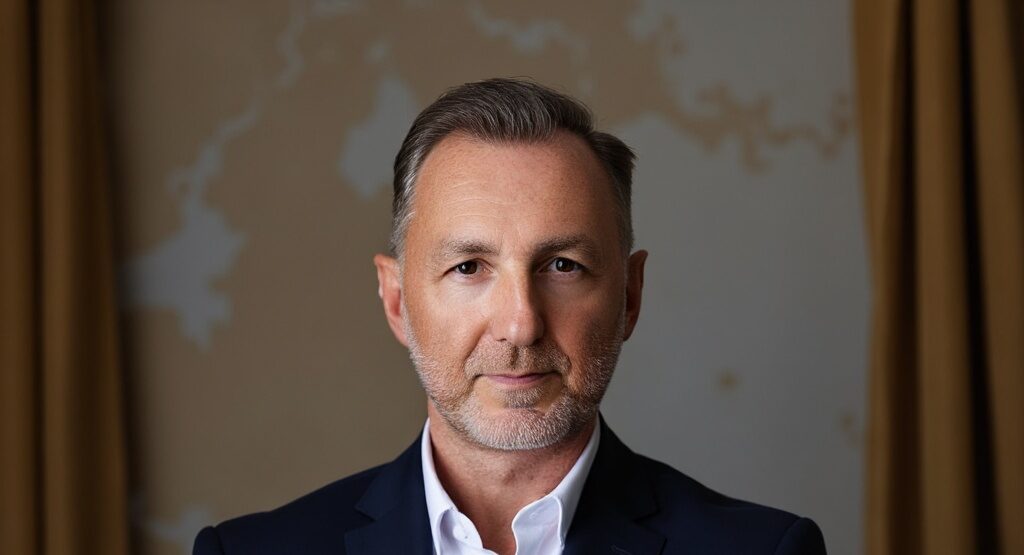
Energy is the fundamental currency of geopolitical stability and economic growth. The future will not belong to those who merely produce energy, but to those who can integrate it, combining generation, storage, and management into a cohesive ecosystem
– Dr. Marcin Sołtysiak
In the complex landscape of European energy transformation, where geopolitical tensions intersect with climate imperatives, few leaders have demonstrated the rare fusion of financial acumen, engineering vision, and geopolitical insight that defines transformative leadership. Dr. Marcin Sołtysiak stands as a testament to what emerges when investor instinct converges with infrastructure reality and an unwavering commitment to energy sovereignty.
His journey represents a masterclass in strategic reinvention. When most investors saw risk in a struggling manufacturing company, Dr. Sołtysiak saw a platform for revolution. In 2012, he acquired ELQ, a traditional transformer station manufacturer with roots stretching back to 1976. What appeared to be a conventional industrial acquisition was, in reality, the foundation stone of what would become one of Central and Eastern Europe’s most dynamic energy transformation ecosystems.
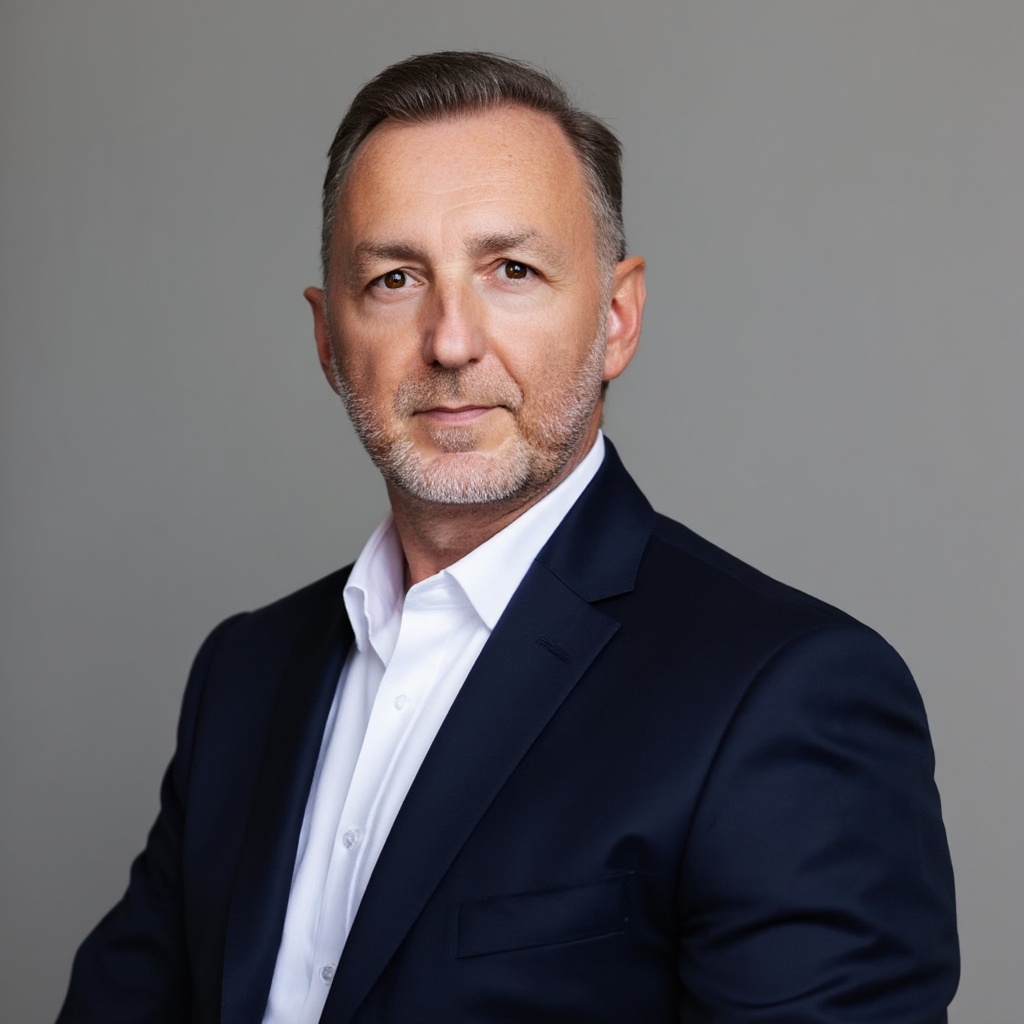
“My journey was not linear; it was driven by the understanding that energy is the fundamental currency of geopolitical stability and economic growth,” Dr. Sołtysiak reflects. “I realized that the future would not belong to those who merely produce energy, but to those who can integrate it, combining generation, storage, and management into a cohesive ecosystem.”
Today, as ELQ Group approaches its 50th anniversary, the transformation is complete. From a single manufacturing facility to a comprehensive energy solutions provider with projects valued at over €2 billion, Dr. Sołtysiak’s vision has reshaped not just a company, but the energy infrastructure of an entire region.
THE CONVERGENCE OF TWO WORLDS: WHERE FINANCE MEETS INFRASTRUCTURE
What distinguishes Dr. Sołtysiak’s approach is his unique ability to navigate two seemingly incompatible domains. His background as an investor equipped him with the financial engineering skills to structure complex capital arrangements. His immersion in energy infrastructure gave him the technical credibility to execute at scale. The convergence of these worlds created something unprecedented in the region.
“My inspiration was the convergence of two worlds: tangible infrastructure engineering and the powerful world of financial engineering and economic theory,” he explains. This dual competency became the foundation of ELQ’s competitive advantage, enabling the company to not just build energy infrastructure, but to finance, develop, and operate it as integrated assets.
The decision to completely transform ELQ’s business model from product manufacturer to comprehensive EPC (Engineering, Procurement, Construction) service provider required more than strategic vision. It demanded a cultural revolution within the organization.
“The most decisive moment was the decision to completely change the business model,” Dr. Sołtysiak recalls. “This required a cultural shift within the organization, convincing engineers and managers that we were no longer just selling products, but delivering complete energy solutions.”
PUBLIC MARKETS AND THE DECLARATION OF MATURITY
The company’s debut on the NewConnect market of the Warsaw Stock Exchange represented far more than a capital raising event. It was a declaration of transparency and institutional maturity in an industry where opacity often prevails.
“This was a declaration of transparency and maturity,” Dr. Sołtysiak notes. “It taught me that in this industry, trust and credibility are just as important as the technology itself.”
The rigorous process of preparing for public markets forced organizational discipline that would prove invaluable in subsequent years. Financial reporting standards, governance frameworks, and stakeholder communication protocols developed during this period became embedded in ELQ’s operational DNA.
This public market experience also shaped Dr. Sołtysiak’s conviction about the relationship between transparency and resilience. “Steering the company through this rigorous process shaped my conviction that resilience is the most valuable currency in business,” he reflects.
THE 360° MODEL: OWNING THE COMPLETE VALUE CHAIN
Dr. Sołtysiak’s leadership philosophy crystallized into what ELQ calls the “360° Model,” a comprehensive approach to energy project delivery that encompasses development, financing, execution, and long-term operation. This holistic framework distinguishes ELQ from competitors who specialize in isolated segments of the value chain.
“My philosophy rests on the 360° Model concept we implemented at ELQ,” Dr. Sołtysiak explains. “It means seeing the full picture: development, financing, execution, and long-term operation. As a leader, I do not micromanage the engineering, but I meticulously design the strategy.”
Central to this philosophy is the concept of “sovereign competencies,” the strategic decision to own critical elements of the value chain rather than outsourcing them. This led to ELQ’s investment in prefabrication plants in Częstochowa and the development of specialized in-house teams.
“I believe in sovereign competencies. This means we must own the critical parts of the value chain,” Dr. Sołtysiak emphasizes. “In high-stakes projects, especially those we are developing in Ukraine with a value exceeding €2 billion, one cannot rely solely on outsourcing. You have to hold the reins of quality and timeliness firmly in your hands.”
This vertical integration strategy reached full expression in 2025 with production capacity reaching 4,500 stations annually, giving ELQ unprecedented control over supply chains and delivery schedules.
THREE STRATEGIC DECISIONS THAT DEFINED EXPONENTIAL GROWTH
ELQ’s transformation from regional manufacturer to continental energy solutions provider resulted from three decisive strategic choices, each representing a calculated bet on future market evolution.
The first was vertical integration. Rather than remaining dependent on external suppliers, ELQ invested in expanding manufacturing capacity and launching new facilities. This required substantial capital but delivered strategic autonomy.
The second was aggressive diversification into renewable energy sources. “We didn’t wait for the market to shift; we actively entered the wind and photovoltaic sectors as a general contractor,” Dr. Sołtysiak explains. This proactive positioning meant ELQ captured market share as European energy policy accelerated renewable deployment.
The third decision, and perhaps the most prescient, was the establishment of ELQ Defence. Recognizing that energy infrastructure represents primary targets in modern conflicts, ELQ combined its automation expertise with defense technologies.
“Understanding that energy infrastructure is a primary target in modern conflicts, we combined our expertise in automation with defense technologies,” Dr. Sołtysiak notes. “This unique positioning allowed us to serve not only commercial clients but also national security interests, which significantly differentiates us from the competition.”
This defense focus would prove strategic as geopolitical tensions elevated energy security to the top of European policy agendas.
INNOVATION WITHOUT RECKLESSNESS: THE EVOLUTIONARY APPROACH
In an industry where reliability determines national security and economic stability, innovation carries existential risks. Dr. Sołtysiak’s approach balances technological advancement with proven reliability, avoiding the Silicon Valley mentality of “move fast and break things.”
“Innovation in energy cannot be reckless; it must be evolutionary and proven,” Dr. Sołtysiak emphasizes. “We approach this through our R&D facilities, focusing on practical applications, such as integrating energy storage with SCADA systems to stabilize the grid.”
ELQ’s innovation strategy involves partnering with proven global leaders like ABB and Siemens for core technologies while introducing innovation at the integration layer. Artificial intelligence applications focus on predictive maintenance and infrastructure protection rather than experimental deployments.
“We collaborate with global leaders to ensure our core technology is proven, while we introduce innovation at the integration level,” Dr. Sołtysiak explains. “It is about leveraging modern technologies to enhance reliability, not to compromise it.”
FROM GREENWASHING TO GREEN PLATINUM: MEASURABLE SUSTAINABILITY
In an era where sustainability claims often exceed reality, Dr. Sołtysiak has positioned ELQ as a standard bearer for verifiable environmental impact. The company’s approach to CO₂ reduction is grounded in rigorous adherence to EU Taxonomy and UN Sustainable Development Goals.
“We strictly adhere to the EU Taxonomy and the UN Sustainable Development Goals. Greenwashing is not an option when dealing with institutional capital,” Dr. Sołtysiak states. “Every project we touch, whether a PV farm or a wind park, is analyzed for its carbon footprint and environmental impact right from the design phase.”
His personal involvement as co-creator of the Carbon Free Flights initiative demonstrates commitment extending beyond corporate boundaries. This program creates direct, measurable links between green energy investment and aviation emission offsets.
“I am personally a co-creator of the Carbon Free Flights initiative. This is proof of my belief that we must look beyond the energy grid itself, to aviation and heavy industry,” Dr. Sołtysiak explains. “By financing green energy projects that offset specific industrial emissions, we create a direct, measurable link between investment and carbon reduction.”
THE HYDROGEN REVOLUTION: FROM FUTURE FUEL TO PRESENT REALITY
While industry analysts debate which technologies will dominate future energy systems, Dr. Sołtysiak has placed strategic bets based on industrial logic rather than market hype. His focus on Small Modular Reactors combined with hydrogen production reflects a sophisticated understanding of baseload requirements and industrial decarbonization.
“If I have to choose the game-changer of the coming decade, it will be SMRs combined with Hydrogen,” Dr. Sołtysiak predicts. “RES are already established, but they are intermittent sources. We are pursuing a model different from the market, betting on small modular reactors with a capacity of 50 MW, which can be assembled as modules.”
This strategic vision found concrete expression in ELQ’s current implementation for Promet-Plast in Lower Silesia, one of the most advanced hydrogen installations in Central and Eastern Europe. Valued at over PLN 460 million, the project integrates green RFNBO hydrogen production with hybrid RES and gravity energy storage.
“Production on the order of 1.7 million kg of hydrogen annually in Gaj Oławski shows that we are no longer talking about hydrogen as the fuel of the future, but treating it as a real fuel for industrial decarbonization here and now,” Dr. Sołtysiak emphasizes.
The project demonstrates ELQ’s ability to move beyond pilot projects to industrial-scale implementation, positioning the company at the forefront of Europe’s hydrogen economy.
THE ECONOMICS OF SUSTAINABILITY: DISSOLVING FALSE DICHOTOMIES
A frequent critique of renewable energy emphasizes the supposed conflict between economic viability and environmental responsibility. Dr. Sołtysiak, drawing on his PhD in economics, rejects this framing entirely.
“As a PhD in economics, I maintain that there is no longer a conflict between economics and the environment. Green energy is currently often the cheapest energy,” he states. “The challenge lies in the capital structure.”
ELQ’s approach focuses on long-term efficiency metrics rather than short-term cost comparisons. The company’s prefabricated stations reduce investment time by 30 to 40 percent, accelerating return on investment for project developers.
“Faster deployment means a faster ROI,” Dr. Sołtysiak explains. “We prove to investors that green assets carry lower long-term risk and higher resilience to regulatory changes, making them the superior economic choice.”
This economic framing has proven persuasive with institutional investors who increasingly view sustainability through a risk management lens rather than viewing it as philanthropic activity.
UKRAINE: WHERE ENERGY SECURITY BECOMES NATIONAL SECURITY
ELQ’s engagement in Ukraine through ELQ Investments represents one of the most ambitious strategic moves in Dr. Sołtysiak’s career. With a project portfolio valued at over €2 billion in wind, solar, and waste-to-energy, the initiative operates at the intersection of private capital and public necessity.
“In Ukraine, energy security is national security. You cannot have a sovereign state without independent energy generation,” Dr. Sołtysiak observes. “By building distributed renewable sources, we make the grid more resilient to attacks compared to centralized, Soviet-era power plants.”
The strategic logic extends beyond humanitarian considerations. Ukraine’s energy reconstruction represents an opportunity to build 21st-century infrastructure rather than rebuilding 20th-century systems.
“The opportunity lies in the ability to make a technological leap. We are not rebuilding the old grid; we are building a new, decentralized, decarbonized, and digital grid from scratch,” Dr. Sołtysiak explains.
Managing war risk required innovative financial structures. ELQ Investments finances Ready-to-Build projects with war risk insurance, cooperating with international financial institutions to secure guarantees.
“The opportunity lies in the fact that Ukraine will likely become a major exporter of green energy to the EU, and being a first-mover there allows us to shape this future infrastructure,” Dr. Sołtysiak notes.
CROSS-BORDER INTEGRATION: BUILDING EUROPEAN ENERGY SOVEREIGNTY
Dr. Sołtysiak’s vision extends beyond individual projects to systemic European energy integration. His work involves connecting Polish engineering with Ukrainian resources and Western capital, specifically through a SICAV fund structure launching in Prague.
“Energy respects no borders. We need a unified European grid,” Dr. Sołtysiak emphasizes. “My work involves connecting Polish engineering with Ukrainian resources and Western capital.”
This cross-border approach enables resource balancing across the continent. Wind resources from Northern and Eastern Europe can complement solar generation from Southern regions, creating a more resilient overall system.
“Cross-border cooperation allows for balancing: wind from the North and East can balance sun from the South,” Dr. Sołtysiak explains. “Strengthening interconnectors and standardizing technology is the only way for Europe to achieve energy sovereignty independent of fossil fuel imports.”
ELQ’s commitment to EU standard-compliant components supports this integration agenda, ensuring interoperability across national boundaries.
ACADEMIC RIGOR MEETS INDUSTRIAL REALITY
Dr. Sołtysiak’s doctoral thesis on managing photovoltaic farm construction projects was not merely an academic exercise. The research analyzed the development processes on one of ELQ’s largest energy projects, creating a feedback loop between theory and practice.
“My academic background enforces a disciplined approach to risk. My doctorate was not merely theoretical; it analyzed the management of development processes on one of our largest energy projects at the time,” Dr. Sołtysiak explains. “The research conducted on that project served as an excellent foundation for developing and scaling projects that are several times larger today.”
This academic rigor proves particularly valuable when structuring complex financial vehicles and communicating with investment committees.
“It taught me to view projects not just as construction sites, but as financial assets with a specific risk profile,” Dr. Sołtysiak notes. “When I speak to investment committees, I speak their language of valuation and risk mitigation, backed by engineering reality.”
Yet Dr. Sołtysiak also recognizes significant gaps between academic theory and industrial execution, particularly regarding schedules and supply chain realities.
“The widest gap concerns schedules and supply chain realities. Theory often assumes a frictionless market. In reality, we grapple with permitting delays, grid connection refusals, and component shortages,” he observes.
The human factor represents another area where academic models fall short. “Academia also often underestimates the human factor, the need for skilled teams to execute these plans,” Dr. Sołtysiak adds. “You can model a project in a spreadsheet, but you need experienced engineers to build it in the field.”
This recognition drives ELQ’s investment in its team of 178 specialists, understanding that human capital ultimately determines execution quality.
THE INVESTOR’S LENS: EVALUATING LONG-TERM VALUE CREATION
As an investor and advisor to Momentum Capital, Dr. Sołtysiak applies rigorous criteria to evaluate energy transformation projects. His framework focuses on three core dimensions: Scalability, Connectivity, and Compliance.
“I look for three things: Scalability, Connectivity, and Compliance,” Dr. Sołtysiak explains. “Is the project scalable or a one-off? Can it be connected to the grid and potentially integrated with storage or hydrogen production? And is it fully compliant with the EU Taxonomy?”
Projects failing these criteria risk becoming stranded assets as regulatory frameworks evolve. Dr. Sołtysiak focuses on what he terms “Green Platinum” standard assets that are high quality, sustainable, and bankable.
“Assets that do not meet these criteria will become stranded assets in the future,” he warns. “I focus on projects that fit the Green Platinum standard.”
INNOVATIVE FINANCIAL STRUCTURES: UNLOCKING CENTRAL AND EASTERN EUROPE
Accelerating energy transition in Central and Eastern Europe requires financial innovation tailored to regional characteristics. Dr. Sołtysiak has pioneered two particular structures that address market-specific barriers.
The SICAV (Investment Company with Variable Capital) structure aggregates diverse RES assets into a single investment vehicle, allowing institutional investors to enter the market with diversified risk.
“The SICAV structure is highly effective in aggregating diverse RES assets into a single investment vehicle. It allows institutional investors to enter the market with diversified risk,” Dr. Sołtysiak explains.
The EPC plus Finance model addresses a common bottleneck where investors possess licenses but lack technical capacity or financing.
“Investors often have a license but lack technical capacity or financing. By bridging this gap, providing technology and assisting in debt structuring, we unlock projects that would otherwise remain on paper,” Dr. Sołtysiak notes.
ESG AS ENTERPRISE VALUE: THE SUSTAINABILITY PREMIUM
Dr. Sołtysiak rejects the framing of sustainability as corporate social responsibility separate from value creation. In his view, sustainability directly drives enterprise value through capital cost advantages.
“Value creation today is sustainability. Companies with high ESG ratings attract cheaper capital,” Dr. Sołtysiak states. “At ELQ, our commitment to sustainability, from production processes to office culture, makes us a preferred partner for global giants. This directly increases our enterprise value.”
This approach demonstrates what Dr. Sołtysiak terms “responsible business is profitable business,” dissolving the perceived tension between financial returns and environmental impact.
AWARDS AS RESPONSIBILITY: THE BURDEN OF RECOGNITION
Dr. Sołtysiak has received numerous national and international awards recognizing his contributions to energy transformation. Rather than viewing these as validation alone, he frames them as accountability mechanisms.
“Awards are a validation, but they are also a burden of responsibility. They mean the industry is watching our hands,” Dr. Sołtysiak reflects. “Being recognized as a Visionary Leader forces me to strive harder, not to rest on ELQ’s success, but to take risks in Ukraine or in new technologies like hydrogen.”
The recognition also creates mentorship obligations. “It compels me to be a mentor and an advocate for the sector,” he adds.
THE EUROPEAN ECONOMIC SENATE: A PLATFORM FOR SYSTEMIC INFLUENCE
Dr. Sołtysiak’s appointment as an Honorary Senator of the European Economic Senate represents more than personal recognition. It provides a platform to influence regulatory frameworks and advocate for entrepreneurship-friendly policies.
“Personally, it is a great honor. Professionally, it gives me a voice in Brussels and beyond,” Dr. Sołtysiak explains. “It allows me to advocate for sensible regulations that support entrepreneurship and the energy transition.”
The role represents an opportunity to shape the ecosystem rather than merely operating within it, particularly in promoting Central and Eastern European interests within broader EU economic discussions.
“It is a platform to promote the interests of Central and Eastern Europe in the broader EU economy,” he notes.
BUILDING COMPETITIVE EUROPE: REPATRIATING CRITICAL SUPPLY CHAINS
Dr. Sołtysiak views business leaders as bearing responsibility for building European industrial competitiveness through strategic investment decisions. This means moving beyond consumption of Asian technology to domestic manufacturing capability.
“By investing in Deep Tech and manufacturing within Europe, we cannot be mere consumers of Asian technology. We must build our own,” Dr. Sołtysiak emphasizes.
ELQ’s investment in a new factory in 2025 represents his contribution to this broader industrial strategy.
“Leaders must repatriate critical supply chains and invest in local talent. That is how we build a competitive, resilient Europe,” he adds.
ADAPTIVE RESILIENCE: LEADING THROUGH PERPETUAL DISRUPTION
When asked about critical leadership traits for navigating today’s energy landscape, Dr. Sołtysiak emphasizes adaptive resilience and radical transparency.
“The landscape changes overnight, regulations, prices, geopolitics. A leader must be able to pivot quickly without losing sight of the long-term vision,” he explains.
Transparency serves as the foundation for long-term stakeholder trust in an environment prone to greenwashing and misinformation.
“In a world of fake news and greenwashing, radical transparency builds the trust necessary for long-term survival,” Dr. Sołtysiak notes.
THE NEXT 20 YEARS: DECENTRALIZATION, DIGITALIZATION, AND THE PROSUMER REVOLUTION
Looking forward, Dr. Sołtysiak envisions fundamental restructuring of global energy systems around three core transformations: decentralization, digitalization, and the prosumer revolution.
“We will see the death of the centralized baseload energy model as we know it. The future is a decentralized grid of RES, SMRs, and storage, managed by AI,” he predicts.
Energy will transition from a physical commodity to a digital one, traded in real-time by automated systems. Consumers will evolve into prosumers on a mass scale, generating and trading their own energy.
“Energy will become a digital commodity, traded in real-time by automated systems. Consumers will become prosumers on a mass scale,” Dr. Sołtysiak explains.
Hydrogen will gradually replace natural gas as the primary fuel for industrial applications, completing the decarbonization of sectors that cannot easily electrify.
“Hydrogen will eventually replace gas as the fuel for industry,” he adds.
A LEGACY OF CONCRETE ACTION: ENGINEERING THE FUTURE
When asked about the legacy he hopes to leave, Dr. Sołtysiak’s response reflects his engineering mindset and commitment to tangible results.
“I hope to leave a legacy under the banner of Engineering the Future. I want to be remembered as someone who didn’t just talk about the green transition, but who poured concrete, built networks, and structured capital to make it a reality,” Dr. Sołtysiak states.
His professional footprint includes specific aspirations: a rebuilt, green Ukraine and a secure, energy-independent Poland.
“Specifically, I hope to see a rebuilt, green Ukraine and a secure, energy-independent Poland as part of my professional footprint. If the ELQ Group and my investments contribute to this stability and cleanliness, my mission will be fulfilled,” he explains.
Yet beyond physical infrastructure, Dr. Sołtysiak’s legacy also encompasses the collaborative relationships that enabled his vision.
“I have always dreamed of building a project that would be recognized and perceived positively around the world. I am glad that on my path to success I met many positive people who believed in my visions of the future and are helping me realize them. This empowers me even more,” he reflects.
THE ARCHITECT OF ENERGY SOVEREIGNTY
Dr. Marcin Sołtysiak represents a new generation of European industrial leaders who understand that energy transformation requires more than technological innovation. It demands financial engineering, geopolitical awareness, strategic patience, and unwavering commitment to measurable environmental impact.
His career demonstrates that sustainable energy infrastructure can be both profitable and purposeful, that private capital can serve public interest, and that Central and Eastern Europe can lead rather than follow in the energy transition.
Through ELQ Group, Dr. Sołtysiak has created not just a company but a comprehensive ecosystem for energy transformation encompassing manufacturing, development, financing, and operation. His investments in Ukraine demonstrate courage in pursuing strategic vision despite geopolitical risk. His commitment to hydrogen industrialization shows willingness to move beyond rhetoric to implementation.
As Europe navigates the complex transition from fossil fuel dependence to renewable abundance, leaders like Dr. Sołtysiak provide essential infrastructure both physical and institutional. His example proves that energy sovereignty is achievable through strategic investment, vertical integration, and commitment to sovereign competencies.
The future of European energy security will be shaped by leaders who combine investor discipline with engineering reality, who understand that energy is simultaneously an economic commodity, a geopolitical lever, and an environmental imperative. Dr. Marcin Sołtysiak’s career provides a roadmap for this integration, demonstrating that principled leadership can drive continental transformation when backed by capital, capability, and conviction.
Standing at the threshold of ELQ’s 50th anniversary, Dr. Sołtysiak has transformed a traditional manufacturing company into a platform for Europe’s energy future. Through concrete, cables, and capital structures, he is engineering the transition from dependence to sovereignty, from fossil to renewable, from centralized to distributed. This is the legacy of a leader who understood that energy is indeed the fundamental currency of stability and growth, and who dedicated his career to ensuring that currency flows toward a sustainable future.