“Leadership is not control. It is connection. It is the ability to take multiple, distinct human truths and weave them into one shared direction, without erasing what makes each perspective valuable.”
– Ragne Sinikas
BORN WHERE THE CEILING WAS BUILT INTO THE SYSTEM
There is a particular kind of ambition that forms in the absence of permission. Ragne Sinikas grew up in Soviet-era Estonia, a place where private enterprise was not simply difficult. It was illegal. There were no entrepreneurs to observe, no investors to emulate, no role models who had built something from nothing through vision and sheer will. What existed instead was a culture of collective survival and an unspoken understanding that if you wanted something different, you would first have to be able to imagine it.
That upbringing forged something in Sinikas that prosperity alone rarely produces: the capacity to build from zero, in conditions of genuine uncertainty, without a roadmap. And then, almost overnight in the arc of history, the ceiling dissolved. Estonia emerged from Soviet occupation and began one of the most remarkable national reinventions of the modern era. A country of 1.3 million people, with no private equity infrastructure and no entrepreneurial framework, would go on to produce Skype, Bolt, and the world’s first fully digital government. Per capita, Estonia would generate more unicorns than nearly any nation on earth.
Sinikas carried that transformation personally. Her first significant leadership test came when she was entrusted with running operations for IWG, the International Workplace Group, across Estonia, Latvia, Lithuania, and Finland simultaneously. Four countries. Four entirely distinct cultures, each with its own unspoken rules around trust, hierarchy, and how business was actually conducted. The scope was demanding in ways that no single-market career could replicate. It was also, in a specific and lasting way, liberating.
“I am forever grateful to IWG for giving me that opportunity,” she reflects, “for trusting me with that scope, and for the knowledge and experience I gained that became the foundation of everything I have built since.” The company gave her the infrastructure. Her natural drive to lead, formed in a country that once made leading impossible, did the rest.
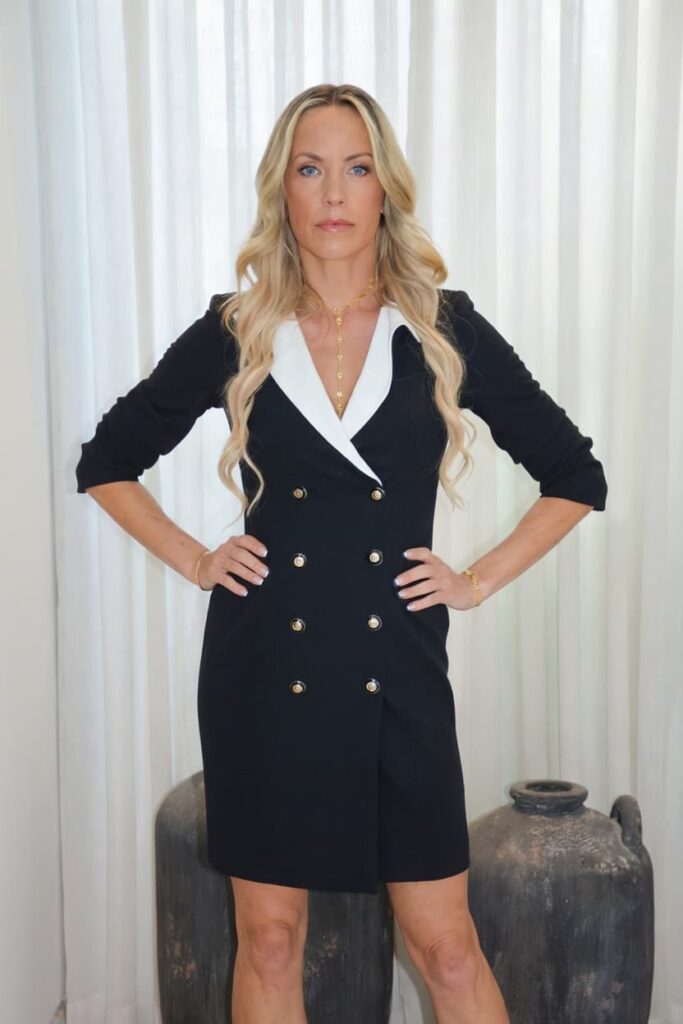
“Leadership is not control. It is connection. It is the ability to take multiple, distinct human truths and weave them into one shared direction, without erasing what makes each perspective valuable.”
THE NORDIC REVELATION: WHAT NORMAL CAN LOOK LIKE
Among the lessons Sinikas absorbed during her years with IWG, one arrived not through a challenge overcome but through a model witnessed. Finland introduced her to something she had not encountered before with such consistency: women leading at the highest levels of business as a matter of course, not as a novelty, not as an achievement requiring comment, but simply as normal.
In the Nordic countries, the structural architecture of business had been deliberately designed over decades to make talent visible regardless of gender. Women were not fighting for a seat at the table. They were already at the head of it, and they occupied that position with precision, warmth, and an unshakeable self-possession that left a permanent mark on how Sinikas understood what leadership could look like.
The contrast with other environments she had worked in crystallized something fundamental in her thinking. Empowerment, she came to understand, is not about motivation. It is about structure. You cannot tell a woman to believe in herself and expect the system to change. You have to build the environment where her belief is matched by real opportunity. That insight would eventually become the founding logic of everything she created next.
WWCA: BUILDING THE STRUCTURE THAT EMPOWERMENT ACTUALLY REQUIRES
The World Women Conference and Awards was not born from a general desire to support women in business. It was born from a specific, recurring observation Sinikas had made across years of operating in investment circles: capital consistently flowed toward people who already looked, spoke, and networked like those who held it. Brilliant women pitched ideas that were dismissed in thirty seconds while less compelling ideas from men in the same room received follow-up meetings and term sheets.
“It was not always malicious,” she notes with the clarity of someone who has examined this pattern from multiple angles. “Often it was simply the invisible architecture of familiarity.” The solution she designed addresses that architecture directly. WWCA is not a motivational platform. It is a structural intervention: a global conference and awards ecosystem that gives women genuine visibility, access to capital, and the community connections that in most industries remain gated behind informal networks that were never built to include them.
The measure of success she returns to is not attendance figures or award categories. It is the woman who arrives uncertain of her place and leaves with a partnership she had not anticipated, a mentor she had not known she needed, and a version of herself she had not yet encountered. That outcome, replicated across continents and through different stages of a woman’s professional life, is what Sinikas is building toward with each iteration of WWCA.
“You cannot simply tell a woman to believe in herself and expect the system to change. You need to build the environment where her belief is matched by real opportunity.”
STONE BY STONE: THE EDUCATION OF A REAL ESTATE INVESTOR
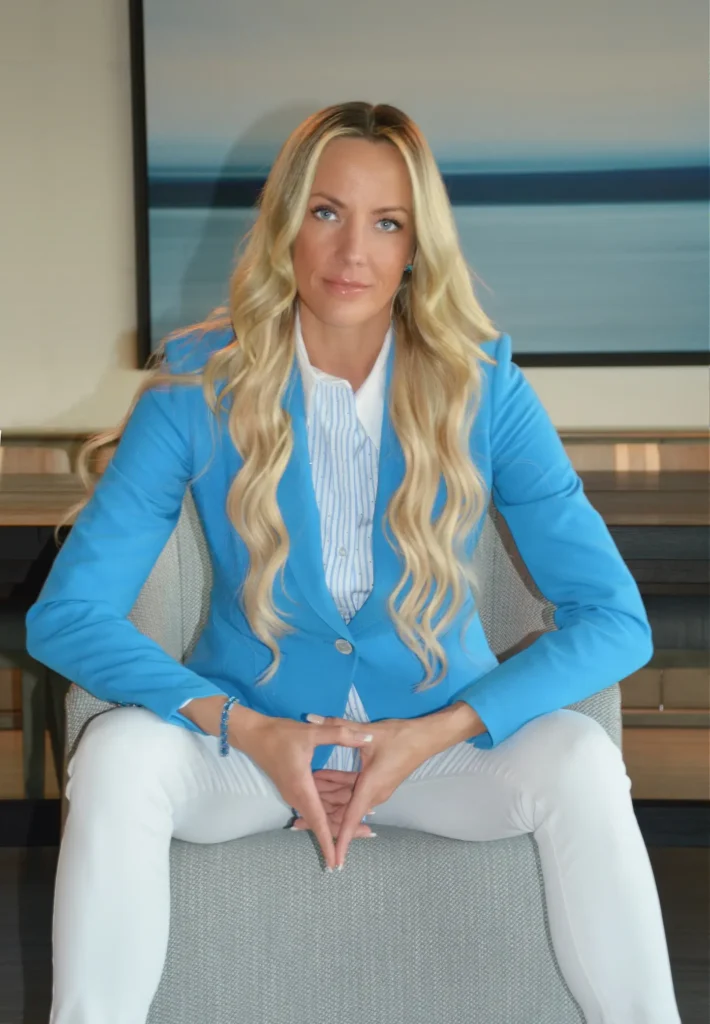
Sinikas’s entry into real estate came through an apprenticeship of the most rigorous kind. Working alongside visionary investors from Italy who had chosen Estonia as the canvas for their ambitions, she was brought into every dimension of the development process: deal evaluation, design, financing structures, the meticulous restoration of UNESCO-protected heritage buildings in Tallinn’s Old Town. These were not timid investors. They were builders with the conviction to see transformational potential where others perceived geopolitical risk.
That education opened the door to one of the defining professional relationships of her career: a collaboration with Urmas Sooruma, one of Estonia’s most celebrated urban developers and the creative force behind Rotermanni Kvartal in Tallinn. Rotermanni is not simply a real estate project. It is the transformation of a nineteenth-century industrial quarter into a world-class mixed-use urban destination, a declaration about what post-Soviet Estonia was becoming. Contributing to the conceptual development of that project gave Sinikas an understanding of real estate as a form of leadership: reading a building’s potential the way you read a business, then committing to the patient, precise work of realizing it.
From Tallinn, her real estate work extended to Mexico, where she built commercial developments in the desert heat of Los Cabos and managed furniture manufacturing operations whose high-end products were, on occasion, intercepted by cartels on the highway between Guadalajara and Baja California Sur. “That experience alone teaches you more about risk management, supply chain resilience, and the absolute necessity of local intelligence than any MBA curriculum ever could,” she observes.
THE SOLAR PROJECT AND THE TRUE COST OF POLITICAL RISK
No experience in Sinikas’s career illustrates the gap between technical excellence and real-world resilience more starkly than her involvement as Partner and Angel Investor in BCS Solar: a 55-megawatt solar plant combined with a battery energy storage system in Baja California Sur. The project addressed one of the region’s most urgent needs. Electricity prices were running fifty to eighty-five percent higher than anywhere else in North America, the isolated grid failed regularly, and the entire economic model of Los Cabos was under strain.
The engineering was complete. The term sheet was signed. Partners were aligned, and support had been secured from CENACE, the State of Baja California Sur, and major resort groups including Sheraton, Hampton Inn, and Diamante Resort. Then Mexico elected a new president, who on his first day in office issued a directive halting all new green energy projects across the country. Years of meticulous, urgently needed work were stopped before a single panel was installed.
“I had done everything right. The market needed the project. The technology was proven. The partners were committed. And none of it was sufficient protection against a single political decision made on day one of a new administration.” That experience permanently reshaped how Sinikas evaluates risk in every venture she advises today. Technical excellence and market need are necessary. They are never sufficient. Understanding the political environment, and building resilience against its volatility, is foundational, not optional.
“Action creates clarity. Clarity creates confidence. Confidence changes everything.”
DOMINATE THE DECADE: YOUR STORY IS SOMEONE ELSE’S PERMISSION
Sinikas’s podcast, Dominate the Decade, operates on a premise she arrived at through her own experience of sharing her story and watching what happened. People heard the parts of themselves in her journey that they had been afraid to acknowledge: the entrepreneur operating in a market the world underestimates, the leader who felt like an outsider in rooms not built for her, the woman who grew up without a roadmap and built one anyway.
The single message she wants every listener to carry forward is both simple and quietly radical. Do not wait until your story is perfect to share it. The specific texture of how you navigated your particular terrain of uncertainty is precisely what someone else needs to hear in order to begin. “Somewhere, someone is waiting for precisely the version of courage that only you can show them,” she says. “Your story, however messy or unfinished it feels, is someone else’s permission slip to begin.”
THE CROSS-BORDER LESSONS THAT ONLY EXPERIENCE CAN TEACH
More than fifteen years of building across Europe and Mexico have given Sinikas a set of principles she articulates with the directness of hard-earned conviction. Culture, she has come to understand, is the invisible operating system beneath every business decision. What appears irrational from the outside is almost always rational within a cultural logic that has simply not yet been learned. In Mexico, business is deeply personal: relationships are built before transactions occur, and there is no shortcut. In Estonia, trust is built through consistency and competence. In Italy, passion and precision are not soft qualities. They are the standard against which everything is measured.
Humility, she argues, is a strategic asset, not a soft virtue. The moment you assume you understand a market better than the people living it, you have already compromised your position. Proximity to local reality is non-negotiable, and the most valuable intelligence consistently comes from people genuinely embedded in the communities you are working in. And patience, the quality most frequently sacrificed in the pursuit of speed, is not weakness. It is infrastructure. The ventures built with patience across cultures are, consistently, the ones still standing.
WHAT SUCCESS LOOKS LIKE FROM HERE
Sinikas’s vision for the coming years is both expansive and precise. For WWCA, her ambition is to take the platform to the continents where it is most needed: not to the places where women’s leadership is already celebrated, but to the places where it is still being fought for, where a single conference, a single connection, a single moment of genuine visibility can alter the trajectory of a woman’s life and, through her, the lives of generations that follow.
Her personal motto reflects a conviction she has carried across every boardroom, construction site, and conference stage she has inhabited: energy is the signature you leave in every room you enter. Make it powerful. Make it purposeful. Make it yours. For women standing at the edge of a bold beginning but held back by hesitation, her counsel is unambiguous. The hesitation is not a stop sign. It is a signal that you are standing at the edge of something real enough to feel terrifying and meaningful enough to deserve your courage.
From Soviet-era Estonia, where private enterprise was illegal and the ceiling was built into the system, to boardrooms in Tallinn, construction sites in Los Cabos, and stages that now span continents, Ragne Sinikas has spent her career proving a single thesis. The world was not built by people who were ready. It was built by people who decided.