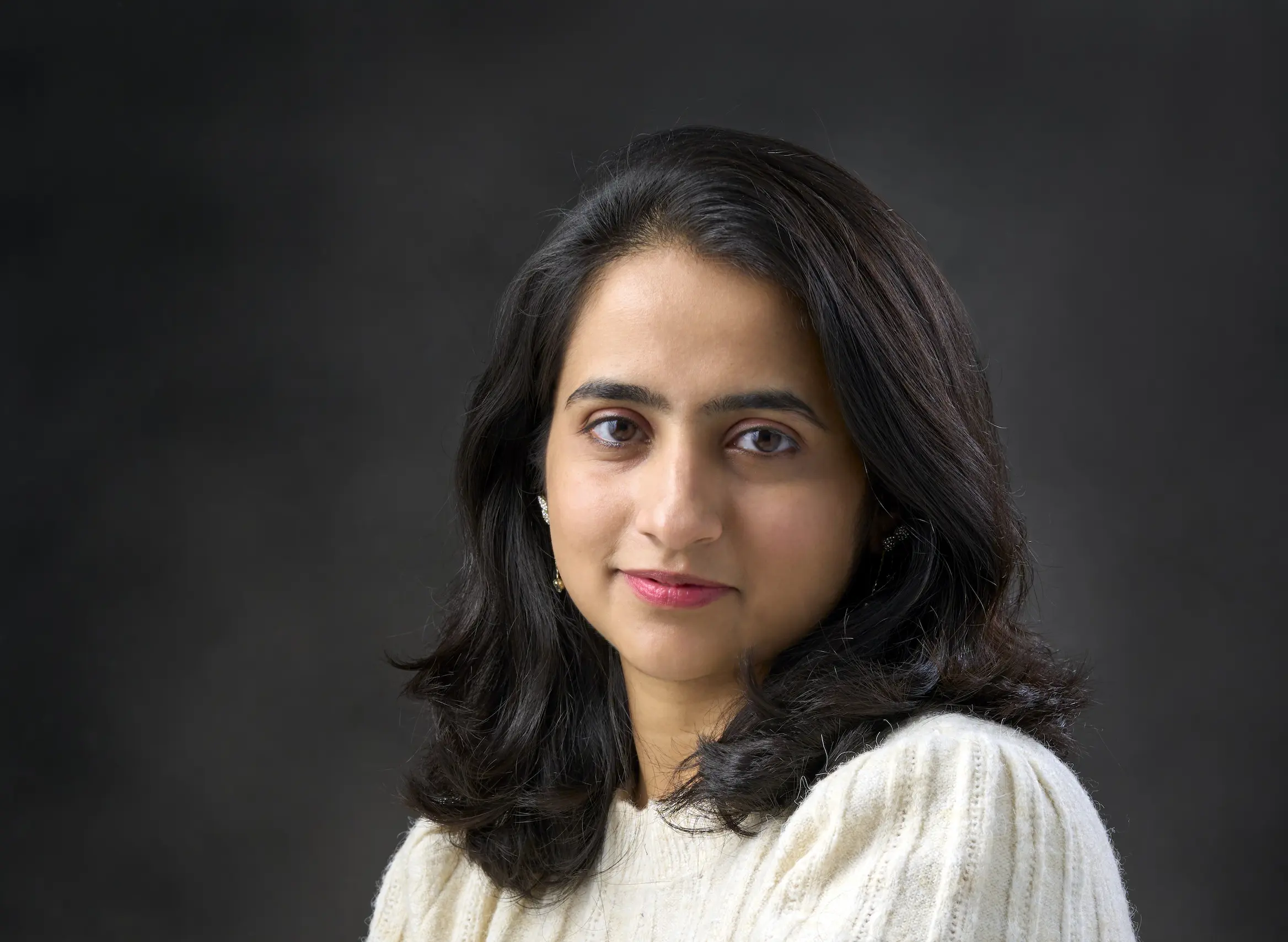
“The tools will evolve, but the act of observing will remain central. No technology can replace the experience of truly seeing a person. That sensitivity will always define portraiture.”
-Dr. Samruddha Purekar
There is a particular kind of attentiveness required to paint a portrait well. It demands more than technical skill or aesthetic instinct. It demands the willingness to truly see another person, to sit with them in silence long enough for something honest to emerge. For Dr. Samruddha Purekar, that willingness has never been a discipline she had to cultivate. It was always simply who she was.
As a student, she would sit with a model and notice how light moved slowly across the plane of a cheek, how a barely perceptible shift in expression could alter the entire emotional register of a face. The smell of linseed oil, the silence of the studio, the patient act of observation: these were not conditions she endured for the sake of craft. They were the experience she came for.
“Portraiture felt like the most honest way to understand a person,” she reflects. “And over time I realised it also becomes a record of human presence that goes beyond time.”
That conviction has guided a career spanning decades of painting, teaching, researching, and creating across disciplines that most artists would consider distinct territories. Dr. Purekar has moved fluidly between the intimacy of the studio and the precision of digital design, between the immediacy of oil on canvas and the structural demands of CNC programming and three-dimensional sculpture. What holds it all together is not a single medium but a singular way of looking.
THE LIVING SURFACE: ALLA PRIMA AND THE TRUTH OF THE FIRST ATTEMPT
At the centre of Dr. Purekar’s painterly practice is her commitment to the Alla Prima Narrative Impressionist style, a technique in which the entire composition is built up in a single session while the paint remains wet. It is an approach that rewards instinct and leaves little room for hesitation, one that demands the artist trust what she sees rather than retreat into revision.
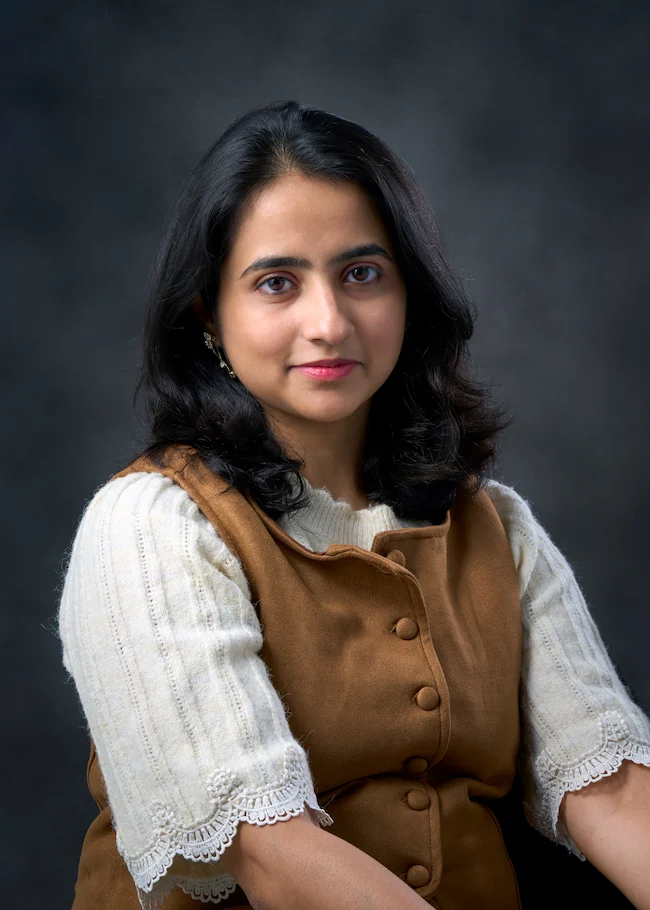
For Dr. Purekar, this is not merely a technical preference but a philosophical one. There is a quality of truth that arrives in the first attempt, she believes, before analysis has had the chance to override perception. A single stroke that catches the light in the right way carries something irreproducible, something more like a lived moment than a crafted effect.
“Sometimes it is just one stroke catching the light correctly,” she says, “like sunlight touching the edge of a leaf for a moment. That quality cannot be recreated.”
The challenge she has set for herself within this discipline is to hold both things simultaneously: the freshness that comes from spontaneity and the underlying structural rigour that prevents freshness from becoming mere improvisation. It is a balance that has taken years to find and that she continues to refine with every canvas she approaches.
“Watching a blank canvas slowly turn into a presence never loses its impact for me. Portraiture quietly records time, identity, changing appearances. That is what keeps it engaging.”
THE SCHOLARLY GAZE: HOW A PHD DEEPENED AN ALREADY MATURE PRACTICE
By the time Dr. Purekar pursued her doctoral research, she was already an experienced artist and educator. The decision to undertake a PhD was therefore not a search for credentials but something more introspective: a structured opportunity to step back and observe her own creative process with the same attention she had long brought to the faces of her subjects.
The research gave her clarity about the threads of continuity running through her work and sharpened her understanding of how thought, observation, and execution relate to one another across different projects and phases. It also deepened her sense of responsibility toward the intellectual and artistic lineage that had shaped her. In an era when automation is increasingly replicating the visible outputs of creative work, Dr. Purekar sees the conscious acknowledgment of human influence and transmission as an act of both integrity and resistance.
In her practice, thinking and making exist as one continuous act. Writing brings the kind of clarity that painting, with all its intuitive richness, sometimes resists. “Painting can be intuitive,” she observes, “but writing brings clarity. It allows me to reflect on what I am doing and why.” The two modes of thinking have become complementary, each informing and sharpening the other.
SAMRUDDHARTE: THE ART OF BEING
Underlying all of Dr. Purekar’s work, across painting, digital processes, sculpture, and education, is a philosophy she has named Samruddharte, which she describes as the art of being. It is not a style or a methodology in the conventional sense but a way of orienting oneself toward material, space, and human presence with full awareness and openness.
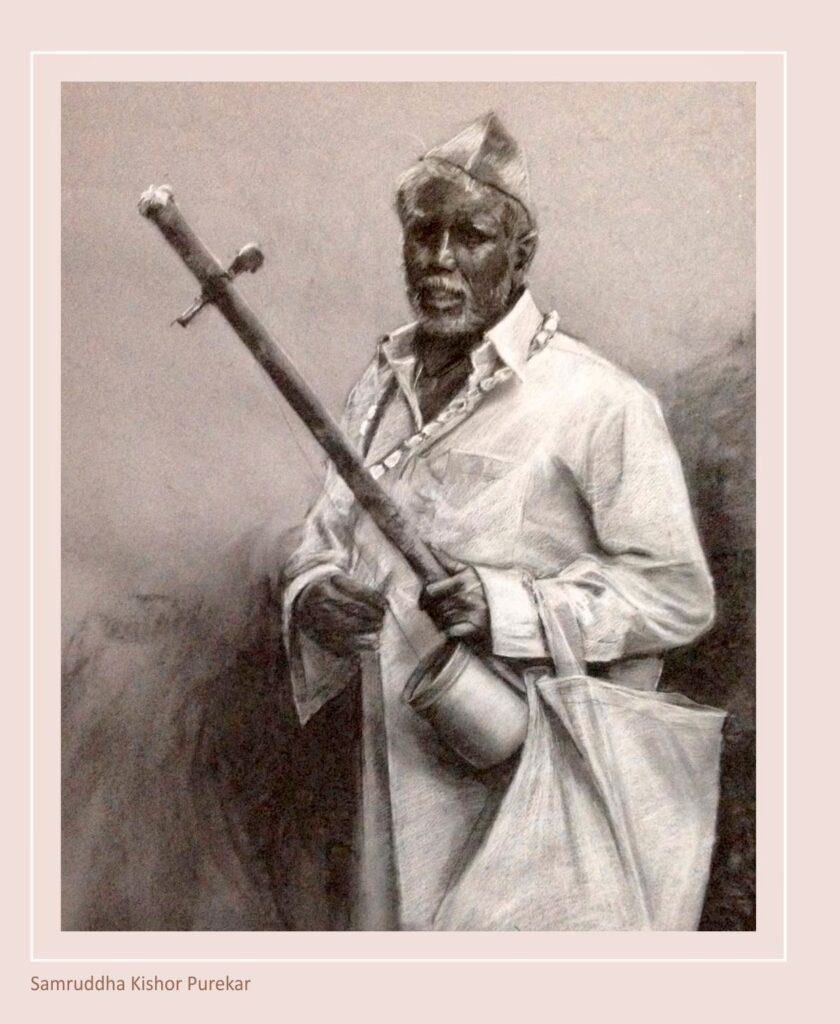
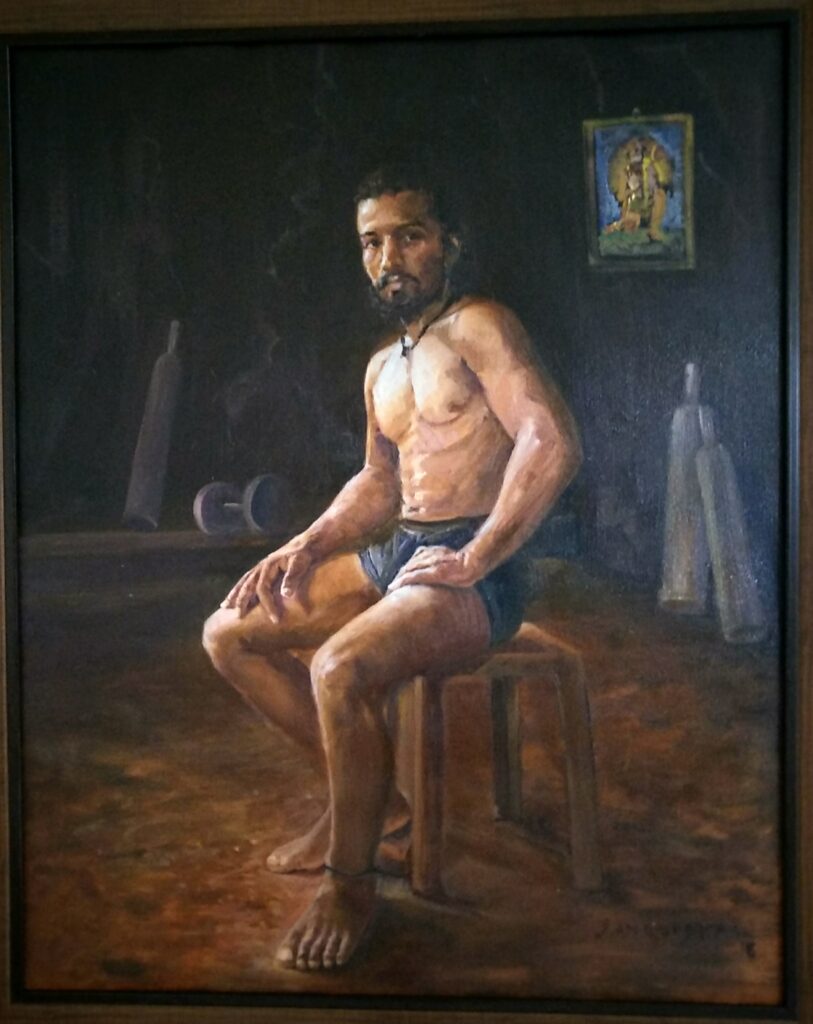
This philosophy is what allows her to move between oil painting and CNC programming without experiencing those as contradictory impulses. Her engagement with digital tools and three-dimensional processes has deepened her understanding of proportion, structure, and spatial form, and that understanding flows back into her paintings as a kind of invisible architecture. Conversely, the intuitive responsiveness she has cultivated as a painter brings warmth and perceptual sensitivity to work that might otherwise remain purely technical.
“This combination has gradually shaped a language that feels fresh and difficult to overlook,” she says, “because it is not limited to a single medium or approach.”
It is a language built over many years of disciplined looking, making, and reflecting, one that continues to evolve as she brings new materials and new questions into her studio. Samruddharte is not a method. It is a way of seeing that precedes method.
JEHANGIR AND BEYOND: THE WORK THAT LIVES WITH OTHERS
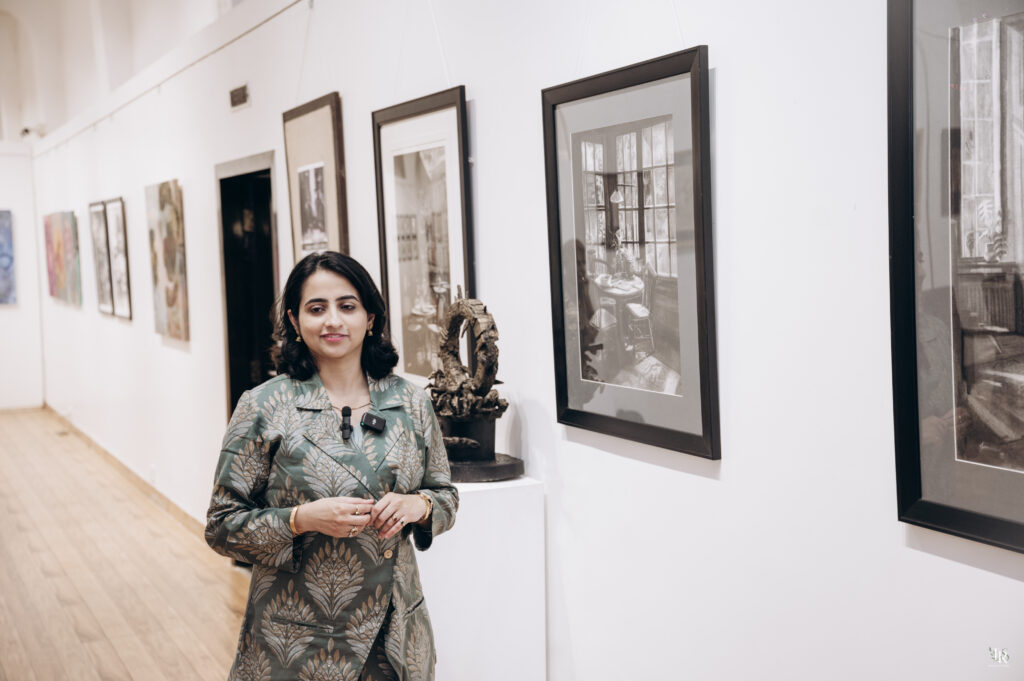
For any Indian artist, an exhibition at the Jehangir Art Gallery in Mumbai carries a particular weight. It is one of the country’s most storied venues for contemporary art, a place where serious work finds serious audiences. For Dr. Purekar, the experience was significant not primarily because of the institutional prestige it represented but because of what it confirmed about the relationship between her work and the people who encountered it.
The works found collectors. Thoughtful remarks filled the visitors’ book. Conversations unfolded that went beyond the usual pleasantries of an opening. What stayed with her was the sense that her paintings had crossed the boundary of the studio and begun to live with others, to exist in spaces she had not imagined and in relationships she had not anticipated.
“That connection with people, and the fact that the work continues to live with others, is something I carry forward,” she reflects. It is a reminder that portraiture, at its deepest level, is always an act of offering. The subject is offered dignity and attention. The viewer is offered a point of genuine human contact.
A DAUGHTER AS MUSE: FOURTEEN YEARS OF PAINTED TIME
Among the most quietly remarkable threads running through Dr. Purekar’s recent work is a sustained body of portraits of her own daughter, painted across fourteen years and counting. Beginning when her daughter was a young child and continuing through adolescence, this ongoing series has become something few artists manage to achieve: an authentic visual document of time itself.
It is a project that could only have emerged from the particular vantage point of a mother who is also an artist. The emotional continuity it carries cannot be manufactured or compressed into a shorter period of work. It accumulates slowly, the way a relationship does, the way understanding does.
When asked about the challenges of being a woman artist in a world that has often dismissed creative women as hobbyists distracted by domestic roles, Dr. Purekar’s response is characteristically direct. Motherhood, she argues, is not a limitation on her practice. It has been one of its most generative forces. “I see these as strengths,” she says. “That journey has added emotional continuity that cannot be created artificially.”
TEACHING AS SHARPENING: THE EDUCATOR WHO KEEPS LEARNING
As an art educator and Creative Director, Dr. Purekar has spent years guiding students through the disciplines that she herself has spent a lifetime deepening. Her approach to teaching reflects the same priorities that govern her studio practice: observation first, always, before production.
In a landscape increasingly saturated with shortcuts and image-generating tools, she brings students back to the foundational act of careful looking. How does light change as it moves across a form? How do planes turn? What does a small shift in the angle of observation reveal that was invisible a moment before? These are the questions she presses her students to sit with, not because the answers are simple but because the practice of asking them builds the perceptual muscles that no shortcut can develop.
Her role as Creative Director has reinforced this commitment to structural awareness. Understanding how forms exist in three-dimensional space and how they are constructed changes the way one paints them. The two domains have been mutually enriching in ways she continues to discover. And teaching, she notes, has its own refining effect on a mature practice. “Constantly explaining and observing different approaches has refined my own thinking and brought a certain depth to my work.”
THE FUTURE OF PORTRAITURE: PRESENCE AS THE IRREDUCIBLE CORE
As artificial intelligence becomes increasingly capable of generating images that mimic the surface qualities of painted work, questions about the future of portraiture have taken on a new urgency. Dr. Purekar approaches these questions without anxiety but with clarity about what technology can and cannot replace.
Tools will evolve. They always have. What will not change, she believes, is the centrality of genuine observation: the willingness to sit with another person long enough to perceive not just their appearance but something of their inner presence. That quality of sustained, sensitive attention is the irreducible core of portraiture, and it is not something that can be automated.
Her advice to aspiring artists is an extension of this conviction. Build your fundamentals carefully and without rushing. Observe more than you produce. Stay consistent across the years when results feel slow and uncertain. “Over time,” she says with the quiet confidence of someone who has lived this truth, “your work will find its own direction.”
In Dr. Samruddha Purekar’s case, that direction has led to a body of work that stands as both artistic achievement and human testimony: portraits that do not merely record appearances but reveal the depth, the dignity, and the irreplaceable particularity of the people they hold.