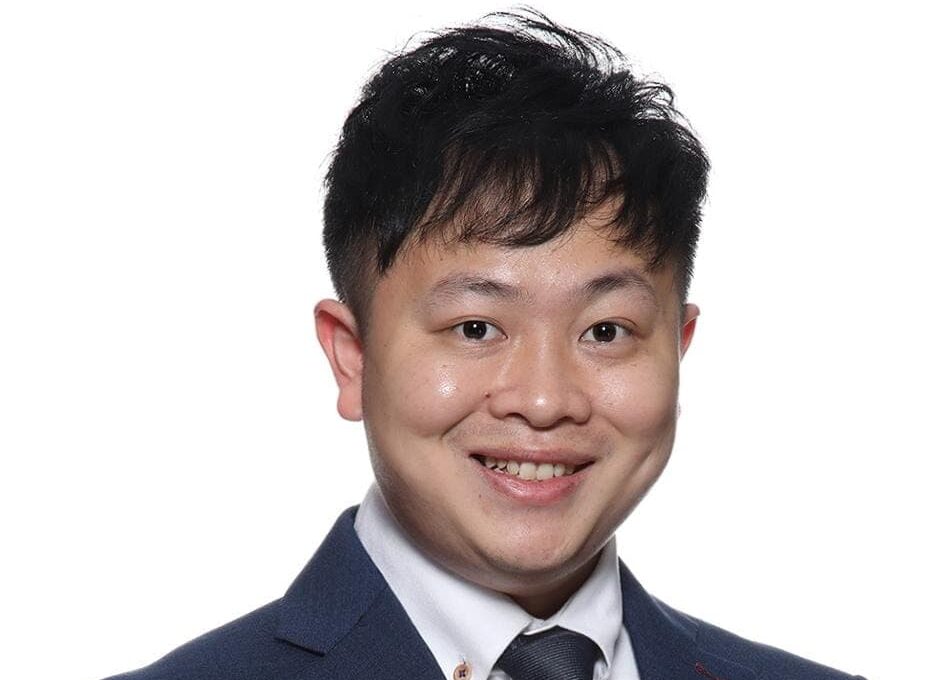
“Residency is not simply where doctors learn clinical skills. It is where the future leaders of healthcare institutions are formed.”
– Dr. Benjamin Jeremiah Wee
FROM CLINICIAN TO INSTITUTION BUILDER: A CAREER SHAPED BY PURPOSE
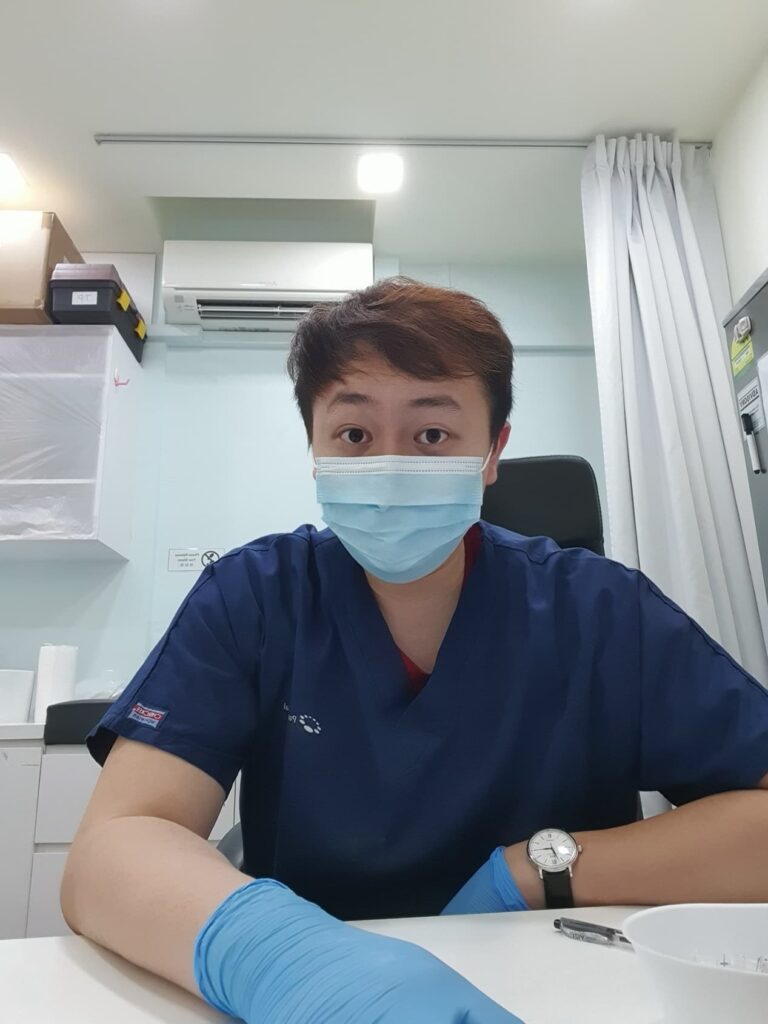
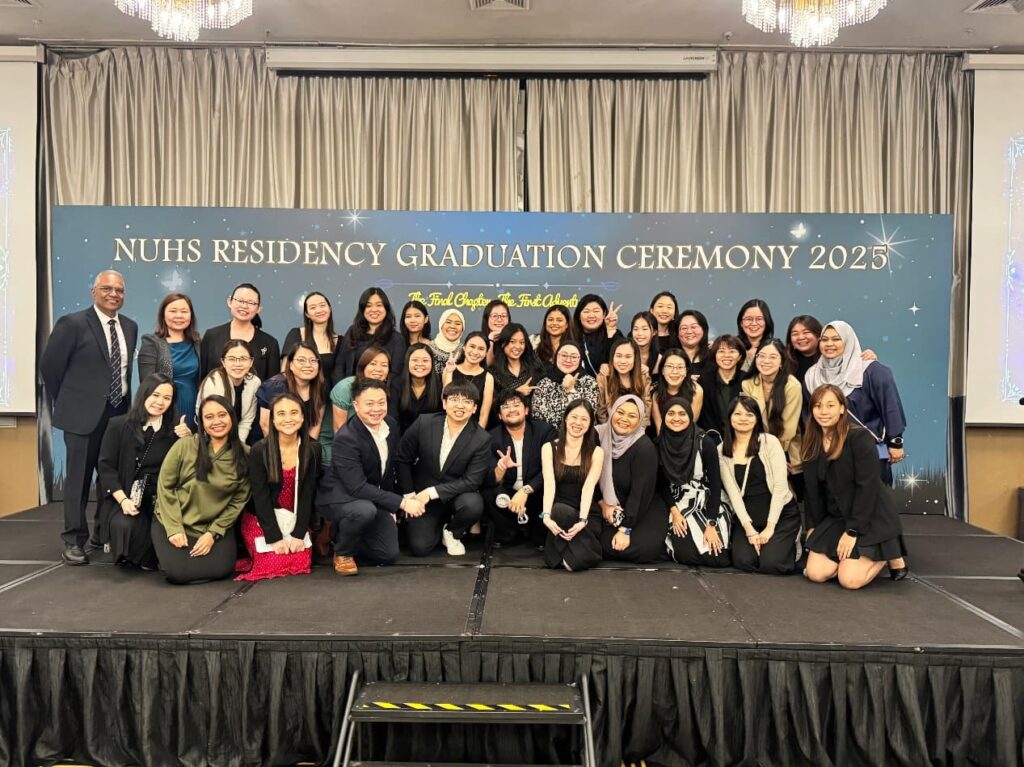
There are administrators who manage systems, and then there are leaders who transform them. Dr. Benjamin Jeremiah Wee belongs firmly to the latter. As Head of Medical Residency and the Group Graduate Medical Education (GME) Office at the National University Health System in Singapore, Dr. Wee oversees nearly a thousand doctors in training across approximately thirty residency programmes, supported by a team of more than fifty administrators. Yet the numbers, as impressive as they are, tell only part of the story.
His journey into healthcare administration was not a departure from medicine but a deepening of it. Having witnessed firsthand how institutional design shapes the quality of care that patients ultimately receive, Dr. Wee became convinced that developing doctors well was one of the most consequential acts of leadership available to anyone in healthcare. That conviction has since become the animating force behind everything he does.
“Residency is not simply where doctors learn clinical skills, It is where the future leaders of healthcare institutions are formed.”
This belief, simultaneously simple and profound, sets the tone for his leadership philosophy. For Dr. Wee, Graduate Medical Education is not a human resources function or a training pipeline. It is a strategic act of nation-building within healthcare.
WORKFORCE DEVELOPMENT AS LEADERSHIP IMPERATIVE
In many healthcare institutions, manpower planning is dominated by metrics: intake sizes, vacancy rates, specialty ratios. Dr. Wee does not dismiss the importance of quantitative modelling, particularly in a society with a rapidly ageing population and intensifying healthcare demands. But he is equally clear that numbers alone cannot build a sustainable workforce.
“Dashboards and KPIs provide direction, but they do not generate discretionary effort,” he observes. “That comes from meaning, mentorship, and clarity of growth pathways. When clinicians understand how they are developing, not just how they are performing, engagement strengthens.”
This distinction between performance management and development leadership is one Dr. Wee draws with quiet conviction. He argues that hospital leaders must shift from a culture of KPI-driven accountability to one of people-centred stewardship, recognising that the quality of care a patient receives is inseparable from the quality of support that the physician rendering that care has experienced throughout their formation.
The implication is both structural and cultural. Institutions must build transparent assessment frameworks, invest in faculty engagement, and signal through every policy decision that resident development is a strategic priority rather than an afterthought. When leadership treats people as professionals in formation rather than roster fillers, performance outcomes follow naturally.
“The culture residents experience today is the culture they will reproduce tomorrow as clinical leaders, educators, and chairmen of medical boards.”
THE CULTURE WE DESIGN IS THE CULTURE WE INHERIT
If there is one theme that surfaces most persistently in Dr. Wee’s leadership thinking, it is psychological safety. In high-acuity medical environments, where hierarchy is deep and time pressure is constant, the willingness of a junior doctor to raise a concern can be the difference between a near-miss identified and one that reaches a patient. Yet building the conditions for that kind of candour requires far more than an open-door policy.
Drawing on conversations with luminaries such as Professor Amy Edmondson of Harvard Business School, Dr. Wee frames psychological safety as the distance between what individuals think and what they are willing to say aloud. The narrower that gap, the healthier and more resilient the learning culture.
In his own department, this has not been an aspiration but a measurable reality. Staff engagement surveys that once registered between sixty and seventy percent across indicators including wellbeing, psychological safety, and confidence in leadership now consistently exceed ninety percent. The change was not driven by slogans or retreats. It came from sustained leadership behaviour: recognising contributions publicly, addressing concerns privately, and ensuring that fairness consistently replaced favouritism in day-to-day decisions.
“When junior doctors hesitate to raise concerns, near-misses remain hidden. When feedback cannot flow upward, blind spots persist,” Dr. Wee says. “Psychological safety is not a soft aspiration. It is the operational foundation of safe practice and accelerated learning.”
MENTORSHIP AS INFRASTRUCTURE, NOT AFTERTHOUGHT
One of Dr. Wee’s most distinctive contributions to Graduate Medical Education is his insistence that mentorship must be treated as institutional infrastructure rather than a fortunate accident of interpersonal chemistry. Effective mentorship, in his framework, is structured, longitudinal, and equitable.
Assigned faculty mentors provide continuity across the rotational nature of residency, ensuring developmental dialogue extends beyond immediate clinical feedback. Peer and near-peer mentorship create psychological anchors for junior residents who may find it easier to voice uncertainty to someone who recently navigated the same challenges. Structured forums normalise vulnerability and collective learning in ways that informal arrangements simply cannot guarantee.
Crucially, Dr. Wee extends mentorship beyond clinical technique to encompass career planning, leadership exposure, reflective practice, and professional identity formation. Residents at NUHS are not passive beneficiaries of this system. They participate in Graduate Medical Education Committee meetings and are present during Institutional Medical Board sessions, enabling them to present their perspectives directly to senior leadership including the Chairman of the Medical Board.
“These conversations give residents a deeper appreciation of institutional decision-making,” Dr. Wee explains, “while ensuring leadership hears firsthand how policies and operational decisions affect trainees on the ground.” It is a two-way design, and that reciprocity is entirely intentional.
OPERATIONAL DISCIPLINE IN SERVICE OF PEOPLE
Dr. Wee’s effectiveness as an administrator is grounded not only in his educational philosophy but in his command of operational systems. As a Six Sigma Black Belt, he approaches institutional inefficiency with the same rigour he brings to curriculum design.
When he assumed his current leadership role, he identified close to half a million dollars in avoidable departmental expenditure over a six-month period. Some inefficiencies were systemic: laptop procurement for residents, for instance, had long been absorbed by his department even though those costs properly belonged to the hospital cost centres where residents were actually training. Tightening procurement governance and verifying cost allocations freed significant resources that were subsequently reinvested in faculty development, overseas conferences, and resident engagement initiatives.
Process redesign extended to administrative workflows as well. Residents had previously been required to sign new contracts every year of their training. By applying a first-principles approach, the department moved to a single contract valid for the entire duration of residency, with amendments added only when necessary. Automation reduced routine administrative inefficiencies by nearly seventy percent within months.
“Operational discipline is much more than cutting costs,” Dr. Wee is careful to note. “It is about freeing resources so we can reinvest in people, education, and the future of the profession.”
“If residency is treated as a service pipeline, we produce competent practitioners. If it is treated as a leadership platform, we strengthen the entire healthcare system.”
EDUCATING SYSTEMS THINKERS, NOT JUST CLINICIANS
Modern healthcare does not operate in silos, and neither should the doctors trained to lead it. Dr. Wee argues that Graduate Medical Education must broaden its scope to cultivate what he calls systems literacy alongside clinical excellence. Residents should graduate with a working understanding of healthcare financing, interdisciplinary dynamics, change management principles, and quality improvement metrics.
In his academic role as Adjunct Associate Professor teaching Healthcare and Business Management across programmes from diploma to doctoral levels, Dr. Wee brings this conviction directly into the classroom. His teaching philosophy centres on a metaphor he calls the Swiss Army Knife approach to leadership: a leader must be versatile across many competencies, while possessing one defining area of expertise that others depend upon.
“Leadership is not an innate trait reserved for a few,” he emphasises. “It is a cultivated capacity that can and should be developed systematically.”
Singapore’s integrated cluster structure, spanning acute hospitals, community care, and population health, offers a distinctive opportunity to embed this systems perspective into residency by design. Exposure across settings fosters clinicians who understand continuity, resource stewardship, and cross-sector collaboration in ways that siloed training never could.
GLOBAL LEARNING, LOCAL RESPONSIBILITY
As an International Fellow of the Australasian College of Health Service Management and a regular presence at platforms such as the ACGME Annual Education Conference, Dr. Wee brings a genuinely international perspective to his work. Conversations with leaders like Dr. Debra Weinstein, CEO of the Accreditation Council for Graduate Medical Education, have reinforced a theme he now champions consistently: the most effective leaders define outcomes clearly and grant their teams genuine ownership of the process.
“When leaders prescribe every step of a process, innovation is unintentionally suffocated,” he observes. “When we define outcomes and allow teams ownership of the how, we create space for creativity, accountability, and growth.”
He is equally clear that global best practices must be interpreted through local context. Singapore faces a particular configuration of challenges: a rapidly ageing population, intense healthcare demand, and a relatively small talent pipeline. These realities require healthcare administrators who are not merely efficient managers but visionary stewards of a system that cannot afford to lose the trust of the people it serves.
A VISION FOR 2026 AND BEYOND
Looking ahead, Dr. Wee envisions a future for Graduate Medical Education that is data-informed yet irreducibly human. Digital tools and artificial intelligence will increasingly support analytics and administrative workflows, but he is firm that these must augment rather than replace the judgement and relational leadership that define excellent medical education.
The sustainability of Singapore’s healthcare system, in his view, will be determined less by infrastructure or policy reform alone, and more by whether the next generation of clinicians emerges technically proficient, emotionally intelligent, and systems-aware. Designing residency to produce that kind of doctor is, for Dr. Wee, the defining leadership challenge of his generation.
“The doctors we train today will shape the culture, safety, and humanity of healthcare tomorrow,” he says. “Designing residency well is a strategic act of nation-building within healthcare.”
Across nearly a thousand residents, thirty training programmes, and a team of fifty-plus administrators, that vision is not merely articulated. It is lived, every day, in every ward round, every mentorship conversation, and every system quietly redesigned so that a doctor in training can focus on what matters most: learning how to care for others, and how to lead.