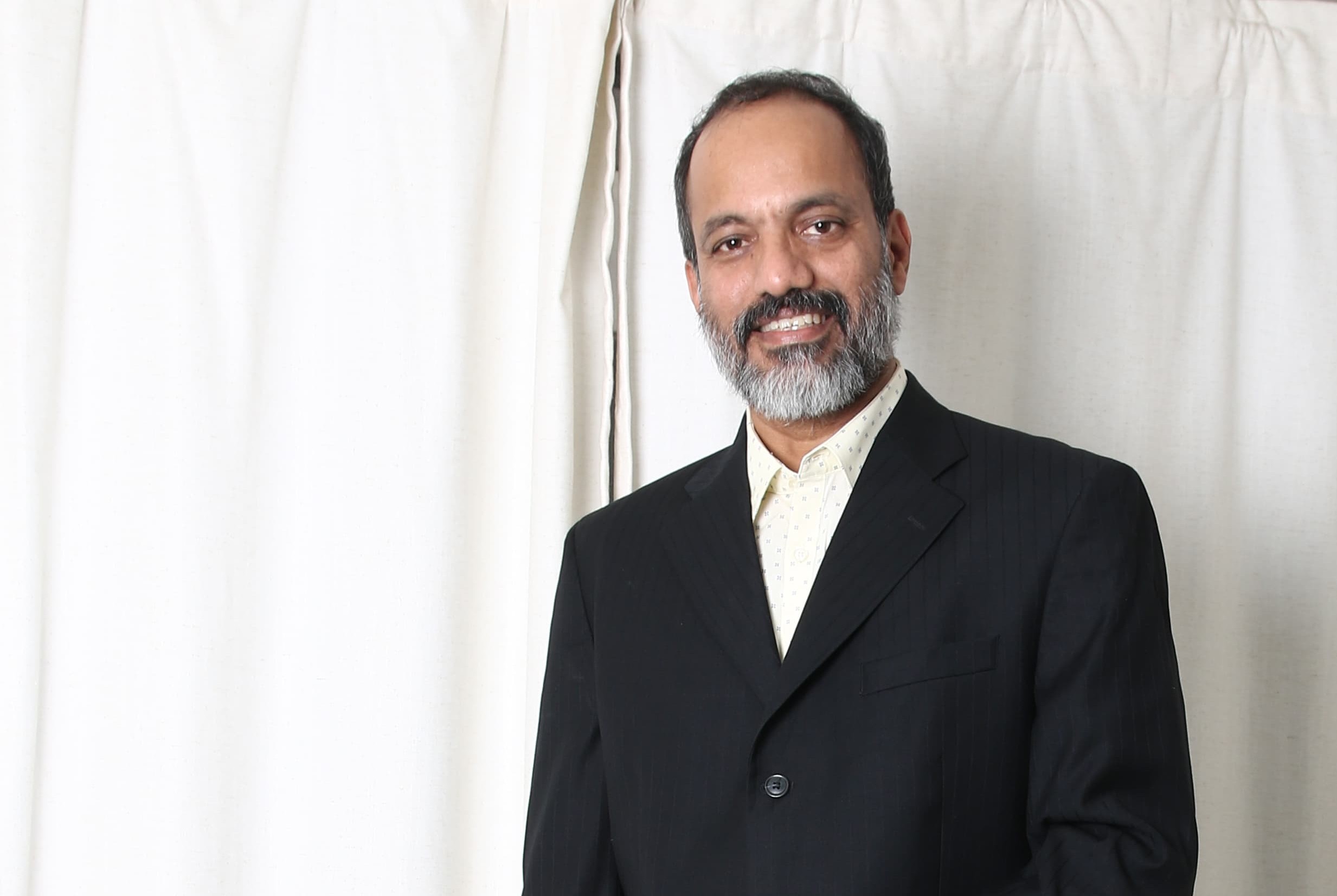
“Finance needed structure, not more effort. Building solutions for modern finance functions became a natural extension of that belief: simplify the architecture so that finance leaders can focus on judgment, not just processing.”
-Venkatachalam P.K.
Most software companies begin with a product. Venkatachalam P.K. began with a problem he could not stop thinking about. As someone who spent years working alongside CFOs, controllers, and finance teams across industries, he kept encountering the same dissonance: brilliant people, exhausted by process. Not because they lacked skill, but because the systems around them were fragmenting their effort rather than focusing it.
That observation became an obsession, and that obsession became FinAlyzer, a finance transformation platform now serving more than 125 clients across multi-entity, multi-standard environments globally. As its CEO, Venkatachalam has built something that goes beyond software. He has built a philosophy of how modern finance should function, anchored in a single, quietly radical idea: that good systems do not just improve efficiency. They restore trust in the numbers that guide decisions.
FRUSTRATION AS A FOUNDING PRINCIPLE
Venkatachalam is disarmingly direct about what drove him to build FinAlyzer. It was not ambition in the conventional sense. It was frustration. Specifically, the frustration of watching capable finance professionals spend the majority of their working lives reconciling numbers rather than interpreting them. The problem, as he diagnosed it early in his career, was never about talent. It was about architecture.
Finance teams were operating in structures that were fundamentally disconnected. Close happened in one system, consolidation in another, reporting somewhere else entirely. Each piece was locally optimized and globally inefficient. Data moved between these islands, but context did not. And without context, even accurate numbers become difficult to trust or act on confidently.
That insight that finance needed structure, not more effort became the founding logic of everything he has built since. Where others saw a technology problem, Venkatachalam saw a design problem. And design problems require solutions that start not with features, but with flow.
THE STRUCTURAL GAPS NO ONE WANTS TO NAME
After years of working with finance leaders across industries, Venkatachalam has developed a precise vocabulary for the dysfunction he consistently encounters. The most pervasive problem, he argues, is structural disconnection: close, consolidation, reporting, and compliance treated as separate functions rather than a single continuous process. The second is the quiet proliferation of manual workarounds Excel bridges, offline adjustments, undocumented dependencies that accumulate like sediment over time until the system underneath is barely recognizable.
The third, and perhaps most organizationally damaging, is diffused ownership. When no single system anchors accountability end to end, responsibility becomes everyone’s in theory and no one’s in practice. The result is a finance function that appears busy but is not necessarily effective, one that produces outputs through heroic effort rather than coherent design.

“Finance needed structure, not more effort. Building solutions for modern finance functions became a natural extension of that belief: simplify the architecture so that finance leaders can focus on judgment, not just processing.”
This diagnosis shapes everything about how FinAlyzer is designed. The platform does not automate individual steps within a broken process. It redesigns the process itself, connecting financial close, consolidation, and reporting into a single continuous flow where data moves once, validations happen in real time, and outputs are always audit-ready. The system becomes the source of truth, which means reconciliation across disconnected tools becomes unnecessary.
LISTENING BEFORE BUILDING: WHAT CFOS ACTUALLY NEED
One of the less visible but most consequential aspects of Venkatachalam’s approach is how seriously he takes the practice of listening. Over his career, he has had hundreds of direct conversations with CFOs, controllers, and auditors across organizations of varying size and complexity. The pattern that emerged from those conversations reshaped his entire understanding of what finance transformation actually requires.
CFOs, he found, want confidence in their numbers without having to chase them. Controllers want fewer last-minute disruptions. Auditors want traceability without excessive back-and-forth. Taken together, these are not requests for features. They are expressions of a single underlying need: trust. Trust in the data, trust in the process, and trust in the outputs that drive board-level decisions.
That realization reoriented his product philosophy. Finance transformation, in his framework, is not about feature sets. It is about what he calls trust architecture: the design of systems that reduce anxiety around numbers rather than increasing dependence on manual checks. If a system achieves that, it is working. If it does not, no amount of technological sophistication compensates for the gap.
SPEED WITHOUT SACRIFICING CONTROL
A recurring tension in finance transformation conversations is the assumption that speed and control are necessarily in conflict, that moving faster means accepting more risk, and that rigorous governance requires accepting more slowness. Venkatachalam rejects this framing entirely, and his experience with more than 125 clients gives him the evidence to back that rejection.
The real culprit, he argues, is poor structure. When validations, audit trails, and controls are layered on top of a process as an afterthought, they create friction and delay. But when they are embedded within the process itself, built into the flow rather than bolted onto it, speed and control stop being trade-offs and start reinforcing each other. He describes this shift as moving from post-facto control to in-process control: fewer surprises, fewer last-minute adjustments, and significantly greater confidence in outputs before they reach senior leadership.
This principle extends to multi-entity environments, where complexity can grow exponentially if not managed through deliberate standardization. His prescription here is precise: standardize structure, allow controlled exceptions. A common financial language uniform charts of accounts, consistent consolidation policies, centralized rules maintained by the system rather than by individual discipline. Local variation acknowledged but bounded. That is how organizations achieve both global compliance and operational scale simultaneously.
THE FUTURE CFO: INTERPRETER, NOT CUSTODIAN
When Venkatachalam speaks about the evolving role of the CFO, he draws a sharp and useful distinction. The CFO of the past was, in his framing, the custodian of history: responsible for accurate reporting of what had already occurred. The CFO of the future is the interpreter of direction: responsible for providing real-time context, forward-looking insight, and strategic clarity to the boardroom.
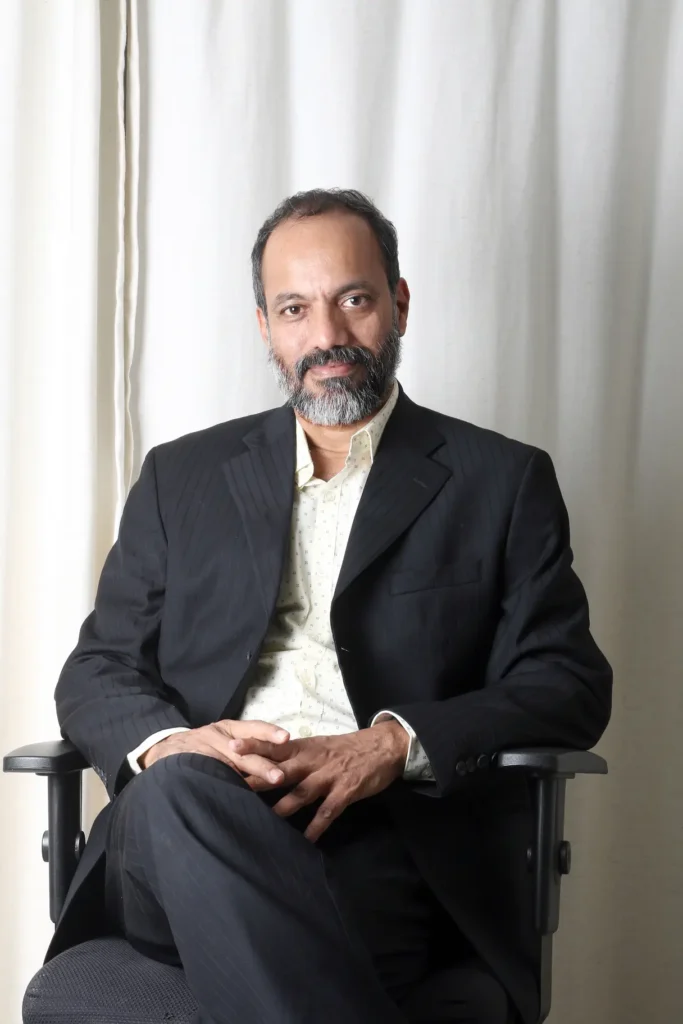
“The modern CFO is not the custodian of history but the interpreter of direction. That shift requires building systems that provide real-time visibility, not just accurate reports of what has already occurred.”
Making that transition requires more than adopting new technology. It requires reorienting the entire finance function around a different question. Instead of asking how quickly can we close and report, the question becomes what does this data tell us about where we are going, and what decisions does it inform right now. That shift in orientation demands exactly the kind of structural integrity that Venkatachalam has spent his career building toward.
Looking further ahead, he identifies three forces that will define the next decade of finance transformation. Integrated platforms will replace fragmented technology stacks. Real-time reporting will move from aspiration to expectation. And governance will become proactive, with systems designed to flag risks before they materialize rather than document them after the fact. AI will be part of this picture, but quietly so: embedded within workflows rather than positioned as a visible transformation in itself. The competitive advantage, he believes, will not go to organizations that adopt the most technology. It will go to those that design the most coherent finance architecture.
Venkatachalam P.K. began his journey into finance transformation not with a vision of building a company, but with an inability to ignore a problem that others had normalized. That instinct to treat structural dysfunction as solvable rather than inevitable has produced a platform, a methodology, and a body of work that is quietly changing how finance functions operate across geographies and organizational structures.
The legacy he articulates for himself and his team at FinAlyzer is modest in tone but significant in ambition: finance should not feel like a burden to those who run it. If that sounds simple, it is because the most important design principles usually do. Delivering on it, as anyone who has spent time inside a fragmented finance function knows, is anything but.