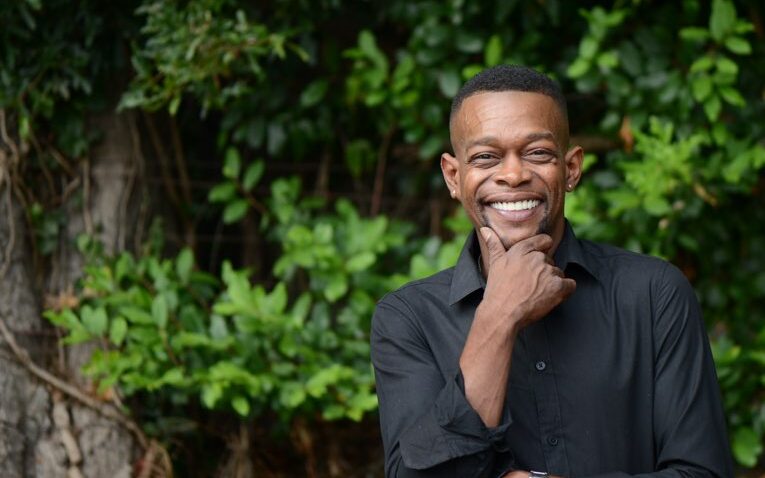
“Lead with the intangibles that cannot be measured by any scale or chart. Those are the things that will separate you from 99% of the competition.”
-Durrel Dabney
AN UNLIKELY BEGINNING
Not every great career begins with a plan. Some begin with a wrong turn that turns out to be exactly right.
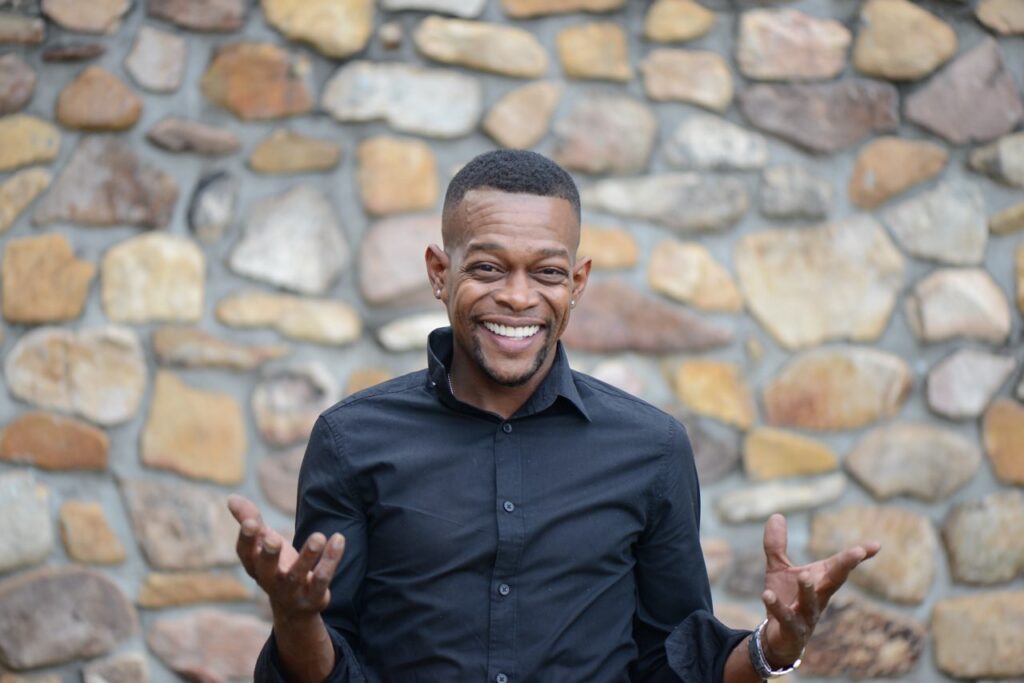
In December 2013, Durrel Dabney walked onto the campus of Everest College in Atlanta with pharmacy technology on his mind. What he found instead, through a glass window, was a room full of dental assisting students and not a single man among them. Curiosity did the rest. “Sign me up,” he said, and a decade-long career was born from a moment of spontaneous instinct.
That backstory matters, because it tells you something essential about who Durrel is: someone who moves toward the unfamiliar, trusts his instincts, and finds a way to make something meaningful out of whatever room he walks into.
The road leading to that campus had been anything but smooth. At 21, Durrel survived a debilitating stroke that reshaped his entire trajectory. Years followed where the path forward was unclear. A music career under the name WingzOnaPlane kept his creative spirit alive, but financial stability remained elusive. It was a candid Thanksgiving conversation with a mentor in his hometown of New Orleans, Louisiana that lit the spark. He returned to Atlanta determined to prove something, not just to others, but to himself.
That determination has never left him.
THE PERFORMER IN THE OPERATORY
Twelve years and multiple dental specialties later, Durrel brings something to clinical practice that no textbook teaches: the instincts of a performer.
His experience spans pediatric dentistry, oral surgery, sedation dentistry, and cosmetic dentistry, a breadth that has given him a rare, panoramic view of what patients actually need across the full spectrum of oral care. But more than technical range, what these years have developed in him is a deep and practiced empathy.
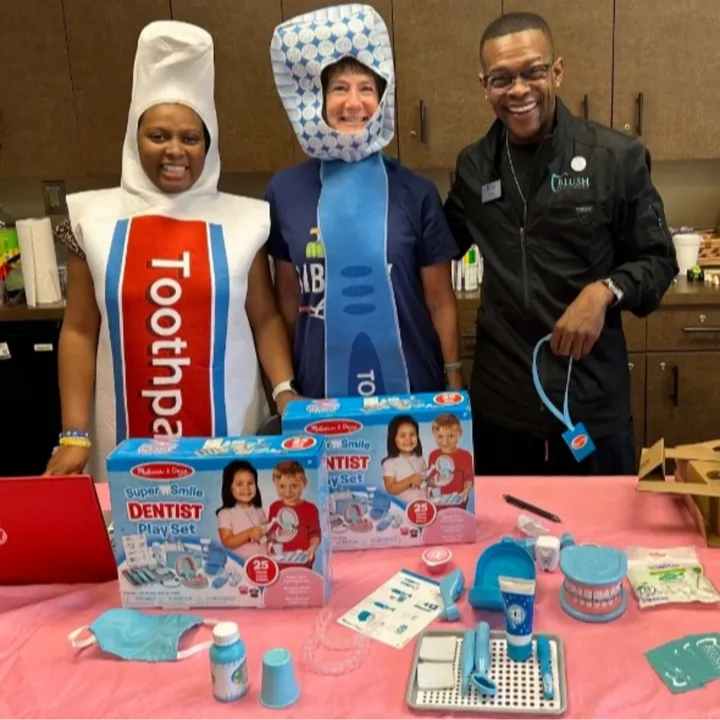
“Once the patient’s chart touches my hand, it’s time to perform,” he says. The analogy is deliberate. Like a character at a theme park who makes every child feel the magic is real, Durrel understands that what patients remember is not the procedure. It is the experience. The feeling of being seen, calmed, and cared for by someone who is genuinely present with them.
This philosophy becomes especially critical in pediatric and sedation dentistry, where anxiety is not a minor inconvenience but a genuine barrier to care. Rather than defaulting to a formulaic routine, Durrel approaches each patient as an individual case. Whether the challenge is developmental delay, ADHD, acute anxiety, or simply a first-time visit to the dentist, his approach bends toward the person sitting in the chair. “You have to cater a technique specifically for that patient at that particular time,” he explains.
The result is not just better appointments. It is a generation of younger patients who are actually excited about dental visits, a transformation he considers one of the most significant advancements he has witnessed in his career.
SAVING THE WORLD ONE TOOTH AT A TIME
Durrel is clear-eyed about the challenges facing dental professionals today. Chief among them is the ongoing friction between providers and insurance companies over fee schedules for necessary procedures. For smaller practices without the financial buffer to absorb those disputes, the impact on efficiency and quality of care is real. It is a systemic thorn that affects not just dentistry but medicine broadly, and Durrel does not shy away from naming it.
Yet he refuses to let those frustrations define the work. His response to the pressures of a long career is not cynicism but connection, particularly with the next generation of professionals coming into the field.
He attends events like the Thomas P. Hinman Convention in Atlanta and pursues continuing education not just to stay current technically, but to stay fluid in his thinking. Engaging with newer providers, he says, keeps him in what he calls the “honeymoon phase” of his career. There is something generous in that framing: a seasoned professional who actively seeks out the energy of beginners because he knows it keeps his own work alive.
As a keynote speaker and thought leader, the message he carries into every room is simple and quietly profound. “It’s nice to be important, but it’s more important to be nice.” In an industry where clinical authority can sometimes crowd out human warmth, Durrel consistently leads with the intangibles, the soft skills, the qualities that no certification can measure but every patient immediately feels.
THE FUTURE HE IS BUILDING TOWARD
When Durrel looks ahead at the next decade of oral healthcare, he sees artificial intelligence not as a threat but as a collaborator. He envisions AI companions taking over time-consuming administrative and procedural tasks, freeing dental assistants to bring more of their human capabilities to the patient experience. He also anticipates the EFDA role expanding in clinical scope, with greater autonomy over procedures like coronal polishing that can meaningfully ease the burden on dentists and hygienists.
His outlook on AI is characteristically grounded. “Robots are not coming to replace your local dentist any time soon,” he says with the kind of easy confidence that comes from actually understanding the work. What he sees instead is a future where technology amplifies the human elements of care rather than replacing them.
To the next generation of dental professionals, his advice is direct: lead with what cannot be measured. Technical skills open the door, but it is empathy, presence, and genuine kindness that build careers worth having. “No matter how far you ascend, no matter how bright your light may shine,” he tells them, “it’s more important to be nice.”
Durrel Dabney did not arrive at dentistry through the conventional route. He arrived through resilience, redirection, and a willingness to walk through a door he had never considered before. What he has built since is a career defined not by the procedures performed, but by the people genuinely cared for.
One tooth at a time.