“Bringing together medicine, public health, and academia has allowed me to bridge gaps between clinical practice and population health strategy, ensuring that knowledge is not only generated but effectively applied and shared.”
-Dr. Charla N. Burns
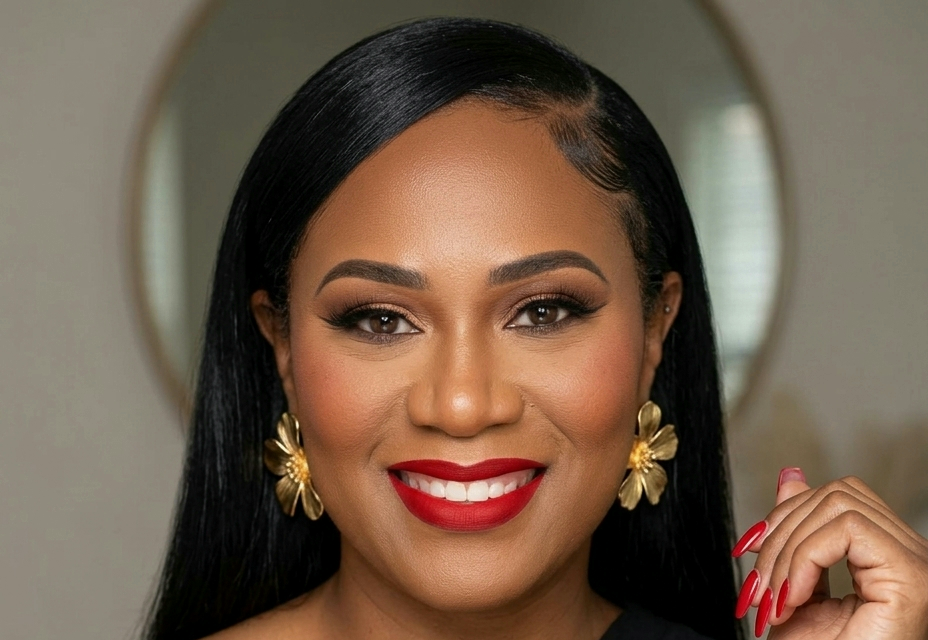
Most careers have a center of gravity, a single discipline that defines everything else. Dr. Charla N. Burns has built hers around a deliberate refusal of that constraint. Physician, professor, epidemiologist, mental health advocate, curriculum architect, life insurance broker, and notary public: each role is a response to the same foundational recognition that health, in its full meaning, cannot be addressed from any single vantage point.
Her career has been shaped by a conviction that runs deeper than professional versatility. It is the understanding that the challenges most worth addressing (chronic disease, health disparities, preventable infections, mental health crises) do not live inside clinical walls. They live in systems, communities, and the gaps between the institutions that are supposed to serve people. Reaching them requires moving fluidly between bedside and boardroom, between individual patient and population, between data and the human story behind it.
THE RECOGNITION THAT CHANGED EVERYTHING
Early in her medical training, Dr. Burns encountered a realization that would quietly reorient her entire professional trajectory. One-on-one patient care was deeply meaningful, but the problems she kept encountering (chronic disease, health disparities, preventable infections) extended far beyond what any clinical encounter could resolve. Addressing them required working upstream, at the level of systems, root causes, and policy.
That recognition drew her into public health and epidemiology without diminishing her commitment to clinical medicine. It also pulled her toward academia, where she saw a different kind of leverage: the ability to multiply impact by shaping how future healthcare professionals think, reason, and take responsibility. Bringing these three domains together allowed her to work at every level simultaneously connecting clinical insight with population health strategy and translating both into educational experiences that prepare leaders, not just practitioners.

“Bringing together medicine, public health, and academia has allowed me to bridge gaps between clinical practice, data-driven public health, and education ensuring that knowledge is not only generated but effectively applied and shared.”
LESSONS FROM THE FRONT LINES OF INFECTIOUS DISEASE
Dr. Burns’ work in infectious disease surveillance and epidemiology has produced a set of convictions she returns to with consistency. The first is that early detection and timely data are not technical preferences but survival requirements. Delays in reporting or incomplete data can
critically hinder response efforts. Surveillance systems must be standardized, interoperable, and supported by trained personnel who understand what they are seeing before it becomes an outbreak.
The second conviction is equally important and far less frequently stated: clear communication and public trust matter as much as the data itself. During a public health response, the ability to translate complex information into actionable guidance for clinicians, policymakers, and communities can determine whether an outbreak is contained or amplified. Misinformation and inconsistent messaging can undermine even the strongest scientific efforts, a lesson that continues to resonate in public health contexts long after individual crises have passed.
Her broader prescription for global preparedness is both structural and relational. Invest in surveillance infrastructure. Strengthen the public health workforce. Prioritize data integration across systems and regions. And foster the kind of international collaboration and transparency that recognizes, practically and institutionally, that infectious diseases do not respect borders.
MENTAL HEALTH AS A NON-NEGOTIABLE
Dr. Burns’ commitment to mental health advocacy did not arrive as a separate professional interest. It grew organically from her clinical training and public health work, where she repeatedly encountered mental health conditions that were underrecognized, undertreated, and compounded by stigma, inaccessible care, and fragmented systems. She also saw, with increasing clarity, how closely mental health is woven into every other health outcome affecting chronic disease management, health behaviors, and quality of life in ways that make it impossible to treat as peripheral.

“Mental health is not optional in our vision of overall health; it is essential to improving health at every level. Normalization alone is not enough if care remains out of reach. Access alone is limited if stigma prevents people from seeking it.”
Her strategic framework for improving mental health access rests on five interconnected priorities: normalizing mental health conversations through education; expanding the mental health workforce and leveraging telehealth; ensuring care is culturally responsive and community-grounded; prioritizing early intervention and prevention, particularly for youth; and driving the policy and systems-level change that sustains all of the above. The unifying thread is her insistence that mental health must be treated with the same urgency, visibility, and compassion as physical health, not as a specialty concern, but as a foundational dimension of human well-being.
REIMAGINING MEDICAL EDUCATION FOR A DATA-DRIVEN WORLD
As a curriculum developer and instructional designer, Dr. Burns is developing a clear and specific vision for what medical education must become. The future she describes is one where static content delivery gives way to adaptive, data-informed competency development where learners advance based on demonstrated mastery rather than time in seat, and where analytics continuously map strengths, gaps, and the interventions most likely to close them.
Learning platforms will increasingly function as intelligent tutors, adjusting case complexity in real time and recommending targeted content precisely when it is needed. High-fidelity simulation, virtual patients, and augmented reality clinical environments will replace passive case studies for skills that require pattern recognition and decision-making under uncertainty. Integrated learning analytics will finally allow medical education to answer not just whether learners passed, but whether the training improved the decisions that affect patient outcomes.
She is careful, however, about what this technological evolution must not displace. Medical education still requires human mentorship, ethical reasoning, and professional identity formation dimensions of development that cannot be captured by dashboards or algorithms. The strongest programs, in her view, will be those that use digital tools to enhance rather than replace those relationships: highly personalized, data-rich, and technology-enabled, but still fundamentally grounded in clinical wisdom and human mentorship.
COMMUNITY SCAFFOLDING: HEALTH BEYOND THE CLINIC
Perhaps the most distinctive dimension of Dr. Burns’ work is what she calls community scaffolding: the construction of supporting systems around individuals so they are not navigating complex medical, financial, and legal decisions in isolation. Her roles as a licensed life insurance broker and notary public are expressions of this philosophy rather than digressions from it.
As an insurance broker, her work is fundamentally educational: helping individuals and families understand the financial consequences of illness, disability, or premature death and make decisions that protect stability during uncertainty. Financial distress, she notes, is one of the strongest downstream determinants of health outcomes. As a notary, she removes a barrier that disproportionately affects underserved communities ensuring that advance directives, wills, and legal documents are accessible and properly executed, supporting continuity of care planning in practical, immediate ways.
The key, she is clear, is maintaining transparent ethical boundaries across each role. When integrated with integrity, these services reinforce trust rather than blur it; healthcare guidance informs planning, financial protection addresses downstream risk, and documentation ensures that people’s wishes are legally recognized and honored.
The legacy Dr. Burns hopes to leave is both ambitious and precise. In medical research, she wants to help close the gap between strong science and consistent implementation. In public health, she wants to contribute to systems that anticipate rather than only react, grounded in equity rather than treating it as an afterthought. In mental health advocacy, she wants normalization paired with genuine access care embedded in primary care, education systems, and community spaces, visible and reachable before crisis rather than only during it.
Across all three, the unifying vision is a healthcare ecosystem that is more integrated, more preventative, and more human-centered, one where data, science, and compassion operate in alignment rather than in separate lanes. If that alignment holds after the individual is no longer directly involved, she says, then the work has done what it was meant to do.