“Three Decades, One Conviction: The True Differentiator of Every Organisation Is Always Its People”
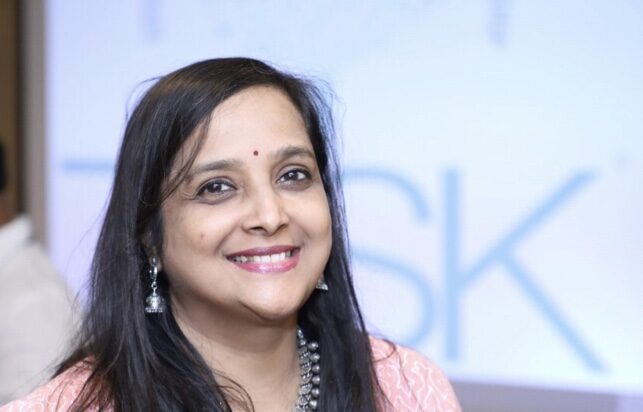
– Dr Sailaja Ph.D
A JOURNEY THAT BEGAN WITH PEOPLE, NOT PLANS
There are careers that are mapped in advance, and there are careers that unfold through curiosity, conviction, and a willingness to follow what matters most. Dr. Sailaja’s journey into human resources and talent leadership belongs firmly to the second kind. Spanning more than three decades across government institutions, private corporations, start-ups, educational environments, and international markets, her career was never guided by a fixed destination. It was guided by a question she has never stopped asking: what does it take to help people become the best version of themselves within an organisation?
The answer to that question, she discovered early on, has nothing to do with the sophistication of a company’s strategy or the scale of its technology investment. It has to do with whether the people within that organisation feel trusted, valued, and given the conditions to grow.
“I realized that while strategies, technologies, and systems are important, the true differentiator for any organization is always its people,” she reflects. That realisation became the lens through which she interpreted every role, every challenge, and every transition that followed.
Each institutional context she worked within contributed something distinct to her understanding. Government and structured organisations taught her the importance of long-term thinking, governance, and systems-level discipline. Corporate environments gave her an appreciation for speed, agility, and the continuous pressure of evolving business realities. Start-ups immersed her in the culture of innovation, resilience, and the particular courage required to build organisational foundations from the ground up. Academia, perhaps most significantly, brought her face to face with the aspirations and anxieties of the professionals who would one day inherit the workplaces she had spent her career trying to improve.
The thread connecting all of it was the moment of transformation she witnessed, again and again, when individuals who initially lacked confidence were given the right environment, the right mentorship, and the right opportunity. Those moments convinced her, beyond any professional framework or academic theory, that HR is not a support function. It is a strategic discipline with the power to shape human potential and organisational futures simultaneously.
CULTURE IS EXPERIENCED, NOT ANNOUNCED
One of the most consequential lessons Dr. Sailaja has drawn from her work across diverse organisational contexts is deceptively simple: culture cannot be copied. It cannot be imported from a company that appears to have got it right, and it cannot be manufactured through a vision statement or a values poster on a conference room wall. It is built, slowly and irreversibly, through the daily behaviour of leaders under pressure.
“Employees observe how leaders behave during difficult situations, how decisions are made, how conflicts are resolved, and how inclusively opportunities are distributed,” she explains. “Culture is experienced through consistency.” The organisations she has seen struggle most with engagement and retention are rarely those without good intentions. They are those where the gap between what leadership communicates and what employees experience has grown too wide to ignore.
Her exposure to international markets deepened this understanding considerably. Working with professionals from varied cultural, educational, and professional backgrounds reinforced the importance of approaching culture-building not as a fixed model to be implemented but as a living ecosystem that must be tended to continuously. Communication styles differ. Expectations of authority differ. Relationships with risk, consensus, and feedback differ enormously across geographies and generations. What does not differ, she has found, is the fundamental human need for dignity, recognition, and a sense that one’s contribution genuinely matters.
“HR is not merely an administrative function. It is a strategic and human-centred discipline capable of shaping organisational futures, one person at a time.”
THE FUTURE OF WORKFORCE DEVELOPMENT: FROM TRAINING TO TRANSFORMATION
When Dr. Sailaja speaks about the future of workforce development, she is careful to resist the pull toward a simplified narrative. This is a domain undergoing genuine structural transformation, and the organisations that will navigate it well are those willing to rethink not just what they teach their employees but the entire relationship between work and learning.
The shift she considers most significant is the move from static, role-based talent models to dynamic, skills-based ones. In an environment where the capabilities valued today may be obsolete within a few years, organisations can no longer treat learning as a periodic event or a compliance exercise. Learning must become embedded in the daily flow of work itself: a continuous practice rather than an occasional interruption.
She identifies five dimensions that will define this evolution. Skills-based talent assessment, replacing the focus on job titles with a focus on transferable and future-relevant capabilities, will become the new operating logic of talent management. AI and technology will reshape learning ecosystems by enabling personalised, adaptive, and accessible development at scale, though she is careful to note that technology’s role is to augment rather than replace the human dimensions of mentorship and leadership guidance. Experiential learning, which she considers among the most underinvested tools in most organisations’ development arsenals, will gain greater prominence as companies recognise that people learn most durably through application, not instruction. Leadership development will need to expand its scope to encompass not only strategic and technical capability but emotional resilience, ethical judgement, and the ability to lead diverse teams through ambiguity. And the democratisation of learning, ensuring that development opportunities reach every employee rather than a select tier of high-potentials, will become both an ethical imperative and a competitive one.
“Workforce development is no longer a support function,” she says plainly. “It is a strategic business imperative that directly influences innovation, competitiveness, employee engagement, and long-term organisational sustainability.”
INCLUSION BEYOND THE POLICY DOCUMENT
Few areas of organisational life have attracted more rhetorical investment and more practical disappointment than diversity, equity, and inclusion. Dr. Sailaja has observed this paradox play out across organisations that were genuinely committed to building inclusive workplaces, and she has come to a clear conclusion about where the gap originates.
“Inclusion is not created through compliance alone,” she says. “It is built through culture.” The organisations that have reduced DEI to a policy document or an annual awareness calendar have not merely failed to make progress. They have, in many cases, deepened the cynicism of the very employees they were hoping to reach. People are perceptive. They notice when inclusion is a stated value and when it is a lived one. The difference shows up not in mission statements but in who gets promoted, whose ideas are heard in meetings, whose concerns are taken seriously when they are raised, and whether the leaders who claim to champion inclusion actually behave accordingly when no one is watching.
Her framework for building genuinely inclusive workplaces begins with psychological safety, the assurance that employees can express ideas, share concerns, challenge unethical behaviour, or admit mistakes without fear of humiliation or retaliation. From there, it extends to equitable access to opportunity, not just representation in headcount but fairness in promotions, leadership development, learning access, and the informal networks through which influence is distributed. And it requires active listening structures: employee resource groups, pulse surveys, mentoring circles, and open forums that provide real insight into what the workplace experience actually feels like for the people inside it.
One conviction she returns to consistently is that inclusion cannot be delegated to HR alone. Every manager who gives feedback, every leader who runs a meeting, every person who makes a hiring or promotion decision is either advancing or undermining an inclusive culture. Ownership must be shared, and accountability must be real.
PSYCHOLOGICAL SAFETY AS A STRATEGIC IMPERATIVE
Dr. Sailaja’s work in POSH initiatives and workplace ethics has given her a ground-level perspective on what the absence of psychological safety actually costs organisations, in ways that are often invisible until they become impossible to ignore.
When employees do not feel safe, they do not speak up. When they do not speak up, near-misses go unreported, dysfunctional dynamics go unaddressed, and the concerns that could have been resolved early instead quietly compound into crises. The organisations that appear most stable on their surface metrics can sometimes be the ones carrying the greatest weight of unspoken problems.
“Psychological safety is not a soft concept,” she says with conviction. “It is a strategic business enabler.” The research is unambiguous: teams that feel psychologically safe are more innovative, more collaborative, more willing to learn from failure, and more capable of the kind of honest dialogue that produces better decisions. In an environment being reshaped by AI and digital transformation, where adaptability and continuous learning are not optional, organisations that stifle the conditions for those qualities are undermining their own futures.
“True sustainability comes from creating environments where employees feel respected, protected, heard, and valued. Performance metrics alone will never get you there.”
Trust, she emphasises, is built through consistency. Leaders who behave with transparency and fairness during ordinary moments create the reserves of credibility that allow organisations to weather difficult ones. Conversely, trust eroded through small acts of inconsistency or injustice is remarkably hard to rebuild, and the cost is carried throughout the organisation long after the original incident has been forgotten by those who caused it.
HR’S ROLE IN THE ESG AGENDA
As ESG frameworks have evolved from sustainability reporting tools into genuine strategic lenses through which investors, employees, and regulators evaluate organisations, the role of HR leadership within those frameworks has grown correspondingly more significant. Dr. Sailaja sees this as one of the most important shifts in the HR profession’s evolving mandate.
The social and governance dimensions of ESG, she argues, sit squarely within HR’s sphere of influence. Ethical workplace culture, equitable access to opportunity, employee well-being, responsible talent development, community engagement, and the cultivation of conscious leadership are not peripheral concerns that happen to carry ESG relevance. They are the operational substance of the social and governance dimensions of the framework. HR leaders who understand this are uniquely positioned to bring those dimensions to life in ways that are measurable, credible, and genuinely meaningful rather than cosmetic.
The future workforce, she notes, is making this expectation explicit. Younger professionals increasingly evaluate potential employers through an ESG lens, seeking organisations whose stated values align with observable behaviour. Employer branding in this environment is inseparable from ESG performance, and HR leaders who can bridge those two domains will become central to how organisations attract and retain the talent they need to remain competitive.
SPEAKING, WRITING, AND THE WORK OF CHANGING MINDS
Alongside her leadership practice, Dr. Sailaja has developed a significant presence as a speaker, writer, facilitator, and podcaster, and she approaches each of those platforms with a consistent underlying purpose: not to inform, but to transform.
She has observed over many years that policies and frameworks, however well-designed, do not on their own change the way people think about leadership, culture, or their relationship to work. Real transformation happens when people engage emotionally and intellectually with ideas that challenge their existing assumptions. The goal of every workshop she facilitates, every article she writes, and every podcast conversation she hosts is to create the conditions for that kind of engagement.
What motivates her most, she says, is witnessing the moment when a conversation becomes an action. A leader who rethinks how their team culture functions. A student who leaves a session with greater confidence in their own voice. An organisation that takes a concrete step toward a more inclusive or psychologically safe environment. These outcomes, modest in isolation but significant in aggregate, are what she is working toward across every platform she occupies.
BRIDGING THE GAP BETWEEN CAMPUS AND CAREER
Dr. Sailaja’s engagement with academia has given her a clear-eyed view of one of the most persistent structural challenges in talent development: the gap between what educational institutions prepare students for and what organisations actually need from the professionals they hire. In a period of rapid technological change, that gap is widening, and neither side can close it alone.
The collaboration she advocates for goes beyond occasional guest lectures or internship arrangements. She envisions genuine strategic partnership: industry participation in curriculum design, faculty development programmes that keep educators current with workplace realities, joint innovation ecosystems, and career preparation that addresses not only technical competence but the emotional intelligence, communication skills, ethical grounding, and adaptability that organisations consistently identify as critical and consistently find in short supply.
One aspect she considers especially underdeveloped is the preparation of students for lifelong learning itself. The professionals who will thrive in the years ahead are not those who graduate with the most complete set of skills but those who understand that their education is a beginning rather than a conclusion, and who have the curiosity, resilience, and growth mindset to keep developing across an entire career.
A LEGACY BUILT ON HUMAN POTENTIAL
When Dr. Sailaja considers the legacy she hopes to leave in the field of human capital leadership, she does not reach for metrics or institutional achievements. She reaches for something harder to quantify and more durable in its effects: the lives influenced, the cultures strengthened, the moments when an individual found their confidence or an organisation found its integrity.
Her advice to emerging HR professionals reflects the same values that have guided her own journey. Remain curious and committed to lifelong learning, because the profession will keep evolving and relevance requires continuous adaptation. Understand business deeply, because HR impact is greatest when it is grounded in a genuine understanding of what the organisation is trying to achieve. Build strong communication and trust-based relationships, because HR leadership is ultimately relational at its core. Embrace technology while retaining the human perspective, because empathy, inclusion, and ethical judgement are not capabilities that any system can replicate. And above all, maintain integrity, because credibility in this profession is built over years and lost in moments.
“Remember that HR is fundamentally about people,” she says. “Policies, systems, and technology are important, but compassion, respect, and trust are what truly define impactful leadership.”
In a world that is simultaneously more technologically capable and more deeply in need of genuine human connection than at any previous point in history, that reminder carries more weight than ever. And it is a reminder that Dr. Sailaja has spent more than three decades not merely articulating, but living.