“Transforming High-Risk Operations Through Transparency, Resilience, and Safety Leadership”
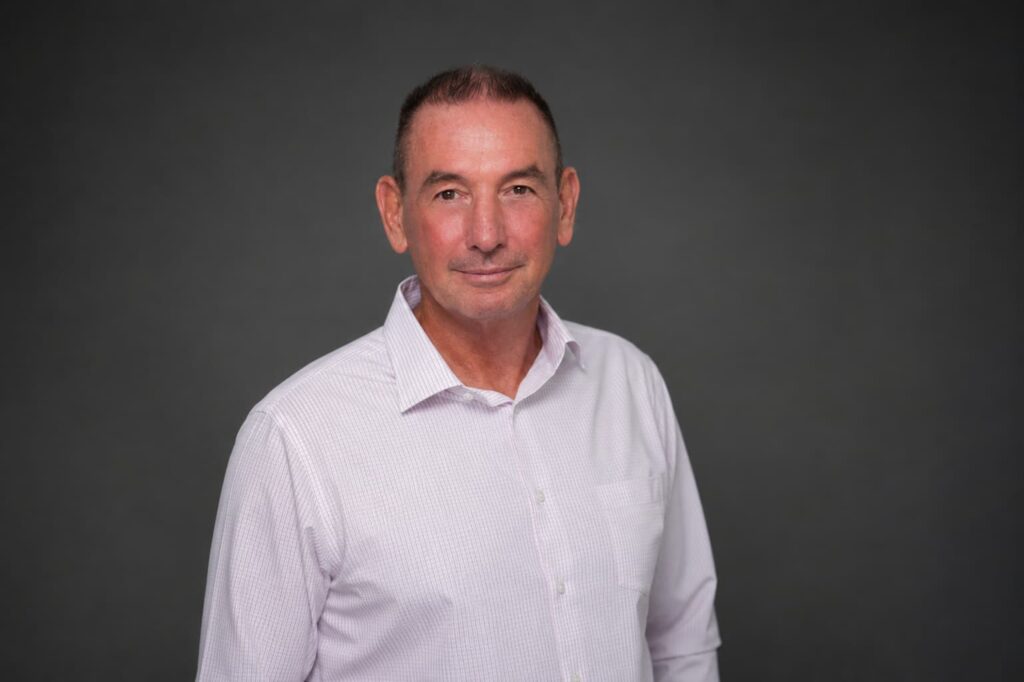
– Darren Williams
From military service to operational leadership
Few leadership journeys are shaped by the breadth of experiences that define Darren Williams.
From maritime operations and military deployments to industrial access solutions, rescue operations, facilities management, safety consultancy, and complex high-risk environments, Darren has spent his career operating where consequences are significant and margins for error are minimal. Yet despite the diversity of industries and operational settings he has navigated, a common thread runs through his leadership philosophy: the belief that effective risk management is ultimately about people.
His journey began long before professional titles or leadership responsibilities. As a young boy, Darren knew he wanted to serve in the Royal Navy, a goal he fulfilled by joining at the age of sixteen. What followed was more than two decades of military service that exposed him to conflict zones, humanitarian missions, natural disaster responses, and demanding operational environments around the world. These experiences provided far more than technical expertise. They instilled resilience, situational awareness, disciplined decision-making, and a profound understanding of how individuals and teams perform under pressure.
Whether skydiving in Hawaii, skiing in Antarctica, diving in the Caribbean, or trekking across the Alps, every experience reinforced a lesson that continues to guide his career today: success in high-risk environments depends on the ability to understand uncertainty, manage risk intelligently, and adapt when circumstances change.
Leading with transparency when failure is not an option
In industries where safety and operational excellence are non-negotiable, leadership requires more than technical competence. It requires trust.
For Darren, trust begins with transparency.
Over the years, his leadership philosophy has evolved around a simple but powerful principle: leaders must be willing to communicate openly about risks, challenges, and operational realities, even when those conversations are difficult. Concealing problems or minimizing concerns may provide short-term comfort, but it ultimately undermines credibility and can create far greater consequences.

This commitment to transparency creates stronger relationships between stakeholders, teams, and clients. It fosters realistic expectations and encourages collaborative problem-solving rather than reactive crisis management. Darren believes that operational success is achieved not by avoiding difficult truths, but by confronting them directly and working collectively toward sustainable solutions.
This mindset has become increasingly important as operational environments grow more complex and interconnected.
Building safety cultures that go beyond compliance
One of Darren’s strongest convictions is that true safety leadership extends far beyond policies, procedures, and compliance requirements.
In his view, organizations often misunderstand safety culture by focusing primarily on rules rather than relationships.
The strongest safety cultures are built on trust, care, mentorship, and empowerment.
Throughout his career, Darren has learned that the most resilient teams are not necessarily the toughest. They are the teams where individuals feel confident raising concerns, questioning decisions, and stopping operations when they believe risks are not being adequately managed.
He often emphasizes that silence not vulnerability is the greatest danger in high-risk environments.
When individuals feel psychologically safe enough to challenge assumptions and speak openly, organizations become more resilient. Safety stops being a compliance exercise and becomes a shared responsibility embraced by everyone involved.
This philosophy transforms employees from passive participants into active guardians of operational safety.
The technologies reshaping high-risk industries
Innovation is rapidly transforming how organizations approach safety management and operational execution.
Darren sees several emerging technologies as particularly influential in redefining industry standards.
Advanced wearable technologies and smart personal protective equipment are creating new opportunities for real-time monitoring of worker wellbeing, environmental conditions, and operational risk. Devices capable of tracking biometric data and detecting hazards allow organizations to intervene before incidents occur rather than reacting afterward.
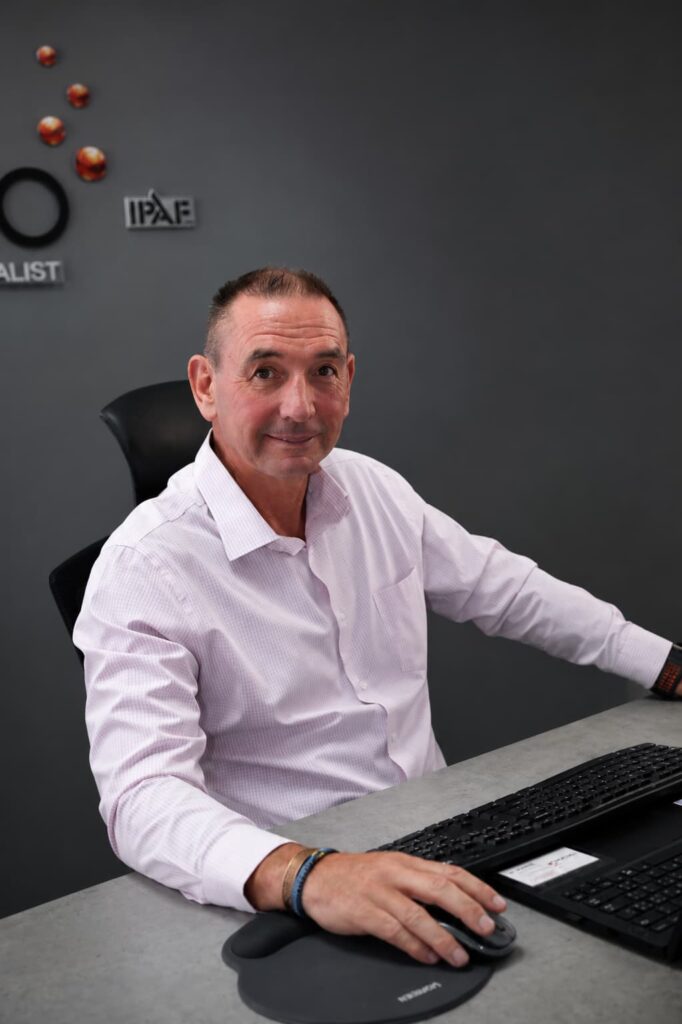
“Silence, not toughness, is the real hazard in high-risk environments.”
Virtual reality and augmented reality are also revolutionizing workforce development. Immersive training environments enable personnel to experience emergency scenarios, operational challenges, and complex procedures without exposure to actual danger. These technologies provide realistic experiential learning opportunities that significantly enhance preparedness and decision-making capability.
Meanwhile, drones, robotics, and remote inspection technologies are reducing human exposure to hazardous environments while improving operational efficiency and precision.
Collectively, these innovations are shifting organizations from reactive safety management toward predictive and preventative operational models.
Yet it’s equally important to recognize that technology is at its best when it supports human experience not when it replaces it. Over‑reliance without true understanding can create a false sense of progress, where convenience overshadows comprehension and automation erodes the emotional depth that defines human relationships and decision‑making.
Calm leadership in high-consequence environments
One of the defining characteristics of effective leadership during crises is composure.
Early in his career, Darren believed strong leadership meant making decisions quickly. Experience taught him a different lesson.
The most effective leaders are not necessarily the fastest decision-makers they are the clearest thinkers.
In high-pressure environments, a leader’s emotional state directly influences team performance. Panic, confusion, and uncertainty can spread rapidly. Conversely, calm and focused leadership creates stability and confidence.
Darren’s approach centers on maintaining a composed command presence regardless of external pressures. This discipline allows teams to remain focused, evaluate risks objectively, and make informed decisions without compromising safety standards.
By balancing operational agility with thoughtful risk assessment, organizations can respond effectively to dynamic situations while preserving the discipline necessary for safe execution.
Empowerment, accountability, and operational excellence
Managing risk across industries as diverse as maritime operations, counter-piracy, industrial access, rescue services, and facilities management requires adaptable leadership.
Darren believes the foundation of that adaptability lies in accountability without blame.
Effective leaders empower those closest to the risk to make informed decisions because they often possess the clearest understanding of operational realities. However, empowerment does not eliminate accountability. Instead, it creates ownership while ensuring leadership remains responsible for maintaining standards and supporting teams.
This balance encourages proactive decision-making, strengthens organizational resilience, and enables rapid responses to evolving conditions.
By decentralizing ownership while maintaining clear accountability, Darren has consistently built teams capable of navigating complexity with confidence and professionalism.
Developing resilient professionals for high-risk work
Talent development remains one of the most critical responsibilities in safety-sensitive industries.
For Darren, preparing professionals for complex operational environments begins with repetition, discipline, and procedural consistency.
High performance is rarely the result of improvisation.
Instead, it emerges through continuous rehearsal, standardized practices, and rigorous preparation. By reinforcing operational fundamentals repeatedly, teams develop the confidence and muscle memory required to perform effectively under pressure.
Equally important is building resilience through redundancy. Whether applied to systems, personnel, or processes, redundancy creates safeguards that allow organizations to continue functioning effectively when unexpected challenges arise.
This disciplined approach ensures that individuals are prepared not only to execute tasks safely but also to adapt when circumstances demand flexibility.
A leadership model for crisis and transformation
Throughout military operations, global crises, incident responses, and organizational transformations, Darren has consistently relied on three foundational principles.
The first is Crisis Clarity establishing a single source of truth through unified leadership structures and clearly defined accountability.
The second is Psychological Safety creating environments where individuals feel empowered to raise concerns, challenge assumptions, and report anomalies without fear.
The third is Operational Humility the recognition that effective decisions require diverse perspectives, validated data, and collaborative input rather than individual certainty.
Together, these principles create organizations that are more adaptive, innovative, and resilient.
More importantly, they position safety not as a compliance requirement but as a strategic capability that drives operational excellence.
The future of safety leadership
Looking ahead, Darren believes safety leadership will become increasingly integrated with enterprise risk management, ESG frameworks, operational resilience strategies, and long-term value creation.
Future leaders will need to operate comfortably between site operations and executive boardrooms. They will combine hands-on operational expertise with strategic decision-making, data analysis, technological understanding, and business acumen.
Artificial intelligence, predictive analytics, sensor technologies, and digital platforms will continue transforming how organizations identify and manage risk. Yet despite these advances, Darren remains convinced that people will remain the most important component of any safety system.
Technology may provide insights.
Processes may create structure.
But human judgment, courage, and accountability remain irreplaceable.
A legacy of intelligent, human-centered safety
Darren Williams’ vision for the future is not simply safer workplaces.
It is the creation of operational ecosystems where intelligence, discipline, technology, and human capability work together seamlessly.
He envisions environments where risks are anticipated before incidents occur, where individuals feel empowered to challenge unsafe conditions, and where safety leadership is recognized as a strategic advantage rather than an administrative obligation.
If his legacy is measured by anything, it will be by helping organizations build cultures where people are protected, empowered, and trusted to do the right thing even in the most demanding circumstances.
Because in high-risk operations, true excellence is not defined by avoiding challenges.
It is defined by how intelligently and responsibly those challenges are managed.