“Hard on the Outside, Vulnerable Within: The Coconut Theory Changing How We See Adolescents”
– Hamza Fayyaz Madni
A CALLING, NOT A CAREER
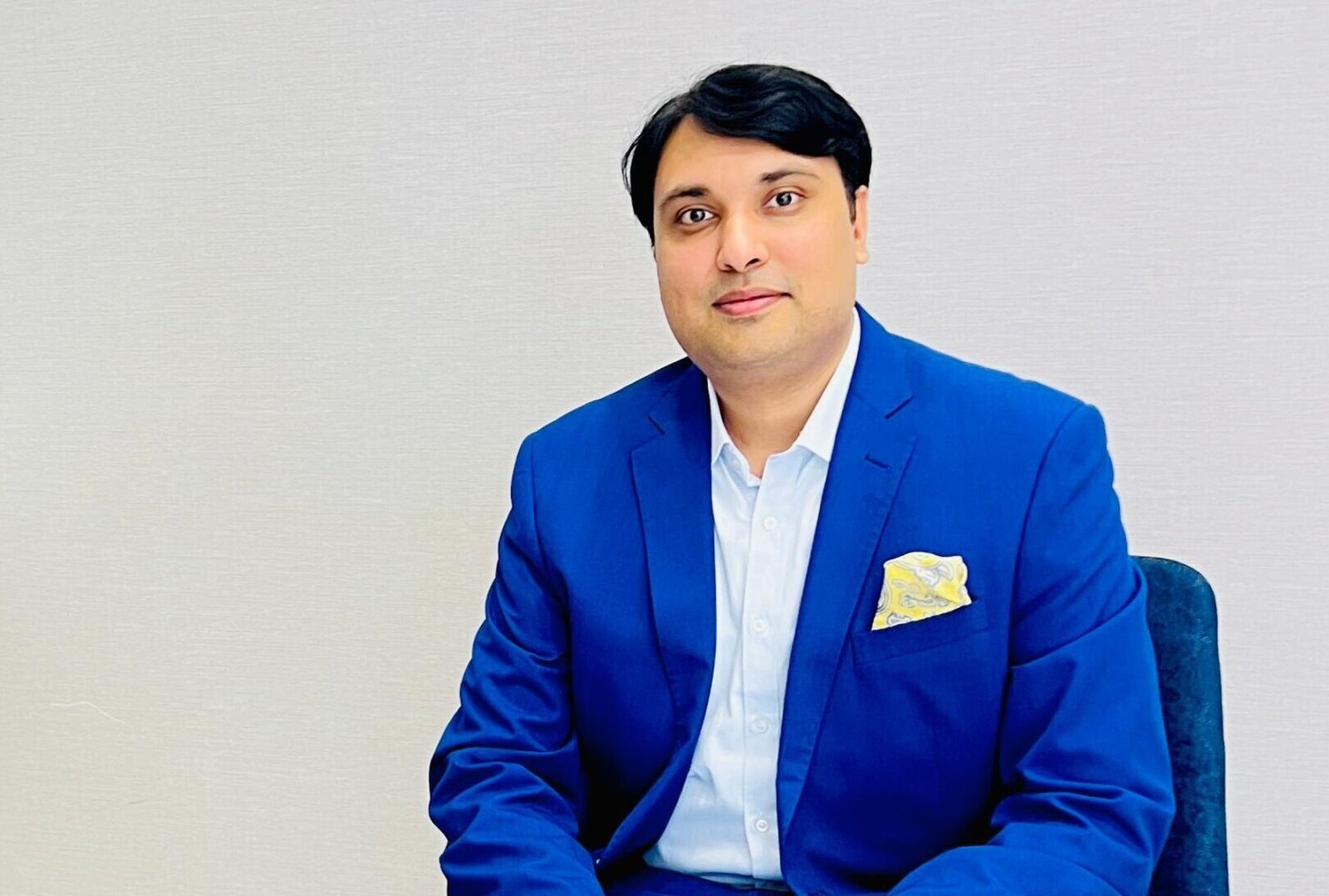
Based in Dubai, UAE, Hamza Fayyaz Madni serves as an Assistant Phase Lead and Academic & Career Guidance Counsellor, bringing together educational leadership, career guidance, and social-emotional learning to help students reach their full potential.
As a student himself, he observed something that stayed with him: how a teacher’s genuine care and guidance could fundamentally alter the character of a child. Not just their grades or their behavior, but who they were becoming as a person. That observation planted a conviction that has driven every professional decision since. Education, in his understanding, is not simply the transfer of knowledge. It is the formation of character, the nurturing of responsible human beings who can contribute meaningfully to the world around them.
“Teaching was not only an option for me,” he reflects. “It was a well-considered choice that I made on my own.”
That conviction eventually broadened into a commitment to educational leadership and student development in its fullest sense. A University Gold Medalist in his Master’s degree, he has continued to build on that academic excellence through doctoral research, career guidance, behavioral frameworks, and published authorship, all in service of the same foundational belief that education has the power to transform lives.
LEADING BY EXAMPLE, BUILDING BY TRUST
As Assistant Phase Lead and Academic and Career Guidance Counsellor, Hamza brings to his leadership a philosophy he articulates with straightforward clarity: leadership is about leading by example.
In practice, he operates through a blend of participative and transformational leadership styles. Participative leadership brings diverse perspectives into problem-solving, ensuring that the people closest to the work have a genuine voice in shaping it. Transformational leadership keeps the focus on personal growth across the entire team, building the kind of culture where educators feel empowered to develop alongside their students.
He is careful to acknowledge the environment that makes this possible. The school management’s commitment to creative freedom, professional independence, and a culture of trust has been foundational to the positive outcomes he has helped generate. Effective educational leadership, he understands, is never a solo endeavour. It is built through relationships, accountability, and shared purpose.
RESEARCH THAT CONNECTS TEACHERS TO BETTER STUDENT OUTCOMES
Hamza’s doctoral research brings an additional dimension of rigor to his professional practice. His focus is on improving collaboration among teachers based on social-emotional intelligence, a subject that sits precisely at the intersection of his two deepest professional commitments.
The research operates from a premise that is both intuitive and evidence-supported: well-informed and emotionally intelligent teachers, working in genuine professional collaboration with one another, can achieve significantly better outcomes for students. When educators share effective teaching strategies and methods through strong professional relationships, the benefits flow directly into student academic achievement.
This research is not abstract. It informs the school-wide strategies Hamza designs and the way he approaches the professional development of the educators around him, treating teacher wellbeing and teacher collaboration as essential levers for student success rather than peripheral concerns.
THE COCONUT THEORY: UNDERSTANDING ADOLESCENTS FROM THE INSIDE OUT
Among the most distinctive contributions Hamza has made to educational practice is the Coconut Theory, a behavioral management framework he developed to help educators and parents better understand and support adolescent learners.
The framework begins with an observation that any educator who has worked with teenagers will recognize immediately: adolescents can appear careless, disengaged, or resistant to guidance. Traditional responses to this appearance often focus on discipline or correction. The Coconut Theory proposes something fundamentally different.
Like a coconut, Hamza argues, adolescents present a hard exterior to the world. That toughness is not defiance. It is protection. Beneath the outer shell lies genuine vulnerability, a softness that developmental pressures and the turbulence of adolescence cause young people to guard carefully. The hard exterior is a smokescreen, not a character flaw.
The implication for educators and parents is significant. Understanding the real reason behind adolescent behavior, responding with emotional maturity and empathy rather than reactive discipline, is not simply a kindness. It is the most effective path to genuine connection and lasting behavioral change. School leadership, in his framework, must prioritize teacher-student relationships, student wellbeing, and inclusive environments that make every learner feel genuinely safe.
CAREER GUIDANCE BUILT ON PASSION
On the question of career guidance, Hamza’s advice to students is grounded in a simple and powerful conviction: pursue your interest.
“When passion becomes your job, you actually do not work for a single day,” he says. The ideal intersection, in his view, is when that passion also provides financial sustainability, creating a life where meaningful work and economic security reinforce each other.
Beyond passion, he helps students consider the full landscape of career decisions: the scope of their chosen field, a realistic assessment of their likelihood of academic success within it, its financial viability, and the role of family support in sustaining the journey. These practical considerations do not replace the importance of genuine interest. They ensure that interest is matched with a realistic and supportive pathway.
As the educational landscape transforms rapidly around emerging technologies, AI, and shifting labor markets, this kind of personalized, holistic career guidance has never been more important. Hamza sees career counselling evolving toward increasingly individualized approaches, tailored precisely to each learner’s unique interests, strengths, and developmental trajectory.
SOCIAL EMOTIONAL LEARNING IN THE AGE OF AI
Perhaps the most pressing argument Hamza makes in his work is one that feels counterintuitive in an era of accelerating technological change: as artificial intelligence becomes more capable and more prevalent, emotional intelligence becomes more essential, not less.
The post-Covid educational landscape has already transformed how schools operate. Holistic learning ecosystems, project-based learning, STEM integration, digital literacy, and AI tools are now embedded in classrooms at increasingly early stages. Hamza embraces these changes fully. But he holds them in deliberate tension with an equally urgent commitment: protecting and promoting the emotional intelligence that technology cannot replicate.
Student mental wellbeing, he insists, is directly connected to academic achievement. A student who is emotionally grounded, socially capable, and psychologically secure is a student positioned to learn effectively and to thrive across the full range of life’s demands. Teaching 21st century technical skills without attending equally to social-emotional skills produces incomplete preparation for the complex world students will actually inhabit.
WORDS WORTH NOTING: A BOOKOURNAL FOR EMOTIONAL INTELLIGENCE
Hamza’s commitment to emotional intelligence extends beyond the classroom and into a published work that is uniquely his own. Words Worth Noting: A Bookournal for Emotional Intelligence is his first authored publication, and one he describes with obvious personal significance.
Its origins trace back to the moment he penned his very first original quote shortly after completing his Master’s degree. One quote followed another, each exploring different emotions and dimensions of human experience, until the collection had grown into something larger than a simple anthology. The result was what he calls a Bookournal: a blend of book and journal, combining original quotes with reflective questions designed to prompt readers to engage with their own emotional lives rather than simply absorb the thoughts of another.
“I hope that my thoughts will inspire readers to pause, reflect on their own journeys, note down their stories, and ultimately establish a higher level of emotional intelligence,” he says.
It is a publication that embodies everything his professional work stands for: the belief that genuine growth requires self-awareness, reflection, and the courage to sit with one’s own inner landscape.
THE DECADE AHEAD
Looking toward the future of educational leadership, Hamza envisions a landscape where the dimensions of his work become more deeply interconnected. Educational leadership, career guidance, and student wellbeing will not operate as separate silos. They will function as an integrated ecosystem, each informing and strengthening the others.
AI will be an integral part of school life, but school leadership will ensure its ethical and purposeful application. Compassion, empathy, inclusion, and equity will shape both student experience and staff culture simultaneously. The concepts of global citizenship, community engagement, and cultural diversity will define what education is ultimately preparing young people for.
At the center of all of it, in Hamza Fayyaz Madni’s vision, remains the child: seen fully, supported holistically, and equipped not only with knowledge but with the emotional resilience and social intelligence to navigate wherever life leads them.