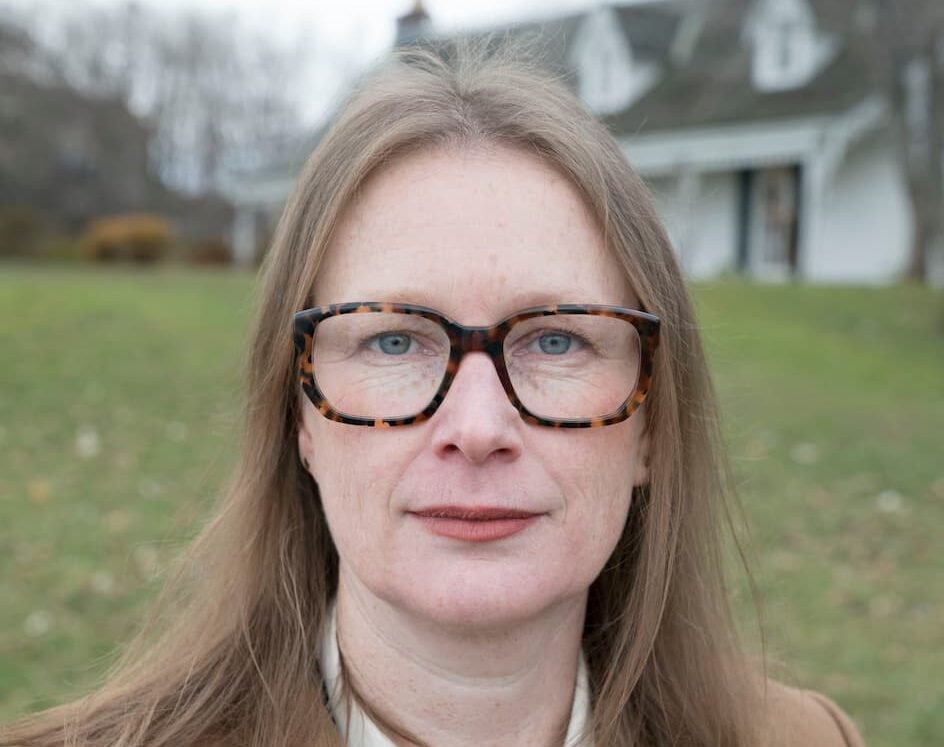
As Executive Director of Alice Austen House Museum and Board President of the Museums Council of New York City, Victoria Munro is redefining what a cultural institution can be: not a place people visit, but a place people feel they belong to.
– Victoria Munro
There is a question that runs underneath everything Victoria Munro does as a museum leader: whose institution is this? Not in a legal or administrative sense, but in the deeper sense that determines whether a person walking through a door feels welcomed or observed, seen or studied, invited or tolerated. She has spent more than eight years at Alice Austen House Museum working toward an answer that is ambitious, practical, and quietly radical: this institution belongs to everyone, and if it does not feel that way yet, the work is not finished.
Victoria’s path into museum leadership began with her hands. She studied fine arts with a specialization in sculpture, and her practice was shaped from the beginning by questions about how space, time, materials, and movement affect the viewer’s experience. She was drawn not only to the artwork itself but to the environments created around art and the ways people move through and inhabit cultural spaces. That embodied, physical understanding of how culture is experienced has never left her, even as her role has shifted from artist to curator to executive director.
Her early professional years as a founding member of an artist-run gallery deepened her understanding of what it means to create cultural spaces that actively make room for new perspectives rather than simply presenting existing ones. Parallel graduate work in arts education expanded her sense of how art transforms learning and connection. Museum leadership became a natural convergence of all of it: curation, storytelling, education, and the belief that institutions can create experiences that change how people see themselves and others.
“Museums are spaces where ideas can be made tangible, histories can be reconsidered, and people can encounter experiences that change how they see themselves and others.”
Eight Years, One Extraordinary Legacy
When Victoria took the executive director role at Alice Austen House, she was the museum’s only full-time employee. Nine years later, the institution has grown to five full-time and seven part-time staff, and its annual budget has quadrupled. That growth trajectory is significant not simply as an organizational achievement but as evidence of a philosophy: that artistic ambition and institutional sustainability are not competing priorities. They are mutually dependent.
The milestones that matter most to her are not the budget figures, however. They are the moments when the museum expanded who felt ownership of Alice Austen House: when communities saw their histories, identities, and creative voices reflected within the institution’s walls and programs. Her leadership approach has been shaped above all by collaboration with community organizations, artists, educators, and mentors from LGBTQ+ activist and cultural communities. These relationships taught her the value of listening, sharing authority, and building programs collectively rather than imposing them from the top down.
Alice Austen herself offers an extraordinary foundation for this approach. A pioneering photographer working in the late nineteenth and early twentieth centuries whose life included a long partnership with a woman she loved, Austen documented her world with remarkable honesty and intimacy. In Victoria’s hands, that legacy is not a fixed historical record to be preserved but a living platform from which artists, students, and communities can ask new questions and tell their own stories. Exhibitions and programs connect Austen’s work to contemporary questions of identity, place, history, and representation, keeping the institution rooted in its history while continually looking forward.
Meeting People Where They Are
One of the most important lessons Victoria has drawn from her years at Alice Austen House is about where cultural engagement actually happens. Museums are not always spaces where every community feels welcome, comfortable, or represented. Waiting for people to cross the threshold is not a strategy. The work begins long before anyone enters the building.
At Alice Austen House, her team brings artists, educators, and museum resources directly into schools, parks, community centres, and other public spaces where communities already gather. The museum also offers a broad range of largely free programs on site, recognizing that removing financial barriers is a foundational requirement for making cultural participation genuinely possible for individuals and families.
“Accessibility is not simply a program or an accommodation,” she states. “It has to be embedded in how an institution thinks, operates, and builds relationships.” This means building a staff culture that values hands-on public engagement and genuinely welcomes people of all abilities and backgrounds. When communities see that a museum is interested in meeting their needs rather than simply increasing its attendance numbers, they are more likely to develop a lasting relationship with the institution. The distinction between those two motivations is detectable, and communities are perceptive.
The Queer Ecologies Garden and the Case for Tactile Innovation
In a cultural moment saturated with technology-driven programming, Victoria has taken a considered step in a different direction. Her approach to innovation has moved increasingly toward sustainable, tactile, and participatory forms of learning. This is not technophobia. It is a recognition that technology-heavy installations are expensive, quickly outdated, and often become the focus rather than the story they are meant to serve.
In 2023 she launched the Queer Ecologies Garden Project, an education resource garden where all plants are self-seeding, intersex, and symbolically queer. The garden is simultaneously a statement about queerness as natural, a source of materials for arts programs, and a space where young people can engage with the natural world at a time when climate anxiety is profoundly affecting them. It also gives staff the opportunity to plan and cultivate programs away from desks and screens, reinforcing a connection between the physical environment and the creative process that underpins the museum’s entire pedagogical philosophy.
The project exemplifies her broader curatorial approach: innovation through meaning, not novelty. When the environment itself affirms identity while teaching ecology and generating materials for creative practice, the educational value compounds in ways that a screen-based installation rarely achieves.
“Innovation is not necessarily about technology. It can be about changing who holds power, whose stories are considered worthy of preservation, and what role an institution chooses to play in the life of its community.”
Curating as a Form of Leadership
Victoria holds a conviction about the relationship between curatorial practice and institutional leadership that is worth examining carefully. She believes museum leaders need to see themselves as curators and creative thinkers, not only as administrators or fundraisers. A curatorial approach means remaining deeply engaged with the public-facing life of the institution: spending time in the galleries, understanding how visitors move through and experience the space, and continually asking how exhibitions and programs can create meaningful connections.
This hands-on engagement creates a deeper understanding of the artist’s experience and allows the institution to support artists more thoughtfully. It keeps leadership genuinely connected to the creative process rather than experiencing it from a distance. And that connection, she argues, is felt by the visitor. When staff, artists, and leadership are all genuinely engaged with the creative work, the institution feels alive in a way that purely administrative management cannot produce.
Her approach to sustainability and financial planning reflects the same orientation. She frames fundraising not as asking for money but as building relationships. Staff and board should feel supported and empowered to both fundraise and “friend-raise,” creating authentic investment in the institution among donors, partners, and the broader community. When financial, operational, and artistic priorities are all aligned with the mission, supporters understand the long-term value of what they are investing in.
Strengthening the Field Through Collaboration
Beyond Alice Austen House, Victoria’s role as Board President of the Museums Council of New York City extends her leadership into the broader challenge of sustaining and strengthening the cultural sector. The Council was established in 1939 to support the growing professional field, and its mission remains essential. Museum professionals too often lack the time and space to share resources, exchange ideas, receive mentorship, and support one another’s growth while managing the intense demands of institutional leadership.
As Board President, she sees an enormous opportunity to create more intentional spaces for knowledge sharing, mentorship, and collaboration across New York City’s rich and diverse museum landscape. She has witnessed significant partnerships emerge from Council conversations: collaborations that have expanded the visibility, reach, and audiences of programs across all five boroughs. When individual institutions strengthen their connections to the broader field, everyone benefits. The cultural sector functions better as a network of interdependent institutions than as a collection of competing organizations.
The Vision: Porous, Courageous, and Radically Open
Victoria’s vision for the future of museums is both generous and demanding. She envisions cultural institutions that are increasingly porous: connected to their neighborhoods, responsive to their communities, and unafraid to engage with the urgent questions of their time. Places where a young person can see themselves reflected in history. Where an artist can experiment and take risks. Where communities can recover stories that have been overlooked or erased. Where people who may never have considered themselves museum people recognize that these institutions belong to them too.
Inclusion, in her framework, goes considerably deeper than programming decisions. It is about who has a voice in shaping the institution, whose histories are collected and preserved, who is represented in exhibitions, who is employed and supported, and who has the opportunity to become the next generation of artists, educators, curators, and cultural leaders. “It requires changing institutional structures,” she states clearly, “not simply changing programming.”
Her advice to museum leaders reflects the courage that this kind of change requires: take risks, question long-held assumptions, build partnerships outside the traditional cultural sector, invest in staff and emerging leaders, compensate artists and cultural workers fairly, and listen deeply to the communities around you. The museums that will matter most in the future will be those willing to imagine themselves differently: preserving history while actively shaping the future, places of scholarship and experimentation, but also places of joy, connection, and civic life.
Victoria Munro is already building that kind of museum. And in doing so, she is demonstrating, one program, one partnership, one garden at a time, that culture is not something institutions dispense to communities. It is something communities create together, with institutions that are brave enough to genuinely invite them in.