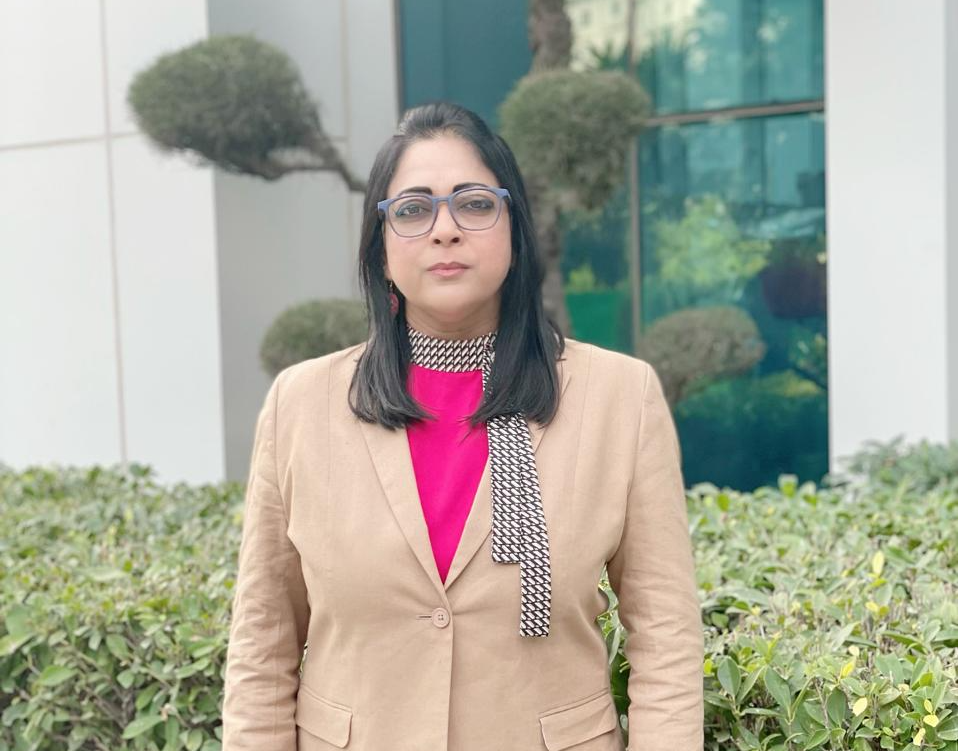
FROM MEDICAL SERVICE TO THE FRONTIERS OF REGENERATIVE MEDICINE
For Dr. Lipi, healthcare was never simply a professional destination. Her earliest understanding of medicine was shaped by her father, a military doctor, whose career demonstrated that healthcare could be a profound form of service. Growing up with that example, she developed an early fascination with medical science and eventually pursued Medical Biotechnology before completing her Ph.D. in Experimental Medicine at PGIMER, Chandigarh. That scientific foundation would later take her into some of the most advanced areas of regenerative medicine, stem cell biology, cellular therapeutics, and translational healthcare.
A defining chapter came during her postdoctoral research at the Beckman Research Institute and City of Hope Medical Center in California, where she worked in stem cell biology and regenerative medicine, particularly in the context of Type 1 diabetes. Her work involving stem-cell differentiation, pancreatic lineage development, and insulin-producing beta cells provided exposure to the complex journey through which fundamental biological discoveries can move toward therapeutic possibilities. It also established a principle that continues to shape her professional philosophy: scientific innovation becomes truly meaningful when it can eventually be translated into a solution that is safe, reproducible, compliant, scalable, and beneficial to patients.
Her subsequent experience across India and Singapore broadened that perspective considerably. Her work moved across stem cell banking, cellular therapeutics, clinical research, laboratory operations, quality systems, regulatory compliance, product development, commercialization, and healthcare leadership. Rather than viewing these areas as separate disciplines, Dr. Lipi developed a multidisciplinary understanding of advanced healthcare innovation one that connects scientific discovery with the practical realities of manufacturing, regulation, clinical adoption, operational execution, and access.
BEYOND SCIENCE: BUILDING CELL & GENE THERAPIES FOR REALWORLD TRANSLATION
In Cell & Gene Therapy, scientific excellence is only the beginning. The extraordinary complexity of living and biologically active products means that an innovation cannot succeed simply because it demonstrates promising scientific results. It must also be characterized, manufactured consistently, tested appropriately, regulated responsibly, and ultimately delivered in a manner that is safe and economically sustainable.
Dr. Lipi approaches this challenge by viewing product development as an integrated process rather than a sequence of disconnected stages. Quality, manufacturing, regulatory strategy, clinical development, and commercialization must begin moving together from the earliest phases of development. Her experience includes technology development and readiness, analytical assays for critical quality attributes of CAR-T cells and viral vectors, manufacturing licensing, biosafety compliance, regulatory submissions, and clinical-trial planning aligned with CDSCO and FDA requirements.
For her, five elements are particularly important: a scientifically robust product, clearly defined and measurable critical quality attributes, reproducible and scalable manufacturing, a credible regulatory and clinical pathway, and a sustainable commercial model.
This integrated approach is essential because CGT products present challenges that conventional pharmaceutical development cannot always address in the same way. Consistency, traceability, potency, identity, purity, safety, and manufacturing control become fundamental considerations. The objective is therefore not merely to demonstrate that a therapy can work. It is to establish that the therapy can be produced reliably, evaluated appropriately, delivered safely, and eventually made accessible to the patients who need it.
COMPLIANCE BY DESIGN: WHERE INNOVATION MEETS ACCOUNTABILITY
One of Dr. Lipi’s defining perspectives is that regulation and innovation should not be viewed as opposing forces. In advanced therapies, strong regulatory and quality systems can actually strengthen innovation by making it more credible, reproducible, and translatable.
Her approach is grounded in what she describes as “compliance by design.” Rather than waiting until the final stages of development to consider regulatory expectations, organizations should integrate quality, risk assessment, regulatory strategy, and evidence requirements into the development process from the beginning.
That means asking fundamental questions early: What is the intended use? What are the critical quality attributes? What are the biological and manufacturing risks? How will potency, identity, purity, safety, and consistency be demonstrated? What evidence will regulators require before the product can progress toward clinical use?
Her experience across GMP-compliant laboratory systems, clinical protocol development, cellular therapeutics, quality management, regulatory affairs, and healthcare standards has reinforced the importance of this integrated model.
For Dr. Lipi, compliance cannot remain the responsibility of a single regulatory or quality department. It must become part of the organizational culture. Scientists, clinicians, manufacturing professionals, management teams, and regulatory specialists all have a role in protecting quality and patient safety.
When compliance is incorporated early, organizations can reduce avoidable rework and delays while creating a stronger foundation for responsible innovation.
BUILDING QUALITY CULTURES FOR THE NEXT GENERATION OF THERAPIES
The regulatory challenges surrounding regenerative medicine and Cell & Gene Therapy are intensified by the fact that scientific innovation can advance faster than established frameworks. Advanced therapies introduce questions surrounding donor and starting-material qualification, traceability, biosafety, contamination control, analytical validation, potency assessment, chain of identity and custody, GMP manufacturing, data integrity, documentation, and long-term safety monitoring.
Dr. Lipi believes these requirements should not be interpreted as administrative burdens detached from science. They are integral components of the science-to-patient journey.
Her experience with NABH, ISO 9001:2015, ISO 13485:2016-related standards, quality management, biotherapeutic quality control, and regulatory responsibilities has strengthened her conviction that quality must be embedded across the organization. Documentation is not simply paperwork. Reproducibility is not merely a manufacturing objective. Risk assessment is not simply a regulatory exercise. Each contributes to the reliability of the final healthcare intervention.
This philosophy becomes especially important as the industry moves toward increasingly sophisticated cellular therapies. The more complex the therapy, the more important it becomes to create systems capable of demonstrating exactly what the product is, how it behaves, how consistently it can be manufactured, and how safely it can be used.
In Dr. Lipi’s model, quality is therefore not an endpoint. It is a foundation.
FROM EXOSOME SCIENCE TO PRODUCT INNOVATION
Dr. Lipi’s work also demonstrates how emerging biotechnology can move beyond laboratory concepts into product development when scientific, regulatory, quality, and commercial questions are considered together.
One notable initiative involved the development and regulatory strategy for an exosome-based cosmetic application in India. The project required navigating an emerging scientific area within a regulatory environment that was not originally designed around many of these advanced biological ingredients.
Her work involved concept development, product strategy, quality considerations, risk assessment, regulatory pathway development, and evaluation of the scientific and practical implications of different exosome sources. The project included a COS-5 application under India’s Cosmetics Rules, 2020, toward a State Manufacturing Licence in Form COS-8 in 2024.
An important strategic consideration was the distinction between human-derived and plant-derived exosomes. Questions surrounding sourcing, biological activity, safety, regulatory complexity, stability, scalability, and product positioning contributed to a focus on plant-derived exosome technology for cosmetic applications.
The broader lesson extends well beyond this particular product. In emerging biotechnology, scientific novelty alone does not guarantee successful innovation. Source selection, characterization, formulation stability, manufacturing feasibility, regulatory classification, claims, safety, consumer expectations, and commercial scalability must all be considered simultaneously.
For Dr. Lipi, this is where scientific innovation becomes product innovation.
CONNECTING SCIENCE, BUSINESS, AND PATIENT NEED
Advanced healthcare innovation rarely succeeds through the work of one department. Scientists may prioritize biological performance and technical novelty, while business teams consider market need, cost, timelines, scalability, and commercial sustainability. Regulatory and quality teams focus on evidence, risk, and compliance. Clinical professionals evaluate applicability and patient needs.
Dr. Lipi’s multidisciplinary career has positioned her to work across these perspectives.
Having led functions spanning R&D, laboratory operations, clinical programmes, quality, regulatory affairs, marketing, training, and senior management, she understands the importance of creating a shared definition of success. Scientific teams need to understand commercial and regulatory realities, while business teams need to appreciate what can and cannot be accelerated scientifically.
Her approach is to establish cross-functional alignment from the beginning of a project. Development milestones should be connected to scientific objectives, patient needs, regulatory expectations, and business outcomes.
This becomes particularly valuable in regenerative medicine, where development cycles can be complex and resource-intensive. When teams understand not only what they are building but why it matters to patients, regulators, clinicians, and the organization, decision-making becomes more focused.
For Dr. Lipi, multidisciplinary leadership is therefore not simply about having expertise in multiple areas. It is about creating a common language between those areas.
RESPONSIBLE GROWTH: MAKING INNOVATION SUSTAINABLE
Dr. Lipi’s leadership extends beyond scientific and regulatory considerations into the economics of biotechnology. Her experience with budgeting, resource allocation, cash-flow monitoring, P&L responsibilities, operational improvement, strategic planning, and risk assessment has given her a broader perspective on what sustainable innovation requires.
In her view, biotechnology organizations cannot measure growth only through revenue. Sustainable growth requires the ability to continue investing in research, technology, quality, people, and product development without compromising scientific standards.
Not every scientifically interesting technology should immediately become a commercial product. Prioritisation must consider clinical relevance, scientific feasibility, regulatory pathway, market need, scalability, and long-term sustainability.
Operational efficiency also matters. During her laboratory leadership experience in Singapore, she worked on improving laboratory operations and quality while reducing operational costs over time. Such experience reinforces the importance of building efficient systems that allow organizations to preserve resources for the areas where investment can create the greatest impact.
Responsible growth therefore becomes a balance: invest where unmet need and scientific evidence justify investment, build quality into the operation, eliminate unnecessary costs, and reinvest sustainable growth into research and organizational capability.
THE MULTIDISCIPLINARY LENS OF A REGENERATIVE MEDICINE LEADER
Dr. Lipi’s professional evolution from experimental medicine and biotechnology research to stem cell biology, regenerative medicine, clinical programmes, laboratory leadership, quality, regulatory affairs, business strategy, and advanced therapeutics has fundamentally changed the way she evaluates new technologies.
She does not ask only whether a technology is scientifically exciting. She asks whether there is a genuine unmet clinical need, whether the biological mechanism is credible, whether the product can be characterized and manufactured consistently, what safety risks exist, which regulatory pathway may apply, whether clinicians can realistically adopt it, and whether the economics can support broader access.
This multidisciplinary lens is increasingly important as regenerative medicine becomes more sophisticated. Scientific breakthroughs must eventually interact with clinical systems, manufacturing infrastructure, regulatory institutions, healthcare economics, and patient expectations.
Dr. Lipi’s experience allows her to view innovation through these interconnected lenses simultaneously.
The result is a philosophy that resists both excessive commercial enthusiasm and excessive scientific isolation. A promising technology deserves ambition, but it also deserves scrutiny. The objective is not simply to reach the market. It is to reach the market responsibly.
THE NEXT FRONTIER OF CELL & GENE THERAPY
The next major transformation in Cell & Gene Therapy, according to Dr. Lipi, will come from making advanced therapies more precise, scalable, reproducible, and accessible.
CAR-T and other engineered cellular therapies have already changed expectations around the treatment of certain cancers. Her own experience with analytical assay development for CAR-T cells and viral vectors, together with manufacturing readiness, quality control, biosafety, regulatory, and clinical-trial considerations, places her close to many of the practical challenges involved in translating these technologies.
Looking ahead, she sees significant potential in improved cell engineering, more effective viral and non-viral delivery systems, next-generation cellular therapies, more efficient manufacturing platforms, automation, stronger potency and characterization assays, and increasingly data-driven approaches to patient selection and monitoring.
Yet for countries such as India, scientific sophistication cannot be separated from affordability.
The true transformation will occur when advanced therapies can move beyond a limited number of highly specialized centres and become more practical and accessible without compromising safety, quality, or efficacy.
That is the larger challenge facing the field: not simply making therapies more advanced, but making them more achievable for the patients who need them.
REGENERATIVE MEDICINE AND THE FUTURE OF HEALTHY AGING
Dr. Lipi’s interest in regenerative medicine also extends into healthy aging, where she believes scientific evidence must replace exaggerated anti-aging claims.
Areas including cellular senescence, chronic inflammation, tissue repair, extracellular vesicles and exosomes, regenerative dermatology, metabolic health, and biomarkers associated with biological aging deserve continued research and rigorous clinical investigation.
Her experience spans stem-cell therapeutics, regenerative applications, PRP-related academic work, and exosome technologies for skin and hair wellness. Her academic contributions also include work connected to stem cell biology, diabetes, and regenerative therapeutics.
As interest in longevity and anti-aging continues to grow, she advocates a more evidence-driven approach. Standardized characterization, well-designed clinical studies, long-term safety data, and responsible communication of claims will be essential if regenerative medicine is to develop sustainably.
For Dr. Lipi, the field must resist the temptation to allow public enthusiasm to move faster than scientific evidence.
Regenerative medicine should progress through proof rather than hype.
AI AS AN AUGMENTATION TOOL FOR ADVANCED HEALTHCARE
The convergence of artificial intelligence with regenerative medicine creates another significant opportunity. Dr. Lipi views AI primarily as an augmentation tool for scientists, clinicians, regulatory professionals, and healthcare organizations rather than a replacement for human expertise.
In Cell & Gene Therapy, AI could support complex data analysis, pattern recognition, process optimization, predictive analytics, manufacturing intelligence, and knowledge management. Within regulatory functions, generative AI could assist with document organization, literature review, information retrieval, gap analysis, and workflow automation, provided that outputs remain subject to qualified human review and appropriate data governance.
Clinical applications could also benefit from AI-supported risk stratification and decision support. Yet Dr. Lipi maintains an important boundary: clinical accountability must remain with healthcare professionals.
The greatest potential, in her view, comes not from choosing between biological intelligence and artificial intelligence, but from combining them responsibly.
The technology can increase capability. Human expertise must continue to provide judgment, context, ethics, and accountability.
EMPOWERING THE NEXT GENERATION OF WOMEN IN HEALTHCARE
For Dr. Lipi, leadership is ultimately inseparable from learning, mentorship, and the willingness to cross professional boundaries.
Her advice to women entering advanced healthcare is straightforward: build depth before chasing titles. Scientific credibility matters. So does curiosity. Professionals working in regenerative medicine and Cell & Gene Therapy must be prepared to understand not only science, but also quality, regulation, clinical requirements, intellectual property, business strategy, and technology.
Her own career demonstrates the value of such breadth.
She also encourages aspiring leaders to seek mentors while becoming mentors themselves. Training and mentoring healthcare professionals and researchers has been an important part of her own journey, allowing knowledge to move beyond individual achievements and contribute to the development of future professionals.
For women especially, leadership does not require adopting somebody else’s style. Scientific credibility, integrity, resilience, continuous learning, and the courage to take responsibility can create influence without sacrificing individuality.
Most importantly, Dr. Lipi believes that healthcare innovation must remain connected to its human purpose.
Developing a new technology is an achievement.
Translating that technology into a safe, ethical, accessible, and meaningful solution for patients is the greater achievement.
PROFESSIONAL CONTRIBUTIONS AND LANDMARK INITIATIVES
Dr. Lipi’s career spans fundamental research, regenerative medicine, clinical translation, cellular therapy operations, quality systems, regulatory strategy, product development, and biotechnology management across India, the United States, and Singapore.
Her early scientific work at the Beckman Research Institute and City of Hope Medical Center contributed to her foundation in stem cell biology and regenerative medicine, including research related to Type 1 diabetes, pancreatic lineage development, and insulin-producing beta cells.
Her subsequent work in India expanded into stem-cell banking, clinical programmes, GMP-compliant laboratory systems, regenerative medicine initiatives, and therapeutic translation. Her international leadership experience with Cryoviva Singapore and Reviva Cell Technologies included laboratory operations, quality control, regulatory compliance, professional training, and work supporting Singapore regulatory requirements for cord blood and cord tissue banking.
Her exosome-based cosmetic initiative represented another intersection of biotechnology and product development, involving scientific evaluation, safety and risk considerations, formulation strategy, and regulatory pathway development under India’s Cosmetics Rules, 2020.
In her current Cell & Gene Therapy leadership work, her responsibilities include technology development and CDMO readiness, analytical assay development for CAR-T cells and viral vectors, manufacturing licensing, biosafety compliance, regulatory processes, and clinical-trial development aligned with CDSCO and FDA requirements. She also serves as Member Secretary of the Institutional Biosafety Committee.
Alongside these initiatives, her academic and knowledge-sharing contributions span stem cell biology, diabetes, cellular therapies, regenerative medicine, and exosome technology, including peer-reviewed research and textbook contributions such as a chapter on “Stem Cell Application and Regulations.”
THE ARCHITECTURE OF RESPONSIBLE REGENERATIVE MEDICINE
Dr. Lipi’s career reflects an increasingly important evolution within regenerative medicine: the movement from breakthrough science toward integrated translation.
The future of advanced healthcare will not be defined by scientific discovery alone. It will depend on whether discoveries can be characterized, manufactured, regulated, financed, adopted, and delivered responsibly.
That is where Dr. Lipi’s multidisciplinary perspective becomes particularly significant.
Her journey connects the laboratory with the clinic, science with regulation, innovation with commercialization, and advanced technology with patient access. Her philosophy does not diminish the importance of scientific ambition; instead, it gives ambition a framework through which it can become sustainable impact.
In a field where the possibilities of cellular medicine continue to expand, her message is ultimately clear: innovation must remain accountable to the people it is intended to serve.
“Innovation in regenerative medicine is not only about what science makes possible; it is about translating that possibility into safe, ethical, accessible and meaningful solutions for patients.”