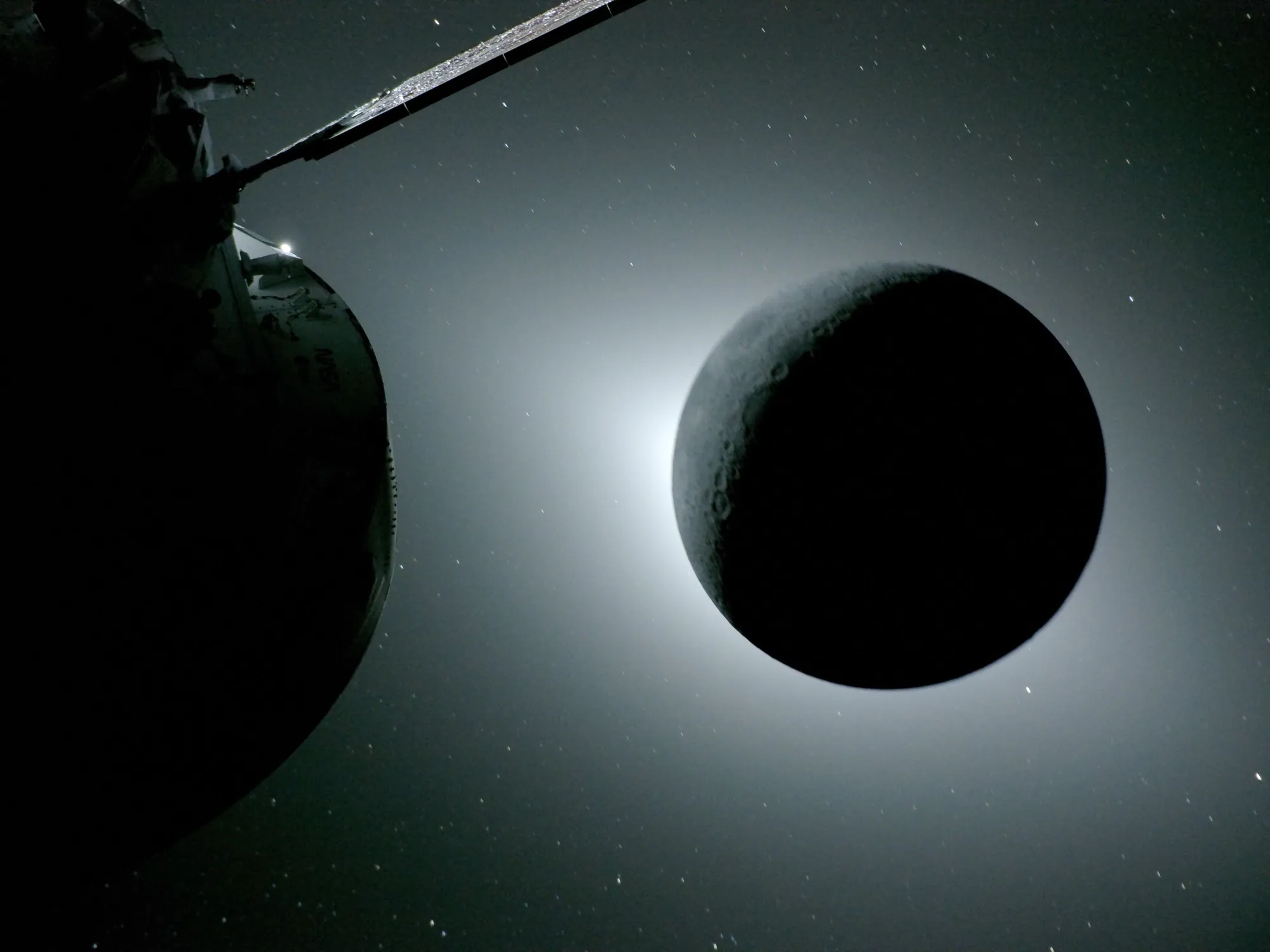
The date is April 9, 2026. High above the Pacific, a small, scorched capsule named Integrity is beginning its final descent toward Earth. Behind it lies a trail of broken records and a lunar silhouette that hasn’t felt the warmth of human proximity in over half a century.
On Monday, April 6, 2026, the four astronauts of the Artemis II mission—Commander Reid Wiseman, Pilot Victor Glover, and Mission Specialists Christina Koch and Jeremy Hansen—did more than just “fly by” the Moon. They reclaimed a piece of the human spirit that had been dormant since 1972, hurtling through the lunar far side at speeds and distances that have redefined the boundaries of our species.
The Moment the World Held Its Breath
The climax of the 10-day mission occurred as the Orion spacecraft entered the Moon’s gravitational sphere of influence. For 40 agonizing minutes, the crew went behind the lunar far side, entering a total communications blackout. In that silence, they were the most isolated humans in history—406,771 kilometers from home, surpassing the 56-year-old record held by Apollo 13.
As they emerged from the darkness, the first images beamed back to Mission Control weren’t just data points; they were art.
The reaction on social media was instantaneous. Within minutes of the first high-resolution “Earthrise” photo hitting NASA’s feed, the internet exploded.
@NASA: “For the first time in 50 years, human eyes have looked upon the lunar far side. Orion is home-bound, carrying the dreams of a new generation. #ArtemisII #ToTheMoon”
(1.2M Likes | 450K Retweets)
@Astro_Christina (Christina Koch): “Coming back from the far side and seeing that tiny blue marble rise over the lunar horizon… it changes you. We aren’t just exploring space; we’re seeing our home for what it truly is: fragile and unified.”
@Cmdr_Hadfield: “History isn’t just being made; it’s being corrected. Huge congratulations to Jeremy Hansen and the entire Artemis II crew. The far side looks good on you, Canada! 🇨🇦🌕”
A Symphony of “Firsts”
While the Apollo missions were a sprint of the Cold War, Artemis II is a marathon of inclusion. The crew itself is a living testament to how much the world has changed since the 1960s.
- Victor Glover: The first person of color to leave Earth’s orbit.
- Christina Koch: The first woman to venture into deep space.
- Jeremy Hansen: The first non-American to fly to the Moon.
- Reid Wiseman: The veteran commander leading humanity back to the lunar frontier.
During the flyby, the crew didn’t just look out the window. They documented six meteoroid impact flashes on the lunar surface—sparks of light in the dark that haven’t been seen by human eyes since the Apollo era. They also witnessed a rare in-space solar eclipse, where the Moon completely obscured the Sun from their unique vantage point, allowing them to study the solar corona with unprecedented clarity.
The Emotional Heart of the Mission
Perhaps the most touching moment of the flyby occurred when Mission Specialist Jeremy Hansen suggested naming a newly observed crater on the lunar far side. He proposed the name “Carroll,” in honor of Commander Reid Wiseman’s late wife, who passed away in 2020.
The audio from the capsule, shared by NASA, captured the raw emotion of the moment. “Hearing your crewmates giggling and crying, gasping at the views while loving their families from afar… that has been the most amazing part,” Wiseman told reporters during a live downlink on April 8.
𝕏 The Public Weighs In
The “social proof” of the mission’s impact can be felt in the way the public has rallied around these four individuals.
@SpaceGeek88: “I wasn’t alive for Apollo. I always felt like I missed the ‘great era.’ Watching the #ArtemisII flyby live on my phone today made me realize: MY generation’s great era is just starting.”
@ScientificAmerican: “Artemis II is the ultimate validation test. By using a ‘free-return trajectory,’ the Moon’s own gravity is slingshotting Orion back to Earth. It’s a masterclass in orbital mechanics.”
More Than a Rehearsal
Critics often argue that Artemis II is “just” a flyby—a mission that doesn’t land. But for the engineers at NASA and the scientists waiting in Houston, this was the “Value Test.”
To reach the Moon, Orion had to survive the Van Allen radiation belts and test its life-support systems in a deep-space environment far more hostile than the International Space Station. The spacecraft, nicknamed Integrity by the crew, has performed flawlessly.
As they hurtle back toward Earth at 40,230 kph (25,000 mph), they are preparing for a reentry that will see the heat shield endure temperatures of 2,760°C—half the temperature of the surface of the Sun.
The Road to the South Pole
The success of the Artemis II flyby clears the path for Artemis III, the mission that will finally put boots back on the ground—specifically at the lunar South Pole.
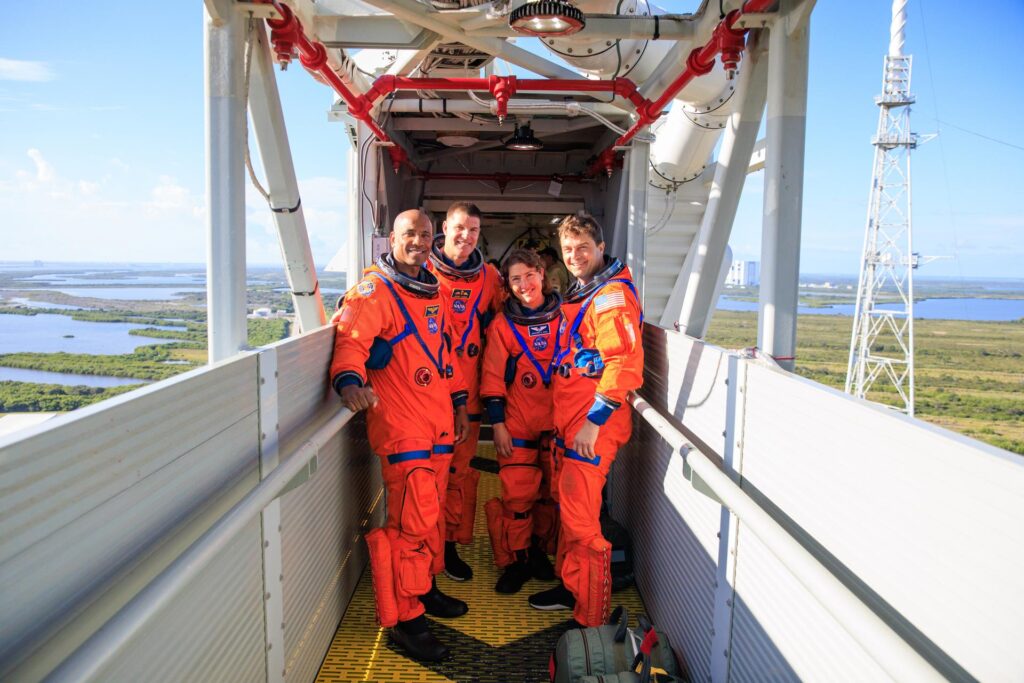
But for now, the world is focused on the four pioneers currently stowing their gear and preparing for a Friday evening splashdown in the Pacific. They are the bridge between a storied past and a multi-planetary future.
As Victor Glover said during his conversation with the White House on April 7: “I said a little prayer when we went behind the Moon, but then I had to keep rolling. We have a job to do for all of humanity.”
The “historic flyby” is over, but the era of the Moon has only just begun. When Integrity hits the water off the coast of San Diego on April 10, it won’t just be a capsule returning home. It will be the return of our greatest ambitions.
Final Mission Stats:
| Metric | Artemis II Achievement |
| Max Distance from Earth | 406,771 km (New Record) |
| Top Speed at Reentry | 40,230 kph |
| Mission Duration | 10 Days |
| Crew | Wiseman, Glover, Koch, Hansen |