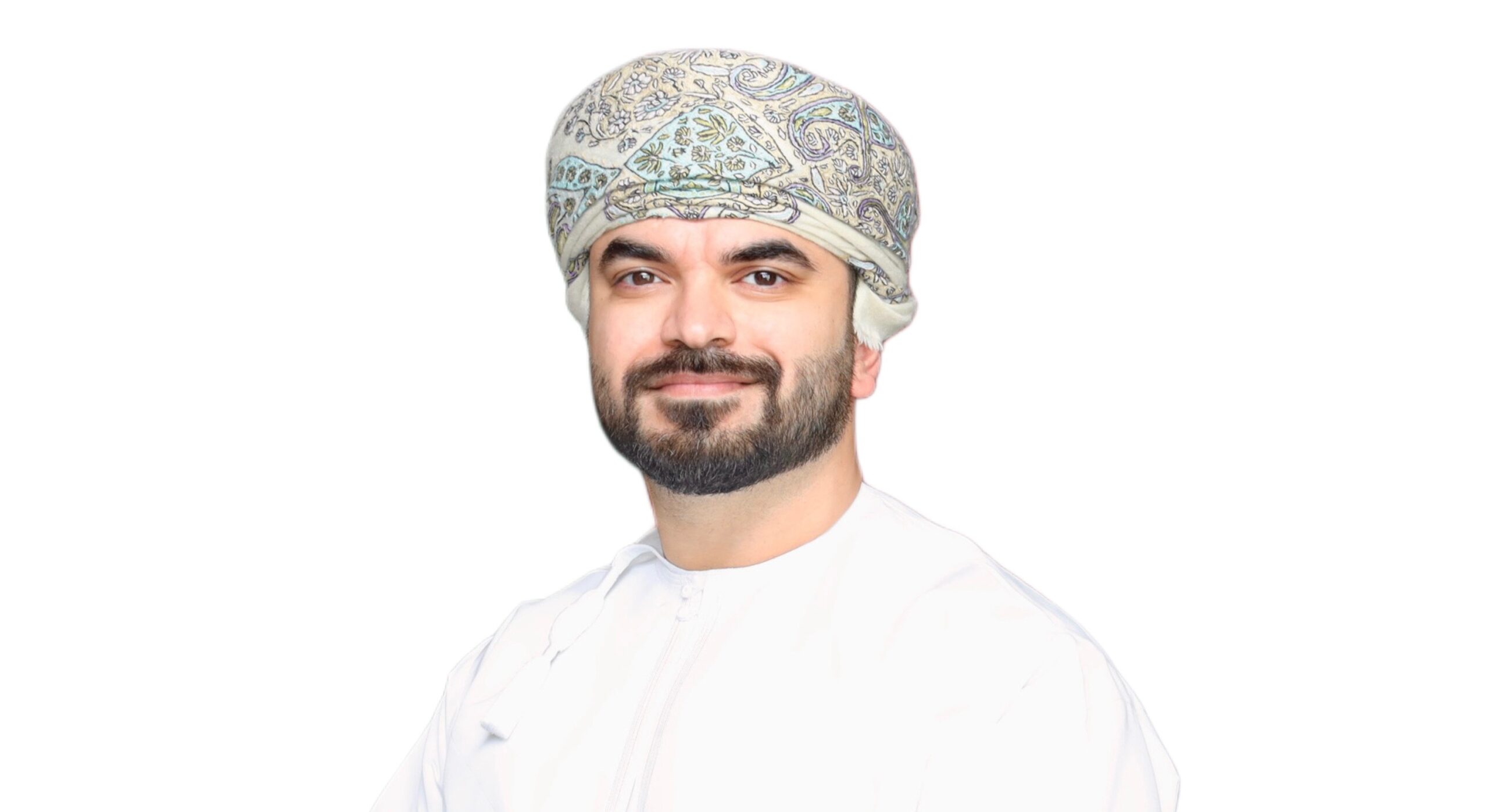
. “Transformation isn’t just about systems. It’s about how people adapt. When teams understand why changes happen and feel involved, they change how they work, question old habits, and think more openly about delivering value.”
-Mohammed Al Zaabi
There is a particular kind of leader who does not arrive at transformation through technology. They arrive through people. Mohammed Al Zaabi is one of them. His career did not begin in banking or technology innovation hubs. It began in wholesale business operations, in the unglamorous work of understanding what customers actually need and how organizations can genuinely deliver it. That grounding has shaped everything he has built since.
Today, as Head of Digital Business and Ecosystems at Oman Housing Bank, Mohammed sits at the intersection of national development, financial innovation, and human-centered design. His work is not just about modernizing banking services. It is about helping strengthen the ecosystem through which Omani citizens move from aspiration to homeownership, and through which the nation moves toward its Vision 2040 goals. His story is one of deliberate evolution, patient conviction, and a philosophy that places mindset above machinery.
FROM WHOLESALE FLOORS TO DIGITAL STRATEGY ROOMS
Mohammed’s formative years in wholesale business operations gave him something that many digital leaders lack: a visceral understanding of inefficiency. He watched slow processes, hard-to-find information, and manual scaling create friction at every level of value delivery. Rather than accepting these as facts of business life, he began to see them as coordinates on a map pointing toward where transformation was needed most.
That instinct led him to international consultancy, where he focused on business development, identifying market demand and positioning transformation services across the region. Working alongside global experts, he learned how structured transformation programs are designed and how international standards translate across industries. More importantly, he saw how often they fail. Not because of bad technology, but because of poor execution and resistant mindsets.
When he turned his attention fully toward banking, it was with clear eyes. He recognized that banks are not merely service providers. They are the infrastructure of economic life, the mechanisms through which capital flows, entrepreneurs grow, and communities develop. That understanding would become the backbone of his leadership philosophy.
THE MINDSET PROBLEM NO ONE WANTS TO TALK ABOUT
Ask Mohammed about the biggest challenge in digital transformation and he will not mention AI, cybersecurity, or legacy infrastructure. He will talk about mindset. After years observing transformation programs across industries, he has come to a clear conclusion: strategy rarely fails because of what is planned. It fails because of how change is experienced by the people asked to carry it out.
“Transformation isn’t just about systems. It’s about how people adapt. When teams understand why changes happen and feel involved, they change how they work, question old habits, collaborate better, and think more openly about delivering value.”
This conviction shapes how Mohammed leads. He does not deploy digital tools and expect behavior to follow. He invests in alignment first, building shared understanding of why a change is happening before addressing how it will be implemented. In his view, the most dangerous pattern in transformation is when institutions adopt digital platforms but retain the old workflows underneath them. Technology is present, but transformation is absent.
That distinction between presence and transformation is one Mohammed returns to often. It explains why, in his definition, digital transformation has nothing to do with the number of applications deployed and everything to do with how an organization thinks, decides, and delivers value.
A DIGITAL VISION ROOTED IN NATIONAL PURPOSE
At Oman Housing Bank, Mohammed’s role extends well beyond internal efficiency. The housing finance journey in Oman involves government bodies, financial institutions, developers, and citizens navigating a process that can feel fragmented at each seam. His vision is to close those gaps through thoughtful digital integration, creating a transparent, connected experience from initial financing inquiry to the moment a family walks through their front door.
This is not transformation for its own sake. It is transformation in service of a national mission. Oman’s Vision 2040 emphasizes economic diversification, citizen empowerment, and stronger institutional performance. Mohammed sees digital banking ecosystems as one of the primary levers through which that vision becomes tangible reality, particularly for entrepreneurs, young families, and communities whose access to financial services shapes the trajectory of their lives.
“The future of banking,” he says, “will be defined less by individual products and more by the ecosystems banks enable.” This is the architecture of his work: not building better transactions, but building better systems of possibility.
SUSTAINABLE GROWTH: THREE DIMENSIONS, ONE DISCIPLINE
Mohammed’s definition of sustainable growth in banking is precise and three-dimensional. The first dimension is financial discipline: maintaining sound balance sheets, disciplined risk management, and a long-term view of value creation. Without this, every other ambition is built on unstable ground.
The second dimension is economic enablement. Banks that restrict their role to product provision miss the larger contribution they can make. By equipping entrepreneurs, supporting businesses, and providing individuals with the right financial tools at the right time, banks become active participants in market development rather than passive observers.
The third dimension is digital capability, not as a standalone initiative but as the mechanism through which the first two become more efficient and more scalable. When financial discipline, economic contribution, and digital capability move in alignment, growth becomes genuinely sustainable rather than a series of short-term gains.
TURNING STRATEGY INTO OUTCOMES: THE THREE MEASURES THAT MATTER
One of Mohammed’s clearest contributions to digital thinking is his insistence on grounding transformation in measurable outcomes rather than conceptual ambitions. He judges digital initiatives by three indicators that cut through the noise of innovation for its own sake.
The first is adoption. When users engage actively with a digital service, it signals that the solution addresses a real need. Adoption data also reveals where improvements are required and where expansion is justified. It is honest feedback in its purest form.
The second is financial impact. When customers find genuine value, they return and bring others. Revenue growth and expanding participation reflect not just popularity but sustainability. A digital initiative that does not generate this momentum cannot be considered a business success regardless of how sophisticated its technology may be.
The third is operational efficiency. Transformation that improves the customer experience without streamlining internal processes has captured only half its potential value. When all three align, a digital initiative stops being a project and becomes part of the institution’s core business model.
ECOSYSTEM PARTNERSHIPS AND THE LOGIC OF COLLABORATION
Mohammed’s approach to ecosystem partnerships begins with a discipline that many organizations skip: defining the problem first. In his experience, the most durable collaborations are not formed around technology availability or innovation enthusiasm. They are formed around a clearly identified market challenge that no single institution can solve alone.
“Ecosystem partnerships succeed best when they start with a clearly defined problem. The focus must be on a real market challenge and how participants can team up to solve it more effectively than any single institution could alone.”
When the problem is clear, the right partners become visible. A bank brings financial infrastructure and regulatory credibility. A technology provider brings speed and specialized capability. A government body brings policy alignment and reach. When each participant contributes their distinct strengths toward a shared objective, the collaboration produces outcomes that genuinely exceed what any party could have achieved independently.
This philosophy extends to his broader view of banking’s future. The institutions that will define the next decade of financial services are not those with the most sophisticated products. They are those that build and anchor the most valuable ecosystems, becoming the trusted center of interconnected services that customers actually need.
DATA, BEHAVIOR, AND THE EVOLUTION OF TRUST
Mohammed’s perspective on data is behavioral rather than statistical. Banks collect vast amounts of customer information, but he argues that its true value lies not in what the numbers say but in what the patterns reveal about how people actually experience financial services.
He illustrates this with a simple observation about trust and technology adoption. When people receive cash from another person, they tend to count it immediately. Yet when withdrawing money from an ATM, many no longer do. The difference is not that people have become less careful with their money. Rather, the system has proven itself reliable over time. Trust gradually shifted from human verification to confidence in the system itself. Today, that same confidence extends to digital payments, where people send and receive money with the quiet assurance that the value has already settled securely in their accounts.
For Mohammed, this is what customer centricity means in practice: designing services around how people naturally make decisions, not around internal assumptions about what should be digital. When digital products are built as part of a broader ecosystem that respects customers’ existing decision-making patterns, adoption follows far more naturally than when technology is imposed from the top down.
BUILDING FOR OMAN, CONTRIBUTING TO A GENERATION
When Mohammed looks ahead, his ambition is calibrated not by market share or product launches but by the quality of the ecosystem he leaves behind. He wants to contribute to financial infrastructure that makes it easier for entrepreneurs to grow, simpler for individuals to access services, and more natural for institutions to collaborate effectively.
“The most meaningful legacy would be helping build systems that empower individuals, strengthen the economy, and create lasting value for future generations — ecosystems that contribute to Oman’s Vision 2040 and the opportunities it aspires to create.”
His advice to the next generation of digital transformation leaders is consistent with this long view. Focus on real problems. Treat technology as a tool that supports human thinking rather than one that replaces it. Let transformation be guided by purpose rather than driven by trend. And above all, remember that adoption, financial value, and operational efficiency are the only honest measures of whether transformation has actually occurred.
Mohammed Al Zaabi did not set out to transform banking. He set out to build services that solve real problems for real people. That the two ambitions have converged is not an accident. It is the natural consequence of a philosophy built on patience, clarity, and an unshakeable belief that the most powerful technology is the kind that makes human possibility more accessible, not more complicated.