In 1989, a young student nurse at Singapore General Hospital received something that would shape the next 36 years of her life. It wasn’t a prestigious award or recognition. It was a simple thank you from a patient. That moment, seemingly ordinary yet profoundly meaningful, confirmed for Lilian Yew Siew Mee what she had suspected all along: nursing was her calling, her purpose, and the path through which she would touch countless lives.
“I still remember a patient thanking me during my training,” Lilian reflects. “That moment confirmed my purpose and commitment to nursing.”
Today, as Chief Nurse at Raffles Hospital, Lilian leads with the same spirit that moved her as a student nurse, but her influence has expanded far beyond individual patient interactions. She shapes systems, builds leaders, and transforms how nursing is practiced across Singapore and beyond. Her journey from sponsored student nurse to internationally recognized nursing leader exemplifies what happens when dedication meets opportunity, and when personal conviction aligns with professional excellence.
I ensured that nurses at every level were involved in shaping the model, so their voices defined its values. This inclusive approach built trust and gave the team a true sense of ownership and pride. Today, the PPM is more than just a framework; it has become a living culture
Yet what makes Lilian’s story truly remarkable is not just her achievements, impressive as they are. It is her unwavering belief that leadership begins with courage, continues with compassion, and succeeds through empowering others. Even while battling her own health challenges, including early-stage of Right thyroid papillary carcinoma during her early years as a junior nurse, she has remained steadfast in her mission to elevate nursing from a respected profession to a driving force in healthcare transformation.
THE EVOLUTION OF A LEADER: FROM TASKS TO TRANSFORMATION
Lilian’s leadership philosophy has been shaped by experiences across both public and private healthcare sectors, each teaching her different but complementary lessons about what it means to lead effectively. In public healthcare, she learned about the immense responsibility leaders carry and the complexity of managing large, interconnected systems. Those years taught her that decisions made in boardrooms directly impact lives on hospital floors.
“Working in public healthcare taught me the immense responsibility leaders carry and the complexity of managing large systems,” she explains. “These experiences continue to shape the way I lead today.”
When she transitioned to private healthcare, Lilian discovered new dimensions of leadership. She learned the value of flexibility, the importance of building strong relationships, and how to balance clinical excellence with operational efficiency. More importantly, she began shifting from managing tasks to designing better systems and encouraging curiosity among her teams.
This evolution represents a fundamental transformation in how she views her role. Early in her career, like many nurses who move into leadership, Lilian focused on ensuring tasks were completed correctly and protocols were followed. But experience taught her something more valuable: the most effective leaders don’t just enforce rules. They inspire people to think differently, question assumptions, and innovate boldly.
“Instead of only enforcing rules, I try to inspire people to think differently and innovate,” Lilian notes. This shift from compliance to inspiration, from management to mentorship, defines her approach today.
Central to her philosophy is what she calls leading with integrity and courage. For Lilian, these are not abstract values but practical commitments that guide daily decisions. Integrity means being open and honest with her team, even when the truth is uncomfortable. Courage means making the right decision despite difficult circumstances, standing by convictions when easier paths present themselves.
“Leadership is not just about serving others with integrity but also with courage,” she emphasizes. “We need to be more open, honest, and prepared to make the right decision despite being in any situation.”
This courage was tested repeatedly during the COVID-19 pandemic, when she led efforts to establish 14 vaccination centres and multiple treatment facilities while keeping Raffles Hospital functioning. It was tested again when she received her cancer diagnosis in her early years as a junior RN. She has recovered well post-surgery back then. In both instances, she chose transparency and vulnerability over the traditional leadership mask of invincibility. That choice, she believes, made her stronger and more effective.
BUILDING TRUST THROUGH THE RAFFLES PROFESSIONAL PRACTICE MODEL
When Lilian considers what it takes to build trust within nursing teams, she thinks about more than just communication strategies or team-building exercises. She thinks about creating structures that empower nurses to own their practice, understand their impact, and see themselves as essential partners in patient care rather than task executors following orders.
This thinking led to the development and introduction of the RAFFLES Professional Practice Model, unveiled during Singapore Nurses Day on August 1, 2024. For Lilian, this was far more than a framework or policy document. It represented a fundamental shift in how nursing at Raffles Hospital would be practiced, understood, and valued.
What made the PPM introduction particularly meaningful was the process Lilian insisted upon. Multiple roadshows were conducted, ensuring nurses at every level participated in shaping the model. Their voices defined its values. Their experiences informed its structure. Their aspirations shaped its goals.
“I ensured that nurses at every level were involved in shaping the model, so their voices defined its values,” Lilian recalls. “This inclusive approach built trust and gave the team a true sense of ownership and pride.”
The result exceeded her expectations. The PPM didn’t remain a document gathering dust in policy manuals. It became a living culture that guides how Raffles nurses care for patients and support one another. It provides clear care standards while empowering the nursing standards team to make decisions. It strengthens responsibility and accountability without creating bureaucratic burdens.
But perhaps most importantly, it fulfills Raffles Hospital’s vision “To be the Trusted Partner for Health” by ensuring every nurse understands how their individual contributions connect to that larger mission.
Lilian’s approach to building trust extends beyond formal models. She believes in transparency, sharing information openly even when it reveals challenges or uncertainties. Daily team meetings keep everyone aligned and informed. Regular recognition ensures contributions don’t go unnoticed. Open channels for input transform potential conflicts into opportunities for growth.
“We believe collaboration works best when everyone is heard, so we welcome input and bring teams together to turn challenges into chances to grow,” she explains.
When nurses are involved in problem-solving and can see their progress, they develop pride in their contributions. That sense of trust and shared purpose becomes embedded in everyday culture, influencing how teams respond to challenges, support each other through difficult shifts, and celebrate successes together.
TRANSFORMATIONAL LEADERSHIP IN AN ERA OF RAPID CHANGE
For Lilian, transformational leadership means something specific and tangible. It means inspiring growth so people are ready to face future challenges with confidence. It means blending knowledge, strong values, and empathy while staying open to new ideas and focusing on what matters most.
In the context of modern healthcare, this translates to practical commitments. Using technology wisely rather than adopting every new tool indiscriminately. Staying deeply connected to patients even as systems become more complex and digital. Caring for the environment by making climate-aware decisions in daily practice. Ensuring everyone has fair access to care regardless of their circumstances.
“Transformational leadership means inspiring growth so people are ready to face future challenges with confidence,” Lilian reflects. “It’s about blending knowledge, strong values, and empathy, while staying open to new ideas and focusing on what matters most.”
She has worked to build a culture where feedback leads to genuine improvement and learning is continuous rather than episodic. When one nurse feels empowered to speak up about a concern or suggest an improvement, it creates permission for others to do the same. This ripple effect leads to real and lasting improvements in both patient care and nursing practice.
Her advice to future leaders captures this philosophy succinctly: lead with courage and compassion. When you empower others, you create change that lasts beyond your own tenure as a leader. The systems you build, the people you develop, and the culture you establish continue making a difference long after you’ve moved on.
This perspective shapes how Lilian approaches succession planning and leadership development. She doesn’t view emerging leaders as threats to her position but as multipliers of her impact. Every nurse she mentors, every leader she develops, every system she improves represents an extension of her influence that will outlive her time in any particular role.
EXCELLENCE AS DAILY PRACTICE, NOT OCCASIONAL ACHIEVEMENT
Under Lilian’s leadership, Raffles Hospital has achieved an impressive array of prestigious accreditations. The American Nurses Credentialing Centre (ANCC) re-accreditation as a Provider with Distinction. The NCPD Premier Award. Baby Friendly Hospital Initiative (BFHI) Re-accreditation. Most recently, in November 2025, Raffles became the first private hospital in Singapore to achieve three successful BFHI re-accreditations, maintaining this status through October 2028.
These recognitions matter, but not for the reasons one might assume. For Lilian, accreditation was never about collecting badges or enhancing marketing materials. It was about demonstrating commitment through real, everyday actions. It was about proving that excellence could be integrated into routine practice rather than reserved for special projects or external reviews.
“Accreditation was never just about awards,” Lilian emphasizes. “It was about showing our commitment through real, everyday actions. We made excellence part of our daily routines, not just a special project.”
This philosophy guided how her team approached each accreditation. They created practical nursing standards that could be implemented consistently. They developed useful checklists that supported rather than burdened clinical work. They practiced high-risk scenarios until responses felt natural and automatic rather than forced and mechanical.
Each recognition resulted from deliberate and consistent efforts: rigorous competency training that prepared nurses for complex situations, accurate documentation that captured the full scope of care provided, meaningful patient education that truly informed and empowered those receiving care.
When accreditations were achieved, teams celebrated together. When challenges emerged, they learned from them and adapted. The focus remained not on the moment of recognition but on what those recognitions represented: safer care for patients, greater confidence among nurses, and a culture where excellence was woven into the fabric of everyday practice.
The third BFHI re-accreditation holds special significance for Lilian. It demonstrates that excellence can be sustained over time, not just achieved once and allowed to fade. It shows that family-centered care and breastfeeding support can thrive even in busy hospital environments. Most importantly, it proves that when systems are built well and teams are empowered effectively, high standards become the norm rather than the exception.
CONTINUOUS LEARNING AS PROFESSIONAL FOUNDATION
Lilian’s commitment to continuous professional development stems from a simple reality: nursing is always changing. Treatments evolve. Technologies advance. Patient expectations shift. Regulatory requirements expand. In this environment, standing still means falling behind. Excellence requires perpetual learning, constant adaptation, and willingness to question established practices.
“Our patients deserve care that reflects the latest evidence and best practices,” Lilian states simply. This conviction drove the development of Raffles Hospital’s comprehensive Nursing Continuing Professional Development (NCPD) framework.
Grounded in the ADDIE model (Analysis, Design, Development, Implementation, Evaluation), this framework supports every nurse from their first day on the job through advanced practice and leadership roles. It ensures structured learning pathways so progression is clear and achievable. It emphasizes competency-based advancement so promotions reflect actual capability rather than just time served. It creates opportunities for specialization so nurses can develop deep expertise in areas that matter to them.
The framework makes learning accessible and relevant through multiple approaches. Clear pathways show nurses exactly what skills they need to develop for advancement. Simulation training allows practice of high-risk situations in safe environments. E-learning provides flexible options that fit busy schedules. Audits and competency assessments ensure new skills translate into safer, more effective care.
Critically, all educational activities connect closely to organizational goals. Patient safety initiatives. BFHI standards. Service excellence metrics. When nurses understand how their learning contributes to larger objectives, education becomes meaningful rather than just another requirement to check off.
Every nurse is encouraged to set yearly goals, share knowledge with colleagues, and maintain curiosity about emerging practices. For Lilian and her team, education is not about meeting minimum requirements. It is the foundation of everything they do.
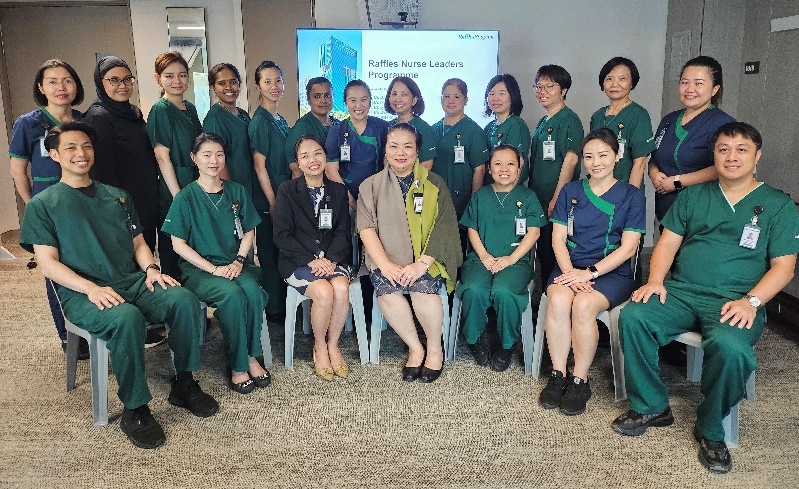
The Raffles Nurse Leaders Programme exemplifies this commitment. Lilian initiated this program because she recognized that leadership is more than a title. It requires specific skills, sustained development, and deliberate practice. The program adapted the American Organization for Nursing Leadership (AONL) Nurse Leader Framework, which focuses on five main areas: business Skills and Principles; Communication and Relationship Building; Knowledge of the Health Care Environment; Professionalism; and Leadership
At the center lies the concept of the “Leader Within,” reminding participants that effective leadership begins with self-awareness, clear values, and defined purpose. What Lilian particularly values is incorporating reflection sessions alongside knowledge and skills development. Participants don’t just learn theories. They examine how those theories apply to their own practice through hands-on workplace application.
RECOGNITION THAT REFLECTS DEEPER COMMITMENT
In 2024, Lilian received two significant recognitions that reflected not just her individual achievements but the broader culture of excellence she has built. Raffles Hospital was honored with the Best HR Training Intervention Award 2024, highlighting the impact of strategic investment in people. Additionally, the SkillsFuture Fellowship Award 2024 made her the first nurse leader in Singapore to earn this distinction.
For Lilian, these awards carried personal significance but also served as reminders of ongoing responsibility. The HR Training Intervention Award validated an approach that combined mentoring, practical skill development, and real-life stories to make training impactful and relevant. It showed that when organizations invest thoughtfully in their people, the returns extend far beyond individual capability to transform entire cultures.
The SkillsFuture Fellowship was particularly humbling. Being the first nurse leader in Singapore to receive this recognition reflected more than technical ability. It acknowledged a lifelong dedication to continuous learning and commitment to sharing knowledge with others. The fellowship supports her ongoing education while enabling improvements to professional development programs at Raffles Hospital.
“Receiving the SkillsFuture Fellowship Award in 2024 was an incredibly humbling milestone,” Lilian shares. “Being the first nurse leader in Singapore to earn this recognition goes beyond technical ability; it reflects a lifelong dedication to continuous learning and sharing knowledge with others.”
Yet she views these recognitions not as endpoints but as encouragement to continue pushing forward. They remind her to keep challenging herself, supporting future leaders, and creating opportunities for those who need them. They validate that promoting lifelong learning and helping every nurse see growth as part of their professional path creates ripples that extend far beyond any individual.
The awards also reinforced a lesson Lilian has learned throughout her career: excellence is never about individual achievement. It always involves teams, systems, cultures, and collective commitment. When she accepted these awards, she accepted them on behalf of everyone at Raffles Hospital who shares the vision of continuous improvement and patient-centered care.
INNOVATION GROUNDED IN PRACTICAL IMPACT
When Lilian discusses innovation in nursing education and practice, she emphasizes something that might surprise those expecting enthusiasm for every new technology. For her, innovation is fundamentally about staying relevant and practical. It’s not about adopting the latest technology for its own sake but ensuring new approaches truly improve care and learning.
At Raffles, this philosophy has guided selective but effective technology adoption. Microsoft Teams enables virtual learning that accommodates busy schedules and diverse learning styles. Manikins provide realistic code-blue simulations where nurses can practice high-pressure situations without risk to actual patients. Decision-support systems guide clinical practice by making evidence-based recommendations accessible at the point of care. Data analytics personalize learning for each nurse, ensuring education feels meaningful and directly applicable to their practice.
“Technology is an enabler, not the hero,” Lilian reminds her team. “Nurses are the ones who make the real difference.”
This perspective prevents technology from becoming an end in itself. Whenever her team considers a new tool, Lilian asks a simple question: Will this save time or make care safer? If the answer is yes, they pilot it, refine it based on feedback, and ensure it integrates naturally into existing workflows. If the answer is unclear or negative, they don’t proceed regardless of how impressive or trendy the technology might be.
Innovation also extends to how content is taught. Breaking lessons into small, digestible modules makes learning more manageable and less overwhelming. Encouraging reflective discussion helps nurses connect theory to their own experiences. Ensuring hands-on practice transforms abstract concepts into concrete skills. By focusing on what really happens in ward areas, innovation becomes a genuine help rather than just a buzzword or distraction.
This grounded approach to innovation has prevented the technology fatigue that plagues many healthcare organizations. Nurses don’t view new tools with suspicion because they trust that anything introduced will genuinely help them do their jobs better. They engage with new systems because they’ve been involved in selection and implementation. They adopt new practices because they’ve seen evidence of improved outcomes.
LEADING THROUGH CRISIS: THE PANDEMIC EXPERIENCE
The COVID-19 pandemic tested healthcare leaders globally in ways few could have anticipated. For Lilian, it brought challenges that stretched resources, strained systems, and demanded levels of coordination, flexibility, and resilience that pushed everyone to their limits.
As Chief Nurse, her primary responsibility involved organizing staff to establish 14 vaccination centres and several COVID-19 treatment facilities. This meant deploying key nursing leaders and frontline nurses to new locations while ensuring Raffles Hospital maintained normal operations. Every day felt like a race against time. Protocols changed constantly as understanding of the virus evolved. Staff shortages created impossible scheduling challenges. Strict visitor restrictions added emotional weight as families struggled to support loved ones from a distance.
“We had to cope with staff shortages, constant updates to Ministry of Health guidelines, and the emotional weight of supporting families under strict visitor restrictions,” Lilian recalls. “It was tough at times, but we relied on each other and turned obstacles into opportunities to grow stronger as a team.”
What got them through was clear communication and unwavering teamwork. Frequent updates kept everyone aligned even as situations changed rapidly. They maximized every space and every helping hand to deliver safe, efficient care. The community’s support provided encouragement during the darkest moments.
Most importantly, Lilian witnessed her nurses demonstrate extraordinary resilience, compassion, and leadership under immense pressure. They supported each other through rotating shifts in full protective equipment. They found moments to laugh even in the hardest times. They showed that shared purpose and genuine teamwork can help people overcome crises that once seemed insurmountable.
This experience fundamentally reshaped Lilian’s perspective on crisis management and nursing leadership. She learned that having good protocols matters, but the relationships built during normal times prove equally important during emergencies. She discovered that planning for surprises, making difficult choices without complete information, and continuing to listen even during high-stress periods are essential leadership capabilities.
“I learned how important it is to balance urgent tasks with rest and to look after everyone’s well-being,” she reflects. “Being open about our struggles, explaining our choices, and inviting everyone’s input made a real difference.”
That openness built trust and strengthened the team in ways formal protocols never could. Nurses knew their leaders were being honest about challenges rather than presenting false reassurances. They felt included in decision-making rather than simply receiving orders. This transparency created psychological safety that enabled people to speak up about concerns, suggest improvements, and support each other through difficult moments.
Now, Lilian tries to lead with the same flexibility and compassion she discovered during the pandemic, always keeping in mind the real people behind every role and title.
LESSONS THAT ENDURE BEYOND THE CRISIS
Three lessons from the pandemic continue guiding how Lilian leads, trains, and prepares her teams today. Each emerged from difficult experiences but has proven valuable in normal operations, not just emergencies.
First, being prepared is a genuine act of care. Having plans in place, running regular drills, and ensuring everyone knows their roles helps people feel safer and more confident. Preparation demonstrates to staff that leadership takes their wellbeing seriously. It shows patients that the organization is ready to handle whatever situations arise.
Second, taking care of wellbeing is essential, not optional. Making time for debriefs after difficult situations, providing peer support networks, and ensuring access to mental health resources helps people process experiences and maintain resilience. Looking after each other enables everyone to give better care to patients.
Third, working together makes everyone stronger. Partnerships both inside and outside the organization allow accomplishment of far more than any group could achieve alone. Collaboration multiplies capabilities, shares burdens, and creates support systems that sustain people through challenges.
These lessons took on even deeper meaning when Lilian received her own health diagnosis. Being diagnosed with early-stage thyroid papillary carcinoma could have been purely frightening. But the lessons she had learned and taught about preparation, wellbeing, and collaboration helped her navigate treatment. They helped her care for herself with the same compassion she encouraged in her teams. They reminded her that nursing is truly a community of courage where people support each other through whatever comes.
Her willingness to be open about this diagnosis, to show vulnerability as a leader, created permission for others to acknowledge their own struggles. It reinforced that seeking help is strength, not weakness. It demonstrated that leaders who show their humanity don’t lose authority but gain deeper connection with their teams.
SHAPING GLOBAL NURSING THROUGH ADVOCACY AND SCHOLARSHIP
Lilian’s influence extends well beyond Raffles Hospital through her roles as an ICN GNLI (International Council of Nurses Global Nursing Leadership Institute) 2025-2026 Scholar and Vice President of the Singapore Nurses Association. These positions enable her to contribute to policy discussions, international collaborations, and the global nursing landscape in ways that amplify nursing voices and advance the profession.
Her vision for global impact begins at home. She focuses on supporting policies that protect nurses’ wellbeing, promote fairness in working conditions, and encourage climate awareness throughout healthcare systems. She advocates for nurses working with international colleagues, sharing ideas and practical solutions that can be adapted to different cultural and organizational contexts.
“I am committed to mentoring because I know talent is everywhere, but opportunities are not always equal,” Lilian states. This recognition drives her passion for creating pathways that help nurses from diverse backgrounds access leadership development, advanced education, and policy influence.
She envisions a future where nurses actively shape policy rather than simply following regulations created by others. Where nursing expertise and compassion are recognized as essential to healthcare’s future, not just valuable additions to physician-led care. Where nurses lead innovation, influence resource allocation, and drive systemic improvements that benefit entire populations.
“I hope to see nurses actively shaping policy, not just following it, and to have our expertise and compassion recognized as key to the future of healthcare,” she explains. “I believe that when we lead with heart, we can change whole systems for the better.”
Her service on the ANCC’s Appraisal Team has significantly influenced her views on global standards in nursing education and practice. Working across different countries applying ANCC criteria, she realized that standards should guide rather than limit. They should promote excellence and lifelong learning while remaining flexible enough to accommodate diverse contexts.
These experiences showed her that high-quality care is possible everywhere if education and practice are grounded in shared values: safety, ethics, evidence-based approaches, continuous improvement. Standards need to be inclusive, shaped by frontline practitioners, and responsive to global issues like climate change, digital health transformation, and health equity.
“Standards are meant to guide us, not limit us, and they help promote excellence and lifelong learning,” Lilian observes. “Nursing education should go beyond just meeting requirements and help nurses build real skills for leadership and teamwork.”
EDUCATION AS THE FOUNDATION FOR TRANSFORMATION
Lilian’s recent completion of a Master’s in Education (Curriculum and Teaching) reflects her conviction that education shapes not just what people know but who they become and what they believe they can achieve. Her graduate studies deepened her understanding of how to create learning experiences that are meaningful, inclusive, and directly applicable to practice.
“Education shapes who we are and what we believe we can achieve,” she reflects. “My Master’s in Education showed me how important it is to create learning that is meaningful, inclusive, and practical.”
She envisions nursing education programs that combine hands-on clinical skills with broader capabilities: ethical reasoning for complex situations, communication skills for difficult conversations, digital literacy for technology-enabled care, strategic thinking for leadership roles. Assessments should feel like coaching and guidance rather than judgment and ranking.
Most importantly, learners should have voice and choice in their education. Working on projects that genuinely help patients and communities makes learning relevant and memorable. Being able to pursue areas of personal interest within structured frameworks builds intrinsic motivation that sustains professional development throughout careers.
The next generation of nurses, in Lilian’s vision, will be both highly skilled and deeply compassionate. They will be ready to lead at the bedside, making critical clinical decisions that save lives. They will also be prepared to participate in broader healthcare discussions about policy, resource allocation, and system design.
“When education matches real-world needs and inspires creativity, nurses will be ready to make a real difference wherever they go,” she believes.
This philosophy shapes how she approaches curriculum development at Raffles Hospital. Programs are designed with input from practicing nurses who understand current challenges. Content is regularly updated based on emerging evidence and changing healthcare landscapes. Teaching methods emphasize active learning, reflection, and application rather than passive information transfer.
BALANCING MULTIPLE ROLES WITH PURPOSE AND GRACE
Leading Raffles Hospital’s nursing division. Teaching and mentoring emerging leaders. Serving in governance roles with professional associations. Contributing to international initiatives. Maintaining family relationships. Managing her own health. The scope of Lilian’s commitments might seem overwhelming to outside observers. How does she balance these diverse demands without burning out or compromising quality?
Her answer reveals an important truth about sustainable leadership. Balance is not something fixed that once achieved remains stable. It constantly shifts with life’s changing demands. The key is keeping everything connected to one clear purpose: moving nursing forward with honesty and hope.
“Balance is not something fixed; it always shifts with life’s demands,” Lilian explains. “I try to keep everything I do connected to one clear purpose: moving nursing forward with honesty and hope.”
Practically, this means clustering meetings to minimize transition time and mental context-switching. Sharing responsibilities rather than trying to do everything personally. Setting aside dedicated time for reflection to process experiences and maintain perspective. Knowing when to say no to preserve focus on highest priorities. Recognizing when to say yes to opportunities that will stretch her capabilities and create growth.
Her family serves as her anchor, providing the love and stability that enables her professional contributions. She finds peace in taking time to pause and reflect, even if those moments are brief. Volunteering reminds her why she chose this profession and reconnects her with the human impact of nursing. Mentoring others fills her with hope for what lies ahead as she sees the next generation developing capabilities and commitment.
“I try to show up as my true self in every role, knowing that life has seasons where some areas need more attention than others,” she shares. “Balance is not about being perfect; it is about finding a rhythm that has meaning.”
This perspective frees her from the impossible standard of perfect equilibrium. Some weeks require more focus on hospital operations when challenges emerge. Other periods allow greater attention to teaching or association work. Personal health needs sometimes take priority. The goal is not maintaining identical attention across all areas all the time but ensuring the overall pattern reflects her values and serves her purpose.
She encourages those around her to extend grace to themselves during difficult seasons. Leadership is not about superhuman capability but about human wisdom, including the wisdom to recognize limits and ask for support when needed.
THE EVOLVING LANDSCAPE OF GLOBAL NURSING LEADERSHIP
Lilian observes nursing leadership changing in ways that excite and inspire her. The profession is beginning to blend technology with the personal connection that defines excellent care. Mental health is becoming a regular part of workplace culture rather than something addressed only during crises. Most importantly, there’s growing recognition that genuine empowerment requires changing systems, not just making symbolic gestures or offering empty encouragement.
“Nursing leadership is changing in exciting ways,” Lilian notes. “We are starting to blend technology with the human connection that defines our care, and we are making mental health a regular part of our work.”
Modern nursing leaders need expanded capabilities. Understanding data to make evidence-based decisions. Communicating effectively with diverse stakeholders from patients to policymakers. Designing solutions that address root causes rather than just symptoms. Truly listening to frontline staff who often see problems before they reach leadership attention.
Addressing burnout requires more than talking about the problem. It demands changing how work is structured, ensuring teams have adequate resources, creating psychological safety where people can acknowledge struggles, and building systems that support rather than deplete those providing care.
Equity must remain central so care is fair and accessible for everyone regardless of circumstances. This means examining policies and practices that create disparities, even unintentionally. It means ensuring diverse voices shape decisions. It means measuring outcomes not just in aggregate but across different populations to identify where improvements are needed.
Lilian is encouraged to see nurses leading innovation across healthcare settings, shaping policy at national and international levels, and building supportive communities that span countries and continents. In the future, nursing leaders will need expertise in both science and storytelling. Scientific knowledge to ensure practices are evidence-based and effective. Storytelling capability to inspire others, facilitate collaboration, and achieve meaningful results.
“In the future, we will need to be skilled in both science and storytelling so we can inspire, work together, and achieve real results,” she observes.
ASPIRATIONS FOR CONTINUED IMPACT
Looking ahead, Lilian’s goals are both clear and ambitious. At Raffles Hospital, she wants to continue building the Nurse Leaders Program, expanding its reach and deepening its impact. Making practices more climate-aware by examining everything from supply chain decisions to waste management. Supporting evidence-based practice initiatives that genuinely improve outcomes for both patients and staff rather than just generating research publications.
Across the region, she hopes to dedicate more time to mentoring, providing guidance to nursing leaders navigating their own challenges. Advising organizations on how to build cultures that value nursing expertise. Working collaboratively to create systems and policies that recognize nurses as essential partners in healthcare transformation.
Personally, she remains committed to learning about both people and policies. Understanding what motivates individuals, what creates thriving teams, what builds resilient organizations. Studying how policy is made, where nursing voices can have greatest influence, how to turn good intentions into actual change.
Most importantly, she wants to lead with compassion that extends beyond patient care to encompass how leaders treat their teams, how organizations support their staff, how systems acknowledge the full humanity of everyone involved.
Her own health challenges reinforced the importance of leaders showing vulnerability. Traditional leadership models often suggest that showing weakness undermines authority. Lilian strongly disagrees. She believes being open and transparent as a leader doesn’t weaken authority but makes leaders more relatable and helps everyone grow stronger together.
“After facing my own health challenges, I want to help make it normal for leaders to show vulnerability,” she states. “I believe being open and transparent as a leader does not weaken your authority; it makes you more relatable and helps everyone grow stronger together.”
This courage to be fully human while holding positions of authority may be one of her most important contributions to nursing leadership.
DEFINING SUCCESS AND LEGACY
When Lilian considers what success means in nursing leadership, she doesn’t think about titles accumulated, awards received, or positions held. Real success, in her view, is helping others become leaders themselves. It manifests in patients who receive safe, compassionate care. In nurses who feel respected and valued. In teams that continuously strive to improve.
“For me, real success in nursing leadership is helping others become leaders too,” Lilian reflects. “It shows in patients who are safe, nurses who feel respected, and teams that always try to improve.”
The legacy she hopes to leave is a nursing profession where courage is part of everyday practice, not reserved for crises. Where curiosity is welcomed and encouraged rather than viewed with suspicion. Where compassion infuses everything from patient interactions to policy decisions to how colleagues treat each other.
If she can help create environments where excellence and kindness endure beyond any individual leader’s tenure, where nurses are encouraged to use their voices powerfully and effectively, she will feel she has succeeded. She wants to be remembered not for her titles but for the opportunities she created and the people she helped advance.
“In the end, I want to be remembered not for my titles but for the opportunities I created and the people I helped move forward,” she says.
Her final thought returns to a theme that has woven throughout her career: the importance of belonging. Nursing brings together people from different generations, cultures, and experiences. That diversity is one of the profession’s greatest strengths, but only when everyone feels they truly belong and their contributions are valued.
Lilian strives to create environments where every voice matters, where people feel supported to grow, where differences are celebrated rather than merely tolerated. Her own journey has been shaped by mentors who believed in her, colleagues who stood by her during difficult times, and family who celebrated her successes. She is deeply thankful for that support and works to provide similar support for others.
“To me, leadership means earning trust and opening doors for possibility,” she reflects. “When we lead with heart, courage spreads, and real change follows.”
As nursing continues evolving to meet 21st-century healthcare challenges, the profession needs leaders who understand that true transformation requires both exceptional skill and deep humanity. Leaders who can navigate complex systems while never losing sight of individual patients and nurses. Leaders who embrace innovation while preserving what makes nursing special: the human connection at its core.
Lilian Yew Siew Mee embodies this kind of leadership. Her 36-year journey from student nurse to internationally recognized Chief Nurse demonstrates that principled leadership, sustained commitment, and genuine compassion can create lasting change. As she continues shaping nursing’s future through her roles at Raffles Hospital, the Singapore Nurses Association, and international collaborations, her influence extends far beyond any single organization.
The future she envisions, where every nurse feels confident, respected, and empowered to help shape healthcare, is becoming reality through leaders like her who show up with courage, lead with heart, and never stop believing in nursing’s transformative potential.

Top 10 Countries with the Best Healthcare
Rankings for the best healthcare systems can differ based on which metrics are prioritized. However, several countries consistently appear at the top of various global indexes, reflecting a combination of high-quality care, accessibility, and strong infrastructure. The following list is based on a synthesis of recent reports from sources like the CEOWORLD Magazine Health Care Index and the Commonwealth Fund.