“Science is complicated. Don’t complicate it more by your language. Try to simplify complexity rather than complexify simplicity, and make it fun and appealing.”
– Martin Kussmann
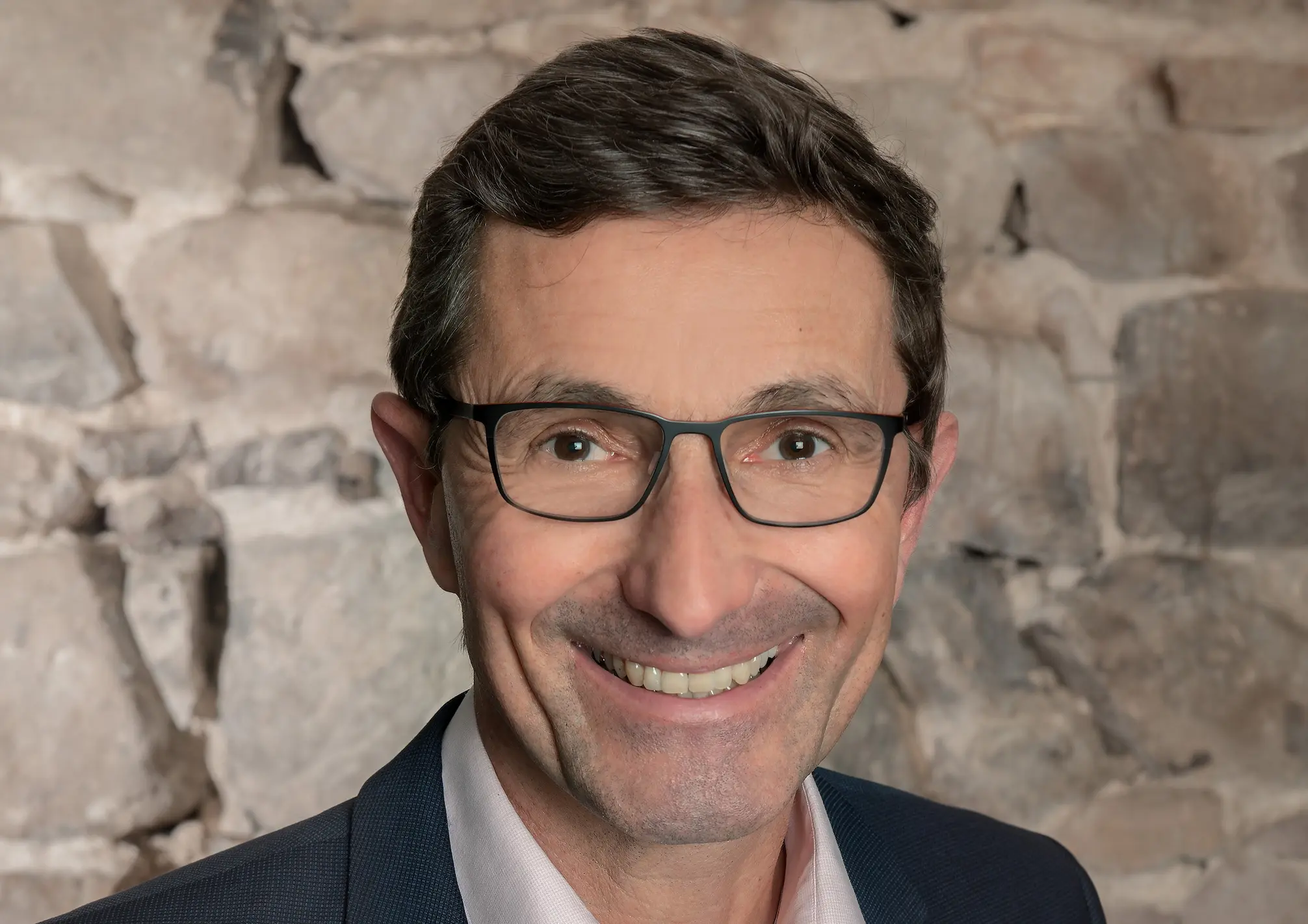
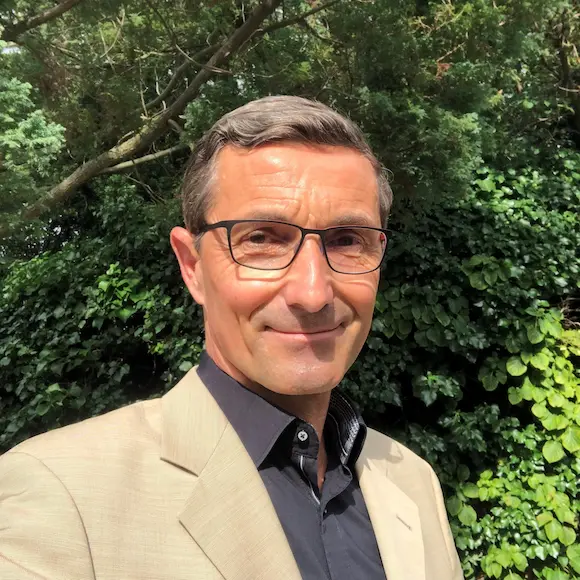
In an era where scientific specialization often narrows focus to molecular minutiae, Martin Kussmann has spent three decades doing precisely the opposite: expanding his vision from proteins to planetary health, from mass spectrometry to meaningful impact, from academic discovery to real-world solutions that feed and heal humanity.
His journey reads like a scientific odyssey across continents and disciplines. From early proteomics laboratories in Denmark to the innovation corridors of Nestlé’s research centers, from New Zealand’s bioactive treasure troves to Bavaria’s agricultural heartland, Kussmann has consistently positioned himself at the intersections where breakthrough innovation is facilitated. His LinkedIn profile captures it succinctly: “Working with smart and nice people that do cool things” plus teaching the next generation. For a scientist with over 200 publications and hundreds of presentations, this deceptively simple statement reveals a profound truth about what drives transformative science.
“I was interested in many things: geography, languages, history,” Kussmann reflects on his early academic years in Germany. “I eventually decided to study chemistry.” That decision, made in the late 1980s, coincided with a pivotal moment in biological science. “In the late 80’s and early 90’s, biology became molecular at scale and speed,” he explains. This convergence would define his career trajectory.
The young chemist joined what he calls “the early biological mass spectrometry journey to study proteins like genes,” witnessing firsthand the technological revolution that would earn the 2002 Nobel Prize in Chemistry for Biological Mass Spectrometry. His doctoral work at the University of Konstanz from 1991 to 1995 included an exceptional stint at UC San Francisco, rare for European PhD candidates at the time. “Experiencing the size, speed, scale and possibilities of the US university and science system, at the time ahead of Europe,” proved formative in shaping his understanding of what ambitious science could achieve.
THE ODENSE YEARS: WHERE PROTEOMICS MET PASSION
Kussmann’s postdoctoral years there, working under Professor Peter Roepstorff from 1995 to 1998, would prove transformative not just scientifically but philosophically.
“What Nashville is to country music, Odense is to Proteomics,” Kussmann notes with obvious affection. Roepstorff, an early pioneer in studying proteins at large scale and high speed, brought more than scientific rigor to his laboratory. “His credo was and is: ‘Science should be fun,’” Kussmann recalls. This wasn’t merely a motto but a lived reality that attracted talented researchers from around the world.
The impact of those formative years resonates decades later. “We held a wonderful revival this summer 2025 where all his ‘scientific kids,’ the PostDocs and PhD students from the early to mid-90’s, met again and celebrated our ‘scientific father’ and our great times.” In an age where academic laboratories often resemble pressure cookers, Roepstorff’s legacy offers an alternative model: rigorous science pursued with joy, competitive research conducted in collaborative spirit.
From Odense, Kussmann plunged into the early biotech boom, joining GeneProt in Geneva, Switzerland in the early 2000s. The scale was staggering: “We did blood proteomics with 50 mass spectrometers for Novartis, in search of biomarkers for cardiovascular disease, thereby building one of the first big protein databases.” This industrial-scale approach to biological discovery represented the future of biomedical research, where big data would eventually deliver deep insights.
THIRTEEN YEARS AT THE TABLE: NESTLÉ AND THE BIRTH OF NUTRIGENOMICS
From 2003 to 2016, Kussmann found himself inside arguably the world’s most international food corporation. At its peak, Nestlé employed some 350,000 people across roughly half the countries on Earth. The headquarters in Vevey, Switzerland housed 2,000 employees, while Nestlé Research in Lausanne employed 800 staff collectively representing over 100 countries.
“Diversity means creativity and resilience, from the microbiome via ecosystems to workplaces and society,” Kussmann observes, drawing connections between biological and organizational systems with the ease of someone who has lived at both frontiers. Working with Dr. Laurent Fay, Head of Bioanalytical Sciences at Nestlé Research, Kussmann built and led several research teams and units in nutrigenomics and molecular biomarkers, focusing intensively on human nutrition studies.
The premise was elegant yet revolutionary: use nutrition as prevention and complement to medicine. Rather than treating disease after it manifests, why not leverage food’s molecular complexity to maintain health and prevent chronic conditions? This shift from treatment to prevention represented more than scientific strategy. It reflected a philosophical repositioning of nutrition from fuel to medicine, from commodity to intervention.
“I accompanied Nestlé’s transformation from a global food corporation to a nutrition, health and wellness company,” Kussmann notes. This wasn’t merely corporate rebranding but a fundamental reconceptualization of what a food company could be and do. During these years, he also taught nutrigenomics as Associate Professor at the University of Aarhus in Denmark and at the Federal Institute of Technology Lausanne (EPFL), a world top-20 university.
Yet even amidst this success, Kussmann found himself asking uncomfortable questions such as “’what comes after the paper?’ because publications are the academic and scientific currency, but the new knowledge must be translated into solutions for consumers and patients.” This persistent inquiry would eventually pull him from corporate research toward more direct impact pathways.
THE NEW ZEALAND INTERLUDE: ENDEMIC GOODNESS MEETS INNOVATION
After 16 years inside a large corporation, Kussmann made a bold leap to the other side of the world. From 2016 to 2018, he served as Full Professor at the Liggins Institute at the University of Auckland and Scientific Director of High Value Nutrition, a national science and innovation programme in nutrition and health. He helped secure a second New Zealand government financing round worth 45 million NZ dollars.
The Liggins Institute’s focus on early-life health and perinatal nutrition resonated deeply. “Better getting things right in the first place than fixing them later,” Kussmann explains, capturing the institute’s preventive philosophy. The work proved “very meaningful and inspiring,” addressing health at its most vulnerable and consequential stage.
“Thanks to millions of years of molecular evolution, nature has come up with a bioactive answer to many, if not most, of our questions about human, animal and planetary health. To leverage this treasure, we must find the right sentence in the right book in the right library, and this fast.”
New Zealand offered something else equally valuable: what Kussmann calls “endemic goodness.” The country’s unique biodiversity provided “a treasure for innovative bioactives, ingredients and foods.” His team worked on “leveraging the often endemic beauty of NZ nature” to develop science-backed healthy foods with claims, “thereby adding value to the ‘endemic goodness’ of NZ natural products and converting them into high-value functional foods.”
This represented perhaps the most tangible impact on a healthier and more sustainable food system Kussmann has accomplished. “We managed to raise 45 M NZ$ and leveraged it into developing science-backed healthy foods with claims,” he reflects. “Improving the food system only works through translational science, innovation and generating new value with healthy and sustainable, yet tasty and affordable products and solutions.”
Personal reasons necessitated a return to Europe in 2018 after just two years. “Reintegration into EU from NZ was a challenge, especially with COVID kicking in as of 2020,” Kussmann admits. Geographic mobility, he notes, “comes at a price and is not always easy with family.”
FINDING HOME IN THE FOOD SYSTEM
After several CSO-like assignments across Germany, Switzerland, and Ireland, Kussmann made a decisive choice in 2022: establish himself as an independent consultant and advisor in food, health, and biotech, primarily supporting early-stage startups. “Taking advantage from my wide international network built along my nomad’s life,” he explains.
This decision reflected a broader evolution in his thinking. “Widening scope from biotech, nutrition and health to embrace also sustainability,” Kussmann notes. The catalyst was the One Health Concept, recognizing the interconnection between healthy humans, healthy animals, and a healthy planet.
In 2023, he took the position of Head of Knowledge and Innovation at KErn, the Competence Centre for Nutrition in Bavaria. The fit was natural: “We work there on innovating the Bavarian food system.” By 2025, he added another role as Lecturer at the Technical University of Munich, considered the best university in the European Union. The motivation? “To convey my passion, drive, insights and experience to the next generation of science students.”
At KErn, Kussmann pursues impact through two complementary strategies. The first involves designing, launching, and managing smaller-scale pilot projects along the value chain with multiple food system stakeholders. “These projects demonstrate how a healthier and more sustainable food system can look like,” ranging from improved nutrition and health studies through innovative agriculture and food tech to digital health and consumer apps.
The second strategy leverages information: running the web portal ‘Ernährungsradar’ (Nutrition Radar), providing “timely, up-to-date, scientifically sound yet easy to understand, compact and attractive information about nutrition, health and sustainability. This to enhance the signal above the noise, the fact above the fake and the truth above the myth.”
THE IMPLEMENTATION GAP: KNOWING VERSUS DOING
When asked about the biggest challenges facing sustainable and resilient food systems today, Kussmann doesn’t cite lack of knowledge or inadequate technology. Instead, he identifies something more fundamental and frustrating.
“We have an implementation rather than a knowledge problem,” he states bluntly. “We know much about what we should do but we don’t act accordingly.” This disconnect stems from multiple sources: insufficient international collaboration, societal and political barriers, and the sheer complexity and interconnectivity of the food system. “Too much fragmentation does not deliver system-wide solutions.”
His critique extends to education. “We need to better educate and train the food system scientists and innovators,” advocating for a Bachelor of Science in Food Systems from which students can branch into specialized disciplines along the value chain: agriculture, food technology, nutrition and health, sensory and consumer science.
But education alone won’t suffice. “We also need to reactivate and raise the appreciation of food and nutrition as the most important factor for human health and wellbeing.” This requires moving beyond guidelines and policies toward concrete solutions. “After all, it is the consumer who decides on food purchase and consumption. Therefore, rather than more guidelines and policies, we need healthy and sustainable, yet also tasty and affordable solutions and products.”
Kussmann envisions empowering consumers through “science-based, user-friendly apps that work at point of purchase and point of consumption: everybody should know how good or bad a certain product is for both personal and planetary health.” Technology enables what regulation cannot: informed choice at the moment of decision.
The philosophical foundation runs deeper still. Citing Jane Goodall, Kussmann asks why “the by far most intelligent species would destroy its own home.” His answer: “It may be due to the disconnect between rational and emotional intelligence, between ‘the brain and the heart.’”
This diagnosis points toward his core conviction: “There is no ‘planet B’ and if there was, it would be very far away and likely not as liveable and beautiful as Mother Earth. So we better take care of our unique home.”
FROM OMICS TO APPS: RESHAPING NUTRITIONAL UNDERSTANDING
The technological transformation of nutrition science fascinates Kussmann as both participant and chronicler. Multi-omics technologies reshape nutrition at the science level by delivering biomarkers, diagnostic signatures, and mechanistic insights into how foods work on health and wellbeing. These generate big data for food and nutrition, populating knowledge bases from which machine learning can draw learnings and make predictions about nutrients, bioactives, and their functions.
But the ultimate impact lies downstream. “The consumer must be empowered to take better informed, and thereby healthier and more sustainable decisions,” Kussmann insists. This requires “science-rooted apps that inform the consumer about own health as well as health and sustainability of food purchase and consumption, ideally right at the point of purchase and consumption.”
On personalized nutrition, a field he’s helped pioneer over 25 years, Kussmann offers a nuanced perspective. “While Personalized/Precision Nutrition have been established as scientific disciplines over approximately 25 years, their delivery into real-world solutions has been limited and must be enhanced.”
The term “personalized” itself may mislead. “For economic reasons, nutrition cannot be tailored to an individual. On the other hand, one size clearly does not fit all.” The solution lies in identifying meaningful population segments: “consumers and patients within a group must share enough similarities so that they share an enhanced benefit from a tailored solution; yet, these groups must be large enough so that serving them specifically is economically feasible.”
This could mean consumers of the same ethnicity, with similar lifestyles and environmental exposure, or deeply phenotyped patients with the same predisposition for chronic disease actionable by nutritional prevention or intervention. “Science and innovation for personalised solutions must be paid off by margins and sales of these personalised products,” Kussmann notes pragmatically.
BIOACTIVES: UNLOCKING NATURE’S MOLECULAR LIBRARY
Kussmann’s excitement about bioactives reflects both scientific opportunity and philosophical conviction. “Thanks to millions of years of molecular evolution, nature has come up with a bioactive answer to many, if not most, of our questions about human, animal and planetary health. To leverage this treasure, we must find the right sentence in the right book in the right library, and this fast.”
Natural bioactives, especially from sustainable plant and food sources, provide molecular solutions to nutritionally or pharmaceutically actionable chronic or acute conditions. “Healthy ageing and wellbeing-founded longevity are deeply rooted human desires and increasingly entitling research programs on human health maintenance and disease prevention.”
Yet bioactive discovery has traditionally been inefficient. Early discoveries were serendipitous, based on observing health issues coinciding with bioactive absence. The classic example: scurvy in seafarers due to missing vitamin C. High-throughput screening represented the first systematic large-scale approach, but without defined benefit targets and with purity not always concurring with efficacy, it hasn’t delivered expected consumer and patient solutions.
“As a consequence, true innovation in the field is rare, rather renovation remains the main-stake,” Kussmann observes. Most companies develop variants of known compounds rather than molecularly new solutions, constrained by challenging regulatory environments for new chemical entities and the ethical retreat from animal testing.
Artificial intelligence offers a potential breakthrough. “AI can help unlock these bottlenecks by prediction of bioactive functions and sources, thereby drastically reducing the number of wet lab experiments.” This requires clear benefits defined upfront, flowing from design-first approaches rather than bottom-up shotgun or screening strategies.
BAVARIA: WHERE HERITAGE MEETS INNOVATION
Kussmann’s current work in Bavaria illustrates his approach to regionally contextualized innovation. Bavaria, Germany’s largest federal state by surface with 13 million inhabitants, provides rich terrain for food system transformation.
“While helping improve the food system, we place emphasis on preserving regionality and delight, cultural heritage and topo- as well as geographical particularities,” Kussmann explains. “Rather than replacing the existing system by another, we try to leverage the best of the current into a healthier and more sustainable future system.”
Bavaria’s fame for dairy, meat, and beer products presents both challenge and opportunity. “We try to help preserve and enhance these brands by prioritizing quality over quantity, premium and ecological products over mass foods.” This respects cultural identity while advancing sustainability.
The approach reflects Kussmann’s broader conviction: “Demographic, agricultural, and cultural context is always important to improving food systems and advancing nutrition and sustainability, regardless of geography.”
THE ART OF SCIENCE COMMUNICATION
With over 200 publications and hundreds of oral presentations, Kussmann has developed clear principles for scientific communication. The foundation: “Understand your audience so that they understand you: what do they need, rather than what do you want to talk about.”
For lectures and presentations, he ensures clear, short, possibly catchy titles; explicit topics and reasoning; visible outlines showing progress; tidy slides with minimum text and maximum illustration; respect for time with space for Q&A; and personal, spontaneous parentheses with humor. “After all, it should be both enriching and fun.”
For papers, similar principles apply: clear, short, possibly catchy titles; abstracts as executive summaries allowing readers to grasp essentials without reading fully; strict adherence to journal structure and formatting; clear separation of introduction, methods, results, and discussion; framing explaining why research was done and what comes next; self-explanatory figures with clear legends; and precise yet plain language. His guiding principle: “Science is complicated. Don’t complicate it more by your language.”
The overarching philosophy: “Try to simplify complexity rather than complexify simplicity, and make it fun and appealing.”
COLLABORATION ACROSS BOUNDARIES
On managing cross-functional collaboration between scientists, industry partners, policymakers, and educators, Kussmann offers candid humility. “Honestly, I have never managed all this. I think very few have. Yet I had the privilege to be part of such places and networks.”
The key insight: “Scientists, educators, innovators, entrepreneurs, industry partners typically meet and thrive in centres, hubs and campuses where traditional boundaries blur and various disciplines and interests can be rallied behind the common overarching goal, that is science-driven innovation to improve people’s life and preserve the planet.”
Such hotspots exist in many countries and places, “but it takes the ‘flavour’ of the place and the culture of the people. These are the key ingredients that bring true, synergistic collaboration to life. People must realize and embrace that they can do more together than alone.”
His summary: “Culture is more important than structure, people are more important than infrastructure; this said, you need professional structure and high-end infrastructure and equipment. Yet, in the end, the mission and vision must be shared, lived and carried by the protagonists involved.”
WHAT MAKES PROMISING VENTURES
As Scientific Advisory Board Chair for companies in the US and Spain, Kussmann has developed clear criteria for evaluating biotech and foodtech ventures. Leadership teams must combine competence, charisma, courage, and empathy: “a rare find.” They need both rational and emotional intelligence, scientific and technological depth.
Early core teams require complementary hard and soft skills, recognizing that “no one has it all.” Clear vision for differentiation and competitiveness answers fundamental questions: “What do we make and why? Is it an unmet need? Why are we better, faster or cheaper than others or what can we do that others can’t?”
Diligence and discipline for technological, business and financial execution matter, as does perseverance. For successful venture capital fundraising, all these qualities must align with something less tangible: “Eventually, it also has to ‘click’ emotionally. The investor almost must ‘fall in love’ with the start-up and its team.”
BREAKTHROUGHS ON THE HORIZON
Looking toward 2030, Kussmann identifies specific breakthroughs poised for global impact. In agriculture: vertical farming in places where solar energy is abundant and cheap; indoor agriculture in arid and deserted areas with solar-powered water desalination; urban farming to bring food attention back into cities while greening and cooling them; agro-photovoltaics for combined land use producing energy and food; and precision farming with precision irrigation to reduce water use.
In food production: precision fermentation and alternative proteins from algae and insects. In science and technology: AI for prediction of bioactive function and source, plus AI and microfluidics for high-throughput in vivo testing.
These aren’t distant dreams but emerging realities where “technology is hardly limiting” and “the One Health Challenge in the Anthropocene is immense.”
SCIENCE-TO-INDUSTRY TRANSLATION
For effective science-to-industry translation in nutrition and sustainability, Kussmann returns to fundamentals. “As simple as it sounds: physical proximity is still important and often the key.” Science translates into applications and fuels innovation where local or regional ecosystems make interdisciplinary interaction fun and easy, with facilities beneficial for both science and testing.
“Ideally, there is a campus where universities, institutes, food/health/biotechs and large corporations invest and interact for a common goal of fostering nutrition and sustainability innovation.” Examples exist at Wageningen University & Research in the Netherlands, to some extent at the Technical University Munich,Freising campus near Munich, and at the AgroFood Park at Aarhus University in Denmark. “But we need many more such incubators.”
Easy and rapidly available venture capital for early-stage startups proves essential. “It is not only the available money, it is also about the risk-taking, courageous mindset of entrepreneurs, investors and public sector.”
His prescription: “Less fragmentation, more integration and focus on big common goals. Less nice-to-haves, more must-haves. Higher lighthouses and fewer lanterns. Not everybody can or should have a say and play.”
ADVICE FOR THE NEXT GENERATION
To young researchers and innovators aspiring to contribute to sustainable nutrition’s future, Kussmann offers encouragement grounded in urgency. “There has never been a better time and greater need for science,” he declares, because technology is hardly limiting and the One Health Challenge in the Anthropocene is immense.
“Sustainable production and consumption of food and energy are the biggest sustainability challenges for humanity today,” making food system work “meaningful and rewarding.” His counsel: Follow your passion. Be mobile and leave your comfort zone. Look for excellence and relevance. Work at interfaces. Build and maintain good relationships. Choose good mentors.
The relationship advice carries particular weight. “It is not only important to build good relationships but also to maintain them. Do not only call when you need something.”
THE NOMAD’S WISDOM
Reflecting on his journey as what he calls a “scientific nomad,” Kussmann distills lessons from living and working across Switzerland, Denmark, Sweden, the US, New Zealand, Ireland, and Germany. “I think as a scientific nomad, you should stay authentic while adapting, changing and evolving.”
“Experiencing different cultures, societies and work environment is arguably one of the most teaching and exciting experiences at all.” Living in different natural and built environments proves “very enjoyable,” and “leaving your comfort zone is necessary to really develop and advance.”
Yet he acknowledges the costs. Geographic mobility “comes at a price and is not always easy with family.” The insight reflects hard-won wisdom about trade-offs inherent in ambitious careers.
DEFENDING TRUTH IN AN AGE OF ALTERNATIVES
Perhaps Kussmann’s most urgent concern involves threats to scientific integrity itself. “Political editing of science and questioning, ignoring, discarding achievements of the enlightenment and facts of science is a big threat to factfulness and truthfulness.”
His defence of science does not rest not on claims of absolute truth but on scientific rigour. “Science is not the truth but it is in constant search for the truth about what exists.Its language has always been international. This is why science was the first sector that has become global and borderless.”
This conviction shapes his legacy aspirations. Asked what he hopes to create in sustainable nutrition, biotechnology, and planetary health, Kussmann responds with characteristic humility. “Legacy is a big word,” he notes, pointing out he’s 61 years old and his father turned 90 this year in good health. “I hope to still be around for a while.”
“In all simplicity and modesty, I’d be happy if I was able to inspire and motivate the next generation of young scientists, that take care of people and planet,” to engage for one of the two biggest challenges of humanity in the Anthropocene: healthier people on a healthier planet, because Earth is arguably uniquely hospitable and beautiful and there is no “planet B.”
He hopes to encourage them to stand up for and defend “truthfulness and factfulness” and recognize that “science is not an alternative fact.” And to help them cherish “the privilege and joy to meet and work with smart, nice people that do cool things” through “science as the archetypical global profession with one shared language and without any borders.”
THE NEXT FRONTIER
Looking toward nutrition science’s next frontier, Kussmann identifies three transformative shifts: democratized nutrition and health science with improved equity and sharing of positive outcomes; better educated, informed, and responsible citizens and consumers who appreciate nutrition as the best and biggest impact on personal health and wellbeing; and true leverage of nutrition into prevention to reduce chronic disease burden, improve public health, and stabilize health care systems.
These ambitions reflect his career-long commitment to translating molecular insights into societal benefits, to bridging wet lab discoveries with real-world applications, to ensuring scientific advances serve humanity and planet rather than remaining confined to academic journals.
In Martin Kussmann, we find a scientist who has refused the “comfortable specialization” that often defines modern research careers. Instead, he has built bridges: between proteomics and nutrition, between academia and industry, between molecular discovery and planetary health, between knowing and doing. His journey from studying proteins in Odense to reimagining Bavaria’s food system illustrates how scientific careers can evolve toward increasing relevance without sacrificing rigor.
The scientific nomad has found his mission not in a single laboratory or institution but in the interfaces between disciplines, the conversations between stakeholders, the translation from knowledge to action. “I have never cared about what the door sign says – what mattered to me was what happened inside”. His legacy may ultimately rest not in any single discovery but in demonstrating how science, when pursued with passion, humility, and commitment to impact, can help humanity navigate its greatest challenges.
As he puts it, working with smart, nice people who do cool things while teaching the next generation: “It hardly gets any better as an internationally established scientist.”