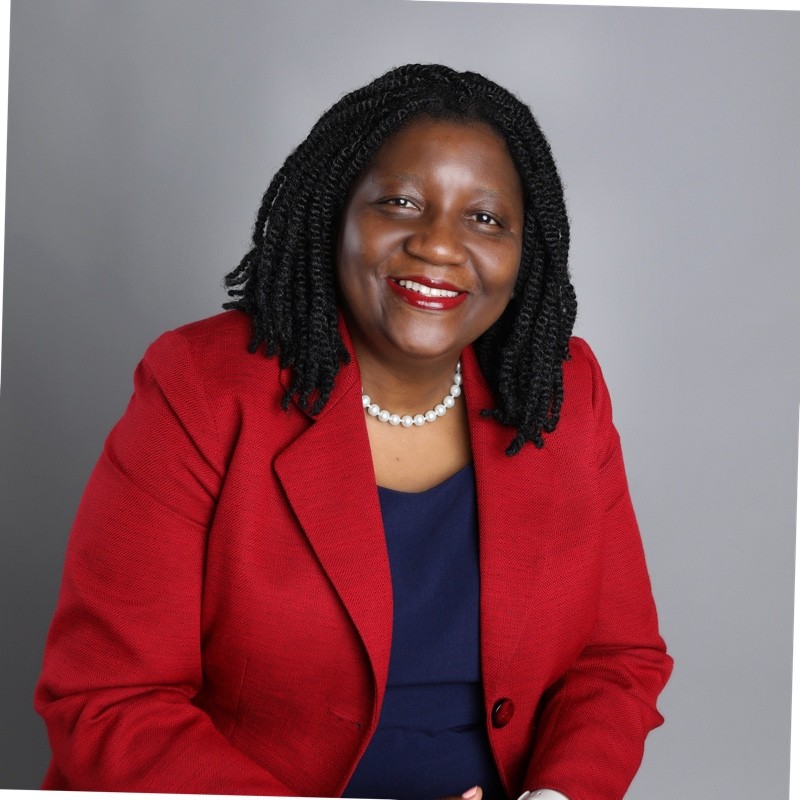
In the landscape of North Texas education and community leadership, where countless voices compete for attention and impact, one leader stands apart through the seamless integration of faith, expertise, and selfless service. Dr. Feyi Obamehinti represents a rare breed of leader whose journey from a fifteen-year-old accepting her calling to teach God’s Word to becoming a dual CEO and President of thriving organizations reads less like a career trajectory and more like a divinely orchestrated symphony of purpose meeting preparation.
Her story spans continents, from Arizona to Nigeria and back to the United States, weaving through classrooms, boardrooms, television studios, and community centers. Yet what makes Dr. Obamehinti’s leadership truly remarkable is not the geographic breadth of her experience but the consistent depth of her conviction that every person she serves belongs to God, and therefore deserves to be led with excellence, character, and genuine care.
“Faith is my ‘why,’” Dr. Obamehinti reflects on her approach to leadership. “Without my faith in Jesus Christ, there will not be an approach to leadership or community service. Because of my faith in Christ, every person I get to serve belong to God. In essence they are God’s people and I am careful how I serve them, because one day I will give an account back to God how I served them.”
This accountability to a higher purpose has shaped not just what she does, but how she does it. From founding Ravir LLC Leadership Services in 2007 to establishing Oasis Focus Inc. in 2009, Dr. Obamehinti has built organizations that don’t just serve communities but transform them from the inside out.
THE ROOTS OF PURPOSE: LESSONS FROM A GRANDMOTHER’S LEGACY
Every transformational leader can trace their passion to formative experiences that planted seeds of purpose long before they understood their full potential. For Dr. Obamehinti, that foundation was laid in the home of her paternal grandparents, particularly through the example of her grandmother, a retired school principal and community leader.
“My passion for education and ministry is first a calling that I was fortunate to answer,” she explains. “Secondly, the passion was God ordained and watered by first example seen in my paternal grandparents that raised me. Particularly my paternal grandmother who was a retired school principal and a community leader.”
Watching her grandmother’s tireless service to the community and dedication to helping people know God through scripture created more than admiration. It created a blueprint for integrated leadership that refuses to separate spiritual conviction from practical service. The summer camps she helped teach, combining both Bible and academic subjects like science, demonstrated early on that faith and education were not competing priorities but complementary expressions of the same calling to develop whole persons.
That early calling, accepted at age fifteen, became what Dr. Obamehinti describes as “a seed that has grown into the fortified oak tree today.” The metaphor is apt. Oak trees are known not just for their strength but for their deep root systems and their ability to provide shelter and sustenance to entire ecosystems. Similarly, Dr. Obamehinti’s early calling has grown into leadership that provides shelter, guidance, and nourishment to people globally, and not just across North Texas.
EMBRACING THE NON-LINEAR PATH: FROM MICROBIOLOGY TO MINISTRY
Unlike leaders who follow predictable career trajectories, Dr. Obamehinti’s journey exemplifies what she calls “the not so linear path.” With a bachelor’s degree in microbiology, her initial direction seemed scientifically oriented. However, eleven years of homeschooling three daughters created an unexpected pivot point that would ultimately define her professional impact.
“After eleven years of homeschooling three daughters, my husband and I made the decision to send them to public school to complete their high school education,” she recalls. “It was this time that allowed me to turn my bachelor’s degree in microbiology into a teaching field in both private and public schools.”
This transition wasn’t merely about finding work outside the home. It was the beginning of a comprehensive educational journey that would take her from teaching science, math, and high school biology to training and developing other teachers through both in-service and pre-service pathways. Each role built upon the previous one, creating what systems thinkers call “holism”where the whole becomes greater than the sum of its parts.
Her classroom experience became the foundation for understanding the practical challenges teachers face daily. When she exited the classroom, that firsthand knowledge of “key gaps” propelled her into teacher training and development. An opportunity to lead a private school provided insights that informed her doctoral studies in curriculum and instruction. Each experience wasn’t just a job but a classroom in itself, teaching lessons that would equip her for greater impact.
“That early experience was a seed that has grown into the fortified oak tree today,” Dr. Obamehinti reflects. “That experience has guided me in embracing all the not so linear path in my career and leadership.”
This embrace of non-linearity reveals a crucial leadership quality: the ability to recognize divine orchestration in apparent detours. Where others might see challenges or digressions, Dr. Obamehinti saw divine intentions of preparation for purpose. This perspective transforms every experience into growth and every challenge into opportunities for learning.
THE LITERACY CRISIS: CONFRONTING NORTH TEXAS’S MOST PRESSING EDUCATIONAL NEED
With over two decades of experience in education and non-profit management, Dr. Obamehinti possesses a panoramic view of North Texas’s educational landscape. When asked about the most pressing needs, her response is unequivocal: literacy.
“The most pressing educational need in North Texas today is literacy,” she emphasizes. “Many of our students are still lagging one, two and even three grades behind in literacy. Especially students from under-served communities with limited resources.”
This literacy crisis transcends socioeconomic boundaries in troubling ways. While students in under-resourced communities face obvious disadvantages, the problem persists even where resources abound. “And where there is abundance of resources, many students are still unable to read and write at grade level,” Dr. Obamehinti notes. “The ability to read and write at grade level is an asset that every student should have.”
Her research as a TCALL-Barbara Bush Fellow at Texas A&M University provided firsthand insight into literacy challenges among refugee families. This scholarship-funded research examined students with interrupted schooling in their foundational years, revealing how educational disruption creates cascading effects throughout a student’s academic journey.
The second pressing need she identifies is equally fundamental: certified teachers to fill every classroom. “Another need is certified teachers to fill every classroom where students are looking for both leadership and guidance,” she explains. This shortage means students aren’t just missing instruction; they’re missing the leadership and guidance that quality teachers provide beyond academic content.
WRITING TO FILL THE GAPS: AUTHORSHIP BORN FROM NECESSITY
Dr. Obamehinti’s journey as an author exemplifies her needs-based approach to leadership. She doesn’t write for the sake of publishing or personal platform building. She writes because she identifies gaps that her experience can fill.
“The books I authored in education was based on the needs,” she explains. Her work on The Cooperating Teacher Handbook emerged during her time mentoring new teachers from various colleges. “Many of them needed more than their educational experience at that point had offered them.”
This handbook addressed a critical gap in teacher preparation programs. New teachers often enter classrooms with theoretical knowledge but insufficient practical guidance for navigating the complex realities of teaching. By documenting what cooperating teachers need to know and do, Dr. Obamehinti created a resource that bridges the theory-practice divide.
Similarly, The Texas Refugee Framework represented a collaborative response to the influx of refugee students in Texas public schools. “Many of our teachers had little experience designing lessons or teaching refugee students,” she notes. The framework provided educators with practical strategies for serving this unique population effectively.
Her book Crushed to Restored draws from the biblical book of Nehemiah, extracting timeless leadership lessons for contemporary application. “One such is the lesson of impactful leadership, something people need today,” Dr. Obamehinti explains. “Impactful leadership is selfless with a focus on the people. We need leaders that understand that their leadership is all about serving people and not themselves.”
BRIDGING EDUCATION, POLICY, AND COMMUNITY: THE FELLOWSHIP ADVANTAGE
Dr. Obamehinti’s work as both a TCALL-Barbara Bush Fellow and Heritage Academy Public Policy Fellow demonstrates her commitment to understanding education from multiple vantage points. These fellowships aren’t credentials to collect but learning experiences that inform her comprehensive approach to serving people better.
The TCALL-Barbara Bush Fellowship focused on literacy research among refugee families, providing data and insights that shape her current work. “That experience gave me a firsthand look at the literacy needs of students with interrupted schooling in their foundational years,” she reflects.
The Heritage Academy Public Policy Fellowship offers a different but equally valuable perspective. “The Heritage Foundation provides to anyone who wants to learn more about our founding principles in America, the constitution and the great benefits of conservative values to our society,” Dr. Obamehinti explains.
She highlights how understanding policy principles enhances community work. “Think of the conservative value of less government and less spending. That is a value that benefits our society.” By understanding how policy shapes educational and community realities, she can more effectively navigate systems and advocate for the communities she serves.
“I am grateful for these learning opportunities,” she says, demonstrating the posture of continuous learning that characterizes effective leaders. Even with extensive experience and multiple degrees, Dr. Obamehinti remains a student, constantly seeking new knowledge that can enhance her service to others.
OASIS FOCUS INC: SIXTEEN YEARS OF MEETING NEEDS BEFORE THEY BECOME CRISES
Since its establishment in 2009, Oasis Focus Inc. has served as a lifeline for under-served communities across the Dallas/Fort Worth metroplex. For over sixteen years, the organization has embodied Dr. Obamehinti’s philosophy that effective leadership identifies needs and meets them practically, not just theoretically.
“We have been fortunate as an organization to serve our underserved communities,” Dr. Obamehinti reflects. “We started out providing guidance to refugee families and helping them assimilate into their new country.”
The organization’s evolution reflects both the changing landscape of community needs and Dr. Obamehinti’s responsive leadership. When Oasis Focus began, resources for refugee families were limited. Now, while resources have multiplied, demand has grown exponentially. “Now, we have a plethora of resources, yet the needs are much that demand over-rides supply,” she notes.
One initiative stands as a flagship of the organization’s impact: participation in the annual Dallas Mayor Back To School Fair. This event has become a signature success story, providing school supplies to families who face impossible choices between feeding their children and equipping them for school.
“For anyone that has taught and been in the classroom, knows that students come to school with no school supplies because they don’t have any,” Dr. Obamehinti explains. “Their parents must choose providing food on the table from school supplies. We get the privilege to fill that gap for the parents and provide school supplies.”
The scale of this operation is staggering. Serving over 2,500 students at an event attracting more than 30,000 people require year-round preparation and substantial funding. “It takes a whole year for us to prepare to serve families at the annual event,” she explains. “Our challenge is funding. Providing free school supplies for over 2500 students takes a lot of money.”
Despite these challenges, the organization perseveres through donor partnerships and relentless commitment to their mission. “This is why we are deeply grateful for our donors and always on the lookout for new donors to partner with us,” Dr. Obamehinti says, demonstrating the humility and practical wisdom that characterizes sustainable non-profit leadership.
AMPLIFYING HOPE THROUGH MEDIA: THE OASIS CONNECTION TV MINISTRY
While Oasis Focus Inc. addresses physical and educational needs, Oasis Connection TV Ministry co-founded with her husband tackles spiritual hunger through modern media channels. This television ministry has reached audiences through major networks, demonstrating how Dr. Obamehinti’s integrated approach extends beyond traditional ministry boundaries.
“Oasis Connection TV is one of the greatest avenues that God reached both churched and unchurched people,” she explains. The ministry’s impact extends far beyond typical church attendance, reaching people who might never walk through sanctuary doors but desperately need messages of hope, encouragement and practical faith.
The results speak to the power of accessible spiritual content. “With such outreach, we saw high request of Bibles from people wanting to read the Bible for the first time, we saw prayer requests from people that typically do not attend church weekly, and we saw lives changed through the many testimonials we receive.”
Dr. Obamehinti recognizes that modern media distributes access to spiritual resources. “In our time now, media makes messages of hope easily accessible to people globally. And the messages are available continuously.” This continuous availability means people can access spiritual encouragement precisely when they need it, whether at 3 AM during a crisis or during a lunch break between demanding responsibilities.
“Media has been instrumental in amplifying God’s message of hope globally,” she concludes, demonstrating how leaders who embrace technology can multiply their impact exponentially.
PARTNERSHIP IN PURPOSE: CO-LEADING WITHOUT COMPETING
One of the most remarkable aspects of Dr. Obamehinti’s leadership story is how she and her husband co-lead both ministry and community organizations while maintaining their individual callings. In an era of high-profile partnership failures and competing egos, their approach offers a masterclass in complementary leadership.
“My husband and I view all that God has entrusted into our hands as a team,” Dr. Obamehinti explains. “We work to complement each other in co-leading both ministry and community organizations. This approach has helped each one lead with our strengths while balancing and complimenting each other.”
The key lies not in identical gifts but in systematic coordination. “We have a system in place that ensures our individual callings continue to flourish,” she notes. This system prevents the common pitfall where partnership becomes competition or where one person’s calling gets subordinated to the other’s.
Practical examples illustrate this philosophy in action. “For example, we travel with each other to support each other in a speaking or ministry assignment.” This mutual support honors both individual callings and partnership strength. They don’t compete for platform or recognition; they amplify each other’s impact through intentional support.
“Things do get hectic,” Dr. Obamehinti acknowledges with refreshing honesty, “but the system helps us stay on track and be true to our callings.” This admission that even well-designed systems face pressure during hectic seasons demonstrates authentic leadership that doesn’t pretend partnership is effortless but commits to making it work anyway.
NEHEMIAH’S TIMELESS LESSONS: CHARACTER AND SERVANT LEADERSHIP FOR TODAY
Dr. Obamehinti’s book Crushed to Restored draws deeply from the biblical book of Nehemiah, extracting principles that transcend time and culture. When asked about the most relevant lessons for today, she identifies two foundational elements: impactful leadership and character.
“One such is the lesson of impactful leadership, something people need today,” she begins. “Impactful leadership is selfless with a focus on the people. We need leaders that understand that their leadership is all about serving people and not themselves.”
This servant leadership model inverts typical leadership paradigms where leaders expect to be served. Instead, following Nehemiah’s example, leaders exist to serve those they lead. “We see this type of impactful leadership from Nehemiah. He put the needs of the people front and center.”
The second lesson addresses an increasingly rare commodity: character. “Another relevant lesson for today is character. We are in a time when character has left the building in many of our public spheres,” Dr. Obamehinti observes with concerned honesty.
She explains that character development isn’t quick or easy. “Character is not developed in ease or quickly. It is molded internally, and the fruits are obvious.” This internal molding process requires time, pressure, and consistent choices that prioritize integrity over expediency.
The synthesis of these two lessons creates her leadership ideal: “When we put both lessons together, we need leaders with character of steel. Nehemiah demonstrated it very well for us to emulate.” Leaders with character of steel don’t bend to expedient compromises. They maintain integrity even when it costs them personally because their focus remains on serving people well rather than engaging in agendas.
EQUIPPING THE NEXT GENERATION: WISDOM FOR NEW TEACHERS
Dr. Obamehinti’s passion for equipping educators at every stage of their journey stems from her own classroom experience and her observation of common pitfalls new teachers face. Her advice to those stepping into today’s rapidly changing educational environment is both practical and profound.
“One advice I would give a new teacher stepping into the classroom in today’s rapidly changing environment is two-fold,” she begins. “First, find a mentor (if one is not automatically provided). A mentor will save you a lot of heartaches that comes with the beloved profession.”
This emphasis on mentorship reflects her understanding that teaching, while rewarding, involves unique challenges that book knowledge alone cannot address. “A mentor has already traveled that road and knows all the detours, winding roads or bumps along the journey,” she explains. The metaphor of a journey with detours and bumps captures the reality that teaching requires navigation skills, not just content knowledge.
Her second piece of advice addresses a critical but often neglected aspect of sustainable teaching: self-care. “Secondly, plan times in your hectic schedule to take care of yourself, body, soul and spirit. The profession is highly demanding, and many new teachers think its heroic going 24/7 non-stop.”
This warning against the hero complex acknowledges a toxic pattern in educational culture where exhaustion becomes a badge of honor. Dr. Obamehinti challenges this narrative directly. “Replenish, rejuvenate and refresh on a weekly basis,” she advises, making self-care not optional but essential for long-term effectiveness.
A MESSAGE FOR ASPIRING WOMEN LEADERS: KNOWLEDGE, MENTORSHIP, AND FAITH
As a role model for young women pursuing impact in education, leadership, or ministry, Dr. Obamehinti offers hard-won wisdom distilled into three essential elements. Her message carries weight because it comes from someone who has paid the price for influence.
“I count it a privilege to be a role model for young women,” she begins with characteristic humility. “It came at great cost and I won’t change anything, because every part (good, bad and ugly) God has used to mold me into His vessel.”
Her first counsel focuses on mastery: “First, take time to know your ‘stuff’ no matter your industry. Invest in learning to be knowledgeable about your field. Know what the industry trends are and what the gaps are to continuously grow within that industry. This will always keep you relevant in the industry.”
This emphasis on continuous learning and gap identification positions aspiring leaders as students of their fields rather than experts who have arrived. Relevance requires ongoing engagement with evolving trends and persistent identification of opportunities for improvement.
Second, she advocates for strategic relationship building: “Find a mentor or coach to guide and walk alongside you on your journey. But do this cautiously. It takes time to find that person who loves you with purest of intentions.”
Her caution about mentor selection demonstrates wisdom earned through experience. Not every experienced person makes a good mentor, and not every mentor-mentee relationship fits well. “In these times, you can invest in hiring a coach. Just because you are paying for someone to coach you doesn’t mean, you will find that ‘right for you’ coach. If one doesn’t work or in alignment with your goals or values, keep searching till you find your right fit.”
This permission to keep searching until finding the right fit liberates aspiring leaders from staying in mismatched relationships out of obligation or guilt. “You always want a great return on your coaching investments,” she notes practically.
Her third counsel addresses the spiritual foundation: “Lastly, find a faith community to be a part of. Remember, that every faith community is imperfect, hence there is no perfect church. Find the one, that will allow you to worship with like-minded people, who are hungry for the things of God and want to continue to grow in their faith journey.”
This faith community provides essential anchoring. “This will keep you grounded in your times of great success and anchored in your challenging times.” The dual benefit, grounding during success and anchoring during challenges, reveals spiritual community as insurance against both pride and despair.
She concludes with a fundamental truth: “The important thing is, do not do life alone.” This simple statement encapsulates a profound principle that runs counter to cultural narratives of rugged individualism. True strength comes through connection, not isolation.
VISION 2026 AND BEYOND: MULTIPLYING IMPACT THROUGH PEOPLE
As Dr. Obamehinti looks toward 2026 and beyond, her vision reflects the same people-centered focus that has characterized her entire journey. Rather than building monuments or expanding organizations for growth’s sake, she envisions greater impact through serving more people more effectively.
“We are excited about all God has in store for 2026, be it Oasis Focus Inc, educational work or personal ministry,” she shares with evident enthusiasm. “Looking forward to serving more people than we did this year through Oasis Focus Inc and new initiatives that will empower and equip people in our communities.”
Her educational vision follows similar lines: “In educational work, looking forward to developing more people than we did this year, so they can be all God has called them to be and their best in their own work.” This focus on helping others reach their potential rather than building her own profile demonstrates servant leadership in its truest form.
The personal ministry vision maintains this trajectory: “In personal ministry, excited to equip people with the powerful Word of God to transform their lives and that of their loved ones. We have been working behind the scenes on some key things that will help people in this area.”
What stands out in these forward-looking statements is the consistent verb: serving, developing, equipping, empowering, helping. Dr. Obamehinti doesn’t envision herself becoming more prominent or her organizations growing larger for their own sake. She envisions people being better equipped, more empowered, and more fully themselves because of the work she has been privileged by God to do.
DEFINING LEGACY: PASSING ON WHAT PROPELS OTHERS FORWARD
When asked to define lasting impact and legacy in education and community leadership, Dr. Obamehinti’s response reveals her long-term perspective and others-focused orientation.
“Lasting impact and legacy is the ability to pass on something that continues to change, transform or propel people to be better for their generation,” she explains. This definition emphasizes transmission rather than accumulation. Legacy isn’t what you achieve; it’s what you pass on.
She elaborates on how this plays out in her two primary fields: “So in both fields of education and community leadership, lasting impact and legacy is passing on life principles and lessons learned to change people and systems in both fields, to transform people in both the fields and to propel people in both fields.”
The threefold focus on change, transformation, and propulsion creates a comprehensive vision of legacy. Change addresses immediate circumstances. Transformation goes deeper, altering fundamental perspectives and capabilities. Propulsion launches people beyond where they currently stand toward futures they might not have imagined.
This understanding of legacy explains Dr. Obamehinti’s investment in mentoring, teaching, and developing others. True legacy multiplies through people who carry forward principles and pass them to subsequent generations.
PARENTING AS LEADERSHIP LABORATORY: LESSONS FROM RAISING THREE DAUGHTERS
Dr. Obamehinti and her husband have raised three accomplished daughters pursuing careers in technology, medicine, and engineering. This diverse professional distribution reflects parenting that encouraged individual callings rather than imposing predetermined paths. When asked how parenting shaped her leadership philosophy, her response reveals profound connections between family leadership and professional influence.
“Parenting is not for the faint hearted. It is a selfless love journey,” she begins, immediately acknowledging parenting’s demanding nature. “For my husband and I, our three daughters were precocious and that demanded we stayed on our knees a lot. We prayed so much for God’s help and guidance.”
This admission of dependence on divine assistance demonstrates the humility that characterizes her leadership approach. Even while possessing expertise in education and development, she recognized parenting’s unique challenges that exceeded her natural capabilities.
“We approached our parenting as a team. This approach helped us to stay on mission and focused,” she explains, connecting family teamwork to the partnership leadership she practices professionally. “We sought the input of our communities, whether that was church, work or networks.”
From these parenting experiences, five core principles emerged that now shape her broader leadership philosophy:
“To believe in who they are,” she begins, referring to trusting the potential within those she leads. This belief precedes evidence and creates space for growth.
“To trust them to lead themselves and ask for help when needed,” demonstrating the balance between empowerment and support that characterizes effective leadership.
“To serve others because it is always best to give than receive,” instilling servant leadership as a foundational value rather than a technique.
“To always make wherever they are better by adding value,” creating a mindset of contribution rather than consumption.
“To make character a hallmark of their lives than just their talents,” prioritizing who they are over what they can do.
These principles, forged in the demanding laboratory of parenting, now guide how Dr. Obamehinti leads in every sphere of influence.
THE SOURCE OF STRENGTH: SCRIPTURE, MOTTO, AND PRINCIPLE
Every leader draws strength from core convictions that anchor them during challenges and guide them toward purpose. When asked about her foundational sources of strength, Dr. Obamehinti identifies three elements that work in concert to sustain her leadership journey.
Her scriptural anchor comes from Acts 17:28: “For in Christ I live and move and have my being.” This verse establishes her entire existence within the context of relationship with Christ. It’s not that she does Christian things or holds Christian beliefs; it’s that her very life, movement, and being find their source and sustenance in Christ.
Her life motto comes from leadership expert Dr. John Maxwell: “Everyone deserves to be led well.” This simple statement carries profound implications. It recognizes leadership as a universal human need and asserts that quality leadership isn’t a privilege for some but a right for all. This conviction drives Dr. Obamehinti’s commitment to equipping leaders at every level and serving communities regardless of their ability to reciprocate.
Her life principle synthesizes her convictions into practice: “Love people right where they are and add value to them.” This principle rejects the temptation to wait until people meet certain standards before offering them genuine love and service. It embraces people in their current reality while intentionally adding value that helps them grow.
Together, these three elements create a coherent leadership framework grounded in spiritual identity, committed to universal human dignity, and expressed through unconditional love combined with value addition.
THE MEASURE OF SUCCESS: ACCOUNTABILITY TO DIVINE ASSIGNMENT
Throughout this remarkable journey spanning education, ministry, community service, and organizational leadership, one thread remains consistent: Dr. Feyi Obamehinti measures success not by metrics of prominence or profit but by faithfulness to divine assignment and service to God’s people.
Her understanding that every person she serves belongs to God creates a standard of care that transcends professional obligations. “With that understanding and focus, I find great joy in serving people whether that is in the educational arena or community,” she explains. “Through hands on leadership, I count it as a privilege to bring out the best in people, to call people higher, to help people, to add value to people or to introduce another perspective that they might have not thought of before.”
This joy in service demonstrates the sustainability of purpose-driven leadership. When work connects to calling and calling connects to Creator, even demanding responsibilities become sources of fulfilment rather than a dread or drain on resources.
As North Texas continues evolving, facing persistent challenges in education, growing needs in under-served communities, and ongoing demand for principled leadership, Dr. Obamehinti stands as a model of integrated excellence. Her organizations, Ravir LLC Leadership Services and Oasis Focus Inc., don’t just fill gaps in services; they transform how communities think about education, leadership development, and mutual support.
Her influence extends through multiple channels: the teachers she trains who go on to shape thousands of students; the refugee families who successfully integrate into new communities through Oasis Focus support; the television audiences who encounter practical hope through Oasis Connection TV Ministry; the young women who find guidance and encouragement for their own leadership journeys; and the countless individuals who experience what it means to be led well because someone took seriously the mandate to serve God’s people with excellence.
The fortified oak tree that grew from a fifteen-year-old’s acceptance of her calling now provides shelter, sustenance, and strength to an entire ecosystem of individuals, families, and communities across North Texas and beyond. As 2026 approaches, that tree continues growing, its deep roots drawing from eternal springs and its expansive branches offering ever-widening shade to all who seek refuge, guidance, and hope.
Dr. Feyi Obamehinti’s story reminds us that the most transformational leadership emerges not from ambition for personal advancement but from faithful response to divine calling, consistent character development, and unwavering commitment to doing life not alone but in service to others. This is leadership that lasts, influence that multiplies, and legacy that continues transforming generations long after specific programs end and particular initiatives conclude.
In the end, true success isn’t measured by buildings constructed or budgets managed but by people equipped, communities transformed, and lives redirected toward their God-given potential. By this measure, Dr. Obamehinti’s leadership stands as a towering testament to what becomes possible when faith meets action, when calling meets commitment, and when one leader decides that everyone truly deserves to be led well.