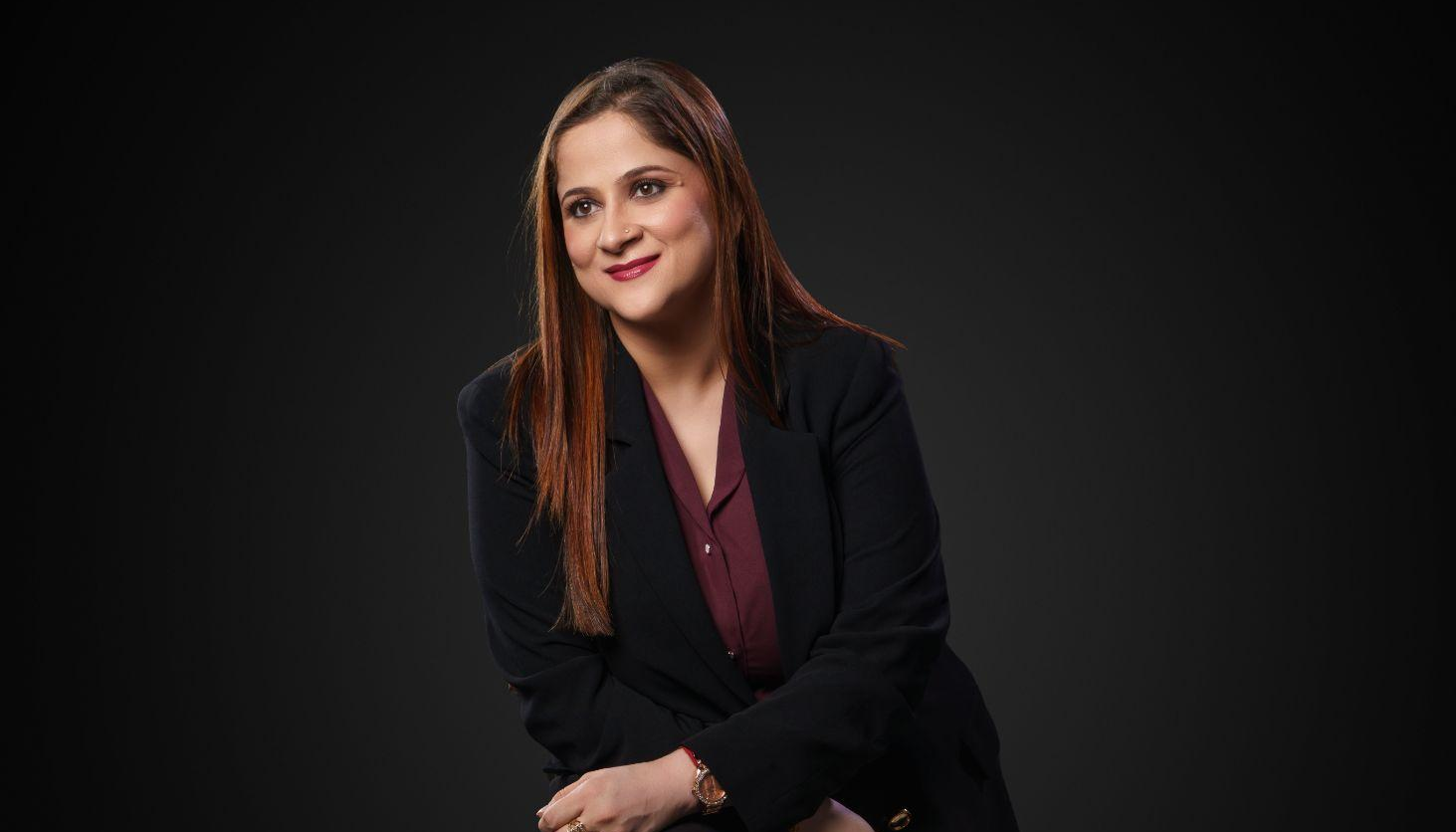
In an era where education technology often prioritizes scale over substance, one educator stands apart by asking a fundamentally different question: How can technology amplify the human elements of teaching rather than replace them? Rydhima Gupta’s journey from classroom teacher to founder of Upskill with Ridzi represents more than a career transition. It embodies a philosophy that learning, at its core, remains deeply human work.
With over 12 years traversing diverse educational landscapes spanning IB, IGCSE, GCSE, ICSE, higher education, and professional programs, Rydhima has witnessed firsthand how systems can both nurture and limit learning. Her experiences across Mumbai, Jammu, and global classrooms revealed a persistent truth: capable students often struggle not from lack of ability, but because learning remains rigid, time-bound, and inaccessible.
“I encountered many capable students who struggled not because of a lack of ability, but because learning was rigid, time-bound, or inaccessible,” Rydhima reflects. This realization became the catalyst for Upskill with Ridzi, founded in 2023 as a virtual platform designed to extend classroom impact beyond physical and temporal boundaries.
THE INSIGHT THAT CHANGED EVERYTHING
Rydhima’s transition from traditional teaching to digital entrepreneurship wasn’t driven by dissatisfaction with classroom education. Rather, it emerged from recognizing the limitations of systems that couldn’t adapt to individual learners. Throughout her teaching career, she observed students whose potential remained untapped simply because conventional structures couldn’t accommodate their unique learning rhythms.
“Building a digital learning platform allowed me to create flexible, inclusive, and learner-centred experiences without compromising academic depth,” she explains. “For me, this was not a departure from teaching, but a conscious decision to scale its impact responsibly and meaningfully.”
This philosophy distinguishes Upskill with Ridzi from typical ed-tech ventures focused primarily on content delivery or technological sophistication. Instead, the platform prioritizes what Rydhima calls the humanization of digital education, where technology serves as an amplifier of empathy, curiosity, and connection.
LESSONS FROM TEACHING ACROSS BORDERS AND BOARDS
Rydhima’s diverse teaching experience across multiple educational systems provided invaluable insights that would later shape her platform’s design philosophy. Working with students from India, Japan, Singapore, Malaysia, Thailand, the Middle East, Europe, Africa, and the USA revealed both universal truths and contextual nuances about how people learn.
“Teaching across regions highlighted significant differences in access, expectations, and learning environments,” she notes. Yet beneath these differences lay a fundamental constant. “Students learn best when they feel understood. While curricula and assessment styles vary, learners everywhere need clarity, relevance, and confidence.”
This understanding became foundational to her approach in digital environments. Rather than imposing uniform learning pathways, Rydhima developed adaptive instruction methods that respect individual learning curves while maintaining academic rigor. Her exposure to IB’s inquiry-based approach, IGCSE’s international perspective, and ICSE’s detailed curriculum informed a multidisciplinary model that draws strength from multiple educational philosophies.
WHEN WORDS BECOME BRIDGES: THE TEXTBOOK JOURNEY
Before founding her digital platform, Rydhima authored and edited nine editions of a Class 12 Computer Science textbook for the Jammu and Kashmir Board of School Education. This venture into authorship emerged from observing a practical classroom challenge: students needed structured, conceptually clear resources that aligned with curriculum requirements while remaining genuinely accessible.
“My students required structured, conceptually clear resources that aligned with the curriculum while remaining easy to understand,” Rydhima explains. “Writing the textbook was my way of bridging theory and application.”
The book’s success, becoming one of the bestsellers across the state, validated her approach. Its affordability, student-friendly language, and extensive use of visual aids demonstrated her early commitment to making learning accessible. “I strongly believe audio-visual reinforcement plays a key role in concept clarity,” she notes, a principle that would later become central to her digital platform design.
Even in today’s technology-dominated landscape, Rydhima sees continued relevance for well-designed textbooks. “When thoughtfully integrated with digital tools, they act as reliable anchors in a rapidly evolving learning landscape,” she observes, highlighting her balanced view of traditional and modern educational resources.
THE GAP NOBODY TALKED ABOUT: TEACHER CONFIDENCE OVER TOOL ACCESS
Working closely with school boards and institutions, Rydhima identified a critical gap that many technology integration initiatives overlooked. The problem wasn’t primarily about access to digital tools. It was about educators’ confidence in using technology meaningfully within their pedagogical practice.
“The most significant gap I observed was not access to technology, but confidence in using it meaningfully,” she reflects. “Many teachers were willing to adapt but lacked structured guidance. Training initiatives often focused on tools rather than pedagogy.”
This insight fundamentally shaped her focus on teacher empowerment. Through initiatives under Upskill with Ridzi, she has trained educators from small cities across India who possessed immense potential but limited exposure to digital teaching methodologies. “Watching them grow professionally has been deeply fulfilling,” Rydhima shares. “I strongly believe that everyone deserves a fair opportunity to explore and showcase their capabilities.”
Her approach to teacher development emphasizes pedagogical clarity before technical proficiency, helping educators understand not just how to use tools, but why and when to deploy them effectively. This foundation builds the instructional confidence necessary for sustained innovation.
PANDEMIC PRESSURES: SUPPORTING EDUCATORS THROUGH CRISIS
The COVID-19 pandemic thrust educators worldwide into unfamiliar digital territories overnight. The sudden transition created widespread uncertainty and anxiety among teachers who feared losing classroom control, student connection, and teaching effectiveness. Rydhima approached this crisis with empathy and practical support.
“I approached this phase with empathy, breaking down tools into manageable steps and reinforcing that technology exists to support teaching, not replace it,” she explains. Her support extended beyond initial training to ongoing assistance with conducting online classes, sharing digital resources such as e-books and presentations, creating assessments using Google Forms, and evaluating student work through online platforms.
“I remained available throughout the journey,” Rydhima recalls. “Although it was a challenging period, it brought me immense satisfaction to support fellow educators during a time of global disruption.”
This intensive period of supporting teachers through technological transition provided invaluable insights that would shape Upskill with Ridzi’s design. The exposure and experience gained during the pandemic became, in many ways, the platform’s inception point, with technology integration and teacher readiness as core pillars. Conclusion and move to next continuation
The experience also prepared the organization for incorporating artificial intelligence to make learning future-ready.
Rydhima’s experience with automating feedback systems and digitizing academic workflows revealed automation’s potential to transform educational sustainability. By streamlining administrative tasks, educators reclaim precious time for mentoring, reflection, and creative instruction design.
“Automation plays a crucial role in building sustainable education systems,” she observes. “Digitised feedback systems also offer timely insights into student progress, enabling more responsive and personalised instruction.”
However, Rydhima emphasizes that automation must serve learning, not replace human judgment. Her vision involves building what she calls a Student Intelligence Management System that maps entire student journeys, capturing feedback at multiple stages including psychometric testing, session feedback, teacher observations, student assessments, school evaluations, and parent input.
“This end-to-end system, powered by state-of-the-art AI agentic workflow technology, enables deeper insights into each child’s learning progress,” she explains. The recently introduced AI companion across all classes helps summarize sessions and generate meaningful insights, enhancing feedback effectiveness while preserving the essential human elements of teaching.
BUILDING FUTURE-READY STUDENTS: BEYOND SUBJECT MASTERY
As an Assistant Professor and Research Mentor, Rydhima developed strong convictions about preparing students for uncertain futures. Her experience mentoring students in academic writing and guiding them through international conference publications reinforced beliefs about education’s broader purposes.
“Future-ready students require more than subject knowledge,” she states. “Research fosters inquiry, critical thinking builds sound judgment, and soft skills enable collaboration and leadership.” This comprehensive view recognizes that navigating complex, interconnected challenges requires capabilities beyond memorizing facts or executing procedures.
Rydhima’s mentoring approach emphasizes articulation, ethics, and problem-solving alongside academic excellence. She sees these capabilities as essential for students who will face challenges we cannot yet fully anticipate, requiring adaptability and sound judgment rather than prescribed solutions.
THE UPSKILL WITH RIDZI DIFFERENCE: PERSONALISATION MEETS COMMUNITY
Designing Upskill with Ridzi’s multidisciplinary learning model, Rydhima drew from a simple observation: real-world challenges are inherently multidisciplinary, and learning should reflect that reality. The platform integrates academic subjects with skill development, helping learners see meaningful connections across domains rather than treating knowledge as isolated silos.
“We believe that every student is unique and has their own learning style,” Rydhima explains. “What truly differentiates our platform is personalisation and community. We adapt learning to individual needs rather than enforcing uniform outcomes, while empowering teachers to act as facilitators of growth rather than mere content deliverers.”
This dual emphasis on personalization and community creates what Rydhima describes as a two-way learning process. Teachers leverage technology to present subject expertise effectively, while student feedback helps educators refine and evolve their practices. The synergy between teacher and student communities enables continuous improvement and mutual growth.
Technology serves as the platform’s design foundation, helping students build individualized learning paths. Interactive experiences, visual support, and flexible pacing accommodate different learning styles. Gamified online assessments maintain motivation, while extensive use of audio-visual aids reinforces concept clarity.
Apart from 1 to 1 mentorship, we go beyond academics (our forty) and build partnerships that can help our students in their career progression and path
The platform’s partnership with an international career guidance organization headquartered in Dubai, with offices across India, the UK, Sri Lanka, and Nigeria, extends support beyond academics. Through free webinars, students receive guidance on career pathways and global university admissions, ensuring holistic development.
DEVELOPING EDUCATORS WHO EVOLVE: THE TEACHER TRAINING IMPERATIVE
Teacher training forms a strong pillar of Upskill with Ridzi’s work, reflecting Rydhima’s conviction that educator development determines student outcomes. Modern teachers must combine subject expertise with digital fluency, adaptability, and emotional intelligence while developing skills in instructional design, assessment literacy, and learner engagement.
“Above all, teachers must embrace lifelong learning, modeling curiosity, resilience, and adaptability for their students,” Rydhima emphasizes. This philosophy informs the platform’s approach to educator onboarding and development.
“At Upskill with Ridzi, whenever we onboard teachers, we ensure they receive essential training, ongoing support, and timely feedback, standing by them throughout their journey so they evolve with the changing nature of education,” she explains. This commitment to sustained support recognizes that professional growth requires time, practice, and responsive guidance rather than one-time training events.
NAVIGATING LEADERSHIP AS A WOMAN FOUNDER
Rydhima’s journey as a woman founder in digital education involved navigating unspoken assumptions and occasional underestimation. Rather than diminishing her resolve, these experiences strengthened her clarity and leadership approach.
“Leadership as a woman often involves navigating unspoken assumptions. There were moments of being underestimated, but these experiences strengthened my clarity and resilience,” she reflects. “Over time, I learned to lead with conviction, consistency, and empathy, focusing on long-term impact rather than external validation.”
This leadership philosophy prioritizes sustainable impact over immediate recognition, building systems that support educators and nurture student confidence across time. Her approach demonstrates that effective leadership combines personal conviction with openness to learning and adaptation.
RECOGNITION THAT REFLECTS COLLECTIVE EFFORT
In December, Rydhima received the Excellence in Education Award in Dubai, a recognition she views as representing collective achievement rather than individual success. “The recognition was not just personal. It represented the collective effort of every student taught, every teacher trained, and every system improved along the way,” she explains.
The award validated her work advancing digital learning, teacher empowerment, and learner-centric education through Upskill with Ridzi. More significantly, it strengthened her resolve to expand access to quality education globally and continue building systems that support educators and nurture student confidence.
Her upcoming speaking engagement at the Euro Women Leadership Power Conclave Week in Paris on Women’s Day provides another platform for advancing these goals. “Platforms like these go beyond celebration. They create space for dialogue, responsibility, and collective action,” Rydhima observes.
As an education leader, her message focuses on empowerment through access, adaptability, and confidence. “I hope to highlight how education, combined with thoughtful digital innovation, can bridge gaps, uplift communities, and prepare learners for an ever-evolving world,” she shares.
PARENTS AS ESSENTIAL PARTNERS
Rydhima recognizes parents as essential partners in the learning process, particularly in online and hybrid environments where traditional school structures provide less visible guidance. Parent involvement reinforces discipline, motivation, and emotional well-being while creating crucial support systems for students navigating digital learning.
“Transparent communication empowers parents to support student growth effectively, especially in online and hybrid environments,” she notes. At Upskill with Ridzi, frequent parent-teacher meetings ensure clarity and transparency. “We believe it is our responsibility to keep parents informed about their child’s progress,” Rydhima explains, viewing this communication as integral to the learning ecosystem rather than supplementary.
ANTICIPATING EDUCATION’S EVOLUTION BY 2030
Looking toward education’s future, Rydhima identifies several trends that will likely define learning by 2030. Blended learning models will become standard, combining digital flexibility with human interaction. AI-assisted hyper-personalization will enable unprecedented adaptation to individual learner needs. Competency-based assessments will increasingly replace time-based progression, recognizing mastery over seat time.
“Education will increasingly prioritise adaptability, ethical thinking, critical thinking, creative thinking, storytelling, logical reasoning, and problem-solving over rote memorisation,” she predicts. Notably, many of these trends have already been integrated into Upskill with Ridzi’s systems, positioning the platform ahead of broader industry shifts.
Lifelong learning pathways will become normalized as career trajectories grow less linear and skill requirements evolve more rapidly. Education will need to support continuous capability development throughout life rather than concentrating learning in youth.
ADVICE FOR ASPIRING EDUCATION ENTREPRENEURS
For educators considering transitions into education entrepreneurship, Rydhima offers clear guidance grounded in her own experience. “Start with purpose, not products,” she advises. “Understand real learning challenges, build solutions thoughtfully, and remain learner-centric.”
This approach prioritizes genuine problem-solving over technological novelty or business trends. Education entrepreneurship requires patience, integrity, and long-term vision focused on impact rather than rapid scaling or exit strategies. Solutions should emerge from deep understanding of learning challenges rather than assumptions about what technology can deliver.
FINDING FUEL IN TRANSFORMATION
When asked what motivates her through moments of burnout or challenge, Rydhima returns to the transformations she witnesses. “Witnessing teachers regain confidence and students discover their potential keeps me motivated,” she shares. “These transformations reaffirm the value of persistent, thoughtful innovation in education.”
This grounding in tangible human impact provides sustainable motivation that external validation or business metrics cannot match. Each teacher who discovers new capabilities, each student who overcomes previous limitations, reinforces the fundamental purpose driving her work.
A MISSION OF HUMANIZATION
Rydhima’s mission as founder of Upskill with Ridzi centers on what she calls humanizing digital education. “Technology should amplify empathy, curiosity, and connection, not replace them,” she emphasizes. “At its core, education is about empowerment, and that belief continues to guide my work.”
This philosophy acknowledges technology’s transformative potential while maintaining that education’s essential purposes remain fundamentally human. Digital tools should expand access, enable personalization, and provide insights that enhance teaching and learning. However, they should serve rather than supplant the relationships, understanding, and growth that define meaningful education.
As education continues evolving through technological advancement and changing societal needs, leaders like Rydhima provide essential guidance on maintaining human priorities while embracing innovation’s possibilities. Her journey demonstrates that scaling impact need not compromise educational soul, and that the most powerful platforms serve both individual learners and collective growth.
The future of education will be shaped by those who understand that technology and humanity are not opposing forces but complementary elements in service of learning. Rydhima Gupta’s work provides a model for this integration, showing that digital innovation can amplify rather than diminish education’s most essential human qualities.
Her example reminds us that behind every technological interface, algorithmic recommendation, or digital assessment lies an opportunity to understand, support, and empower individual learners. This remains education’s highest calling, regardless of the tools we use to pursue it.