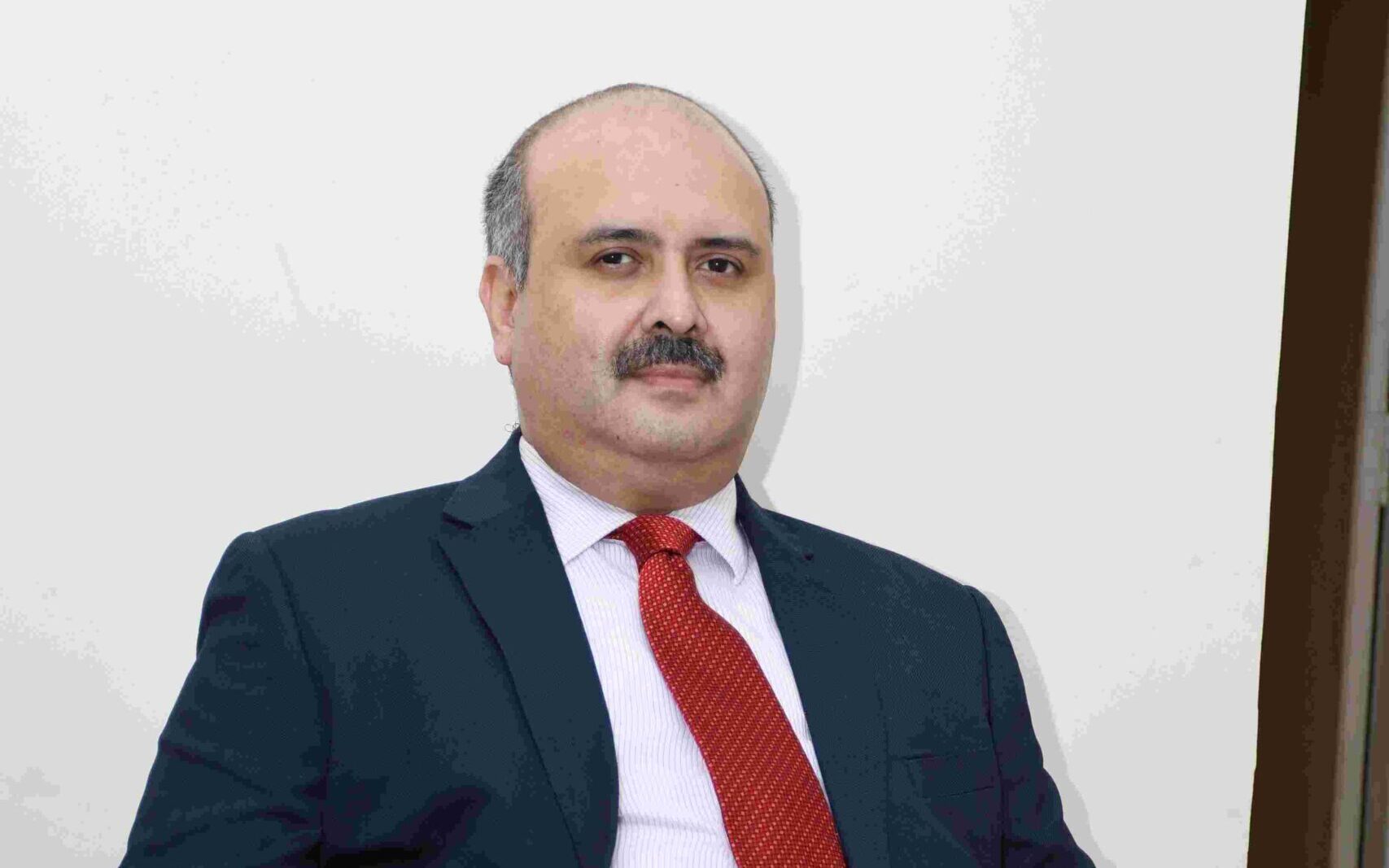
In the constellation of executive coaching and leadership development, few practitioners possess the rare amalgamation of extensive corporate experience, martial arts philosophy, and global boardroom expertise that defines transformative impact. Ajay Bakshi stands as a testament to what emerges when four decades of leadership experience converge with ancient wisdom and modern management science.
His journey spans nearly 40 years across global leadership roles, including serving as CHRO and Executive Board Director at large multinational corporations. Today, as the founder of Metamorphosis Unlimited, a boutique HR advisory and leadership consulting company based in Pune, Ajay has extended his influence far beyond the confines of a single organization. His work now touches leaders across continents, from the bustling business hubs of India to the boardrooms of the Middle East, Southeast Asia, Europe, the UK, and North America.
“What brought me into consulting is the ability to extend the skills developed in the corporate world and offer my experience to multiple organizations keen on transforming their businesses or their leaders,” Ajay reflects on his transition from corporate leadership to building a thriving consulting practice. This shift was not merely a career change but a purposeful evolution driven by a profound observation: organizations were not investing enough in their most critical asset, their people.
THE METAMORPHOSIS MANDATE: REDEFINING STRATEGIC HR AND LEADERSHIP CONSULTING
Metamorphosis Unlimited operates at the intersection of strategic human capital management and executive leadership development. The firm’s mandate extends across organization restructuring, performance management, succession planning, culture and change management, and a distinctive offering that sets them apart: serving as fractional CHRO for small to mid-sized companies who require strategic HR guidance without the commitment of a full-time executive.
“We provide advice on strategic areas of HR and mentor their HR team on operational excellence,” Ajay explains. This dual approach of strategic advisory combined with practical mentorship ensures that organizations not only receive high-level guidance but also build internal capability to sustain transformation long after the engagement concludes.
The coaching dimension of Metamorphosis Unlimited focuses on senior leaders, CEOs, CXOs, and emerging executives navigating the complex terrain of business transformation. The areas of development span business transformation, strategic change leadership, enhanced strategic thinking capabilities, refined decision-making processes, executive presence cultivation, global stakeholder management, and perhaps most critically, transitioning from functional and operational leadership styles to truly strategic leadership approaches.
“We coach senior leaders across multinational corporations, public sectors, and family-run businesses,” Ajay notes, highlighting the diversity of organizational contexts in which his methodologies prove effective. This versatility reflects a sophisticated understanding that leadership principles must be adapted to organizational cultures while maintaining core foundations.
THE WARRIOR’S PATH TO LEADERSHIP: MARTIAL ARTS MEETS THE BOARDROOM
Ajay’s unique contribution to leadership development literature comes through his integration of martial arts philosophy with modern management principles. His book “Build Your Leadership Skills: Lessons from Martial Arts” draws parallels between martial arts discipline and executive leadership that illuminate critical capabilities often overlooked in traditional leadership development programs.
“Martial arts helps inculcate and build certain leadership traits like emotional intelligence, resilience, knowing how and when to handle conflict and when to avoid,” Ajay explains. “These are important leadership traits which martial arts teaches you through experience rather than through theory.”
This experiential approach represents a departure from conventional leadership training. Through partnerships with accomplished martial artists who served as his teachers, Ajay has developed workshops that integrate traditional martial arts wisdom with contemporary management principles. The result is a learning experience that engages both mind and body, creating deeper understanding through physical embodiment of leadership concepts.
The parallels between martial arts discipline and executive leadership in today’s complex business environment are profound. Both require acute situational awareness, the ability to remain calm under pressure, strategic thinking about when to engage and when to conserve energy, respect for opponents while maintaining competitive edge, and continuous practice and refinement of skills.
DUAL AUTHORSHIP: CAPTURING FOUR DECADES OF LEADERSHIP WISDOM
Beyond his martial arts-inspired work, Ajay has authored “Build to Outperform,” a book gaining recognition as it approaches bestseller status. This work captures his extensive experience working with more than 500,000 people throughout his career, identifying, grooming, nurturing, and developing leaders to take on progressively bigger roles and responsibilities across all organizational levels.
The book introduces the DARE model, an integrated framework covering Develop, Attract, Retain, and Engage. “Both books talk about leadership. The principles are quite similar, but one uses martial arts, the other uses integrated modern management techniques,” Ajay observes, highlighting how diverse methodological approaches can illuminate universal leadership truths.
This dual authorship reflects Ajay’s belief that leadership development benefits from multiple perspectives and entry points. Some leaders resonate with the physicality and discipline of martial arts metaphors, while others connect more deeply with structured management frameworks. By offering both pathways, Ajay ensures his wisdom remains accessible to diverse learning styles and cultural contexts.
BOARDROOM EXCELLENCE: WHERE GOVERNANCE MEETS HUMAN CAPITAL STRATEGY
Ajay’s role as an independent board director and chairman of the Nomination and Remuneration Committee provides him with a unique vantage point where boardroom governance intersects with human capital expertise. This dual perspective enables him to help organizations build genuinely future-ready strategies that integrate business acumen with people development.
“Being an independent board director, developing business insights, strategic perspective to business, and being chair of the NRC where my human resources experience helps in driving succession planning and evaluating performance of the CEO and key management personnel,” Ajay explains. His deep knowledge of performance management, executive compensation, and rewards systems combines with board-level governance expertise to create an integrated package that few advisors can match.
This integration of human capital strategy with corporate governance addresses a critical gap in many organizations. Too often, boards treat people strategy as separate from business strategy, delegating human capital decisions entirely to management without maintaining appropriate oversight. Ajay’s approach ensures that talent development, succession planning, and organizational culture receive the same strategic attention as financial performance and market positioning.
As a board advisor to numerous companies, Ajay helps drive the connection between profits and people, ensuring that business success and human development reinforce rather than undermine each other. This holistic perspective recognizes that sustainable competitive advantage ultimately rests on an organization’s ability to attract, develop, and retain exceptional talent.
CULTURAL INTELLIGENCE: COACHING ACROSS CONTINENTS AND CONTEXTS
Having worked across Asia, the USA, UK, and European regions, Ajay has developed sophisticated cultural intelligence that profoundly influences both his coaching style and the way leaders respond to organizational transformation. His approach reflects deep respect for cultural contexts rather than attempting to impose universal solutions.
“Culture plays an important role because culture shapes the way we behave, the way we react to certain situations,” Ajay observes. “One has to be cognizant about it, one has to respect it rather than trying to enforce one culture over the other.”
This cultural sensitivity manifests in his consulting methodology. When recommending solutions or understanding current organizational contexts, Ajay incorporates cultural traits, preferences, and beliefs before suggesting appropriate approaches. This ensures that transformation initiatives align with cultural values rather than creating unnecessary friction that undermines implementation.
The implications of cultural intelligence extend beyond surface-level awareness of customs and communication styles. Ajay’s approach requires understanding how culture influences decision-making processes, attitudes toward hierarchy and authority, preferences for individual versus collective achievement, comfort with uncertainty and ambiguity, and approaches to conflict resolution.
By respecting cultural domains while working toward solutions, Ajay achieves transformation that feels organic to the organization rather than imposed from outside. This cultural adaptability has enabled Metamorphosis Unlimited to maintain effectiveness across the dramatically different business environments of India, the Middle East, Southeast Asia, Europe, and North America.
EXECUTIVE PRESENCE: THE DIFFERENTIATOR FOR C-SUITE SUCCESS
Executive presence emerges consistently as a critical factor for C-suite success, yet many high-performing leaders struggle to develop this elusive quality. Ajay’s extensive experience coaching senior executives has given him clear insights into what differentiates leaders who naturally command respect and influence from those who struggle despite strong technical capabilities.
“What differentiates leaders is their ability to communicate and inspire various levels of stakeholders,” Ajay explains. “The challenge lies with leaders who have been promoted purely for their technical or functional expertise or operational and tactical strengths, but who have not developed softer skills like strategic thinking, leading change, communicating with impact, influencing without authority, and handling conflict collaboratively.”
This observation points to a common pitfall in leadership development. Organizations often promote their best individual contributors into leadership roles based on technical excellence without ensuring those individuals have developed the interpersonal and strategic capabilities required for broader influence. The result is capable professionals who find themselves overwhelmed and ineffective in senior roles.
Ajay’s coaching approach addresses these gaps systematically, helping leaders build strategic thinking capabilities, communication skills that resonate across organizational levels, inspirational leadership styles rather than directive approaches, ability to embrace and leverage diversity, equity and inclusion, executive presence that commands attention and respect, and stakeholder management capabilities that extend influence beyond formal authority.
Many high-performing leaders seek out Ajay’s coaching specifically to build executive presence. His methodology helps them transition from technical experts to strategic leaders, from directive managers to inspirational coaches, and from functional specialists to enterprise thinkers. This transformation often proves decisive in determining whether leaders successfully navigate the transition to C-suite roles.
THE FUTURE OF EXECUTIVE COACHING: AI, HYBRID WORK, AND EVOLVING EXPECTATIONS
Looking ahead, Ajay sees executive coaching evolving dramatically over the next five years, driven by artificial intelligence, hybrid work cultures, and shifting leadership expectations. His perspective combines realistic assessment of current limitations with ambitious vision for future possibilities.
“Executive coaching has still not leveraged artificial intelligence in the best way possible, but I see a lot of scope,” Ajay observes. He envisions AI helping identify behavioral patterns in coachees by leveraging information from past coaching engagements and working with similar personalities. This would enable coaches to understand more quickly what approaches might work with specific clients, reducing the discovery phase from three or four sessions to potentially the very first session.
The application of AI and machine learning could help identify effective interventions, predict behavioral changes post-coaching, select tools and methodologies suited to specific personalities, and accelerate behavioral change through more targeted interventions. Rather than replacing the human element of coaching, these technologies would enhance the coach’s ability to provide customized support.
However, Ajay recognizes that technology integration must preserve the human touch that makes coaching effective. “Technology cannot replace human interactions,” he emphasizes. “Keeping that human touch, human values, and respect remain important, especially when working with virtual teams spread across the world.”
The evolution of executive coaching also responds to generational shifts in leadership expectations. Younger leaders, particularly Generation Z, require different coaching approaches than previous generations. “Gen Z’s don’t require managers. Gen Z’s require leaders who are friends, philosophers, and guides,” Ajay notes. This shift requires coaches to help senior executives develop more collaborative and inclusive leadership styles.
TRANSFORMING STRESS INTO STRATEGIC ADVANTAGE
In his work on transforming stress into opportunities, Ajay provides practical strategies that leaders can apply to thrive under pressure. His perspective draws on both business experience and sports analogies that make abstract concepts tangible.
“You need a certain amount of stress to get the best out of people,” Ajay explains, pointing to examples from cricket where moderate pressure enhances performance while excessive pressure leads to collapse. The key lies in leaders’ ability to manage stress so it becomes a strength rather than a derailer.
Stress becomes destructive when it impacts health, damages relationships, creates conflict with colleagues, reduces communication effectiveness, or leads to micromanagement and inability to delegate. Conversely, stress serves as a catalyst when leaders maintain calm under pressure, stick to plans while adapting when necessary, absorb pressure rather than passing it down, communicate positive expectations, and maintain belief in themselves and their teams.
Ajay’s example of MS Dhoni’s performance in the 2011 Cricket World Cup illustrates these principles beautifully. “Dhoni ended the match with a six. He did not allow the stress to change his plan,” Ajay recalls. Despite challenging circumstances, Dhoni maintained composure, adapted the batting order when necessary, kept other team members comfortable rather than panicked, and maintained belief that victory remained possible until the final ball.
The contrast with talented teams that consistently underperform under pressure, like South Africa’s cricket team in major tournaments, demonstrates that technical capability alone proves insufficient. The ability to remain calm, exercise emotional intelligence and situational awareness, know when to retain strategy and when to modify it, and absorb rather than transmit pressure represents the difference between success and failure in high-stakes situations.
For business leaders, these principles translate directly to managing organizational transformation, navigating market disruptions, leading through crises, and maintaining team morale during challenging periods. Ajay’s coaching helps executives develop these capabilities through both conceptual understanding and practical application.
GUIDANCE FOR EMERGING C-SUITE LEADERS
For emerging leaders aspiring to C-suite roles but feeling overwhelmed by the magnitude of responsibilities, Ajay offers grounded advice born from decades of experience developing senior executives. His guidance balances realistic assessment of challenges with practical strategies for success.
“Consider a C-suite role as a responsibility, not as a designation or power or authority,” Ajay counsels. While authority accompanies senior positions, it must be balanced with responsibility to the organization, the people being led, and broader stakeholders. This mindset shift from viewing leadership as privilege to understanding it as obligation fundamentally changes how leaders approach their roles.
Ajay emphasizes the importance of clarity about purpose. “Be clear on your purpose for wanting to take a C-suite role. Be aware of the obligations you have, both to the organization and the people you lead.” This clarity extends beyond financial rewards or status to encompass the responsibility of doing the right thing for all stakeholders.
Accepting ownership and accountability represents another critical capability. As leaders grow, responsibilities inevitably increase. Rather than shying away from this reality, successful C-suite executives embrace it. Similarly, acknowledging that mistakes will happen and accepting one’s humanity proves essential. “Even the best of leaders, well-known business leaders have made mistakes,” Ajay reminds emerging leaders.
Perhaps most importantly, Ajay advocates for authenticity, approachability, and vulnerability. “By vulnerable, I mean if you don’t know something, you’re not expected to be a subject matter expert in all areas,” he explains. Seeking out subject matter experts, whether team members, peers, managers, or external consultants, demonstrates strength rather than weakness. Many C-suite leaders fall into the trap of projecting omniscience, which limits their effectiveness and prevents them from accessing valuable expertise.
Combined with stress management capabilities and softer skills including executive presence, stakeholder management, influence without authority, and high-impact communication, these ingredients significantly increase chances of C-suite success.
AN EVOLVING LEADERSHIP PHILOSOPHY FOR A CHANGING WORLD
After decades working with top executives worldwide, Ajay has developed a personal leadership philosophy that continues evolving while maintaining core principles. His perspective acknowledges that while fundamental leadership principles remain constant, leadership styles must adapt to dramatically different contemporary contexts.
“Leadership is always evolving because some principles remain the same, but styles of leadership may change,” Ajay reflects. In today’s digital, fast-paced, ever-changing world, the leadership styles that worked 25 or 30 years ago may no longer prove relevant. Yet guiding principles endure.
What has changed, and what has impacted Ajay’s own leadership style, centers on several key shifts. Today’s leaders must be digitally aware, understanding technology’s impact on their business and knowing how to leverage it for productivity and efficiency without necessarily being technical experts. The shift from command and control to inclusive and inspirational leadership represents another fundamental change.
Respect for diversity, including cultural diversity, has moved from nice-to-have to business imperative. “Diversity, equity, and inclusion is not a number which one has to fill to please stakeholders, but it is working with people with different backgrounds, skills, experiences, and cultures to contribute to driving innovation,” Ajay emphasizes.
The integration of technology with human touch emerges as a critical capability, particularly when leading virtual teams spread across the globe. Leaders must maintain human values, respect, and connection even when face-to-face interaction proves infrequent.
The role of leader as coach represents another significant evolution. “Leaders are supposed to be friends, philosophers, and guides, especially when dealing with Generation Z,” Ajay observes. This generation expects clarity, commitment, and inclusion rather than traditional hierarchical management. Many senior executives struggle with this transition due to conflicting values and difficulty embracing new approaches to diversity.
A VISION FOR GLOBAL LEADERSHIP TRANSFORMATION
What excites Ajay most about the next phase of his journey as coach, board director, author, and thought leader centers on solving leadership issues and challenges by developing more effective leaders in years to come. His focus extends beyond helping organizations achieve impressive valuations to building scalability, profitability, strong succession, and good governance.
“It is the quality of leaders rather than the valuation of businesses which I am looking at,” Ajay explains. This perspective recognizes that a leader running a small business exceptionally well, taking care of environmental and social obligations while maintaining profitability and strong governance, creates more meaningful impact than a large organization with poor leadership.
Ajay’s vision includes expanding his work globally, with at least 50 percent of his time spent building global leaders while continuing significant work in India. He aspires to help take India to the next level and potentially advise governments within India or internationally on transforming countries through human capital development.
His future authorship plans include exploring how to integrate leadership and artificial intelligence, continuing his contribution to leadership literature through diverse approaches. This commitment to thought leadership ensures that his four decades of experience continue benefiting emerging leaders for years to come.
THE LEGACY OF A LEADERSHIP ALCHEMIST
Ajay Bakshi represents a unique convergence of corporate leadership experience, martial arts wisdom, strategic human capital expertise, and global cultural intelligence. His career demonstrates that the most impactful coaches bring not only methodological sophistication but also the credibility of having successfully navigated the challenges they help others overcome.
His influence extends beyond individual coaching engagements to shape organizational strategies, board governance practices, and leadership development approaches across continents. Through his books, he shares hard-won wisdom with broader audiences. Through his board service, he influences strategic direction at the highest levels. Through Metamorphosis Unlimited, he transforms leaders and organizations pursuing meaningful impact.
“I’m looking forward to helping solve leadership issues and challenges by bringing more effective leaders in the years to come,” Ajay reflects. This statement encapsulates a career dedicated to multiplying impact through developing others, recognizing that the greatest contribution any leader can make involves enabling the success of many.
As organizations navigate unprecedented complexity, leaders like Ajay provide essential guidance on maintaining human connection while leveraging technology, respecting cultural contexts while achieving global scale, and building capabilities that endure beyond individual tenures. His example demonstrates that effective leadership development requires both ancient wisdom and contemporary innovation, both technical sophistication and human authenticity.
The future of leadership will be shaped by those who understand that transformation requires both strategic thinking and emotional intelligence, both digital fluency and human connection, both individual excellence and collective success. Ajay Bakshi’s career provides a roadmap for achieving this integration, demonstrating that principled leadership coaching can drive meaningful change across decades of evolution and countless cultural contexts.