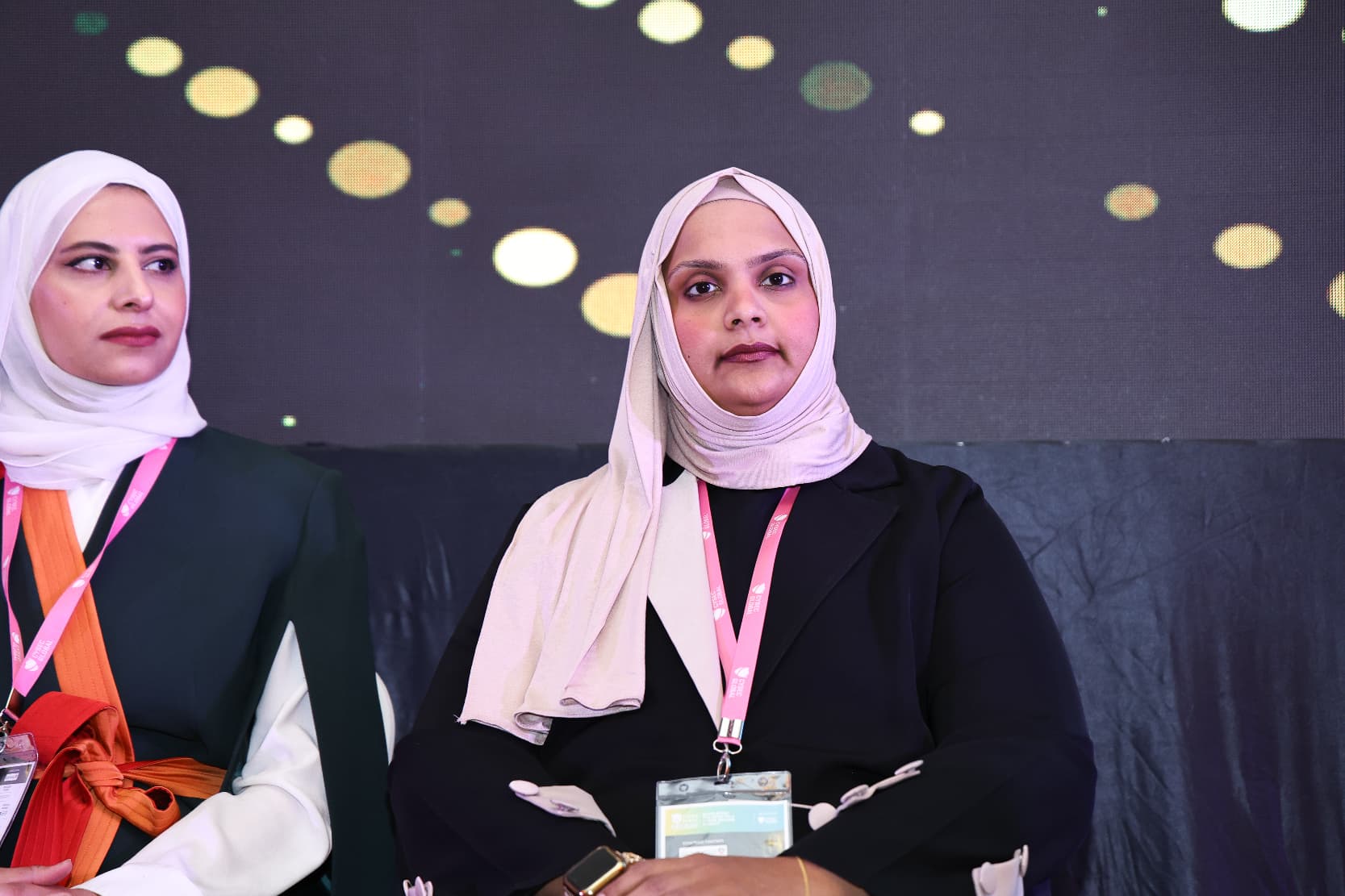
In the vast digital landscape where threats evolve faster than most organizations can adapt, few leaders command the respect and recognition that Dr. Shaheela Banu Abdul Majeed has earned across the Middle East and beyond. Her story begins not with grand ambitions, but with something far more powerful: an insatiable curiosity about the digital world and an unwavering sense of responsibility to protect it.
“My journey into cybersecurity was driven by a deep-rooted curiosity about the digital world and a strong sense of responsibility to protect it,” Dr. Shaheela reflects. This simple yet profound statement encapsulates the essence of a career that has spanned over 15 years, touching countless lives and securing critical infrastructure across multiple continents.
What started as recognition of growing vulnerabilities in critical infrastructure has evolved into a distinguished career marked by prestigious accolades: Cyber Woman of the Year 2024 in Kuwait, leadership of the Women in Cybersecurity 2025 initiative, and inclusion among The World CIO 200 Awards in the Middle East. These honors represent more than personal achievements; they signal a broader transformation in how the cybersecurity industry recognizes diverse leadership and inclusive excellence.
BUILDING EXPERTISE THROUGH RELENTLESS PURSUIT OF KNOWLEDGE
Dr. Shaheela’s approach to professional development reads like a masterclass in strategic career building. With over 20 certifications spanning Network Security, Cybersecurity, Governance, Risk & Compliance, and Auditing, she has systematically built expertise that addresses every dimension of modern security challenges.
Her certification journey includes prestigious credentials such as Certified Information Security Professional, Certified Information Security Manager, EC-Council Certified Ethical Hacker, and ISO 27001:2022 Lead Auditor, among many others. But what sets her apart is not just the breadth of her qualifications, but the strategic intent behind each pursuit.
“Each certification has contributed to a well-rounded understanding of security architecture, risk management, auditing, and cloud security,” she explains. The Certified Ethical Hacker credential provided hands-on experience in vulnerability identification and real-world attack simulation. The Cisco Security Specialist certification deepened her network security architecture knowledge. Meanwhile, her ISO/IEC 27001:2022 Lead Auditor certification elevated her role from technical execution to strategic governance.
Her learning journey continues with active pursuit of certifications in AI Cybersecurity and AI Auditing, alongside working toward the prestigious CCIE Security certification. This commitment to continuous learning reflects a leader who understands that in cybersecurity, standing still means falling behind.
WITNESSING THE EVOLUTION OF DIGITAL WARFARE
Having spent over 15 years in the trenches of Information Security and GRC, Dr. Shaheela has witnessed firsthand the profound transformation of the threat landscape. Her perspective offers invaluable insights into how cybersecurity has evolved from a technical necessity to a strategic imperative.
“Initially, the focus was on traditional vulnerabilities, patch management, and malware analysis,” she recalls. “Today, the landscape is dominated by sophisticated, multi-vector attacks, including ransomware, supply chain breaches, and AI-driven threats.”
This evolution has been particularly significant in the context of Kuwait’s Vision 2030 and its strategic push toward digital transformation and AI integration. Working in the oil and gas sector, Dr. Shaheela has seen how the convergence of operational technology and information technology has expanded attack surfaces, creating new vulnerabilities in critical infrastructure.
The risks she identifies are sobering: Advanced Persistent Threats targeting industrial control systems, AI-driven attacks including deepfakes and automated reconnaissance, supply chain vulnerabilities, data integrity risks from AI systems processing sensitive operational data, and regulatory gaps in aligning AI governance with cybersecurity frameworks.
“Organizations must not only secure their digital assets but also ensure ethical and transparent use of AI technologies,” she emphasizes, highlighting the dual challenge of technological advancement and responsible implementation.
MASTERING THE ART OF BALANCED LEADERSHIP
One of Dr. Shaheela’s most remarkable skills lies in balancing seemingly competing priorities: compliance and innovation, security and accessibility, global standards and local needs. Her approach to this balance reflects sophisticated strategic thinking that goes beyond traditional either-or frameworks.
“Balancing compliance and innovation requires a strategic mindset,” she explains. “I ensure that compliance frameworks like ISO 27001 and NIST are not seen as barriers but as enablers of secure innovation.”
This philosophy manifests in her work across different sectors, where she customizes audit frameworks and risk assessments to align with sector-specific priorities. In healthcare, data privacy and HIPAA compliance take precedence. In education, protecting student data and ensuring system uptime become paramount. Each approach reflects deep understanding of how security must serve broader organizational objectives rather than constraining them.
Her role as Information Security & Compliance Officer and Auditor in the Oil and Gas Industry exemplifies this balanced approach. “I focus on embedding security into every layer of our digital infrastructure,” she notes. “My vision is to create resilient ecosystems where security is proactive, not reactive.”
BREAKING BARRIERS AND BUILDING BRIDGES
Dr. Shaheela’s impact extends far beyond technical expertise into the realm of cultural transformation and inclusive leadership. As co-founder of initiatives like Ibby Cyber Women Warriors and Cyber Heals Ibby Mentorship, she has become a powerful advocate for diversity in cybersecurity.
Her message to young women entering the field is both inspiring and practical: “Cybersecurity needs diverse perspectives, and women bring unique strengths to the table. Be bold, be curious, and never underestimate your potential. Seek mentors, stay updated, and contribute to building a safer digital world. Your voice and skills are needed more than ever.”
This advocacy work has taken her across borders, leading awareness initiatives across India, Kuwait, the UAE, Saudi Arabia, and beyond. Her approach to cross-border collaboration reflects understanding that “cyber threats are borderless, so our response must be collaborative.”
The challenges she has faced in promoting cybersecurity awareness reveal both obstacles and opportunities in the field. “In some regions, cybersecurity is still seen as a technical domain, not a societal concern. Gender biases also limit participation,” she acknowledges. Her solution involved tailoring messages to local contexts, involving community leaders, and showcasing relatable role models. “Persistence and empathy were key.”
TRANSFORMING COMMUNICATION ACROSS AUDIENCES
As a global speaker, panellist, and advisory board member at international cybersecurity summits, Dr. Shaheela has mastered the art of communicating complex security topics to diverse audiences. Her approach reflects sophisticated understanding of how effective communication must adapt to audience needs and contexts.
“For executives, I focus on business impact and ROI. For students, I use analogies and interactive demos,” she explains. “Storytelling, visuals, and real-world scenarios help bridge the gap and make concepts accessible.”
Her consistent message across all platforms emphasizes “the importance of inclusive leadership, continuous learning, and ethical innovation in cybersecurity.” She advocates for empowering women in tech, fostering mentorship, and building resilient digital ecosystems, particularly in alignment with national visions like Kuwait’s Vision 2030.
BUILDING ORGANIZATIONAL CULTURES OF SECURITY
Dr. Shaheela’s insights into how women’s leadership strengthens organizational security culture reveal sophisticated understanding of leadership dynamics. “Women leaders bring empathy, collaboration, and holistic thinking to cybersecurity,” she observes. “Their presence challenges stereotypes, promotes diversity, and encourages inclusive decision-making.”
Her recommendations for companies seeking to ensure more women thrive in cybersecurity roles are practical and actionable: mentorship programs, flexible work arrangements, targeted training, inclusive hiring practices, and leadership development initiatives. “Celebrating women’s achievements and creating safe spaces for growth fosters long-term retention and success.”
This approach reflects her broader philosophy that “a balanced leadership team fosters a culture where security is everyone’s responsibility.” It’s a vision that transforms cybersecurity from a technical function into an organizational capability that engages every stakeholder.
EMPOWERING THE NEXT GENERATION
Dr. Shaheela’s guidance for aspiring cybersecurity professionals reflects both technical depth and strategic wisdom. She recommends starting with foundational certifications like CEH, CISSP, CompTIA Security+, and CISM, which build core competencies in ethical hacking, security architecture, and risk management.
But her advice goes beyond technical credentials. “As organizations increasingly adopt cloud and AI technologies, cloud security certifications such as AWS, Azure, and Microsoft Cloud Specialist have become essential,” she notes. She also emphasizes emerging areas like AI Cybersecurity, AI Auditing, and Threat Intelligence as critical for understanding evolving threats.
Perhaps most importantly, she emphasizes that “soft skills like communication, critical thinking, and adaptability are equally important. They enable professionals to translate complex security concepts into actionable strategies and collaborate effectively across teams.”
GRASSROOTS IMPACT AND GLOBAL REACH
Dr. Shaheela’s approach to public awareness campaigns demonstrates understanding that effective cybersecurity education must reach beyond technical communities. “Campaigns must be relatable, multilingual, and culturally sensitive,” she explains. “Using storytelling, gamification, and community engagement helps demystify cybersecurity.”
Her strategy involves partnering with schools, NGOs, and local influencers to amplify reach and instill lifelong digital hygiene habits. This grassroots approach recognizes that digital resilience must be built from the community level up, engaging diverse stakeholders in understanding their role in cybersecurity.
DEFINING A LASTING LEGACY
When asked about the legacy she hopes to leave behind, Dr. Shaheela’s response reveals the values that have driven her entire career: “I hope to be remembered as someone who made cybersecurity inclusive, accessible, and impactful.”
Her vision of legacy extends beyond personal achievement to systemic transformation: “My legacy lies in the lives I’ve touched—mentees who found their path, organizations that became more secure, and communities that embraced digital resilience. I aim to inspire a future where cybersecurity is a shared responsibility and a force for good.”
This statement encapsulates not just individual ambition, but a broader vision for how cybersecurity leadership can create positive change that extends far beyond technical systems to encompass human potential and societal benefit.
THE FUTURE OF CYBERSECURITY LEADERSHIP
Dr. Shaheela Banu Abdul Majeed represents a new model of cybersecurity leadership: one that combines technical excellence with inclusive vision, global perspective with local sensitivity, and individual achievement with collective empowerment. Her recognition as Cyber Woman of the Year 2024, her leadership of Women in Cybersecurity 2025, and her inclusion among The World CIO 200 Awards reflect not just personal success, but the growing recognition of diverse leadership models in cybersecurity.
As organizations worldwide grapple with increasingly sophisticated cyber threats while pursuing digital transformation, leaders like Dr. Shaheela provide essential guidance on building security cultures that are both technically robust and humanly inclusive. Her career demonstrates that the most effective cybersecurity leaders are those who understand that protecting digital systems ultimately means protecting the people and communities they serve.
In an era where cyber threats know no borders and respect no boundaries, Dr. Shaheela’s approach to leadership—combining technical expertise, cultural sensitivity, mentorship commitment, and global collaboration—offers a roadmap for building the kind of cybersecurity ecosystem the world urgently needs. Her story reminds us that behind every secure system, every protected network, and every resilient organization, there are leaders who understand that cybersecurity is fundamentally about safeguarding human potential in an increasingly digital world.