
“I hope to contribute to shaping a generation of leaders who lead with clarity, courage, and conscience—leaders who understand that performance and humanity are not opposites, but mutually reinforcing forces, and that real authority is grounded in presence rather than pressure.”
– Malgorzata Warda
In an era where leadership is often defined by relentless pressure and performative urgency, Malgorzata Warda stands apart. Her approach to developing executives and transforming organizational cultures is grounded not in adding more pressure, but in creating presence. With over two decades of senior corporate leadership experience, including C-level positions, combined with deep expertise in neuroscience, applied linguistics, and ethical coaching practices, Malgorzata has carved a unique path that bridges science with human understanding.
Her journey began long before formal titles or professional accreditations. As a teenager working after school as a shop assistant, she discovered a truth that would shape her entire career: success in connecting with people was never about persuasion, but about asking the right questions and genuinely understanding another person’s needs.
“Long before I received formal and professional training and had the right words to name what I was doing, I was already applying mentoring approaches instinctively,” Malgorzata reflects. This natural inclination toward understanding human behavior deepened during her studies in applied linguistics, where she worked as a business interpreter and observed senior executives operating under intense pressure.
These early observations crystallized into a fundamental principle that continues to guide her work: presence, supported by people-oriented communication, is more powerful than pressure. “I realized that leadership begins with the quality of attention we bring into a conversation, and the relationship that we are able to build with others,” she explains.
THE PIVOT POINT: FROM CORNER OFFICE TO CONSCIOUS LEADERSHIP
After several years in senior corporate roles, including leading large-scale transformations and restructuring processes across complex, multidisciplinary teams with full P&L responsibility, Malgorzata began noticing a recurring pattern that would ultimately reshape her professional trajectory. Strategy was rarely the real issue. The real issue was mindset.

“I saw highly capable leaders struggle not with competence, but with self-doubt, emotional overload, and the unspoken expectation to always have an answer,” she recalls. The isolation that often accompanies leadership at the highest levels became increasingly apparent, something she experienced personally during her time in C-level positions.
The birth of her third child became the catalyst for a conscious decision to redefine her professional path. Rather than continuing to climb the corporate ladder, Malgorzata chose to move from executive leadership into training, coaching, and mentoring, with a clear intention: building healthier organizations through more self-aware and resilient leaders.
“Coaching and mentoring became my way of creating a space where leaders can slow down, think clearly, and grow consciously, and where presence and awareness replace pressure,” she explains. This transition was not an escape from leadership but an evolution toward a different kind of impact, one that would ultimately reach far more leaders than any single organizational role could allow.
THE INSIDER ADVANTAGE: LEADING FROM LIVED EXPERIENCE
Malgorzata’s background as a leader fundamentally shapes how she works with executives today. Having personally held P&L responsibility and navigated the weight of critical decisions, she understands leadership from the inside. This creates immediate connection with her clients because there is no need to explain the constant performance expectations or the complexity of leading diverse teams through uncertainty.
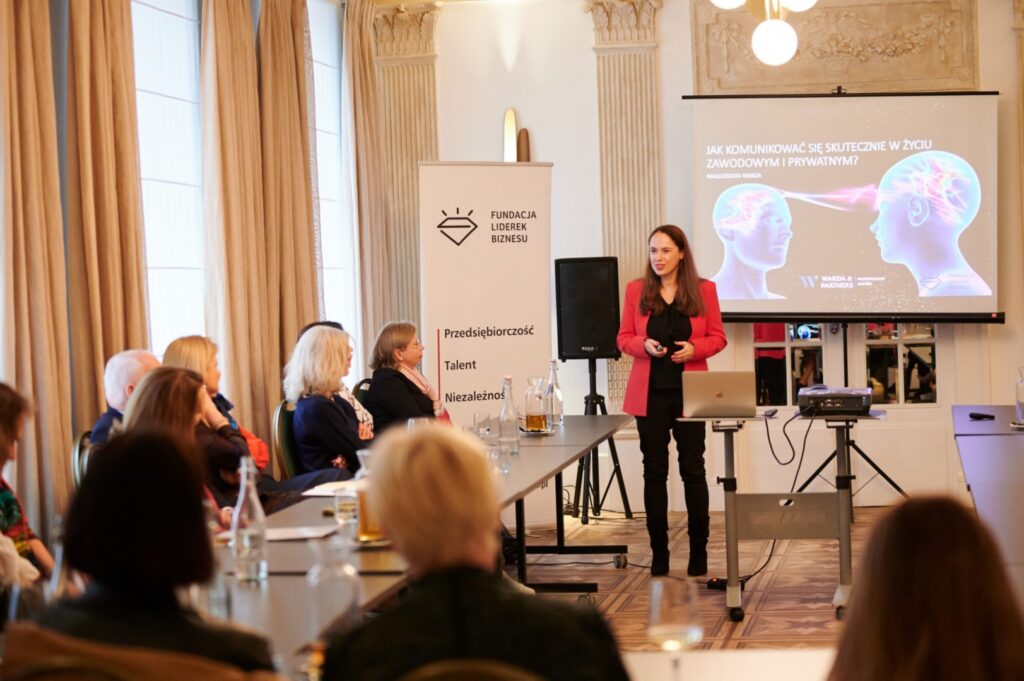
“My role is not to add pressure, but to create clarity,” she states. “My clients who fulfill various leadership roles often discover that when they are fully present and aligned with their values, decisions become not only simpler, but also wiser and more sustainable.”
This insider perspective, enriched by formal education including an Executive MBA that strengthened her understanding of finance and economics, allows Malgorzata to integrate analytical rigor with emotional intelligence. The combination proves particularly powerful in her work as both a practitioner and educator, where she serves as an MBA lecturer bridging academic frameworks with real-world challenges.
Her approach translates theory into lived experience, transforming frameworks from rigid models into tools for reflection that leaders can apply intelligently in complex, real situations. This educational philosophy extends throughout her work at Warda & Partners, where leadership development programs are deliberately designed to build capacity rather than simply add information.
BUILDING THE FOUNDATION: AUTHENTICITY, EMPATHY, AND ACCOUNTABILITY
For Malgorzata, leadership values are not abstract concepts but practical commitments that shape daily decisions and interactions. Authenticity means alignment between values, decisions, and behavior. Empathy is the capacity to truly understand another person’s perspective while maintaining clear expectations and personal boundaries. Accountability is the courage to own outcomes without blame.
“In daily leadership practice, these values are reflected in how leaders communicate change, give feedback, and take responsibility for both results and relationships,” she explains. “Practiced consistently, they shape leadership that is trusted, effective, and resilient over time, and additionally rooted in healthy relationships.”
This values-driven approach becomes particularly evident in her role as a sparring partner to executives. Psychological safety, she emphasizes, does not mean comfort. It means permission to be honest. It creates space for conversations without fear of negative consequences, especially when sharing perspectives or offering feedback.
“In my work, I challenge leaders through incisive questions, intentional moments of pause, and sometimes also by naming the patterns they may unconsciously follow,” Malgorzata notes. This type of challenge is only possible when trust is firmly established through consistency, confidentiality, and deep respect for the client’s autonomy and responsibility.
As an internationally accredited executive coach and business mentor, she operates within strict ethical codes that govern the profession. These principles are not optional but form the foundation that allows leaders to engage in honest self-examination, take ownership of their choices, and grow with integrity rather than pressure.
UNCOVERING WHAT LEADERS CANNOT SEE: THE MOST COMMON BLIND SPOTS
Through her extensive work with clients across industries and cultures, Malgorzata has identified patterns that repeatedly limit leadership effectiveness. Leaders tend to over-rely on their expertise, assuming that experience alone is sufficient, while underestimating the emotional and relational impact of their behavior on individuals and teams.
One of the most common blind spots she observes is confusing authority with influence. “Formal authority may grant decision-making power, especially in the short term, but influence is earned through trust, consistency, and the ability to engage others willingly,” she explains. “Building trust, however, takes far more time and intention than issuing decisions.”
Another frequent blind spot involves delegation. For many leaders, their sense of value is closely tied to being the expert, the problem solver, or the one in control. Letting go can therefore feel like a loss of relevance rather than an opportunity to create capacity.
“This shift in perception is rarely easy,” Malgorzata acknowledges. “Here mentoring and coaching can be highly effective in terms of support. They help leaders notice these patterns, name them, and develop deeper awareness. For many of my clients, increased self-awareness is the first step toward conscious and sustainable change.”
THE NEUROSCIENCE ADVANTAGE: LEADING THE BRAIN, NOT JUST THE BUSINESS
Malgorzata’s integration of neuroscience into leadership development represents one of her most distinctive contributions. Her understanding comes not only from research but from over two decades of senior leadership experience in complex, fast-paced corporate environments, complemented by her academic background in applied linguistics and executive education.
“Every decision, reaction, and interaction is shaped by how the brain processes stress, emotion, and meaning,” she explains. In highly demanding organizations, chronic pressure activates threat responses that narrow focus, reduce cognitive flexibility, and limit creative problem-solving. She has observed this pattern repeatedly, both in her own leadership roles and later in her work as an executive coach and business mentor.
“Leaders who understand how the brain responds to stress are far better equipped to regulate themselves first, and to design communication, feedback, and decision-making processes that foster clarity rather than reactivity,” Malgorzata notes. This awareness enables a critical shift from managing outcomes to consciously shaping the conditions for sustainable performance.
The programs delivered by Warda & Partners focused on stress management, mental resilience, and brain-based well-being are currently in high demand among organizations precisely because they address this fundamental need. When leaders learn how to remain grounded and emotionally available, they are better able to pause, reflect, and respond with intention.
The impact extends throughout organizations. “When employees feel seen, heard, and psychologically safe, trust deepens, accountability strengthens, and collective focus increases,” Malgorzata observes. “Over time, this shift transforms leadership from a state of constant effort into one of sustainable impact.”
THE POWER OF SELF-AWARENESS: PERSONALITY INSIGHTS AS LEADERSHIP TOOLS
Malgorzata’s work with personality insights and behavioral analyses such as Extended DISC® demonstrates her commitment to awareness without judgment. Rather than labeling people, these tools offer a shared language for understanding behavioral preferences, communication styles, decision-making patterns, and natural responses to pressure.
“I began working with personality insights early in my leadership journey, and this experience was really useful. It shaped my self-awareness and effectiveness as a person but also as a leader,” she reflects. “That is why I consistently encourage leaders to engage with tools like Extended DISC® at least once in their professional lives.”
Through these insights, leaders discover how they behave and communicate under stress, how their behavior is perceived by others, and where greater flexibility is required to lead diverse teams effectively. They gain clarity around what energizes them, what drains them, and how their default leadership style may need to adapt depending on context, people, or organizational challenges.
At a team level, personality insights enhance collaboration by making differences visible, understandable, and manageable. “When team members understand each other’s behavioral styles, friction is reduced, misunderstandings decrease, and trust grows,” Malgorzata explains. Communication becomes more precise, expectations clearer, and cooperation more fluid, allowing teams to operate with less pressure and more psychological safety.
For Malgorzata, self-awareness is nothing less than the foundation of sustainable leadership. “Leaders who understand their triggers and habitual responses can choose presence over reaction. This creates healthier organizational cultures and more resilient performance over time.”
RETHINKING FEEDBACK: FROM CORRECTION TO DIALOGUE
One of the most common communication mistakes Malgorzata observes in her work with clients is treating feedback as correction rather than dialogue. Too often, feedback is delivered as a one-way message focused on fixing behavior quickly, rather than as a conversation that supports learning, ownership, and growth.
“In these moments, leaders tend to speak more than they listen, assuming clarity comes from explanation rather than understanding,” she notes. Another frequent mistake is giving feedback under pressure. When urgency dominates, leaders may communicate with the intention to move things forward fast but inadvertently trigger defensiveness or disengagement.
From a neuroscience perspective, pressure narrows attention and reduces cognitive flexibility, making it harder for the recipient to understand, process, and integrate feedback meaningfully. Feedback becomes far more effective when delivered in a brain-friendly way, grounded in curiosity, presence, and genuine interest in the other person’s perspective.
“When leaders slow down, ask open questions, and listen with attention, feedback shifts from judgment to insight,” Malgorzata explains. “This approach strengthens psychological safety, increases accountability, and allows individuals to reflect rather than react.”
Her workshops and webinars on brain-friendly feedback, integrating knowledge of neurolinguistics with business cases, have received exceptionally positive feedback. Some participants report that while they have attended many feedback trainings before, this approach has been a real game changer.
“Impactful feedback is not about control or correction. It is about creating awareness and choice,” she emphasizes. “Leaders who master this form of communication build trust, foster engagement, and enable sustainable performance, because people are far more willing to change when they feel respected, heard, and involved in the process.”
FROM CONTROL TO INFLUENCE: THE COACHING AND MENTORING SHIFT
The transformation from control-based to influence-based leadership represents one of the most significant shifts coaching and mentoring facilitate. “Coaching and mentoring help leaders move from solving problems for others to developing thinking in others,” Malgorzata explains. “Then accountability grows naturally and ownership follows.”
This shift requires leaders to fundamentally reconsider their role. Rather than being the expert with all the answers, effective leaders become facilitators of thinking, growth, and capability development in others. This transition can be challenging for leaders whose identity and sense of value are tied to their expertise and problem-solving abilities.
What differentiates impactful leadership development from traditional management education is precisely this emphasis on behavior change and mindset transformation. “Impactful leadership development goes beyond the transfer of knowledge. It fundamentally changes behavior, mindset, and the way leaders show up,” Malgorzata notes.
While traditional management education often focuses on frameworks, models, and best practices, effective leadership development integrates reflection, experiential learning, and real business challenges that leaders face in the present moment. Learning is embedded in daily practice and reinforced over time through coaching, mentoring, and feedback loops that support accountability and sustainable change.
“The key difference lies in the outcome,” Malgorzata explains. “Traditional approaches tend to add more information. Impactful leadership development builds capacity: the capacity to regulate oneself, to take responsibility beyond formal authority, and to lead with intention in complex and uncertain environments.”
BALANCING DATA WITH HUMANITY: THE CRITICAL ROLE OF ANALYTICAL THINKING
Despite her deep expertise in emotional intelligence and neuroscience, Malgorzata strongly advocates for the continued importance of analytical thinking in leadership. Sustainable leadership, she argues, requires the ability to integrate empathy with data, intuition with structure, and human understanding with sound business judgment.
“From my own experience, developing analytical thinking through formal education played a critical role in shaping my leadership effectiveness,” she reflects. Studying finance, economics, and related subjects during her Executive MBA significantly broadened her perspective and complemented her MA in applied linguistics.
“These disciplines strengthened my ability to understand business dynamics more holistically and to see the long-term consequences of decisions beyond their immediate emotional or relational impact,” she explains. This analytical foundation enabled her to make decisions more quickly and more confidently by combining data with intuition rather than choosing one over the other.
“When leaders are grounded and emotionally regulated, they can interpret data without anxiety and trust their judgment without ignoring evidence,” Malgorzata notes. “This balance is especially important in complex environments, where leaders must act decisively despite incomplete information.”
Analytical thinking provides structure and direction, while emotional intelligence ensures that decisions are implemented with awareness, responsibility, and care. Together, they create leadership that is not only effective but sustainable and credible over time. It allows data to be used wisely, as a source of clarity rather than control.
ALIGNING PURPOSE WITH PRACTICE: THE STRATEGIC REFLECTION APPROACH
When working with executives to align business strategy with personal values and purpose, Malgorzata employs what she calls deep strategic reflection. This process goes beyond surface-level goal setting or values articulation to explore the fundamental drivers of leadership decisions and organizational direction.
“When leaders reconnect with what truly matters to them, decisions become clearer and more consistent,” she explains. “Alignment reduces inner pressure and increases resilience.”
This alignment work often reveals disconnects between how leaders are operating and what they genuinely value. The resulting awareness creates space for intentional choices about priorities, communication approaches, and the kind of organizational culture they want to build.
For many leaders, this reflection process represents a turning point where external performance metrics are balanced with internal coherence. The result is not only more authentic leadership but often more sustainable performance, as leaders operate from a place of genuine conviction rather than obligation or expectation.
THE ETHICAL IMPERATIVE: SHAPING MODERN LEADERSHIP NARRATIVES
As a thought leader, Malgorzata takes seriously the responsibility of shaping how leadership is understood and practiced. “The language we use, the behaviors we reward, and the stories we amplify influence how leaders understand their roles and how organizations define success,” she notes. “With that influence comes responsibility, particularly in a time when leadership narratives still tend to glorify constant urgency, heroic endurance, and performance at all costs.”
From her perspective as a C-level leader, executive coach, mentor, and EMCC-accredited practitioner, she sees high-quality mentoring, rooted in clear standards, supervision, and reflective practice, as one of the most ethical and sustainable ways of shaping modern leadership.
“High-quality mentoring offers leaders a space to slow down, think critically, and examine not only what they do, but who they are becoming as leaders,” she explains. “This reflective dimension is often missing from fast-paced leadership cultures.”
EMCC standards and the Code of Ethics provide an essential framework for this work, emphasizing autonomy, accountability, psychological safety, and boundaries. These principles remind practitioners that leadership carries responsibility for impact.
“It is worth moving leadership narratives away from constant pressure and performative heroism, and toward responsibility, awareness, and humanity without lowering standards,” Malgorzata argues. “On the contrary, ethical leadership demands higher standards: not only for results, but for judgment, integrity, and the conditions leaders create for others to perform sustainably.”
In her work, she consciously advocates for mentoring and leadership development grounded in evidence-based practice, ethical reflection, and professional standards. “The narratives we shape today determine the quality of leadership tomorrow,” she emphasizes. “When mentoring, ethics, and professional standards become central, and not peripheral, to leadership conversations, we contribute to building organizations that are not only successful but trustworthy, resilient, and future-ready.”
RECOGNITION AS REINFORCEMENT: THE ROLE OF INTERNATIONAL AWARDS
For Malgorzata, international awards serve a specific purpose in her professional journey. “Awards are not the goal. For me they rather serve as a sort of feedback,” she explains. “They are nice but at the same time reinforce my commitment to quality, ethics, depth of work and further development.”
This perspective reflects her broader philosophy about recognition and success. External validation matters not as an end in itself but as confirmation that her approach resonates and creates genuine value. The awards become markers along a continuous journey of improvement rather than destinations that signal arrival.
LOOKING FORWARD: THE NON-NEGOTIABLE SKILLS FOR FUTURE LEADERS
When asked which leadership skills will be non-negotiable in the future, Malgorzata’s response reflects both her experience and her vision for what leadership must become. Self-awareness, emotional regulation, ethical judgment, adaptability, and the ability to develop others top her list.
“Technical skills will continue to evolve, but the ability to develop others through presence-based leadership, grounded in trust and brain-friendly communication, will remain essential,” she predicts.
This forward-looking perspective acknowledges the accelerating pace of technological change while asserting that the fundamentally human aspects of leadership will only grow more important. As artificial intelligence and automation handle increasingly complex technical tasks, the distinctly human capabilities of presence, ethical judgment, and relational intelligence will differentiate effective leaders.
DEFINING IMPACT: BEYOND TRADITIONAL MEASURES OF SUCCESS
Malgorzata’s personal definition of impact and success has evolved throughout her journey. “For me, impact means seeing others make braver and wiser decisions,” she explains. “Success is alignment between who I am, how I work, and the value I create, while staying true to the values I follow.”
This definition reflects a maturity that comes from experience and deep self-reflection. Success is no longer about external markers or positional authority but about coherence and contribution. It is about creating conditions where others can grow and make choices that reflect their best judgment rather than their fears or pressures.
“At this stage of my journey, I am aware that sometimes I need to slow down, or even pause intentionally, in order to move forward with clarity and purpose,” Malgorzata acknowledges. “While this is not always easy for me, I already know that mindful presence is more powerful than pressure or pace.”
This honest self-awareness, this willingness to acknowledge her own ongoing growth, exemplifies the presence-based leadership she advocates for others.
A LEGACY OF CONSCIOUS LEADERSHIP
When asked about the legacy she hopes to create beyond 2026, Malgorzata’s vision extends far beyond individual client engagements or professional accolades. “I hope to contribute to shaping a generation of leaders who lead with clarity, courage, and conscience,” she reflects. “Leaders who understand that performance and humanity are not opposites, but mutually reinforcing forces, and that real authority is grounded in presence rather than pressure.”
This vision represents more than aspiration. It captures the essence of decades of work that has consistently demonstrated an alternative to pressure-driven, performance-at-all-costs leadership cultures. Through her coaching, mentoring, teaching, and thought leadership, Malgorzata is actively building this future, one leader at a time.
Her approach integrates neuroscience with emotional intelligence, analytical rigor with human understanding, and ethical standards with practical effectiveness. She has demonstrated that leaders can be both successful and sustainable, both results-focused and relationship-oriented, both strategically sharp and emotionally available.
The organizations she influences, the leaders she develops, and the students she teaches carry forward an approach to leadership that prioritizes consciousness over reaction, presence over pressure, and development over control. This ripple effect extends far beyond her direct sphere of influence, shaping how leadership is understood and practiced across industries and cultures.
In an era when organizational life often feels characterized by urgency and unsustainability, Malgorzata Warda offers a different path. Her work proves that leaders can create exceptional results while building healthy cultures, that performance and wellbeing reinforce rather than contradict each other, and that the most effective authority emerges not from pressure but from presence.
As leadership continues evolving to meet the complexities of modern organizational life, voices like Malgorzata’s become increasingly essential. She represents a new generation of leadership developers who understand that true transformation requires changing not just what leaders do but how they think, how they relate, and ultimately who they become.
The future she is helping to build, one conversation and one leader at a time, promises organizations where people can bring their full selves to their work, where decisions are grounded in both data and wisdom, and where leadership is measured not just by quarterly results but by lasting impact on people, organizations, and society.