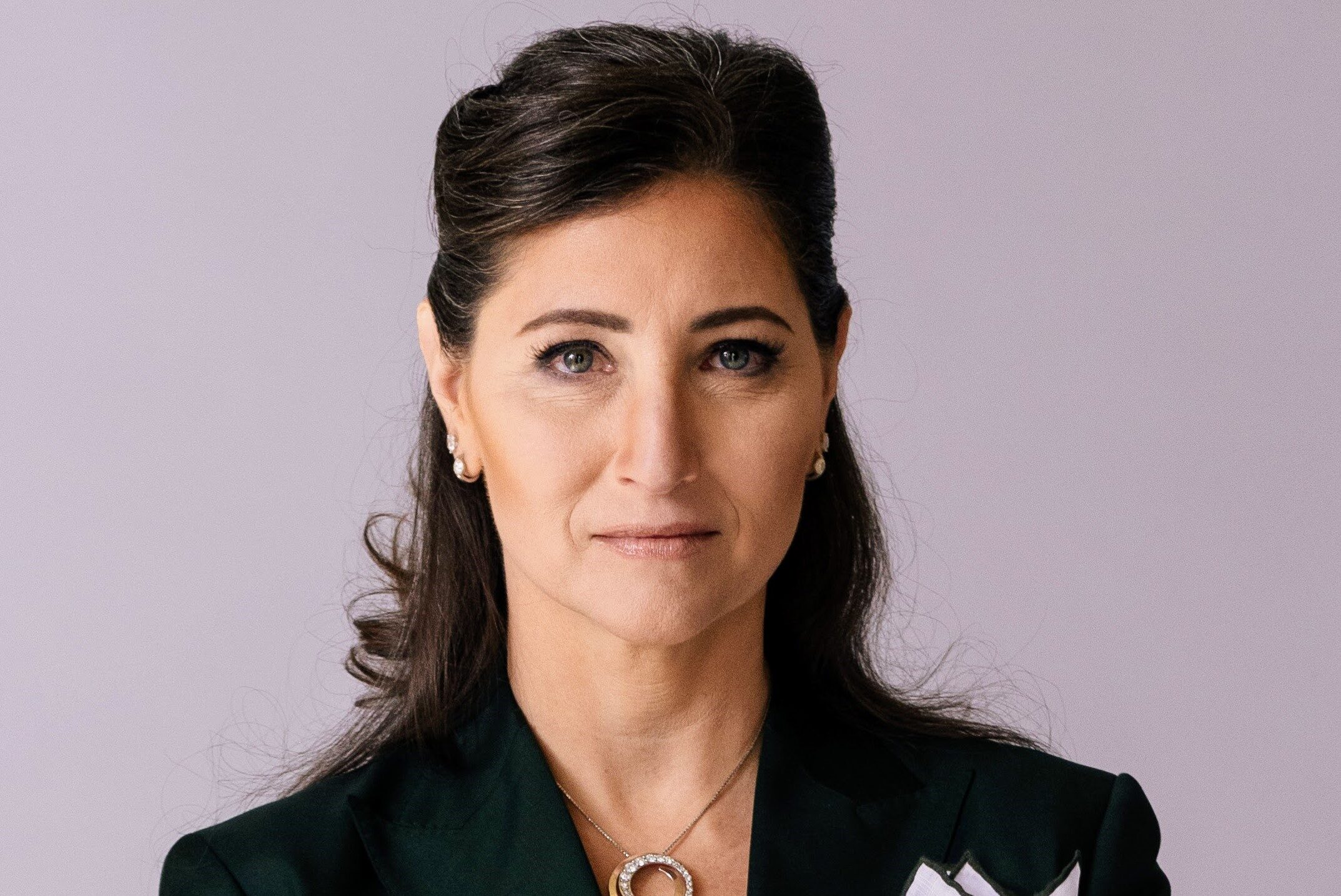
In a world where specialization often defines career success, Yesenia Sevilla represents a revolutionary approach to leadership that transcends traditional industry boundaries. As CEO of CHALK, established in 2024, she embodies a new paradigm of innovation where diversity of experience becomes the catalyst for transformative solutions across ed-tech, biotech, and healthcare sectors.
Her story is one of following passion over convention, where opportunities shape the journey rather than predetermined career checklists. “Diversity is in my blood, quite literally,” Yesenia reflects on her rich heritage that spans Cuba via Spain and Lebanon, Brazil via Portugal, with DNA traces reaching Asia, North Africa, and Ireland. This multicultural foundation has become the cornerstone of her approach to inclusive innovation, where real people solve real problems for real people, including themselves.
“Following my passion for innovation and problem-solving has been my throughline across these diverse industries,” she explains. “I’ve followed opportunities, not a linear checklist of career advancement.” This philosophy has guided her through over 20 years of leadership roles, each building upon the last to create a unique perspective that bridges industries traditionally viewed as separate domains.
THE POWER OF VOICE: FROM TEDx TO TRANSFORMATIVE LEADERSHIP
The pivotal moment that crystallized Yesenia’s approach to leadership came through her experience as a TEDx speaker. The months of preparation required for that “Red Dot” experience fundamentally changed her perspective on communication and vulnerability in leadership.

“Finding my voice and a platform to truly dig into vulnerability makes you understand that you can communicate with anyone about anything,” she emphasizes. “In leadership, that strength, that freedom, is crucial.” This transformative experience became the foundation for her belief that authentic communication transcends all barriers, whether they be cultural, linguistic, or industrial.
The TEDx platform taught her that leadership isn’t about having all the answers but about creating spaces where meaningful conversations can occur. This insight has shaped her approach to building teams, developing strategies, and fostering innovation across the complex landscape of her professional endeavors.
REDEFINING INCLUSIVE INNOVATION
For Yesenia, inclusive innovation extends far beyond buzzwords or corporate initiatives. Her definition is both simple and profound: “any value-add change that is implemented to improve any human experience.” This human-centered approach ensures that innovation serves everyone, not just select populations or market segments.
“There is no exclusion of idea, problem, people, or process in the enhancement of the human experience,” she states emphatically. This philosophy drives every project she undertakes, ensuring that solutions are developed with genuine inclusivity at their core rather than as an afterthought.
Her approach to inclusive innovation recognizes that the most effective solutions emerge when diverse perspectives collaborate on shared challenges. By removing barriers to participation and actively seeking out varied viewpoints, she has consistently delivered results that resonate across different communities and user groups.
WITNESSING INDUSTRY TRANSFORMATION
Over her two decades of leadership experience, Yesenia has observed remarkable transformations in both healthcare and education technology. These industries, while distinct, share common elements that have accelerated their evolution in unprecedented ways.
“Healthcare has adapted to tech in ways unthinkable 20 years ago,” she observes. The transformation encompasses everything from telehealth accessibility to having complete medical records and lab results available on smartphones, and extends to cutting-edge developments like nanotherapeutics. This technological integration has fundamentally altered patient experiences and clinical outcomes.
The education technology sector has experienced equally dramatic changes. “EdTech feels like it’s redesigning curriculum every six months, and AI is now in the playbook to craft smarter ways to individualize learning,” Yesenia notes. The speed of adaptation in both industries reflects broader technological trends, but also demonstrates how human-centered needs drive meaningful innovation.
These observations have informed her strategic approach to leadership, recognizing that successful leaders must anticipate and adapt to rapid technological changes while maintaining focus on fundamental human needs and experiences.
THE ART OF CROSS-INDUSTRY LEADERSHIP
When asked about balancing leadership demands across multiple complex industries, Yesenia offers a unique perspective that reframes the challenge entirely. “Complex is an interesting word because it relates to difficulties that arise from many interrelated and connected parts,” she explains. “So even the description implies that there is more connection than disparity.”
Her approach recognizes that leading organizations is fundamentally about leading processes and people, while tasks relate to specific industries. “To be clear, I am not leading in all of these industries at once. It’s been more sequential,” she clarifies, emphasizing how each experience builds upon previous knowledge and skills.
This sequential approach has allowed her to develop transferable leadership competencies while gaining industry-specific expertise. The connections between healthcare, education, and biotechnology become apparent when viewed through the lens of human experience and improvement, creating synergies that inform more effective solutions across all sectors.
MULTILINGUAL LEADERSHIP IN GLOBAL BUSINESS
Yesenia’s multilingual capabilities represent more than language skills; they embody a fundamental approach to understanding and connecting with diverse populations. “Being multilingual from birth has been a blessing I can’t take credit for; I thank my parents for that gift,” she acknowledges humbly.
However, her strategic use of this gift extends far beyond basic communication. “Knowing more than one language has an exponential effect on your ability to ‘see’ others,” she explains. This perspective has shaped her approach to global business development, where understanding languages opens doors to understanding cultures, customs, and market dynamics.
Her methodology involves comprehensive cultural research before engaging with potential business partners. “I always researched the languages, cultures, music, food, customs, and laws of any potential business partners I wanted to engage with,” she describes. “That effort to learn, ask questions, and respect others first truly opens doors and is the greatest investment you can make in developing a global business mindset.”
This approach has proven invaluable across her various leadership roles, enabling her to build authentic relationships and develop solutions that resonate across cultural boundaries.
CROSS-INDUSTRY EXPERTISE IN ACTION
A particularly compelling example of Yesenia’s cross-industry expertise occurred during her role as head of an Umbilical Cord Blood Bank. Tasked with developing a new collection site for cord blood stem cell collection and expanding their footprint in the southeast, she faced a challenge that required technical healthcare knowledge, business development skills, and cultural competency.
The project’s complexity lay in its intersection of multiple domains. “This is a very clinical, technical healthcare role, but in nature it was very business development based,” she explains. The unique challenge was understanding the customer base: expectant mothers in the southeast, including a large non-English speaking population.
Her previous experience as leader of a Birth Center and Midwifery School provided crucial insights into the world of expectant mothers and labor and delivery processes. “Technical plus Business plus Multicultural gave me a unique perspective to help create solutions and success,” she reflects.
This project exemplifies how cross-industry experience creates unexpected advantages, allowing leaders to see connections and solutions that might not be apparent to specialists focused on single domains.
ESSENTIAL LEADERSHIP QUALITIES FOR INNOVATION
Yesenia identifies three critical leadership qualities necessary for driving innovation in today’s rapidly evolving technological landscape. First is understanding human-centered design, which ensures that technological solutions address real human needs rather than creating technology for its own sake.
Second is embracing problem-solving as a skill rather than a task. This perspective encourages continuous development of analytical and creative thinking capabilities, treating each challenge as an opportunity to strengthen problem-solving muscles rather than simply checking items off a to-do list.
Third is intentional collaboration to drive efficient outcomes. This involves deliberately bringing together diverse perspectives and expertise to achieve shared goals, recognizing that the most innovative solutions often emerge from unexpected combinations of knowledge and experience.
These qualities work synergistically to create leadership approaches that are both effective and sustainable, capable of adapting to changing circumstances while maintaining focus on meaningful outcomes.
FOSTERING GLOBAL COLLABORATION
Yesenia’s approach to fostering collaboration among diverse teams centers on intentionality and clarity. “You bring these diverse teams together because of the individual team member value and the common desired outcome,” she explains. “Making that clarity a priority throughout the process is critical.”
Her methodology involves clearly communicating why each team member was selected and ensuring that everyone understands how their contributions support shared objectives. “Why is everyone there, and are they working toward that common outcome with everything they do?” This question drives continuous alignment and focus.
As a leader, she emphasizes the importance of celebrating diversity while enabling autonomy. “Celebrate the value of the diversity you’ve gathered and why it matters, and then get out of the way so they can reach that desired outcome successfully.” This approach builds confidence while maintaining accountability for results.
The key to successful global collaboration lies in recognizing that diversity of perspective is a strategic advantage rather than a challenge to be managed, creating environments where different viewpoints strengthen rather than complicate decision-making processes.
ENVISIONING THE FUTURE OF EDUCATION AND HEALTHCARE
Looking ahead, Yesenia sees transformative potential in both education and healthcare that will fundamentally alter how these industries operate. “The future of both these industries will be indescribable based on the speed of gains we are achieving with technology today,” she predicts.
Her vision emphasizes increasing individualization across both sectors. “More and more of both industries will become individualized, and we have already seen the tip of the iceberg.” This trend toward personalization reflects broader technological capabilities while addressing fundamental human needs for customized experiences and outcomes.
The convergence of artificial intelligence, data analytics, and biotechnology promises to create possibilities that are difficult to imagine based on current capabilities. However, Yesenia’s focus remains on ensuring that technological advancement serves human needs rather than driving technology for its own sake.
STAYING CURRENT WITH RAPID CHANGE
Maintaining awareness of developments across multiple fast-moving industries requires strategic approaches to information consumption and network engagement. “I don’t know if ‘updated’ is the right word; it’s more of trying to keep up with it all,” Yesenia admits candidly.
Her strategy involves extensive reading across various platforms while leveraging professional networks for insights and updates. “Maintaining my connection with my network over the years has really helped because as they share news, discoveries, patents, conferences, I learn by keeping up with them.”
This approach recognizes that staying current in rapidly evolving fields requires community engagement rather than individual effort alone. By maintaining strong professional relationships across industries, she gains access to diverse perspectives and early insights into emerging trends and opportunities.
BUILDING INCLUSIVE INNOVATION ECOSYSTEMS
One of Yesenia’s most impactful recent initiatives involved building a diverse mentor roster for Vanderbilt University’s Innovation Center, The Wond’ry. This project exemplifies her commitment to inclusive innovation by creating support systems that serve varied needs and backgrounds.
“The goal was to try and create a cadre of mentors across diverse industries, backgrounds, specialties, job titles, genders, ethnicities, geographies,” she explains. The success of this initiative was remarkable: by the end of 2024, they had curated over 250 actively engaged mentors ready to support students and faculty in their innovation pursuits.
This project demonstrates how inclusive innovation extends beyond product development to ecosystem building, creating infrastructure that enables more people to participate in innovation processes and benefit from mentorship relationships.
GUIDANCE FOR EMERGING LEADERS
Yesenia’s advice for young professionals aiming to become leaders in interdisciplinary fields emphasizes action and service. “Learn, listen, observe, do, and then guide,” she counsels. “Always be the first to try something, raise your hand to step up, and always be the first to help someone else.”
This progression from learning to guiding reflects her belief that leadership emerges through experience and service rather than position or title. By consistently stepping forward to tackle challenges and support others, emerging leaders develop the competencies and relationships necessary for cross-industry success.
Her emphasis on being “first” to engage doesn’t mean being reckless, but rather demonstrates willingness to take initiative and accept responsibility for outcomes, qualities that are essential for navigating the ambiguity inherent in interdisciplinary work.
THE MENTORSHIP IMPERATIVE
Reflecting on the role of mentorship in her career, Yesenia acknowledges both its importance and its historical absence in her early professional years. “Mentorship is very important, and not something that was always available to me as a young woman in my career,” she recalls.
This experience has driven her commitment to providing others with the guidance she wished she had received. “I’ve made a commitment over the years to be the mentor I wish I had for others in need.” This approach transforms personal challenges into opportunities to support others, creating positive cycles that strengthen entire professional communities.
Her mentorship philosophy aligns with her broader leadership approach, focusing on empowerment and capability building rather than dependency creation. By sharing knowledge and experiences, she helps others develop their own problem-solving capabilities and professional networks.
REFRAMING INNOVATION IN BIOTECH AND HEALTHCARE
Yesenia addresses common misconceptions about innovation in biotech and healthcare that can limit participation and investment in these critical sectors. “A common misconception is that you have to invent the next ‘cure for [insert terrible disease here]’ to be an innovator or to be a big success,” she explains.
The reality, she emphasizes, is that significant impact opportunities exist within existing processes, products, and practices. “There are huge impact points for innovation in the existing processes, products and practices within these industries today that would change the world and be wildly successful.”
This perspective democratizes innovation by showing that meaningful contributions don’t require revolutionary breakthroughs. Incremental improvements, process optimizations, and user experience enhancements can create substantial value while being more accessible to a broader range of innovators and entrepreneurs.
MEASURING SUCCESS BEYOND FINANCIAL METRICS
Yesenia’s approach to measuring success reflects her commitment to meaningful impact over purely financial outcomes. Her evaluation criteria center on three fundamental questions: “Did you fall in love with the problem, and did you actually solve it? What else did you learn? Is your innovation process reproducible?”
This framework emphasizes problem-solving effectiveness, continuous learning, and scalability rather than short-term financial returns. By focusing on whether solutions actually address identified problems, she ensures that projects create genuine value rather than just revenue.
The emphasis on learning and reproducibility reflects her systems-thinking approach, recognizing that sustainable success requires building capabilities and processes that can be applied to future challenges rather than one-time achievements.
INTEGRATING SUSTAINABILITY AND ETHICS
Yesenia’s commitment to human-centered design naturally incorporates sustainability and ethical considerations into her leadership and business strategies. “I believe in human-centered design and inclusive innovation, thus the human sits at the center of my decisions,” she explains.
This approach ensures that business strategies are constructed to optimize positive impacts on people, which inherently includes thinking about sustainable impact and ethics. “The ‘improved human experience’ cannot be achieved at the compromise of ethics or the risk of unsustainability,” she emphasizes.
By placing human welfare at the center of decision-making processes, she creates frameworks that naturally consider long-term consequences and ethical implications, ensuring that success doesn’t come at the expense of future generations or vulnerable populations.
THE POWER OF STORYTELLING
Storytelling represents both a passion and a strategic tool in Yesenia’s work as a builder, connector, and innovator. “If you cannot share an experience, an idea, a connection, then it is infinitely harder to lead, conduct business, communicate,” she explains.
Her approach recognizes that human connection occurs through shared narratives. “Even the building of a good team begins with the story of each member and why they add to the value and story of that team,” she notes. “Humans connect through stories, and so when we share compelling stories, we are moved to do bigger, better things for one another.”
This understanding of story as a fundamental communication tool enables her to build stronger teams, communicate more effectively with diverse audiences, and create shared understanding across cultural and professional boundaries.
A LEGACY OF INCLUSIVE TRANSFORMATION
As Yesenia continues to build CHALK and expand her influence across ed-tech, biotech, and healthcare sectors, her approach offers a compelling model for leadership in an increasingly interconnected world. Her journey demonstrates that diversity of experience, when combined with inclusive innovation principles and authentic communication, can create transformative impact across traditional industry boundaries.
Her commitment to mentorship, sustainability, and human-centered design ensures that her influence extends beyond immediate business outcomes to create lasting positive change in the communities and industries she serves. By following opportunities rather than predetermined paths, she has created a unique leadership model that others can adapt while pursuing their own passions and making their own contributions.
“The improved human experience cannot be achieved at the compromise of ethics or the risk of unsustainability,” she reminds us. In Yesenia Sevilla, we see embodied the possibility of leadership that serves multiple purposes simultaneously: business success, social impact, and individual fulfillment, all working together to create a more inclusive and innovative future.