In an industry where aesthetics often overshadow functionality, one designer is challenging the conventional approach to hospitality spaces. Sorcha Drakeford’s journey from restaurant floors to design studios represents a rare fusion of operational expertise and creative vision, proving that the most impactful designs emerge from genuine understanding of how spaces truly work.
Her story begins not in design school, but on the front lines of hospitality itself. Three decades spent working in restaurants, bars, and hotels provided Sorcha with something design education alone could never offer: lived experience of what actually works when guests arrive, when service gets hectic, and when spaces need to transition from morning coffee to evening cocktails.

“My career actually started in hospitality. I spent 30 years working in restaurants, bars and hotels. I genuinely love the industry, from both a visitor and a work perspective,” Sorcha reflects. “Its incredibly diverse, and whilst its hard work, it is a lot of fun.”
Those years weren’t just about serving guests. Sorcha’s roles spanned operations, brand development, innovation, and strategy, building a comprehensive understanding of hospitality’s multifaceted challenges. But the pivotal moment came when she led a collection of pubs with rooms, managing both operations and creative direction simultaneously.
“I realised I loved creating spaces too. And not only was it something I enjoyed, I was adding commercial value,” she explains. This revelation sparked the transition from operator to designer, but with a crucial difference. Unlike designers who learn hospitality secondhand, Sorcha had internalized it through thousands of shifts, countless guest interactions, and the accumulated wisdom of three decades in the industry.
“I have always intuitively felt a space, not just from the team and the guest perspective, but on why its working or not working,” she notes. This intuitive understanding, combined with formal design skills, became the foundation for Design@Studio17, launched in September 2023.
THE PHILOSOPHY: WHERE SUSTAINABILITY MEETS CRAFTSMANSHIP
Design@Studio17 isn’t just a business name. It represents a philosophy that challenges the disposable nature of contemporary design culture. At its core lies a commitment that extends beyond aesthetics to encompass responsibility for people and planet alike.

“I feel that we all have a shared responsibility to look after both our fellow humans and the planet,” Sorcha states. “The more you learn about our impact on the planet, the more aware you are of the difference you can make.”
This commitment manifests in tangible choices throughout every project. Sorcha actively seeks B Corps and sustainable suppliers, incorporates vintage items given new life, and champions artisans and craftspeople whose work carries the unmistakable quality of human care.
“I appreciate real craftsmanship, so I seek out artisans and craftspeople when creating designs. It takes longer but it adds a special magic to the overall scheme,” she explains. “You can feel the difference when someone has created something with love. The quality is far superior.”
This approach requires patience in an industry often demanding quick turnarounds. Yet Sorcha remains committed to the longer path, understanding that truly sustainable design must be sustainable in every sense: environmentally responsible, economically viable, and built to endure beyond fleeting trends.
Her philosophy extends beyond environmental concerns to encompass ethical partnerships with smaller businesses, ensuring that design choices support communities rather than simply extracting value from them. It’s an approach that recognizes design as an inherently political act, with every specification either supporting or undermining broader social and environmental goals.
SMART DESIGN: THE SCIENCE BENEATH THE AESTHETICS
The term “smart design” gets thrown around liberally in the industry, often meaning little more than incorporating technology or following current trends. For Sorcha, it means something far more fundamental: design that works as brilliantly as it looks.
A recent hotel project perfectly illustrates this philosophy in action. The hotel had a day delegate area that looked impressive but functioned poorly. Long queues formed at coffee and food stations. Staff constantly rushed to restock during service, creating unnecessary stress and labor costs. The space sat underutilized in the evening, representing wasted potential.
Sorcha’s intervention transformed the space through intelligent problem solving rather than superficial redesign. She swapped furniture to increase seating capacity while reusing displaced pieces elsewhere, eliminating waste. An area that felt like a corridor became additional seating with a strategically hidden coffee and food station.
The masterstroke came in designing dressers that served dual functions. By day, they held coffee machines with precisely calculated cup quantities, ensuring delegates never waited for staff to replenish supplies. They even accommodated hot food. By night, these same units transformed back into gorgeous vintage dressers crafted from reclaimed wood.
“This not only resulted in us reducing queues in the day, but by night they looked like gorgeous vintage dressers,” Sorcha explains. “The area now not only worked better for day delegates but it now worked perfectly for hotel residents who wanted to enjoy a nightcap. Through smart design, the space moved effortlessly from day to night, grew sales and reduced labour.”
The project encapsulates her approach: multiple problems solved simultaneously, sustainability embedded throughout, commercial impact clearly measurable, and aesthetics that delight rather than merely satisfy. As Sorcha notes with characteristic attention to precision: “#detailsmatter.”
BALANCING BEAUTY WITH BUSINESS SENSE
The tension between visual appeal and operational efficiency has plagued hospitality design since the first restaurant opened. Too many spaces prioritize Instagram appeal over staff workflow, or sacrifice atmosphere for brutal functionality. Sorcha’s approach refuses this false choice.
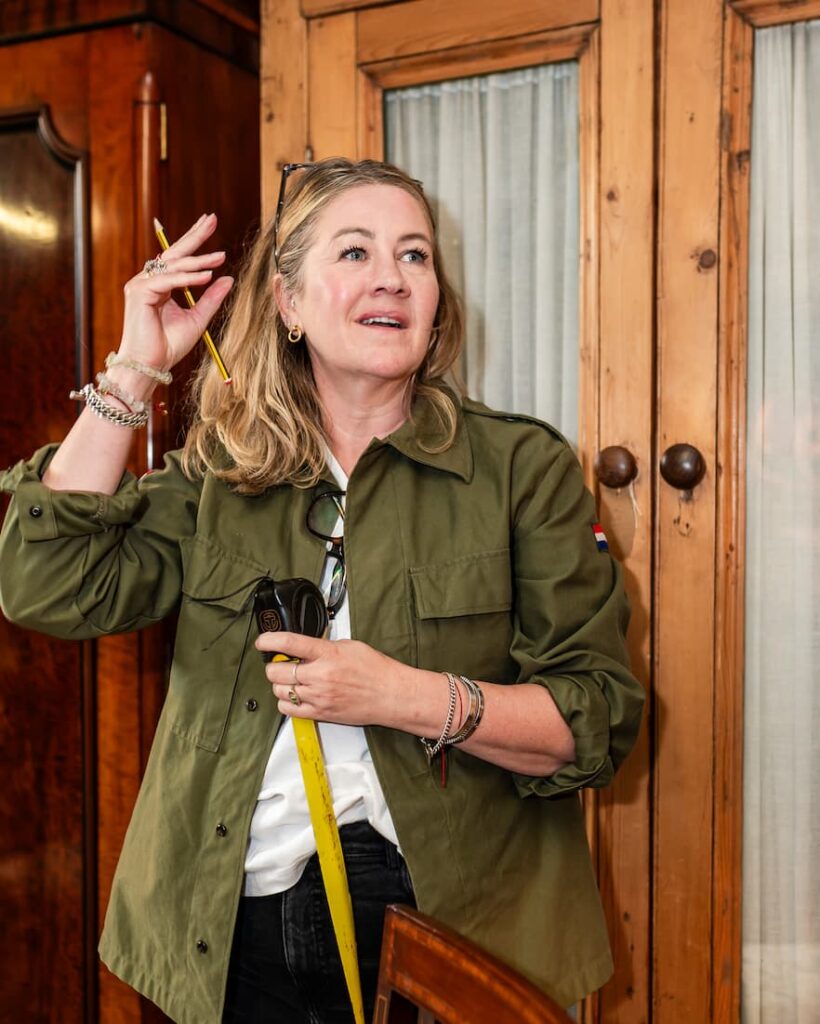
“I am always inspired by the space and its purpose, so the aesthetics usually are the starting point, but I quickly underpin the science,” she explains. This process involves continuous iteration, testing design concepts against operational realities until she achieves synthesis rather than compromise.
“I will then change design aspects so it works. I will keep going until I am happy that it works for everyone, and then I will try and break my thinking until I am happy that it is perfect, for all stakeholders.”
This methodology reflects her fundamental understanding that hospitality spaces serve multiple masters simultaneously. Guests need beauty, comfort, and intuitive navigation. Staff need efficient workflows, ergonomic arrangements, and spaces that work during both quiet periods and peak rushes. Owners need return on investment, durability, and designs that drive revenue while controlling costs.
Understanding the client’s business ambitions isn’t peripheral to Sorcha’s process; it’s foundational. “Its huge,” she states simply when asked about this dimension. “Sustainability also means that the design is timeless, so I have to understand your vision to ensure I can help you achieve your success.”
This business-focused approach extends to asking difficult questions and even helping shape client strategy when necessary. Sorcha isn’t content to simply execute someone else’s vision if that vision contains fundamental flaws. “I am not afraid to ask the questions or help shape out your strategy to ensure what I design works for you now and the future.”
THE DISCIPLINE OF CONTINUOUS LEARNING
Thirty years in hospitality could easily breed complacency. Sorcha has deliberately cultivated the opposite mindset, treating every experience as potential education and maintaining the curiosity of someone just entering the industry.
“Whilst I have experience, I am always learning. I am constantly on the lookout for ideas and inspiration,” she explains. “I travel a lot, eat out a lot, and my eyes and ears are always open.”
This isn’t casual observation. When Sorcha experiences something exceptional, she systematically unpicks how it was achieved, reverse engineering success to understand its components. This practice ensures that complacency never creeps in while keeping her aware of emerging technologies and innovations.
Equally important is what she listens for: not just what clients explicitly say, but what remains unspoken. “I also am listening always to both the things clients say and the things they don’t say to ensure I truly understand their needs.”
Even in residential projects, this operational mindset persists. Sorcha constantly seeks ways to save time and make life more effortless for people, whether designing commercial kitchens or private homes. The same principles of guest flow and team efficiency that governed her hospitality career now inform every project.
Her favorite feedback comes when staff members express disbelief at their own productivity. “I have a strong track record of sales growth and productivity in my old career, but my favourite results are always when I have the team in disbelief that they served more people, took more money but it felt easier. Thats the ultimate feedback.”
NAVIGATING TRENDS WITHOUT BECOMING TRENDY
The design industry worships trends with religious fervor, each season bringing new “must have” elements that promise to revolutionize hospitality spaces. Sorcha maintains a more nuanced relationship with this cycle.
“I stay away from trends,” she states clearly. “It ultimately leads to the need to redesign, probably faster than you need it, or for guests to tire of your offer. You need to create a unique experience.”
This doesn’t mean ignoring what’s happening in the broader design world. Sorcha stays connected to emerging directions, then critically evaluates whether they offer genuine value or simply represent this season’s aesthetic fashion. When trends carry real insight, she finds ways to subtly incorporate their wisdom without slavishly following their superficial expressions.
One trend Sorcha insists cannot be ignored: visitor expectations have risen dramatically and continue climbing. “As life becomes increasingly busy, visitors want effortless personalised experiences,” she observes. “Being good is no longer good enough. You have to be exceptional.”
This elevation of standards reflects broader cultural shifts. In an era where home entertainment and delivery services offer comfort and convenience, hospitality venues must provide experiences worth leaving home for. Mediocrity has lost its market.
Another trend Sorcha hopes transitions from fashionable concept to business standard: genuine and intentional focus on wellbeing and sustainability. “One trend that has been bubbling for a while and I expect (and hope) moves from trend to business as usual is a genuine and intentional focus on wellbeing and sustainability.”
Her emphasis on “genuine and intentional” reveals awareness of how easily these concepts become marketing buzzwords rather than operational commitments. Sorcha’s work aims to embed them as fundamental design principles rather than superficial add-ons.
CREATING SEAMLESS EXPERIENCES FROM THE FIRST STEP
The guest experience begins long before someone crosses the threshold, a reality too many hospitality operators overlook. Sorcha’s approach considers the entire journey, starting with the approach to the building itself.
“For me it starts before your visitors get inside. You need to create a feeling of comfort, excitement, and a warm welcome as they approach your business,” she explains. Walkways should do more than provide safe passage; they should entice and welcome, creating anticipation for what lies ahead.
“Sadly I often see externals that are not as well thought through as it should be,” Sorcha notes. “90% of hospitality venues I visit often create unnecessary friction before their visitor has even crossed the threshold.”
Once inside, layered lighting and appropriate music combine with warm welcomes to create immediate comfort. But Sorcha’s vision goes deeper than ambiance. She believes businesses should lead the guest experience so completely that visitors need do nothing more than lift their knife and fork.
“Your guest should never have to guess what they have to do. It should be seamless,” she emphasizes. This philosophy rejects designs that force guests to navigate unclear spaces, search for restrooms, or puzzle over how to order. Every element should communicate its purpose intuitively.
THE ART OF ZONING AND DURABILITY
High-traffic areas like kitchens, bars, and lounges each present unique challenges. Sorcha’s approach centers on strategic zoning that allows spaces to function beautifully whether occupied by a handful of people or packed to capacity.
“A space needs to work and feel comfortable when it has just a few people in, to when its busy,” she explains. These zones need not be obvious to visitors, but they should create comfort across all occupancy levels and enable smooth transitions through different day parts and occasions.
In hospitality, commercial success requires what Sorcha calls “sweating the assets”: maximizing space utilization from morning coffee through dinner service to late-night drinks. “A great design and concept works when you are able to sweat the assets so you are able to turn tables.”
Durability considerations add another layer of complexity. A hotel in a ski resort faces different wear patterns than a city hotel, requiring different material specifications. Sorcha’s operational background helps her anticipate these distinctions, selecting finishes that will maintain their integrity under specific usage patterns.
“For durability, you need the right finishes so that they last. The finish you need in a hotel in a ski resort must be different to a city hotel.”
WHAT MAKES A SPACE TRULY EXCEPTIONAL
Ask most designers what separates good spaces from exceptional ones, and you’ll hear about innovative concepts, bold aesthetics, or impressive budgets. Sorcha’s answer reflects her hospitality roots: it’s about all the pieces working together seamlessly.
“You need all pieces of the jigsaw. A fabulous team, a great atmosphere, excellent food and/or drink, a great environment and consistency,” she explains. “You must be exceptional, all day, everyday.”
This consistency requirement represents perhaps the greatest challenge in hospitality. Any venue can deliver excellence occasionally, but doing so reliably across every shift, every day part, and every season demands design that supports rather than hinders operational consistency.
Sorcha’s ultimate aspiration reveals the sophistication of her approach. “Your visitors should leave delighted, and for me, if they don’t quite know what made it so special, then thats even better.”
This vision of invisible excellence recalls the best hospitality experiences, where everything works so smoothly that guests never notice the infrastructure enabling their comfort. The coffee arrives at the perfect temperature, the lighting shifts appropriately as evening progresses, the acoustics allow conversation without strain, and dozens of other details align without calling attention to themselves.
Achieving this requires what Sorcha describes elsewhere as “hundreds, if not thousands of decisions” that guests shouldn’t even be able to identify. It’s design as orchestration, coordinating myriad elements into coherent experience.
DESIGN AS REVENUE DRIVER
The relationship between design and financial performance often gets discussed in vague terms. Sorcha’s approach makes these connections explicit and measurable, drawing on decades of operational experience to understand precisely how design decisions impact the bottom line.
“Thoughtful design shouldn’t be visible, it’s felt,” she explains. “By the team, it feels like a great place to work, its as effortless as possible, easy to work at pace, and no friction.”
This team experience directly drives customer experience, which in turn drives sales. When design removes friction from service delivery, staff can focus on hospitality rather than fighting against poor layouts or inadequate equipment. The ripple effects extend throughout the business.
If design is well considered, it also drives efficiency, which directly impacts profitability. In an era of rising costs, this efficiency becomes crucial. “You have to seek out the ways to be more productive,” Sorcha notes. “You can’t just cut costs. You end up damaging the experience. That can quickly become a dangerous place to be.”
Her project portfolio demonstrates these principles in action. Sometimes the intervention is focused: ergonomics of a bar setup that allows the team to deliver more drinks during peak periods. Other times it’s comprehensive: complete concept development covering menu, drinks, and design.
One pub project exemplifies the transformative potential. A historic building that had fallen into obscurity was reimagined completely, going from minimal trade to becoming one of the city’s must-visit destinations. The result: a 900% uplift in sales and a beloved local landmark restored to prominence.
Currently, Sorcha is working on a hotel project that particularly excites her. “A gorgeous historic building, whilst its performing reasonably, it has a huge untapped potential,” she explains. Her scope includes room designs, bar and dining areas, and strategic support covering brand identity, menu engineering, and labor efficiencies.
The goal extends beyond financial metrics. “I have a personal goal too. I would love for the hotel to win one of the local hospitality awards, through unique design and an enhanced offering that is sustainable, unique and outstanding.”
MEASURING SUCCESS BEYOND AESTHETICS
While client and visitor satisfaction matters deeply, Sorcha’s definition of success encompasses harder metrics. “For me, I also want to see a return on the clients investment,” she states clearly.
This return gets tailored to each project and brief, but the underlying commitment remains constant: design must deliver measurable value, not just visual appeal. Achieving this requires deep immersion in the business.
“I always immerse myself in the business, quietly of course, but understanding how it operates, or will potentially operate, is the only way to ensure I am adding long term value for the client,” Sorcha explains. Her signature reminder appears again: “#detailsmatter.”
This approach transforms the designer-client relationship from vendor transaction to strategic partnership. Sorcha isn’t simply executing instructions; she’s actively contributing to business success through design that understands and advances operational objectives.
FINDING INSPIRATION IN UNEXPECTED PLACES
Maintaining creative vitality requires deliberate practices. For Sorcha, inspiration comes through purposeful engagement with the world, particularly through travel and dining experiences.
“I travel as much as I can. I love eating out, catching up with friends and loved ones over dinner or a couple of drinks,” she shares. These aren’t just leisure activities; they’re professional research conducted in the most enjoyable possible way.
Sorcha also maintains direct contact with hospitality operations through occasional consultancy work. “I also keep my toes in the industry by doing some hospitality consultancy too from time to time, so that helps.”
Every experience gets stored for future reference. “On my travels I am always looking for inspiration or new ideas. Spending time in the industry as a consumer is crucial. I store every experience in my memory somewhere. It always comes in useful.”
Recent travels to a sustainable hotel in Brussels provided perfect examples. “They had replaced all ceramics with sinks and toilets made from woodchip. Whilst I knew these existed, it was great to see them in situ and I will definitely use them in the future.” She also discovered lampshades made from shuttlecocks, sparking ideas for future projects.
This openness to unexpected inspiration keeps Sorcha’s work fresh while grounding it in practical realities. She’s not chasing theoretical concepts but collecting proven solutions that can be adapted to new contexts.
WHEN DESIGN EXCEEDS EXPECTATIONS
The hotel delegate area project mentioned earlier represents one of many instances where Sorcha’s solutions surpassed initial briefs. The client had requested hot holding for delegate lunches and was content to wheel equipment in and out for service.
That wasn’t acceptable to Sorcha. “I wanted to create a piece of furniture that just looked like a dresser, so when not in use it fitted perfectly in the space,” she explains. Inspired by mid-century designs, she envisioned furniture that transformed from beautiful dresser to functional chef’s equipment.
Working with craftspeople, Sorcha turned sketches into reality, creating pieces that far exceeded client expectations. “It looks great, functions perfectly and has saved the team time.”
This willingness to push beyond briefs reflects confidence born from operational experience. Sorcha doesn’t just know what clients ask for; she understands what they actually need, often before they fully articulate it themselves.
EMBEDDING SUSTAINABILITY IN EVERY DECISION
For Sorcha, sustainability isn’t a feature to be added; it’s a foundation that supports every other decision. Her approach begins with inspiration drawn from the space itself, the building, the client, and the project’s purpose rather than from trends. This creates inherent longevity.
“I am always inspired by the space, the building, the client and its purpose, and never by trends, so that gives longevity to my designs,” she explains. This trend-resistant approach ensures designs remain relevant years after completion.
Material selection prioritizes craftsmanship over mass production. When appropriate, Sorcha loves giving old furniture new life, creating unique pieces while reducing waste. Natural fibers feature prominently, and B Corp partners and suppliers are sought whenever possible.
“I am always looking for ways to become better so I am constantly learning,” Sorcha adds, acknowledging that sustainability practices continue evolving. This commitment to ongoing education ensures her work reflects current best practices rather than outdated approaches.
Her concern about greenwashing reveals awareness of how sustainability can become performative rather than substantive. “The level of greenwashing in fashion is appalling. I hope that doesn’t follow into design,” she states, determined to ensure her own work maintains genuine integrity.
ADVICE FOR HOSPITALITY BUSINESSES CONSIDERING REDESIGN
When hospitality businesses approach Sorcha about refurbishment, she begins with fundamental questions rather than design discussions. “Ask yourself what it is you want to achieve? Really think about the inefficiencies or pain points,” she advises.
Too many operators jump straight to aesthetics without understanding underlying problems. The design must do far more than look great; it must solve actual operational challenges and advance business objectives.
Sorcha encourages operators to step back and observe their spaces in action. “So many operators don’t find the time to stand back and watch, and I understand, hospitality takes a lot of time and effort, but standing back from time to time, can really help you move forward.”
Finding the right designer matters enormously. “Find someone that gets you and your vision but be open to ideas and experience. And ultimately, find a designer that you trust and fits your values.”
This relationship becomes particularly crucial during refurbishment, which Sorcha describes as probably the hardest thing a manager will go through. “Opening a space to the public, training team, dealing with snagging, is a lot, and you will spend a lot of time together.”
Having the right partnership and support becomes essential, and if you can have some fun along the way, that’s even better. Sorcha’s operational background gives her unique empathy for what clients endure during refurbishment, informing how she structures projects and communications.
VISION FOR THE FUTURE: BOLDNESS AND CRAFTSMANSHIP
Looking ahead, Sorcha sees both challenges and opportunities shaping hospitality design’s evolution. Economic pressures in certain markets, particularly the UK, can stifle innovation. “I think hospitality is tough in certain markets. That can prevent innovation. I see it in the UK, so many operators are similar.”
The growing market of eating at home raises the stakes further. Hospitality venues must create compelling reasons to visit, offering experiences that can’t be replicated at home. This requires boldness and creativity.
“I see some incredible operators and ideas, and I love to see that innovation. I hope to see more of the creativity and boldness,” Sorcha states, aspiring to be part of the movement pushing boundaries.
She hopes sustainability and provenance will accelerate beyond current rates, but with crucial caveats. “These can’t be buzzwords,” she warns, having seen how terms lose meaning through overuse and misapplication.
Perhaps most passionately, Sorcha advocates for renewed focus on craftsmanship. “There are some incredible talents and skills that we need not to fade out. I want to be part of the individuals that ensure we move back to that.”
This vision connects to broader cultural questions about what we value and preserve. As mass production dominates consumer goods, the skills required for genuine craftsmanship risk extinction. Sorcha’s work actively resists this trajectory, commissioning pieces that keep traditional skills alive while creating contemporary designs.
DESIGN@STUDIO17: EVOLUTION AND NEW DIRECTIONS
At just over two years old, Design@Studio17 remains young, but Sorcha approaches its development with the same growth mindset that has characterized her entire career. “In my decades in hospitality, one thing I know to be sure of, is that you cannot stand still. You constantly have to learn and evolve, and that is exciting.”
Current projects include a pitch for a Pilates studio, representing new territory for the firm. While outside traditional hospitality, Sorcha has already begun extensive research, recognizing that success requires deep understanding of the specific context.
“Whilst its not the same, there are some principles that cross over, specifically around a warm welcome and an effortless experience,” she notes. First-time studio visitors need particular care. “Anyone that is going to a studio for the first time needs to be enveloped in a warm welcome as they approach the studio, so I am hoping to be able to take the best of two worlds to create something special.”
Spring 2025 will see the launch of a new initiative combining Sorcha’s love of travel with design, though details remain under wraps for now. This expansion reflects confidence in the firm’s foundation and willingness to explore adjacent opportunities.
A COMMITMENT TO LEAVING THE WORLD BETTER
Sorcha’s philosophy of responsibility extends beyond client work to encompass direct charitable action. In the UK, Design@Studio17 partners with StandingTall, an organization helping people who have experienced homelessness transition into work and independent living.
“At Design@Studio17 we donate a bedding bundle in support of their well-being,” Sorcha explains. “Sleep is essential to setting them up for success.” This practical support recognizes that stable housing represents just one component of successful transition; quality sleep enables the mental and physical wellness required for sustainable change.
Globally, the firm supports 50 children in Uganda through The Sorcha Children Foundation, helping them break the cycle of poverty through love, support, and education. This international dimension reflects Sorcha’s belief that responsibility knows no geographic boundaries.
These charitable commitments aren’t peripheral to the business; they’re expressions of the same values driving design decisions. The responsibility toward people and planet that shapes material selection and sustainability practices naturally extends to supporting vulnerable communities.
THE LEGACY OF EXPERIENCE TRANSFORMED INTO EXPERTISE
Sorcha Drakeford’s journey from hospitality operations to design leadership represents more than a career change. It exemplifies how deep operational expertise can transform creative practice, resulting in work that bridges the persistent gap between how spaces look and how they actually function.
Her three decades in hospitality weren’t preparation for design; they were essential education in what design must achieve. Every shift worked, every service navigated, every operational challenge solved became part of an experiential database that now informs every design decision.
This foundation enables Sorcha to see what many designers miss: the coffee machine placement that will slow service during morning rush, the lighting that will feel wrong when the space transitions from day to evening, the furniture arrangement that looks perfect in renderings but will frustrate staff flow in practice.
Yet she brings more than operational knowledge. Her commitment to sustainability, craftsmanship, and ethical business practices elevates design from problem-solving exercise to purposeful craft that serves multiple stakeholders simultaneously. Beauty matters deeply to Sorcha, but never at the expense of functionality, sustainability, or commercial viability.
As hospitality continues evolving in response to changing consumer expectations, economic pressures, and environmental imperatives, designers like Sorcha who understand both the creative and operational dimensions will shape the industry’s future. Her work demonstrates that spaces can delight guests, support staff, drive profitability, honor craftsmanship, and advance sustainability simultaneously.
The thousands of decisions required to create exceptional hospitality spaces demand both breadth of knowledge and depth of care. Sorcha’s career spanning decades of operations and years of design practice provides exactly this combination, resulting in spaces where everything works so well that guests never notice the infrastructure enabling their pleasure.
“I have always believed, its not one thing that ensures your guests leave delighted, it is hundreds, if not thousands of decisions, that your guests shouldn’t even be able to put their finger on, that goes towards creating something amazing,” Sorcha reflects. This philosophy guides every project, transforming ordinary hospitality venues into exceptional experiences that guests remember without quite understanding why.
As Design@Studio17 continues evolving, Sorcha remains committed to the principles that have defined her work from the beginning: putting clients first, maintaining operational awareness, championing sustainability and craftsmanship, and creating spaces that work as brilliantly as they look. In an industry too often dominated by superficial trends and Instagram aesthetics, this approach offers a refreshing alternative grounded in substance, experience, and genuine care for all stakeholders.