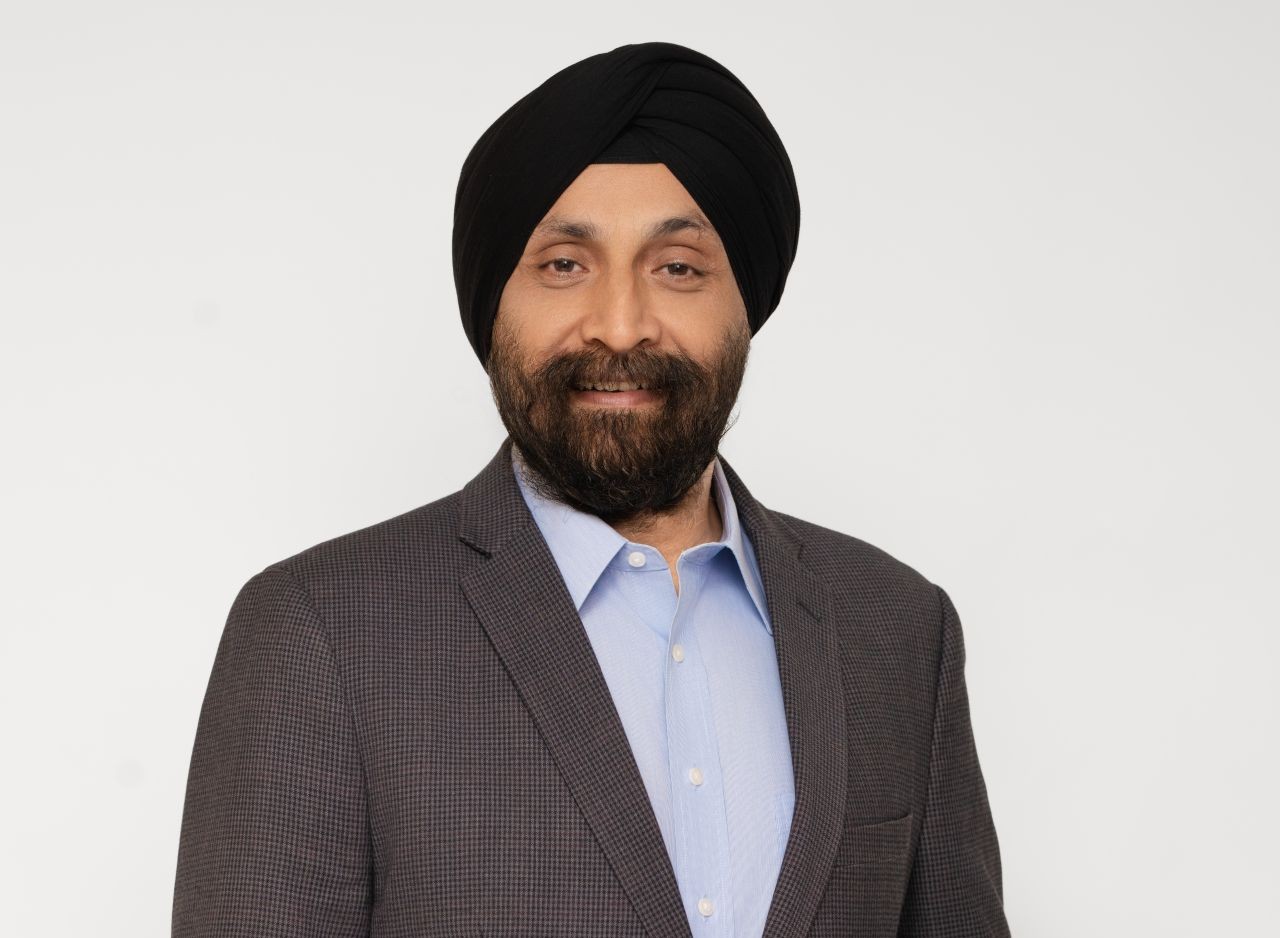
From Naval Discipline to Enterprise Reinvention: The Leadership Journey of Witty Bindra
A Leader Forged in Discipline, Driven by Innovation
In an era where artificial intelligence is rewriting business strategy, leadership is being redefined—not by titles or technology, but by trust, resilience, and results. Few leaders embody this transformation more fully than Witty Bindra, whose three-decade journey spans continents, industries, and paradigm shifts—from the disciplined decks of the Royal New Zealand Naval Volunteer Reserve (RNZNVR) to boardrooms guiding multi-billion-dollar technology partnerships.
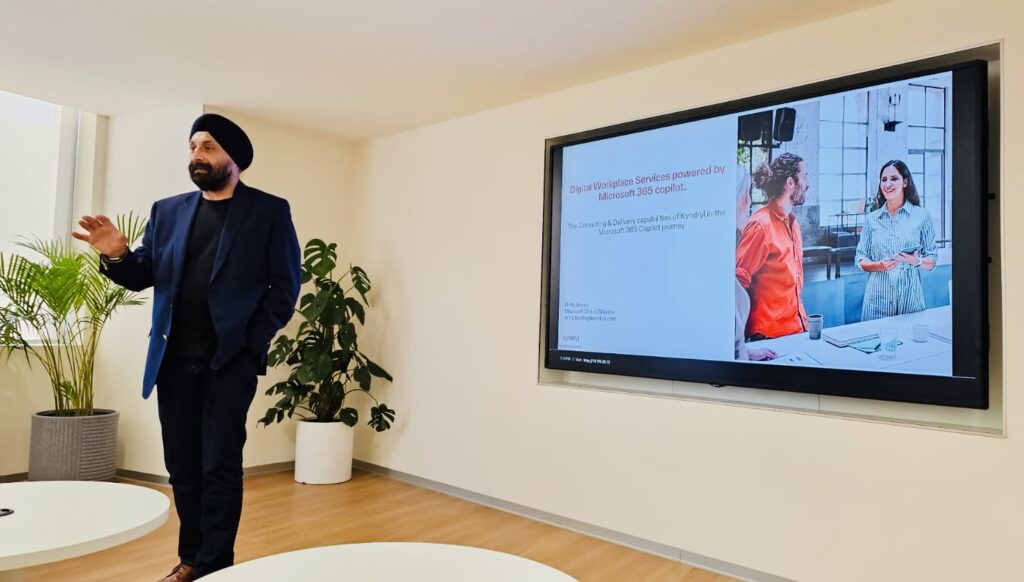
Ethical AI is not optional; it is crucial. By establishing ethical boundaries early, organizations can confidently develop AI capabilities without compromising trust or social responsibility
As a Global Business Executive at Kyndryl, the world’s largest IT infrastructure services provider, Bindra is leading the next wave of enterprise transformation—helping organizations modernize, automate, and scale responsibly through AI. His philosophy is simple yet profound: technology doesn’t transform business—leadership does.
Lesson 1: Discipline Is the Foundation of Innovation
“This naval foundation proved invaluable as my career advanced from engineering projects like the America’s Cup Viaduct Basin Project in Auckland and the Yamuna River Bridge Stabilization Project in India to pioneering Microsoft-focused practices and Gen AI initiatives across international markets.”
The precision and accountability that Bindra absorbed as the first turbaned Sikh commissioned officer in New Zealand’s naval forces became the bedrock of his leadership ethos. That early military experience—where stakes were high and execution had to be flawless, instilled in him a bias for action and a calm decisiveness that would later prove essential in managing high-stakes digital transformations.
Lesson 2: Academic Rigor Builds Strategic Agility
“My education at IIT Delhi grounded me in analytical thinking and rigorous research, while my MBA from Massey University and Kellogg’s product strategy program sharpened my business skills. Together, they offered a well-rounded view of technology leadership, blending technical knowledge with enterprise strategy.”
Bindra’s academic journey—from engineering to business strategy—taught him to connect dots others missed. It’s this combination of analytical precision and commercial foresight that allows him to bridge the worlds of data science, enterprise architecture, and executive decision-making.
Lesson 3: Learn from the Best—and Then Lead Beyond Them
Over the years, Bindra has engaged in thought-provoking dialogue with some of the world’s foremost technology leaders—Arvind Krishna (CEO, IBM), Nikesh Arora (CEO, Palo Alto Networks), Jyoti Bansal (CEO, Harness and Founder, Traceable.ai), Bipul Sinha (CEO, Rubrik), Raj Subramanium (CEO, FedEx) and Gururaj Deshpande (Venture Capitalist).
These exchanges shaped his understanding of leadership in the AI era: sustainable transformation happens when technology, human intent, and ethical responsibility move in harmony. Each conversation deepened his conviction that AI must remain ethical, explainable, and human-centric.
Lesson 4: Generative AI Is Reshaping the Enterprise
“Gen AI will drive hyper-personalization, predictive operations, and smart automation.”
Bindra sees Generative AI as more than an incremental innovation—it’s a full-scale re-architecture of enterprise value.
In BFSI (Banking, Financial Services & Insurance), AI augments advisory intelligence and enhances risk modelling. In telecom, it enables network optimization; in energy, predictive grid maintenance; and in retail, real-time personalization and supply-chain precision.
According to an IDC white paper¹, telecom and media companies are achieving nearly four times the ROI for every dollar invested in AI. Over 60 percent of communication service providers in Asia have already reallocated budgets toward generative AI—proof that intelligent automation has shifted from pilot to core strategy.
Yet even as this shift unfolds, a sobering reality looms: a recent report from the MIT titled The GenAI Divide: State of AI in Business 2025 reveals that 95% of generative AI pilot programs fail to deliver measurable impact on profit & loss. ²
This statistic is a wake-up call for executives: high adoption doesn’t automatically yield transformation—most enterprises are still stuck in the pilot-to-production gap.
Lesson 5: Start Small, Scale Systematically
“Begin with strategy assessment, run controlled pilots with governance, then expand AI into workflows while ensuring alignment with cloud and data strategies.”
His implementation model focuses on sustainable adoption—not quick wins. Every transformation begins with executive sponsorship, data readiness, and governance frameworks before scaling to business-wide deployment. The MIT finding of the 95 % pilot failure rate underscores why this structured path matters.
Lesson 6: Ethical AI Is Non-Negotiable
“Ethical AI isn’t optional; it’s essential. By establishing ethical boundaries early, organizations can confidently expand AI capabilities without compromising trust or social responsibility.”
For Bindra, ethics and innovation are not opposing forces—they are complementary pillars. His framework embeds governance, explainability, and compliance from the start, enabling global enterprises to innovate responsibly across diverse regulatory environments in APAC, EMEA, and the United States.
Lesson 7: Compete by Building Scalable, Repeatable Practices
At Kyndryl—the world’s largest IT infrastructure services provider operating in 60+ countries, Witty has supported Microsoft-focused practices that transform enterprise AI adoption. His approach: leverage the hyperscaler ecosystem creatively, co-innovate with clients, and standardize frameworks that scale across markets.
“Success comes from deep industry insight, close CxO engagement, and collaborative solution development,” he notes.
Rather than selling technology, Kyndryl Global Microsoft Alliance team focus on solving industry-specific problems, creating replicable frameworks that can be adapted across markets, industries, and client environments.
Lesson 8: Collaboration Is the New Competitive Edge
“Mistakes include treating technology as strategy, underestimating cultural change, and lacking executive sponsorship. True transformation requires CxO-level engagement and integrated roadmaps.”
Bindra’s success formula centres on ecosystem collaboration, connecting hyperscalers like Microsoft, Google, and Amazon with startups and universities to co-create innovation labs and accelerators.
His transformation scorecard measures tangible impact: revenue growth, operational efficiency, customer satisfaction, employee engagement, and risk mitigation. “Technology adoption is a milestone,” he says, “not the finish line.”
Lesson 9: Lead Globally, Execute Locally
“Adoption varies by market: APAC favors rapid execution, EMEA emphasizes regulatory compliance, and U.S. markets prioritize innovation and scale. Successful leaders adapt strategies locally while maintaining a unified vision.”
This nuanced understanding of regional culture allows Bindra to tailor strategies to context while maintaining a consistent global vision—a hallmark of leaders who drive lasting change.
Lesson 10: Legacy Lies in People, Not Platforms
“Lead with ethics, curiosity, and resilience—technology alone doesn’t transform business; leadership does.”
Through mentorship programs and global leadership internships, Bindra cultivates emerging leaders who combine technical fluency with strategic empathy. His advocacy for sustainability, recently featured in The Economic Times, demonstrates how technology can serve both profit and planet.
A Legacy of Principled Innovation
From naval discipline to global AI strategy, Witty Bindra’s story is more than a personal journey—it’s a roadmap for the future of leadership. In a world awash with algorithms, his career stands as proof that purpose, integrity, and human insight remain the most powerful drivers of transformation.
As he often reminds his colleagues: “AI will not replace leaders—but leaders who understand AI will replace those who don’t.”
¹ Source: IDC White Paper (2024): AI ROI in Telecom & Media Industries
² Source: MIT “The GenAI Divide: State of AI in Business 2025” Report