In the evolving landscape of workforce management, where artificial intelligence meets human potential and hybrid models reshape traditional boundaries, Layal Abou Ghanem stands as a beacon of strategic transformation. Her journey from witnessing organizational change to orchestrating it spans over 15 years across heavy industry, construction, and healthcare sectors, culminating in her role as Co-Founder and COO of Solutions for Training and Consultancy (STC) Middle East.
“My passion for people and organizational development was sparked early in my career, witnessing firsthand how empowered individuals can transform entire organizations,” Layal reflects. This foundational realization would become the driving force behind a career dedicated to creating environments where people don’t just perform but truly thrive.
Her academic journey provided the strategic foundation to align people, purpose, and performance, while each successive role deepened her understanding of how culture and leadership shape organizational outcomes. Today, as a doctorate candidate, certified data analyst, and SHRM-SCP professional, Layal represents the new generation of HR leaders who seamlessly blend academic rigor with practical innovation.
The Defining Moment: Building From Ground Zero
Every transformational leader can point to a moment that crystallized their purpose. For Layal, this came during her involvement in establishing greenfield healthcare operations, where she led a large-scale transformation initiative that would forever change her approach to organizational development.
“Building HR and OD frameworks from the ground up, I learned the importance of agility, stakeholder engagement, and the power of a clear vision,” she recalls. The experience presented unique challenges, particularly in aligning diverse teams around a shared purpose while navigating cultural differences and regulatory complexities simultaneously.
What emerged from this crucible was more than just successful project delivery. It was the birth of a philosophy that sustainable change is only possible when people are at the heart of every strategy. The most unexpected hurdles became opportunities for innovation and growth through fostering open communication and building robust frameworks.
“This experience reinforced my belief that sustainable change is only possible when people are at the heart of every strategy,” Layal explains, highlighting how this pivotal moment shaped her entire leadership philosophy.
The Data-Driven Humanist: Bridging Analytics And Empathy
In an era where HR professionals must speak the language of both spreadsheets and human hearts, Layal has mastered the art of balancing analytical rigor with empathetic leadership. Her certification as a data analyst transformed her approach to workforce planning and talent management, creating measurable impact while never losing sight of the human element.
“Data analytics has been transformative in my approach to HR,” she explains. “By analyzing workforce trends and performance metrics, we were able to identify skill gaps and tailor development programs accordingly.” This data-driven methodology didn’t just improve talent management but enhanced overall organizational effectiveness across her roles.
Yet Layal’s approach transcends mere number crunching. She leverages analytics as a tool for deeper human understanding, using insights to create more meaningful employee experiences and development pathways. Her work demonstrates that the most powerful HR transformations occur when data illuminates human potential rather than simply measuring performance.
Cultural Intelligence In A Global Context
Having worked across multinational organizations and consulted throughout diverse regions including the GCC and Levant, Layal has developed a sophisticated understanding of how cultural nuances can either accelerate or derail HR strategies. Her approach reflects a fundamental belief that culture is not a barrier but a bridge to transformation.
“Working across regions has taught me that culture is not a barrier—it’s a bridge,” she emphasizes. Her methodology begins with listening, understanding local values, communication styles, and expectations before integrating global best practices in ways that respect and enhance local identity.
This cultural intelligence manifests in practical applications, from designing performance management systems that reflect cultural attitudes toward feedback and hierarchy to creating learning programs that resonate across varying backgrounds. “The key is flexibility with integrity,” Layal notes, “adapting without compromising on quality or ethics.”
The Dual Catalyst: Balancing Corporate Leadership And Consulting
Layal’s unique position as both corporate leader and freelance consultant provides her with a 360-degree perspective on organizational challenges. This dual engagement creates what she describes as “a dynamic feedback loop that enhances both roles,” allowing her to remain agile while constantly learning, adapting, and innovating.
“Balancing corporate leadership with freelance consulting has broadened my perspective and deepened my understanding of diverse business challenges,” she explains. Her consulting work exposes her to organizations at different stages of growth, enabling her to offer tailored solutions that reflect unique contexts while informing her corporate strategies.
This versatility has strengthened her ability to lead with impact across different scenarios, whether establishing new operations, optimizing existing processes, or navigating transformation initiatives. The insights gained from working across sectors create a comprehensive understanding that benefits all her professional endeavors.
Operational Excellence In Dynamic Environments
As Co-Founder and COO of STC Middle East, Layal applies a systematic approach to operational optimization that emphasizes continuous improvement and challenges the status quo. Her strategies encompass data-driven decision-making, process optimization, and team empowerment, supported by lean methodologies and regular performance reviews.
“Driving operational excellence requires a commitment to continuous improvement and a willingness to challenge the status quo,” she states. Her approach focuses on embedding excellence practices into organizational DNA, ensuring that high performance becomes a continuous journey rather than a one-time achievement.
Sustainability in rapidly changing environments demands what Layal identifies as the three pillars of adaptive leadership: flexibility, foresight, and collaboration. By fostering a culture of accountability while maintaining agility, organizations can thrive regardless of external pressures or market volatility.
Designing The Future Workforce
Layal’s vision for workforce development extends far beyond traditional training paradigms. Her approach to learning and development recognizes that the future workforce will be defined by adaptability, innovation, and cross-disciplinary collaboration. At STC and in her corporate roles, she implements skills audits and competency frameworks that map future capabilities rather than just current job requirements.
“The future workforce will be defined by its ability to adapt, innovate, and collaborate across disciplines and geographies,” she observes. Beyond technical skills, she identifies systems thinking, emotional intelligence, and digital fluency as essential capabilities for remaining relevant in 2025 and beyond.
Her methodology integrates microlearning, mentorship, and cross-functional projects to foster agility and resilience. “Preparing for the future isn’t just about training,” Layal explains, “it’s about cultivating a mindset of continuous evolution.”
The Predictive Transformation: Hr’S Technological Future
Looking ahead, Layal foresees HR and organizational development entering a transformative era where technology and humanity must coexist harmoniously. She anticipates a shift toward predictive HR, where artificial intelligence and analytics anticipate workforce needs, enabling proactive interventions before challenges become critical.
“I foresee a shift toward predictive HR, where AI and analytics anticipate workforce needs, enabling proactive interventions,” she explains. This evolution will require new approaches to engagement, performance, and inclusion as hybrid work models continue reshaping traditional workplace concepts.
Employee experience will emerge as a strategic priority, demanding that organizations design work environments that are not only efficient but genuinely meaningful. The most successful HR leaders will balance innovation with empathy, using data to inform decisions while never losing sight of the human element that drives all organizational success.
Breaking Barriers: Leadership Through Authenticity
As a woman shaping the future of workforce management, Layal has navigated both visible and invisible barriers throughout her career. From underrepresentation in decision-making spaces to subtle biases that shape perceptions of authority, her journey reflects the challenges many women leaders face while demonstrating the transformative power of authentic leadership.
“Being a woman in leadership has meant navigating both visible and invisible barriers,” she acknowledges. Her response has been to lead with authenticity, speak up even when uncomfortable, and create space for others to do the same. One of her proudest achievements involves mentoring young women entering the HR field, helping them build confidence and clarity in their career paths.
Her message to aspiring female leaders resonates with hard-won wisdom: “Your voice matters, your perspective is powerful, and your leadership can redefine norms. Don’t wait for permission—lead with purpose.”
The Academic Practitioner: Bridging Theory And Application
Layal’s pursuit of doctoral studies while maintaining active leadership and consulting roles exemplifies her commitment to evidence-based practice. Her research focuses on strategic HR interventions and their impact on organizational performance, creating a bridge between academic theory and real-world application.
“Pursuing a doctorate has enriched my practical approach to HR and OD by grounding my work in research and evidence-based practices,” she explains. This academic lens allows her to critically evaluate existing models, innovate new frameworks, and contribute to thought leadership in the field.
The synergy between academia and practice enhances both the depth and rigor of her work. Research informs strategy while real-world application validates theory, creating a comprehensive approach that benefits both her clients and the broader HR profession.
Cultivating Tomorrow’S Catalysts
Layal’s advice to the next generation of HR professionals reflects her belief that the profession has evolved far beyond traditional administrative functions. Modern HR requires strategic thinking, business acumen, and the ability to serve as a catalyst for organizational transformation.
“To those entering the HR profession today: be bold, be curious, and be strategic,” she counsels. “HR is no longer just about policies—it’s about shaping culture, driving innovation, and enabling growth.”
Her guidance emphasizes the importance of understanding business dynamics, learning to communicate through data, and never underestimating the power of empathy. Building credibility through consistency and influence through collaboration creates the foundation for meaningful impact.
The Trust Imperative: Building Sustainable Cultures
Central to Layal’s leadership philosophy is the recognition that organizational culture cannot be mandated but must be cultivated through consistent actions and authentic relationships. Her approach to building trust and collaboration begins with leading by example and fostering open dialogue across all organizational levels.
“Cultivating a culture of trust and collaboration starts with leading by example and fostering open dialogue,” she explains. Regular feedback mechanisms and cross-functional teamwork create the infrastructure for sustainable cultural change.
Balancing organizational goals with employee well-being requires what she identifies as the essential elements of modern leadership: empathy, transparency, and genuine commitment to supporting people through change. These qualities transform workplace cultures from mere productivity engines into environments where human potential can flourish.
A Legacy Of Transformation
Throughout her career, Layal has demonstrated that success builds on trust, collaboration, and relentless pursuit of excellence. Her journey from healthcare pioneer to workforce transformation leader illustrates how individual commitment to growth and service can create ripple effects that transform entire organizations and communities.
“Whether through corporate leadership, consulting, or academic research, my goal is to create meaningful impact and inspire the next generation of HR professionals,” she reflects. Her belief that aligned people equipped with the right tools can transform organizations and communities alike drives her continued dedication to the field.
As workforce dynamics continue evolving through technological advancement and changing social expectations, leaders like Layal provide essential guidance on maintaining human-centered approaches while embracing innovation. Her example demonstrates that the most sustainable transformations occur when strategic thinking meets genuine care for people.
The future of workforce management will be shaped by professionals who understand that true leadership involves serving as catalysts for others’ success. Layal Abou Ghanem’s career provides a compelling blueprint for achieving this balance, showing that when purpose aligns with professional expertise, the possibilities for transformation become limitless.
From Passion To Purpose: The Making Of A Transformation Leader
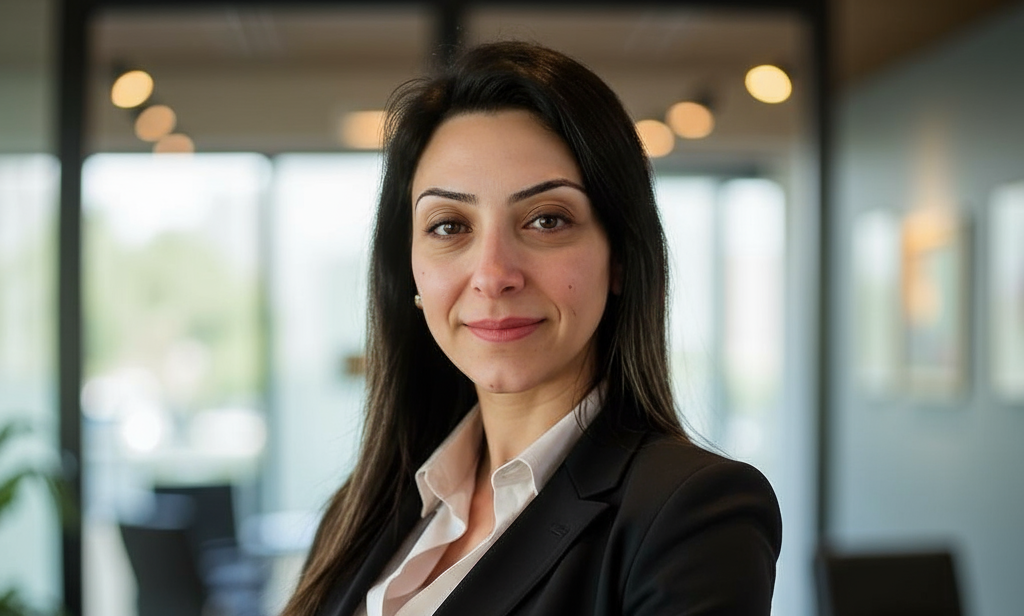
Layal Abou Ghanem, Co-Founder & COO , Solutions for Training and Consultancy (STC) Middle East