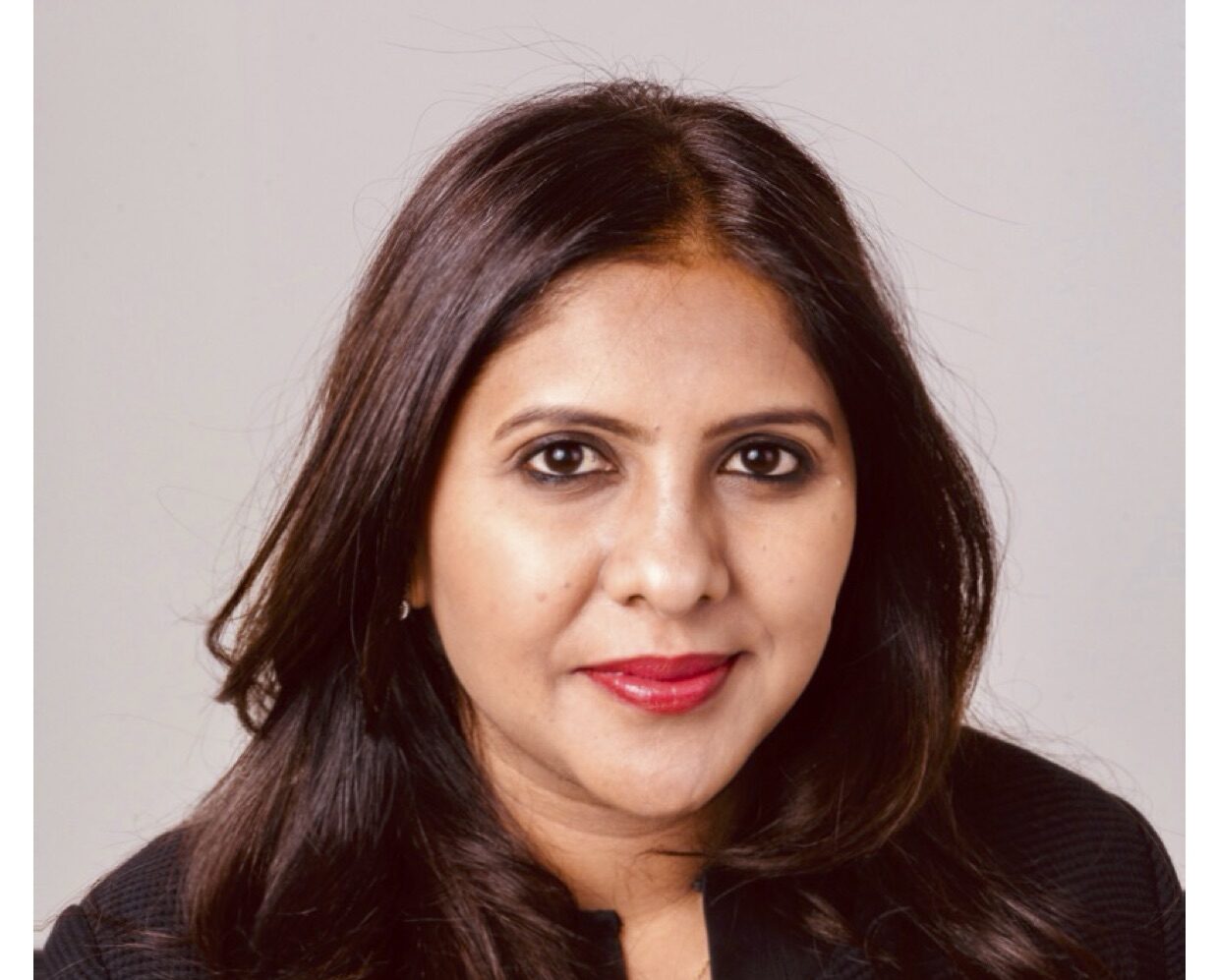
In the quiet lanes of Chandigarh, where career paths were often predetermined and medicine was considered the ultimate achievement, a young Dr. Flomny Menon listened to a different calling. While family and society steered her toward the stethoscope, her inner compass pointed resolutely toward business, leadership, and the untapped potential she saw in people around her.
This wasn’t rebellion. It was clarity.
“Growing up in a small town, I was steered toward medicine, but my inner compass pointed to business and leadership,” Dr. Flomny recalls. That internal navigation system would prove to be her greatest asset, leading her to a discovery that would shape not just her career, but the lives of thousands who would later walk through her programs.
The defining moment arrived when she stood at the intersection of two worlds: the corporate battlefield where leadership was forged through real challenges, and the academic halls where it was theorized from a distance. The gap between them wasn’t just wide. It was a canyon.
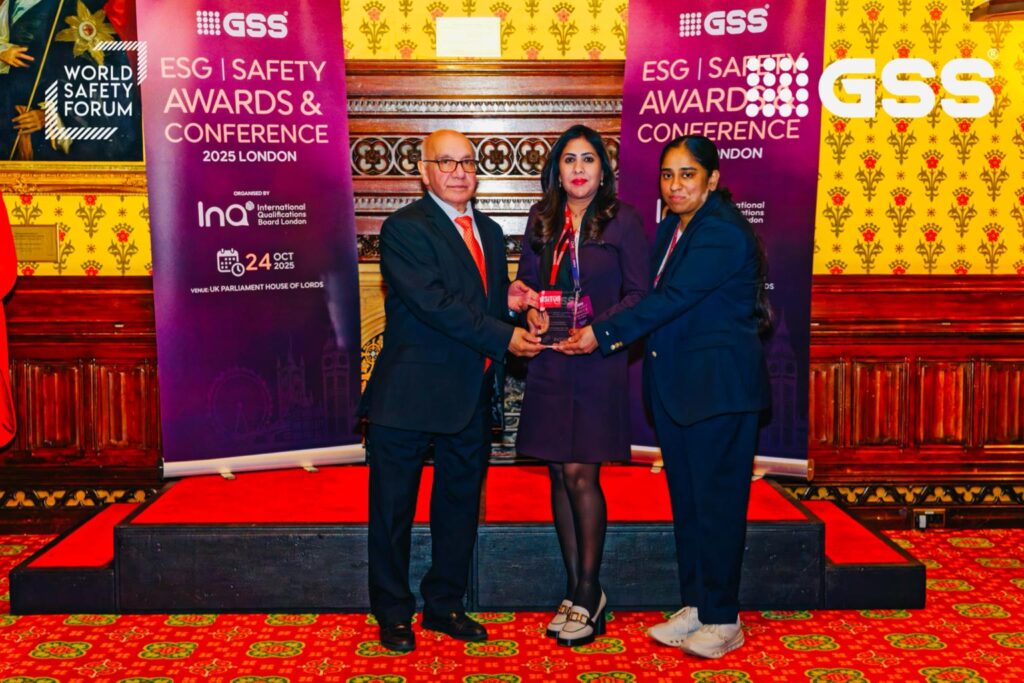
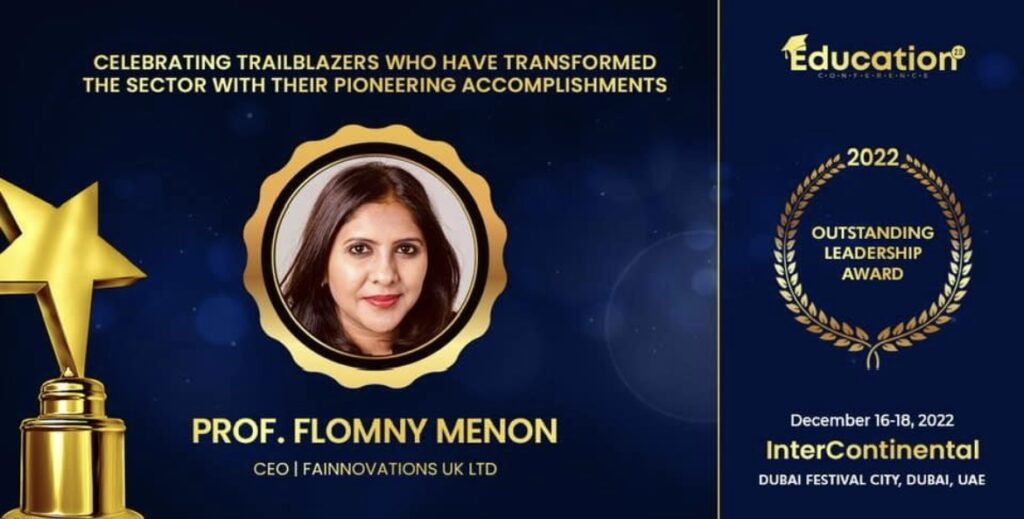
“The defining moment was realizing the gap between corporate practice and academic teaching,” she explains. “I stepped into education while staying in industry to bridge that gap.”
That decision to inhabit both worlds simultaneously to refuse the binary choice between practitioner and educator became the foundation of everything that followed. It was a refusal to accept false divisions, a commitment to integration that would become her signature approach to leadership itself.
THE MANIFESTATION ENGINE: WHEN CLARITY MEETS CONSISTENCY
There’s a phrase that follows Dr. Flomny in professional circles: “manifestation master.” It’s not about vision boards or wishful thinking. It’s about something far more disciplined and deliberate.
“Alignment is clarity plus consistency,” Dr. Flomny states with the precision of someone who has tested this formula across continents and contexts. “When my intent is service, ethics, inclusivity, learning, doors open.”
This isn’t mysticism. It’s mechanics. When purpose is clear and action is consistent, opportunities don’t just appear. They multiply. From leading global keynotes to building programs that fundamentally change career trajectories, alignment has been what Dr. Flomny calls “the quiet engine behind each milestone.”
The formula sounds simple. The execution requires relentless focus. Every decision, every partnership, every program design must pass through the filter of that core intent: service, ethics, inclusivity, learning. Deviate from that alignment, and the engine sputters. Maintain it, and momentum becomes inevitable.
This alignment hasn’t just opened doors for Dr. Flomny personally. It has created pathways for entire generations of leaders who were previously locked out of opportunities, their potential unseen by traditional gatekeepers.
POLISHED BY PRESSURE: THE DIAMOND PRINCIPLE
Ask most leaders about their setbacks, and you’ll get carefully sanitized stories of “learning experiences.” Ask Flomny, and you get a completely different framework.

The greatest challenge in today’s leadership is authenticity, and the lack of self-awareness and empathy. These are the defining gaps leaders must close
“How can success be linear when you’re living in an exponential world?” she asks, immediately reframing the question. “Challenges come not to break you but to make you.”
Her metaphor is striking. Like a diamond cleaved to its utmost best so sunlight can pass through every angle, the goal is to get a sparkle from every corner. Setbacks don’t diminish. They polish. Each challenge creates a new facet, a new angle through which light can enter and radiate.
“Setbacks polish you for greater clarity and impact,” Dr. Flomny explains. This isn’t positive thinking masquerading as strategy. It’s a fundamental reconceptualization of what obstacles mean in a non-linear world.
When a major program was cancelled, most educators would have seen failure. Dr. Flomny saw a pivot point. “We rebuilt it as a modular micro-credential with employer validation. Enrollment and placement both jumped.” The setback forced innovation that the original success would have prevented.
This diamond principle operates at every level of her work. The friction that others avoid becomes the polishing process that creates brilliance. The pressure that breaks some leaders crystallizes others into something stronger, clearer, more valuable.
THE TRINITY THAT BUILDS EMPIRES: DEDICATION, DEVOTION, DETERMINATION
There are words we use so often they lose their weight. Dedication. Devotion. Determination. In most leadership profiles, they’re filler, the expected attributes listed without substance.
For Dr. Flomny, they’re not adjectives. They’re verbs. They’re lived values that shape every decision from hiring to mentoring to strategic planning.
“Dedication to lifelong learning, devotion to service and ethics, determination to execute despite friction,” she explains. “Today, they guide how I hire, mentor, and build. No shortcuts, no silos, no ego.”
The origins of these values trace back to that village, to watching potential go unrealized, to seeing talent trapped by circumstance. But their practice is thoroughly modern, rigorously applied to building institutions that can scale without losing soul.
Dedication manifests in Dr. Flomny’s own continuous learning. She doesn’t just teach about skill development. She models it, constantly acquiring new capabilities, challenging her own assumptions, staying current not through delegation but through direct engagement.
Devotion shows up in the non-negotiables, the ethical boundaries that don’t flex regardless of commercial pressure. When faced with opportunities that could scale revenue but compromise inclusivity, the answer is always no. Service isn’t a marketing position. It’s a constraint that shapes every offering.
Determination is what carries programs from concept to completion when obstacles multiply and easier paths present themselves. It’s the force that pushes through institutional resistance, market skepticism, and the inevitable friction that comes with trying to change systems that have calcified over decades.
Together, this trinity creates something rare in educational entrepreneurship: institutions that grow without compromising the values that made them necessary in the first place.
AUTHENTIC LEADERSHIP IN A BORDERLESS WORLD
In an era when “global leadership” often means imposing one cultural framework across multiple contexts, Dr. Flomny offers a radically different approach.
“We’re living in a globalised world, so thinking regional is a no-brainer,” she observes. But her next statement reveals the sophistication of her model: “A good leader’s most important trait is authenticity, and human traits aren’t confined to cultural boundaries.”
This is the paradox she navigates daily: how do you lead authentically across cultures without losing local relevance? How do you maintain consistency while adapting to context?
Her answer: “I lead with authenticity, then tune to local contexts without losing the human core.”
Authenticity isn’t about being the same everywhere. It’s about being consistently yourself while recognizing that effectiveness requires cultural intelligence. The human core remains constant. Trust, integrity, respect, growth. These aren’t Western values or Eastern values. They’re human values. But how they’re expressed, recognized, and cultivated varies dramatically across contexts.
This approach has allowed Dr. Flomny to build programs that work across geographies without feeling imported or artificial. Students in different regions don’t get a standardized template with local flavor added. They get principles that respect their context while connecting them to universal leadership capabilities.
ENDING THE THEORY-PRACTICE DIVIDE: A MISSION STATEMENT
When asked why she founded the British Leadership Institute and FA Innovation UK, Dr. Flomny’s answer is direct: “To end the theory practice divide.”
This isn’t modest institutional tweaking. It’s an assault on one of education’s most persistent failures: the gap between what’s taught and what’s needed, between credential and capability, between graduation and readiness.
“We design industry-ready leaders through micro-credentials, authentic leadership labs, and inclusive systems,” Dr. Flomny explains. The goal is ambitious: “Organizations gain ethical, capable, deployment-ready talent.”
The traditional model produces graduates who need extensive retraining before they can contribute meaningfully. Dr. Flomny’s model flips this entirely. Students engage with real industry challenges, develop skills through application rather than theory, and emerge with verified capabilities that employers can trust immediately.
This isn’t vocational training dressed up as leadership education. It’s leadership education redesigned from first principles around a simple question: what do organizations actually need, and how can we develop it faster, better, and more inclusively than existing systems?
The answer involves micro-credentials that allow rapid reskilling, AI integration that mirrors modern work environments, VR scenarios that provide experiential learning without requiring physical presence, and live industry briefs that ensure relevance at the speed of business change.
LEGACY AS CHARACTER AT SCALE
Most leaders, when asked about legacy, speak in terms of institutions built, revenues generated, or market positions achieved. Dr. Flomny’s definition cuts through all of that.
“Legacy is character at scale,” she states simply. “I want a generation of authentic leaders, technically strong, ethically grounded, emotionally intelligent, who build inclusive, future-ready ecosystems.”
This vision recognizes that sustainable impact doesn’t come from programs or platforms. It comes from people. Specifically, from people whose character has been developed alongside their capabilities, whose technical strength is matched by ethical grounding, whose intelligence includes the emotional alongside the analytical.
The multiplication factor in this legacy vision is powerful. Each leader developed doesn’t just contribute individually. They shape ecosystems, influence cultures, develop other leaders. Character at scale means that the values embedded in one generation cascade through multiple generations, institutions, and communities.
This is why Dr. Flomny’s proudest moment isn’t about institutional achievements or personal recognition. “The proudest moment of my life is seeing my students step ahead of me in roles they never imagined in their foundational years, leading not just professionally, but as three-dimensional leaders grounded in personal, professional, and community spheres.”
The measure of success isn’t how high you climb. It’s how many people climb higher because you existed.
THE BRAIN AS MUSCLE: WELL-BEING THROUGH CHALLENGE
In a profession where burnout is epidemic and mental health often becomes a casualty of ambition, Dr. Flomny’s approach to well-being is refreshingly contrarian.
“Daily reflection, boundary setting, and gratitude,” she lists as foundational practices. But then adds something unexpected: “Learning new skills and challenging the brain through assessments are the best exercise for brain.”
This isn’t about balance through disconnection. It’s about harmony through engaged challenge. The brain, like any muscle, atrophies without resistance. Well-being comes not from minimizing stress but from ensuring that stress is productive, purposeful, and paired with recovery.
Daily reflection provides the meta-cognition necessary to learn from experience rather than just accumulating it. Boundary setting ensures that engagement remains sustainable rather than consuming. Gratitude creates the psychological foundation that allows challenge to feel energizing rather than depleting.
But the real insight is that learning itself is protective. When the brain is actively developing new capabilities, it remains resilient, adaptive, and resistant to the entropy that comes from routine.
MICRO-CREDENTIALS AND THE RESKILLING REVOLUTION
The future of work doesn’t wait for four-year degrees. Markets shift, technologies evolve, and roles transform faster than traditional education can possibly respond. Dr. Flomny’s answer to this acceleration is micro-credentials.
“Short, stackable, skills-first,” she describes them. “We integrate AI, VR, and real-world projects so learners can reskill in weeks, not years, and signal verified capability to employers.”
This isn’t about shortcuts or diminished rigor. It’s about precision. Why spend years acquiring knowledge that may be obsolete by graduation when you can develop specific, verified capabilities aligned to current market needs, then stack additional credentials as your role evolves?
The integration of AI and VR isn’t technological showmanship. It’s about creating learning experiences that mirror modern work environments where these tools are standard. Students don’t just learn about AI. They work alongside AI co-pilots, experiencing firsthand how human judgment combines with machine capability.
The result is what Dr. Flomny calls “verified capability.” Not theoretical knowledge that might translate to performance. Not credentials that signal prestige but not proficiency. Actual, demonstrated capability that employers can trust and learners can immediately apply.
THE SECRET SAUCE: EMOTIONAL INTELLIGENCE AS COMPETITIVE ADVANTAGE
Ask about emotional intelligence and most educators offer generic platitudes about self-awareness and empathy. Ask Flomny, and she immediately frames it as competitive advantage.
“The answer here is our secret recipe and USP,” she says with a rare moment of guardedness. Then offers just enough to understand the approach: “Emotional intelligence is developed through self-reflection, continuous learning, and practice. Our courses integrate specific strategies to cultivate and foster EI.”
The reluctance to fully reveal methodology isn’t about secrecy for its own sake. It’s recognition that in a market where most leadership programs are indistinguishable commodities, the ability to systematically develop emotional intelligence is genuinely differentiating.
What she will share is the foundation: cultivating self-awareness starts simple. “Daily reflection: What worked? What didn’t? Why? Then 360-degree feedback, values mapping, and small experiments that test your defaults. Measure, learn, adjust.”
This is emotional intelligence operationalized, made concrete and measurable rather than aspirational. It’s not about being a “people person.” It’s about having systematic practices that develop emotional capabilities the same way technical training develops analytical capabilities.
AUTHENTICITY AS IMMOVABLE CONSTANT
In an age when leaders are advised to code-switch, adapt their style, and flex their approach based on audience and circumstance, Dr. Flomny offers something almost radical: consistency.
“Staying true isn’t dependent on circumstances; it depends on the person,” she states. “If you are authentic, nothing can change you. You remain the same person with the same traits in every situation.”
This isn’t inflexibility disguised as integrity. It’s the recognition that real authenticity isn’t a performance adjusted for different audiences. It’s a core that remains stable while tactics adapt.
The distinction is crucial. Surface behaviors can and should adjust to context. Communication style, cultural protocols, and situational approaches all require flexibility. But the underlying values, the core character, the fundamental approach to people and problems must remain constant.
“Staying transparent, empathetic, authentic” isn’t about specific behaviors. It’s about being the same person in the boardroom and the classroom, with senior executives and entry-level staff, in success and in setback.
This consistency is what builds trust at scale. When people know who you fundamentally are, they can predict how you’ll respond to novel situations. That predictability creates psychological safety, which enables the kind of honest dialogue necessary for real development.
THE DEFINING CRISIS: AUTHENTICITY IN THE DIGITAL AGE
When asked about the greatest challenge facing leadership today, Dr. Flomny doesn’t hesitate: “The greatest challenge in today’s leadership is authenticity, and the lack of self-awareness and empathy. These are the defining gaps leaders must close.”
In an era of personal brands, curated online personas, and leadership as performance art, authenticity has become simultaneously more valued and more rare. The digital age allows leaders to project carefully managed images while remaining fundamentally disconnected from themselves and others.
The lack of self-awareness manifests as leaders who don’t understand their impact, can’t recognize their limitations, and fail to see how their behavior shapes organizational culture. The lack of empathy shows up as decisions made without regard for human impact, cultures that optimize for metrics at the expense of people, and leadership styles that demand rather than inspire.
These aren’t separate challenges. They’re interconnected. Without self-awareness, empathy is impossible. You can’t understand others’ experience if you don’t understand your own. Without empathy, authenticity becomes narcissism. Being genuinely yourself without regard for impact on others isn’t leadership. It’s self-indulgence.
Closing these gaps requires the kind of systematic development that Dr. Flomny’s programs provide. It’s not enough to tell leaders to be more self-aware or empathetic. You need structures, practices, and feedback systems that make these capabilities developable rather than just desirable.
ONE ECOSYSTEM: INTEGRATING ACADEMIA, ENTREPRENEURSHIP, AND IMPACT
The traditional model separates research, education, and commercial application into distinct domains with different incentives, timelines, and success metrics. Dr. Flomny’s model collapses these boundaries.
“One ecosystem: research informs programs, programs power ventures, ventures fund impact. The common thread is authentic, applied learning.”
This integration creates virtuous cycles. Research discovers what works in leadership development. Those insights immediately inform program design. Programs generate data that feeds back into research. Successful programs attract venture investment. Venture returns fund expanded impact.
The ecosystem structure solves several chronic problems in education. Research doesn’t languish in journals unread by practitioners. Programs don’t ossify because they’re disconnected from current research. Impact isn’t limited by grant funding because commercial success creates sustainable revenue streams.
Most importantly, the integration ensures constant evolution. When research, education, and enterprise inhabit the same ecosystem, each component stays current because they’re pulling each other forward rather than existing in isolation.
CLAIMING SPACE: LESSONS FROM MALE-DOMINATED ENVIRONMENTS
When asked about navigating male-dominated spaces, Dr. Flomny’s answer combines pragmatism with principle: “I built credibility through delivery, sponsors, and a values-led network.”
The sequence matters. Credibility comes first through delivery. Not networking, not self-promotion, not demanding recognition. By doing exceptional work that creates undeniable value. Only then do sponsors and networks amplify that credibility.
Her advice to others is direct: “Claim your space, ask for stretch roles, document impact, and keep your boundaries intact.”
Each element is critical. Claiming space means not waiting for permission or invitation. Asking for stretch roles means actively seeking opportunities that develop capability rather than waiting to be discovered. Documenting impact means creating objective evidence of value rather than relying on subjective perception.
But the final element, keeping boundaries intact, might be most important. The temptation in male-dominated environments is to prove worth by being always available, always accommodating, always saying yes. That path leads to burnout, not breakthrough.
Boundaries aren’t barriers to success. They’re the foundation of sustainability. Leaders who can’t maintain boundaries end up depleted, unable to deliver the consistent excellence that built credibility in the first place.
THE ONLY METRIC THAT MATTERS
In a field obsessed with metrics, completion rates, satisfaction scores, and employment statistics, Dr. Flomny cuts through to what actually matters: “Have you cultivated the skills into the unconscious mind? If it’s embedded there, it’s a habit, and that’s real impact.”
This reframes the entire measurement question. Learning that remains conscious requires ongoing effort and attention. It’s fragile, context-dependent, and easily lost under pressure. But capabilities that have become unconscious, that have been practiced into habit, remain stable even in high-stress situations.
This is why traditional training often fails to transfer from classroom to workplace. The capability exists at the conscious level but hasn’t been embedded deeply enough to survive the cognitive load of real work environments.
Dr. Flomny’s programs design for unconscious competence from the start. Repetition, varied contexts, real pressure, immediate feedback. The goal isn’t just understanding a leadership concept. It’s practicing it until it becomes automatic, the default response rather than something you have to remember to do.
When that embedding happens, impact becomes measurable not through test scores but through changed behavior, sustained over time, across contexts, without conscious effort.
INNOVATION AS NON-NEGOTIABLE
The question of whether innovation is necessary in leadership development gets a one-word answer from Dr. Flomny: “Non-negotiable.”
Then the explanation: “We embed AI co-pilots, simulations, VR scenarios, and live industry briefs so learning mirrors the pace and ambiguity of work.”
This isn’t innovation for its own sake. It’s recognition that preparing leaders for environments you don’t simulate is fundamentally ineffective. If the workplace is fast-paced, ambiguous, technology-saturated, and constantly changing, training that is slow-paced, clear, technology-light, and stable creates a dangerous gap between preparation and reality.
The integration of AI co-pilots means students experience working alongside artificial intelligence, learning when to trust it, when to override it, how to combine human judgment with machine capability. VR scenarios allow experiential learning without physical constraints, enabling practice of high-stakes situations without real-world consequences.
Live industry briefs ensure that challenges students tackle aren’t hypothetical case studies from five years ago but real problems organizations face today. This creates relevance at the speed of business change, preventing the chronic obsolescence that plagues traditional education.
CHALLENGING THE MYTHS THAT LIMIT LEADERSHIP
Every field has comfortable myths that feel true but limit potential. Dr. Flomny takes aim at several that plague leadership development:
“Charisma equals leadership. False. Character does.”
This distinction is crucial. Charisma attracts followers. Character sustains them. Charismatic leaders without character create cults of personality that collapse when pressure tests values. Leaders with character but less natural charisma build sustainable organizations because trust is based on consistency rather than magnetism.
“Success is linear. False. It’s iterative.”
The linear success narrative persists because it’s comforting. Work hard, climb the ladder, reach the top. But real success, especially in rapidly changing environments, comes through cycles of experimentation, failure, learning, and adaptation. The path isn’t a straight line upward. It’s a spiral that revisits similar challenges at higher levels of complexity.
“Followers can be ‘made’ leaders. Only if you select for and cultivate leadership traits.”
This challenges the egalitarian myth that anyone can become a leader with enough training. Dr. Flomny’s position is more nuanced: leadership requires certain foundational traits. Development programs can cultivate those traits, but only if they exist in nascent form. Trying to create leaders from people who lack fundamental capabilities is inefficient at best, destructive at worst.
These aren’t popular positions. They require difficult conversations about potential, selection, and the limits of development. But they’re necessary conversations if leadership development is to be effective rather than just inclusive in ways that ultimately serve no one.
ADVICE FOR THE NEXT GENERATION: THE THREE-TRAIT FOUNDATION
After decades of developing leaders across continents and contexts, Dr. Flomny’s advice to emerging leaders is remarkably simple: “You only need three traits: authenticity, empathy, and a willingness to learn. If you have them, you’re already making an impact.”
This isn’t reduction. It’s distillation. Everything else builds on this foundation.
Authenticity creates trust. When people know who you really are, they can engage with you genuinely rather than constantly calibrating their approach based on your mood or agenda.
Empathy creates connection. When you can understand others’ experiences, you can lead in ways that account for human reality rather than abstract ideals.
Willingness to learn creates adaptation. When you’re committed to continuous development, you can evolve as context changes rather than becoming obsolete.
With these three traits, technical skills can be developed, industry knowledge can be acquired, and specific capabilities can be cultivated. Without them, even the most impressive resume becomes hollow performance rather than sustainable leadership.
The phrase “you’re already making an impact” is significant. It suggests that leadership isn’t something you achieve after years of development. It starts the moment you embody these traits. The scale may be small initially, but the impact is real. And with time, consistency, and continued development, that scale expands naturally.
THE ARCHITECTURE OF AUTHENTICITY
Dr. Flomny Menon represents something rare in the leadership development space: someone who has successfully integrated the idealistic with the pragmatic, the theoretical with the applied, the global with the local. Her journey from village roots to global influence isn’t just an inspiring story. It’s a blueprint for how authentic leadership can be systematized without being diminished.
The institutions she has built don’t just train leaders. They challenge the fundamental assumptions about how leaders are developed, what capabilities matter most, and how impact should be measured. By ending the theory-practice divide, creating stackable micro-credentials, and embedding emotional intelligence development into every program, she has created an alternative model that is proving more effective than traditional approaches.
But perhaps most importantly, Dr. Flomny has demonstrated that values-driven leadership can succeed at scale. The temptation when building institutions is to compromise principles for growth, to dilute ethics for efficiency, to sacrifice inclusivity for profitability. Her career proves that these trade-offs are false. That dedication to service, devotion to ethics, and determination to execute can coexist with rapid growth and market success.
As leadership faces its defining crisis, the gap between performance and authenticity, between what leaders say and who they are, Dr. Flomny’s work becomes increasingly essential. She isn’t just developing individual leaders. She’s architecting a new approach to leadership itself, one where authenticity isn’t a soft skill to be mentioned in values statements but a hard requirement embedded in selection, development, and measurement.
The legacy she envisions, character at scale, is already taking shape. In students who have stepped beyond their foundational expectations. In organizations gaining deployment-ready talent. In ecosystems becoming more inclusive. In leaders learning to sparkle from every angle, polished by challenges into something clearer, stronger, more valuable.
This is the work of the authenticity architect: building structures that develop character alongside capability, creating systems that scale without losing soul, designing programs that produce not just competent managers but three-dimensional leaders who transform everything they touch.