Executive Summary
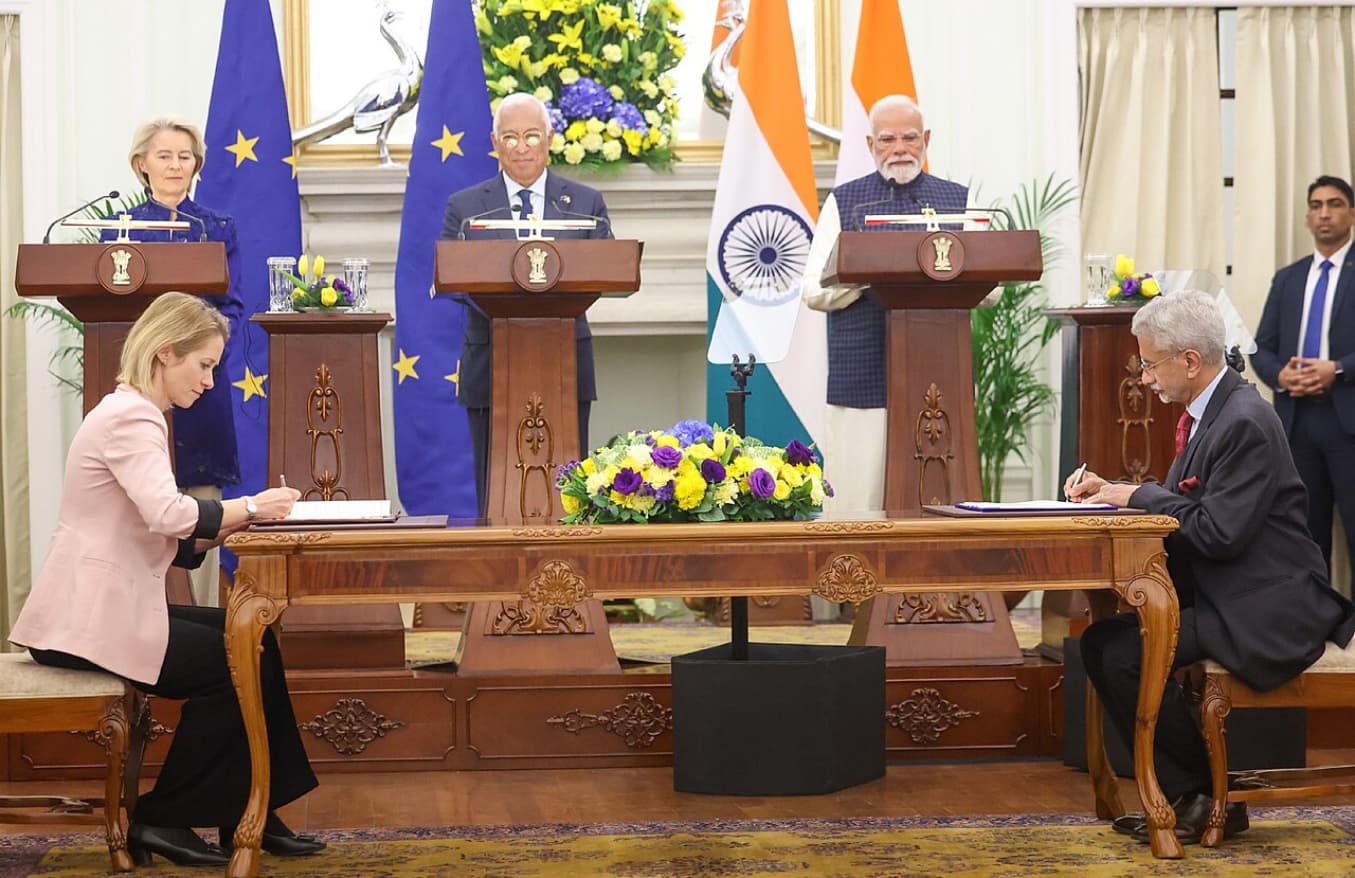
- Status: Concluded January 27, 2026; expected entry into force by 2027.
- Scale: Covers trade between the world’s 4th largest (India) and 2nd largest (EU) economies.
- Core Terms: EU eliminates tariffs on ~97% of Indian goods. India eliminates tariffs on ~92% of EU goods over 5-10 years.
I. Industry-Wise Breakout
1. Automobiles (The “Quota” Compromise)
- Deal Details:
- Luxury Cars: India cuts duties from 110% to 10% for European cars (e.g., Mercedes, Audi, BMW).
- The Catch: This reduced rate applies only to a quota of 250,000 vehicles/year.
- Protection: Mass-market small cars remain protected to shield domestic players (Maruti, Tata).
- Components: Tariffs on EU auto parts drop to 0% over a 5-10 year phase-out.
- Impact: Luxury European cars become significantly cheaper (₹40L cars could drop to ₹25-28L). Domestic makers face pressure to upgrade technology.
2. Textiles, Leather & Gems (The Employment Engine)
- Deal Details: Immediate 0% duty on Indian exports (previously 9-17%).
- Impact:
- Level Playing Field: India finally competes on par with Bangladesh and Vietnam, who previously had zero-duty advantages.
- Clusters: Huge win for Tiruppur (knitwear), Agra (leather), and Surat (gems). Exports could jump by $10-15B in the first 3 years.
3. Wines, Spirits & Processed Food
- Deal Details:
- Alcohol: Duties slashed significantly. Scotch/Whiskey (150% → 40%), Wine (150% → 20-30%), Beer (110% → 50%).
- Food: Zero duty on EU chocolate, biscuits, olive oil, and fruit juices.
- Protection: India excluded sensitive items like Dairy (milk/cheese), Wheat, and Rice to protect farmers.
- Impact: European supermarket items (Swiss chocolate, Italian pasta) become affordable staples rather than luxury goods in Indian metros.
4. Services & IT (The Hidden Gem)
- Deal Details: EU grants access to 144 sub-sectors (accounting, engineering, R&D, digital services).
- Mobility: New visa norms for “Contractual Service Suppliers” allow Indian professionals to work on temporary EU projects without full work permit hassles.
- Data: India gains “Data Adequacy” status, simplifying GDPR compliance for Indian IT firms handling EU data.
II. Business-Wise Breakout
1. For Large Conglomerates
- The “Diversification” Play: Major Indian conglomerates (like Tata, Reliance, Adani, Mahindra) are the biggest strategic winners. They operate across multiple verticals—from green energy to automobiles—that directly align with EU interests.
- Tech Transfer: These groups can now import high-tech European machinery and precision engineering tools at 0% duty, allowing them to upgrade their factories to “Industry 4.0” standards at a fraction of the previous cost.
- Global Integration: Expect these conglomerates to form Joint Ventures (JVs) with European firms to manufacture in India for the world, leveraging the “China+1” strategy.
2. For MSMEs (Micro, Small & Medium Enterprises)
- The Opportunity: Direct access to a high-paying market of 450 million Europeans.
- The Challenge: Compliance. While tariffs are gone, Non-Tariff Barriers (NTBs) like the Carbon Border Adjustment Mechanism (CBAM) and EU Deforestation Regulation (EUDR) are strict.
- Reality: Small exporters must digitize their supply chains to prove “green” credentials, or they will be locked out despite zero tariffs.
3. For Startups
- SaaS & Tech: The data adequacy ruling reduces legal overheads for Indian SaaS startups selling to Europe.
- Talent: The post-study work visa expansion allows Indian ed-tech and recruitment startups to tap into a talent pool that moves fluidly between India and Europe.
III. Winners vs. Protected List
| Big Winners | Protected / Excluded |
| Textiles & Apparel (Zero Duty) | Dairy Sector (Milk, Cheese, Butter) |
| Gems & Jewellery (Zero Duty) | Basic Agriculture (Wheat, Rice) |
| Luxury Auto Consumers (Cheaper cars) | Mass Market Autos (Small cars) |
| IT Services (Market Access) | Government Procurement (Limited access) |