Executive Summary
In a late-night announcement on New Year’s Eve, Elon Musk confirmed Neuralink’s most aggressive target yet: achieving “high-volume production” of its N1 brain-computer interface (BCI) by the end of 2026. For the past two years, the conversation around Neuralink has focused on feasibility—proving the device works in humans without rejection. With this announcement, the narrative shifts instantly to scalability. For global leaders and HealthTech founders, this signals the start of the “BCI Platform Era,” where the value moves from the hardware itself to the ecosystem of applications built on top of it.
The News: Manufacturing the Mind
Musk’s definition of “high volume” in medical devices differs vastly from Tesla’s automotive output. In 2024 and 2025, Neuralink performed fewer than 50 implantations combined. The 2026 goal likely targets the hundreds or low thousands, a massive leap in medical device terms.
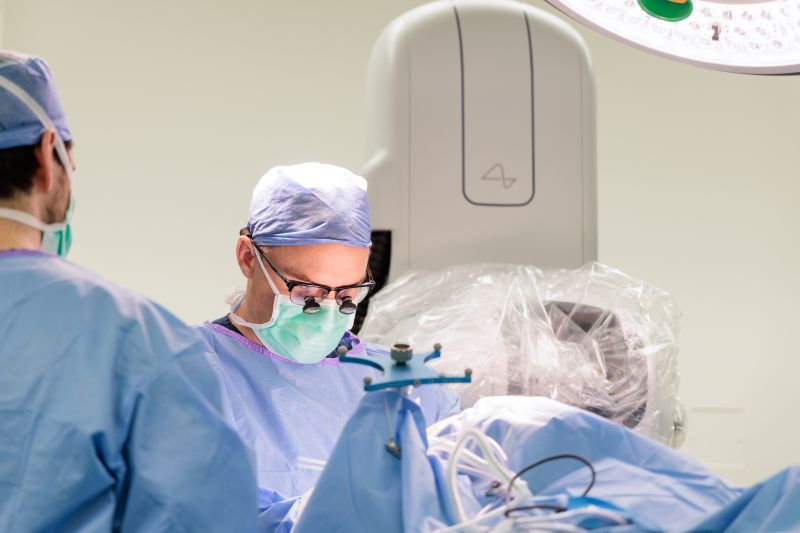
The bottleneck has never been the chip; it has been the surgery. The shift to “high volume” implies that Neuralink’s R1 Robot—the sewing-machine-like surgeon capable of implanting electrodes without hitting blood vessels—has reached a level of autonomy and speed that allows for a factory-like approach to neurosurgery. We are moving from boutique, artisanal brain surgery to an assembly-line model.
Business Impact Analysis: The “iPhone Moment” for MedTech?
For founders and conglomerate leaders, Neuralink’s scaling creates three specific market ripples in 2026:
1. The “Neuro-App Store” Emerges
If Neuralink successfully implants thousands of users this year, the hardware becomes a platform. Much like the iPhone launched the App Store economy, a standardized BCI creates a market for “Brain Apps.”
- Impact: Expect a gold rush for software developers creating applications for the N1. Initial apps will be medical (restoring speech, motor control), but the roadmap will quickly pivot to “enhancement” apps—memory aids, linguistic translators, and direct-to-brain UI controls for external devices.
- Leader Takeaway: If you run a consumer tech or software company, start asking: How does our product interface with a BCI? The mouse and keyboard are no longer the only inputs.
2. Supply Chain “Bio-Compatibility” Squeeze
Scaling to high volume requires a consistent supply of medical-grade biocompatible polymers, ultra-fine conductive threads, and hermetically sealed casings.
- Impact: We anticipate a supply squeeze on specialized bio-materials. Neuralink will likely consume the majority of the world’s high-grade electrode threading capacity, much like Tesla cornered the lithium market in the 2010s.
- Leader Takeaway: If your conglomerate relies on high-end medical manufacturing, lock in your suppliers now. The “Musk Effect” on procurement is real and inflationary.
3. The Regulatory “Safety vs. Speed” Collision
The FDA granted approval for trials, but “high volume” commercialization is a different beast. Musk’s timeline assumes a perfect regulatory track record. Any adverse event in a “high volume” cohort could ground the entire fleet, creating massive volatility for investors.
- Impact: Competitors like Synchron and Precision Neuroscience may benefit if Neuralink hits a regulatory wall. These rivals offer less invasive (and perhaps more regulator-friendly) solutions.
Strategic Action Plan for Founders & Leaders
1. Pivot R&D to “BCI-Ready” Standards If you are in prosthetics, gaming, or accessibility tech, your hardware must be BCI-compatible by 2027.
- Action: Launch a “Neural Interface” skunkworks team. Don’t build the brain chip; build the wheelchair/exoskeleton/cursor that reacts 50ms faster because it reads Neuralink’s API.
2. Watch the “Second-Mover” Advantage Neuralink is doing the heavy lifting of normalizing brain implants in the public eye.
- Action: Invest in the “picks and shovels” of this industry. Look for startups working on neural encryption (cybersecurity for the brain) and biological batteries (powering chips using body glucose). These are the unaddressed gaps in Musk’s high-volume roadmap.
3. Ethics as a Brand Differentiator As Neuralink scales, the “Cyborg” narrative will alienate some consumers.
- Action: Position your brand’s interaction with AI/BCI as “Human-First.” There is a massive market segment that will reject invasive BCI; ensure your conglomerate has a strong “non-invasive” strategy (like high-fidelity wrist wearables) to capture the skeptics.
The “Tesla Production Hell” — But for Brains
Veterans of the industry remember Tesla’s “Model 3 Production Hell” in 2017-2018. Neuralink is about to enter its own version. The difference? You can recall a car with a faulty door latch. You cannot easily “recall” a thread implanted 3mm deep in the motor cortex.
The year 2026 will not be defined by the success of the technology—we know it works. It will be defined by the quality control of the scaling. If Neuralink succeeds, the line between human and machine blurs permanently this year. If they fail, it sets the industry back a decade.