“My passion for agri-tech did not come from a sudden revelation; it evolved naturally from a lifetime spent observing the limitations of traditional agriculture and wanting to build a future that is more stable, resilient, and sustainable.”
-René Tort Llanos
In the sprawling landscape of Latin American agriculture, where traditional farming methods have dominated for generations, a new breed of leader is emerging. These visionaries understand that the future of global food security lies not in expanding farmland, but in reimagining how we grow. René Tort Llanos stands at the forefront of this transformation, leading one of the most advanced greenhouse operations in the Americas while staying deeply connected to the agricultural roots that shaped his childhood.
His journey from the coffee fields of his family farm to the helm of Bionatur’s 83.7-hectare AI-controlled greenhouse operation represents more than personal success. It embodies the evolution of agriculture itself, moving from weather-dependent uncertainty to technology-enabled precision, from resource-intensive practices to sustainable efficiency, from individual effort to collaborative innovation.
“I always say I didn’t choose agriculture; I was born into it,” René reflects on his origins. “I had the privilege of growing up in a family whose livelihood has always been tied to the farm.” This foundation, built among coffee fields, soybeans, sorghum, sugarcane, and cattle operations, provided more than agricultural knowledge. It instilled fundamental questions about the future of an industry perpetually vulnerable to forces beyond human control.
BORN INTO AGRICULTURE: WHEN QUESTIONS SHAPE DESTINY
René’s childhood unfolded in an environment where economic activity and agricultural production were inseparable. Watching his father navigate droughts, pests, floods, and unpredictable market fluctuations year after year sparked early reflections that would define his career trajectory. The young René constantly wondered: How can any of this truly be controlled? What is the future of agriculture if we remain dependent on factors no one can manage?
These questions, born from observation and genuine concern, gradually crystallized into conviction. The future of agriculture, he realized, lies in controlled, modern, efficient production where technology reduces uncertainty, strengthens resilience, and enables responsible farming without losing connection to the land.
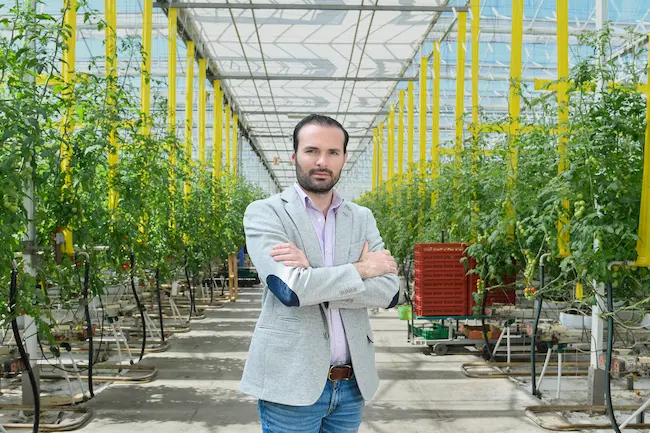
“My passion for agri-tech did not come from a sudden revelation,” René explains. “It evolved naturally from a lifetime spent observing the limitations of traditional agriculture and wanting to build a future that is more stable, resilient, and sustainable.”
This organic evolution from curiosity to commitment distinguishes René’s leadership approach. He understands agriculture not as an abstract business challenge but as a lived experience affecting real families, real communities, and real futures.
THE ENGINEERING MINDSET: BUILDING SYSTEMS THAT WORK
René’s academic foundation as an industrial engineer provided the analytical framework that would prove essential in transforming agricultural operations. For him, industrial engineering means processes, efficiency, and continuous improvement. This training taught him to examine any operation from a structured perspective: identify opportunities, understand which variables are being affected, and search for solutions generating maximum impact.
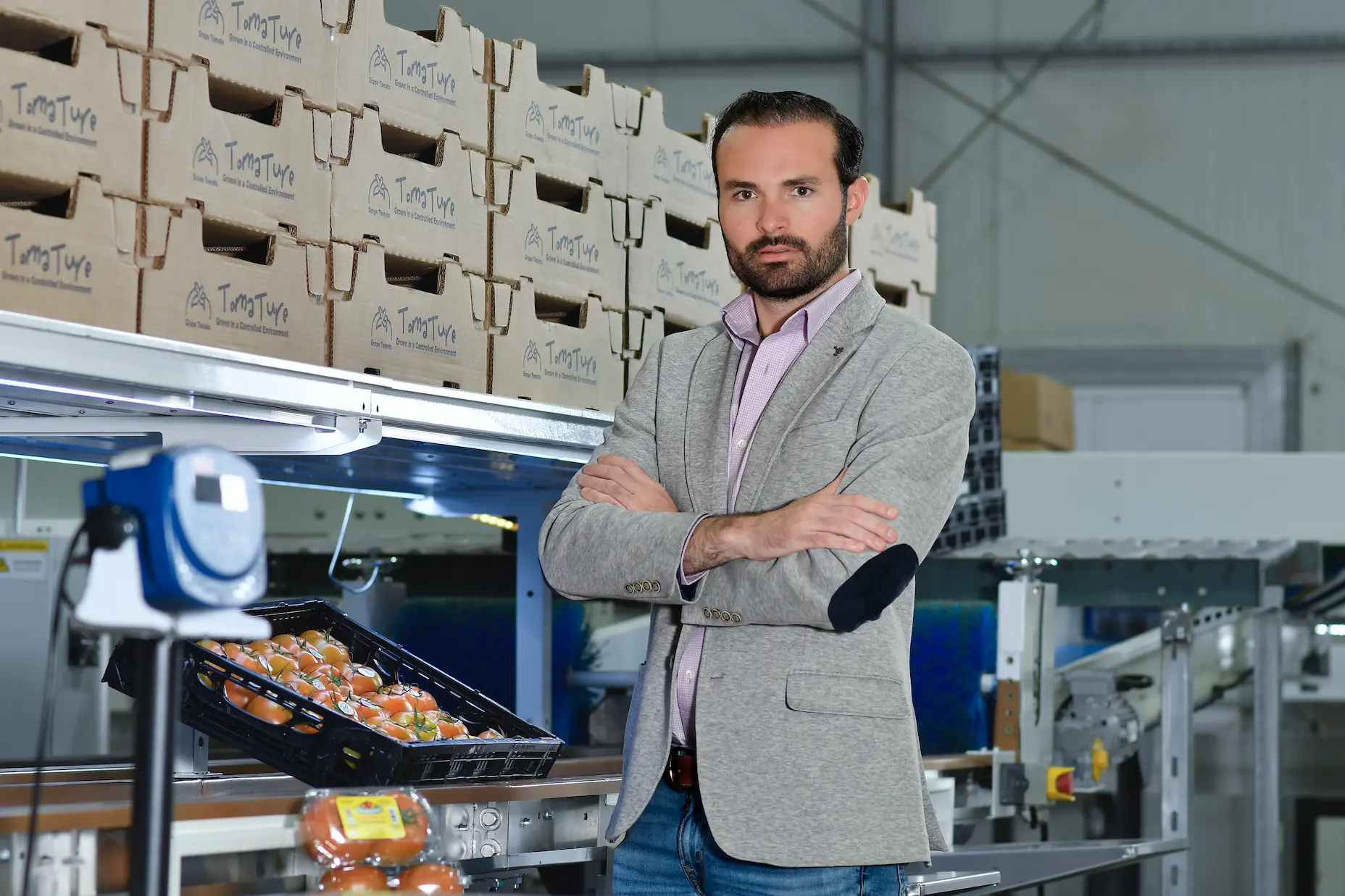
“Profitability is not the ultimate goal, but it is the condition that enables us to reach that greater purpose. Only a company that consistently generates profits can truly aspire to pursue that deeper, more socially meaningful mission.”
“With a lot of humility, because I’m certainly no genius, I believe that academic foundation allows me to detect problems quickly and think logically and pragmatically about how to solve them,” René notes. Whether optimizing time, reducing waste, improving workflow, or strengthening team dynamics, the engineering approach provides clarity.
This mindset manifests in a leadership philosophy that rejects unnecessary complexity. René instills in his team a fundamental principle: stop seeking convoluted solutions and act promptly. He recognizes that processes, relationships, and situations are never static. What works today will almost certainly need adjustment tomorrow. This drives constant questioning of the status quo and the famous “this is how we’ve always done it” mentality.
The engineering foundation also shaped René’s understanding that companies function as interconnected systems. Like gears in a machine, individual components must work harmoniously. Understanding how each part interacts with others becomes essential for sustained success.
EXPANDING THE STRATEGIC LENS: THE EXECUTIVE MBA JOURNEY
When René enrolled in an Executive MBA at IPADE, one of Latin America’s most prestigious institutions, his initial motivation centered on personal development: gaining knowledge, earning a globally recognized credential, and building long-term security. However, within just a couple of sessions, he realized his initial motivation was far too limited.
The program revealed crucial gaps in his expertise. While his engineering background provided solid process understanding, he had virtually no formal training in other essential business pillars: finance, marketing, human capital management. The Executive MBA allowed him to broaden his strategic vision, complement his technical strengths, and make more well-rounded decisions aligned with Bionatur’s long-term future.
This willingness to recognize knowledge gaps and actively address them exemplifies the growth mindset that characterizes René’s leadership. He understands that technical excellence alone cannot sustain complex operations requiring financial acumen, market understanding, and people management.
FROM SUN TO HARVEST: LESSONS FROM RENEWABLE ENERGY
Before leading Bionatur, René founded a renewable energy venture that continues thriving as a successful company today. “It’s curious, isn’t it?” he observes. “I started out harvesting the sun and turning it into energy; today we grow with the sun, but we harvest tomatoes.”
This first venture became his real training ground. Starting at a very young age with virtually no work experience, René made many mistakes. He exercised leadership styles he no longer believes in and learned from scratch about capital, taxes, and payroll. The inexperience proved valuable, teaching lessons that only real-world challenges can provide.
Yet one element remained constant: the essence, the reason behind building a business. “The answer remains the same today as it was when I launched that project: I want to leave behind a better México,” René explains. “A country with more inclusion, greater opportunities for people to get ahead, and a more just society for future generations, including my own children.”
Environmental responsibility also drove this early venture and continues guiding his work today. He envisions a México with less pollution, making the most of renewable resources while behaving responsibly with finite resources like water. This first experience shaped him technically but, more importantly, strengthened his conviction that businesses must be built on purpose: to generate well-being, development, and true sustainability.
THE BIONATUR MISSION: FROM ASPIRATION TO OPERATION
Leading Bionatur requires balancing long-term vision with immediate operational excellence. When asked about his core mission, René acknowledges the complexity depends on time horizon. In the long term, viewed through a more romantic lens, his mission centers on making Bionatur a source of well-being, opportunity, and development for employees and their communities. He wants to create a place where young professionals can grow and a real instrument for improving regional quality of life.
However, mission cannot remain merely aspirational. It needs tangible expression. In an industry where production cycles last barely 40 weeks, operational mission must be equally concrete and immediate: keeping greenhouses healthy and productive, maintaining commitment to quality and food safety, and ensuring sustainable financial performance.
“Only a company that consistently generates profits and delivers acceptable returns to its board can truly aspire to pursue that deeper, more socially meaningful mission,” René emphasizes. “Profitability is not the ultimate goal, but it is the condition that enables us to reach that greater purpose.”
This pragmatic idealism distinguishes René’s leadership. He refuses to separate financial performance from social responsibility, recognizing they must advance together or neither survives.
INHERITING VISION: THE CARLOS PERALTA LEGACY
When discussing Bionatur’s position as one of Latin America’s most advanced greenhouse facilities, René quickly redirects credit. “I appreciate the implicit recognition in the question. But to be completely honest, I cannot take that credit. I have only been leading Bionatur for a few years. The true vision and merit behind what this operation represents today belongs to Mr. Carlos Peralta, the owner of the company.”
More than 25 years ago, Carlos Peralta recognized, long before most, that agriculture’s future lay in controlled environments. He understood that México’s strategic location and extraordinary climate positioned the country to supply fresh products to one of the world’s largest and most demanding markets: the United States. Most importantly, he had the courage to invest the capital required to bring Dutch technology to México when greenhouses were practically nonexistent in the country, and the few that existed operated at minimal scale.
Bionatur was born big. It was founded with the most advanced technology available at the time, sparing no effort or investment. “I believe that is what still makes it unique today,” René explains. “The conviction that technology is not a luxury, but a tool to make work easier, create jobs, produce efficiently, and sustain a truly sustainable agricultural model.”
Twenty-five years later, Bionatur remains one of the largest, most advanced, and most emblematic greenhouse complexes in México and Latin America. René’s role involves honoring this legacy while driving continuous innovation.
THE PERMANENT CHALLENGES: PESTS, CLIMATE, AND PEOPLE
Despite operating with cutting-edge technology, fundamental agricultural challenges persist. René identifies three major ongoing battles that require constant attention and investment.
First, pest management and disease control remain critical. The Tomato Brown Rugose Fruit Virus (ToBRFV) affected tomato growers worldwide, and Bionatur was no exception. In an operation of this size, containing, preventing, and mitigating plant diseases requires discipline, investment, and extensive training. These biological threats respect no technological boundaries.
Second, climate change impacts even controlled environments. While Bionatur can manage variables like humidity, temperature, nutrition, and irrigation, external conditions still matter. LED lighting was historically considered unnecessary in México due to high average solar radiation. However, 2025 has been the cloudiest year in the last 15 years, directly impacting productivity. This represents an issue requiring serious evaluation and potential infrastructure investment.
Third, human capital management presents daily challenges. Even with high automation levels, human labor remains at the operation’s heart. Managing more than 1,400 collaborators means navigating interpersonal relationships, organizational culture, and leadership dynamics. “Interpersonal relationships, organizational culture, and leadership are just as important as the technology itself,” René observes.
Despite these challenges, René expresses deep gratitude for his team. “We are fortunate to have committed, hardworking people who genuinely care about the company and about the plants. It is a privilege to work with them every single day.”
THE 52-WEEK PROMISE: CONSISTENCY AS COMPETITIVE ADVANTAGE
Bionatur’s ability to guarantee consistent year-round delivery of high-quality products for demanding international markets represents a significant competitive achievement. Very few growers worldwide can maintain the same product for 52 weeks annually without compromising quality, traceability, or food safety.
This consistency results from a multidisciplinary process beginning long before products reach final destinations. It starts with variety and seed selection. Bionatur works exclusively with the highest-quality genetic materials available worldwide, prioritizing yield per square meter, production consistency, physical quality, and most critically, flavor.
“A client we respect deeply once told us: ‘Appearance gets the consumer to buy the first time; flavor is what keeps them coming back,’” René recalls. “We adopted that phrase as a guiding principle.”
The nursery facility plays the next crucial role. Germination, selection, and seedling management largely determine production cycle outcomes. Only the strongest and most uniform plants reach the greenhouses. Once inside, dedicated collaborators work with responsibility, quality, and genuine care, supported by experienced growing teams capable of anticipating and responding to any crop condition.
Finally, postharvest handling ensures every shipped box meets client standards and expectations. “Consistency is not a coincidence,” René emphasizes. “It is the sum of disciplined work by many people and the commitment of every department to deliver on its part.”
MERITOCRACY IN ACTION: BUILDING HIGH-PERFORMANCE CULTURE
René’s leadership values center on meritocracy and continuous growth. His approach follows a simple idea: he defines upper and lower boundaries to prevent costly mistakes, but his team operates within those parameters, makes decisions, and owns the results they generate.
“I firmly believe that making mistakes is part of the journey; I include myself in that,” René states. “Not knowing something is not a failure, but what is unacceptable is not trying.”
At Bionatur, culture promotes understanding that every individual is responsible for their own results and their team’s growth. The company must always be bigger than any single individual. René’s aspiration involves building leadership that ensures Bionatur continues operating effectively regardless of whether any one person, himself included, is present tomorrow. This represents the true indicator of high-performance organizations: the ability to sustain results with autonomy, accountability, self-regulation, and genuine commitment to continuous improvement.
This philosophy manifests in organizational structure. Unlike other producers, René doesn’t believe in a centralized Head Grower concentrating all decision-making. He believes in direct responsibility. Each greenhouse has a lead individual fully accountable for everything throughout the cycle: productivity, quality, team management, plant health, and yield.
“We evaluate their performance, provide support, and make adjustments when necessary, but the decisions and outcomes belong to them,” René explains. This structure, clear, direct, and rooted in accountability, enables more than 1,400 professionals to work with genuine autonomy. When people have clarity and true ownership over their work, accountability becomes a natural cultural element.
SUSTAINABILITY AS SURVIVAL: THE THREE-DIMENSIONAL APPROACH
For René, sustainability means one thing: ensuring Bionatur will still be here 40 years from now. Achieving this requires work across three inseparable dimensions: solid economic performance, responsible resource management, and people well-being.
“Sustainability begins with profitability,” René states candidly. “It may sound unglamorous, but it is the truth: without profits, there is no investment, no jobs, and no future.”
Environmental sustainability serves as a central pillar. The ongoing question asks: how do we do more with less? Water usage provides a clear example. Bionatur reuses water that plants don’t absorb by recirculating it through a highly controlled system. This approach now uses roughly 75% less water per kilogram produced compared with traditional agriculture.
Improvement continues. In 2026, Bionatur will begin a project replacing all water disinfection, filtration, and recirculation systems with state-of-the-art technologies. This should generate an additional 20% reduction in water use and up to 35% less fertilizer consumption.
“Any conversation about sustainability would be incomplete without addressing our people,” René emphasizes. “To still be here in 40 years, we must invest in better working conditions, more efficient tools, and safer processes.”
Currently, Bionatur is evaluating new certifications and social responsibility programs that will further strengthen support for collaborators and surrounding communities. Sustainability is not a standalone initiative but the core of the operating model and the foundation of what they aim to build long-term.
THE AI REVOLUTION: ENHANCING HUMAN INTELLIGENCE
Among several ongoing projects, one particularly excites the Bionatur team: implementing artificial intelligence for autonomous greenhouse control. Bionatur became the first greenhouse in México to operate a fully AI-controlled 5-hectare module. Shortly after, they expanded to 10 hectares, then 20, and by mid-2026 the entire 83.7-hectare operation will be managed through artificial intelligence.
“What’s most exciting is that AI does not replace the grower; it enhances them,” René explains. The technology takes over routine tasks, climate strategy, and thousands of data-driven decisions made daily, while freeing the grower to focus on what truly creates value: reading the plants, walking the greenhouse, and making decisions grounded in experience and human intuition.
This combination of human intelligence plus artificial intelligence represents one of the innovations most profoundly shaping Bionatur’s performance and future vision. It exemplifies René’s broader philosophy: technology should empower people, not replace them.
The AI implementation extends beyond climate control to integrated pest management, making it far more efficient and data-driven. These technological advances, combined with social initiatives like training schools and formal recruitment programs, demonstrate how innovation can strengthen both operational efficiency and human capital simultaneously.
DATA AS POWER: MAKING INFORMED DECISIONS
René cannot conceive of a truly successful company guided solely by leader intuition. “Data represents information, and information is power: the power to make better decisions, make fewer mistakes, lead with clarity, improve outcomes, and maximize every resource.”
Personally, he never makes decisions without clear, measured, historical, and comparable context. This is precisely where new artificial intelligence tools are revolutionizing business. What previously required significant resources to organize, process, and present now happens automatically, making decisions and delivering informed, immediate recommendations based on real patterns.
“Anyone not evaluating how AI will transform their industry and their own role over the next three years is destined to fall behind,” René warns. “For me, it is undoubtedly the most important revolution of the modern era, which is why I consider it essential to keep it at the top of my priority agenda.”
This data-driven approach influences every aspect of Bionatur’s operations, from greenhouse management to strategic planning, from resource allocation to market positioning.
NAVIGATING TURBULENCE: EXTERNAL RISKS AND STRATEGIC RESPONSES
Bionatur faces significant external challenges requiring strategic responses. Recently, a 17.09% anti-dumping compensatory duty on all Mexican tomatoes exported to the United States has profoundly impacted operational profitability. René anticipates that companies lacking high efficiency, clear financial management, proper cash-flow management, or strict process compliance may exit the market.
This situation drives natural industry consolidation. The companies that will remain and grow are those ready to expand, both organically and through acquisitions, and those ready to adopt technology, traceability, and social responsibility as central competitiveness pillars.
René also observes market self-regulation. For years, situations like ToBRFV created product shortages driving very high prices. Today, most producers are delivering expected volumes, creating overproduction in a market with inelastic demand, resulting in historically low prices. This phenomenon affects not just México but Canada and the United States equally.
Despite short-term challenges from tariffs, duties, political barriers, and depressed markets, René sees enormous medium and long-term opportunities for high-tech agriculture in Latin America. The region offers advantages including better climate, greater water availability compared to other regions, affordable labor, and a production culture aligning with global demands: healthier food, produced responsibly, with solid quality and traceability standards.
“The only limitation will be operational excellence,” René predicts. “The industry will trend toward tighter margins, making operational efficiency and intelligent resource management the key determinants for sustaining and growing businesses.”
To prepare for these challenges, Bionatur maintains a robust strategic project agenda aimed at mitigating climate risks, using resources more efficiently, and reducing environmental impact. The organization is moving toward ultra-specialization: what they do, they aim to do better than anyone else. The goal is becoming a partner difficult to replace, not just in scale but in consistency, quality, and specialization.
LEADING BY EXAMPLE: CONFLICT MANAGEMENT AND TEAM HARMONY
René acknowledges that managing conflicts within large, diverse teams is never easy. Differences and tensions arise almost daily. What matters is how they are addressed and the steps taken to resolve them.
“What has worked for me is leading by example and ensuring that chains of command do not become rigid or distant,” René explains. One of the most profound changes under his leadership has been operating as a true team, a structure where each individual is a fundamental pillar for what they’re building, but recognizing there are many pillars. If one falters, grows tired, or needs support, others can share the load to sustain the whole structure.
He has learned that not everyone wants to engage with the same organizational dynamics. When people consistently fail to contribute to the desired environment or culture, clear action must be taken quickly. The saying “Hire slow, fire fast” guides this approach. Bringing someone into the team should be careful, but when necessary, decisive action serves the team’s greater good.
René doesn’t aim for an organization where managers are untouchable. Visitors will likely find him on the floor with his people, in a greenhouse, listening, supporting, and fostering a positive work environment. He considers it essential to promote a culture of respect, inclusion, transparency, and productivity.
“I don’t aim for a static organization, but a dynamic one, where leaders and middle managers are present, involved, and willing and able to get their hands dirty when necessary.”
THE MARKET EVOLUTION: FROM VALUE-ADDED TO MINIMUM STANDARD
The market, and ultimately the end consumer who determines industry direction, will continuously push growers to improve. Not long ago, food safety and traceability certifications were considered value-added. Today, they’re indispensable. René believes something similar will happen with social responsibility certifications and practices. What seems a differentiator today will become tomorrow’s minimum standard.
Flavor is becoming increasingly important. Consumers buying tomatoes at retail now expect very specific, high-quality flavor profiles. Achieving consistent Brix levels and flavor uniformity is only possible in high-tech greenhouses; open-field production cannot match this. Through years of effort, innovation, and investment, México has captured approximately 65% of the tomato shelf space in the United States, a real competitive advantage that must be leveraged and protected.
However, this position is not guaranteed. “If we do not stay at the forefront, other countries and growers will surpass us,” René warns. At Bionatur, they focus on becoming strategic partners for clients, ultra-specializing in products they know they can produce best and most consistently. They don’t aim to do everything; they aim to do a few things exceptionally well.
The future will be built only with resilient, financially solid business partners sharing long-term vision. “Now more than ever, we must leave behind a short-term mindset,” René emphasizes. “Real results are not achieved today, but through collaboration, vision, and consistency for tomorrow.”
ADVICE TO THE NEXT GENERATION: RESILIENCE, CURIOSITY, AND HUMILITY
When considering essential qualities for the next generation of agri-tech leaders, René identifies three fundamental attributes.
First, resilience. This quality hasn’t changed since agriculture allowed humans to stop being nomadic, and René is convinced it never will. In this industry, no matter how much you plan and manage every detail, there will always be factors beyond control. Plants are living beings: they get sick, respond to climate, have good seasons and not-so-good ones. The ability to get up, adapt, and try again is indispensable.
Second, curiosity and the ability to question established processes. Although the sector has seen significant innovations, especially in the last two decades, its transformation pace doesn’t compare to other industries. The next generation must dare to rethink what has “always been done this way.”
Finally, something Bionatur values deeply: not being afraid to demonstrate value from the ground up. Starting from the basics, from the field, teaches lessons no office ever can. Future leaders must maintain willingness to learn, to get their hands dirty, to start from scratch, and to grow through their own merit.
A LOVE LETTER TO AGRICULTURE: MESSAGE TO YOUNG INNOVATORS
René’s message to young innovators and engineers wanting to contribute to sustainable agriculture overflows with passion tempered by realism.
“Without a doubt, you have chosen one of the most rewarding and beautiful industries there is,” he begins. “Few experiences in life compare to working with living beings: seeing a plant emerge, grow, strengthen, and finally produce a fruit that nourishes a family. That privilege, accompanying a life cycle with your hands, mind, and effort, is something no manufacturing industry can offer.”
Agriculture teaches patience, humility, and wonder. It reminds us that, no matter how much technology we have, we remain dependent on nature, and nature responds best when treated with respect.
But René also chooses honesty: this is an industry that never rests. It knows no Sundays, holidays, or convenient hours. It demands sacrifice, discipline, and stubborn determination. At times it frustrates, at times it exhausts, but it always rewards.
“And it offers something that very few careers can: a purpose that endures,” René explains. “In a world where the population is growing and resources are increasingly scarce, one thing is certain: millions of people will need to be fed. That is the greatness of our industry. It is not a trend, it is not a fad; it is a responsibility toward the future.”
If young people have the vocation to innovate, to create sustainable solutions, to challenge the status quo, agriculture will welcome them with open arms. Brilliant minds who fall in love with this work and understand its transformative power are desperately needed.
“Welcome to an industry where the most valuable fruit is not what we harvest but what we plant.”
THE VISION FORWARD: BIONATUR AS GLOBAL BENCHMARK
When René thinks about Bionatur’s future, he envisions it as a global benchmark: an example guiding agriculture toward a more responsible, humane, and conscious model. He aspires for it to become a worldwide reference in sustainability, a company demonstrating with actions, not just words, that it’s possible to feed the world while respecting life, water, soil, and the people who make it all possible.
He wants Bionatur to be a space where talent emerges, where people challenge the status quo, imagine new ways to cultivate, and where every fruit leaving their greenhouses carries a message: sustainable, responsible agriculture is possible.
On a personal level, René’s mission is being the tool that helps achieve that vision. To be an instrument for México to continue playing a leading role in global agriculture, as it has for decades. He wants to be the kind of leader who drives progress, opens paths, sows opportunities, and places deep trust in his people.
“If I can help more individuals find purpose, a future, and a reason to be proud in this industry, then I will feel that my work has been worthwhile,” René reflects.
THE LEGACY OF PURPOSE: CULTIVATING HOPE
René Tort Llanos represents a new generation of agricultural leaders who honor tradition while embracing transformation. His journey from family coffee fields to leading one of Latin America’s most advanced greenhouse operations demonstrates that technological sophistication need not mean losing connection to agriculture’s fundamental purpose: nourishing people, supporting communities, and stewarding resources responsibly.
His leadership philosophy, grounded in meritocracy, continuous improvement, and stakeholder responsibility, provides a roadmap for sustainable agricultural transformation. By balancing long-term vision with operational excellence, financial performance with environmental stewardship, technological advancement with human development, René shows that agriculture’s future lies not in choosing between productivity and sustainability but in achieving both simultaneously.
Through his work at Bionatur, René influences not just production practices but industry standards, community development, and the next generation’s understanding of what agriculture can become. His commitment to AI-enhanced operations, water conservation, social responsibility, and flavor excellence demonstrates that competitive advantage increasingly flows from comprehensive excellence rather than single-factor optimization.
As global population growth strains food systems and climate change challenges traditional production methods, leaders like René provide essential guidance on building resilient, sustainable, technologically advanced agricultural operations. His example proves that purpose-driven leadership can drive both business success and societal benefit.
The future of agriculture will be shaped by leaders who understand that cultivating food means cultivating hope, that managing resources means managing responsibility, that building businesses means building communities. René Tort Llanos’s career and vision embody these principles, demonstrating that the most valuable harvest isn’t measured only in kilograms produced but in lives improved, resources conserved, and opportunities created.
His vision remains elegantly simple: “To leave a lasting mark that transcends myself and contributes, even in a small way, to building a world where cultivating food is also cultivating hope.”