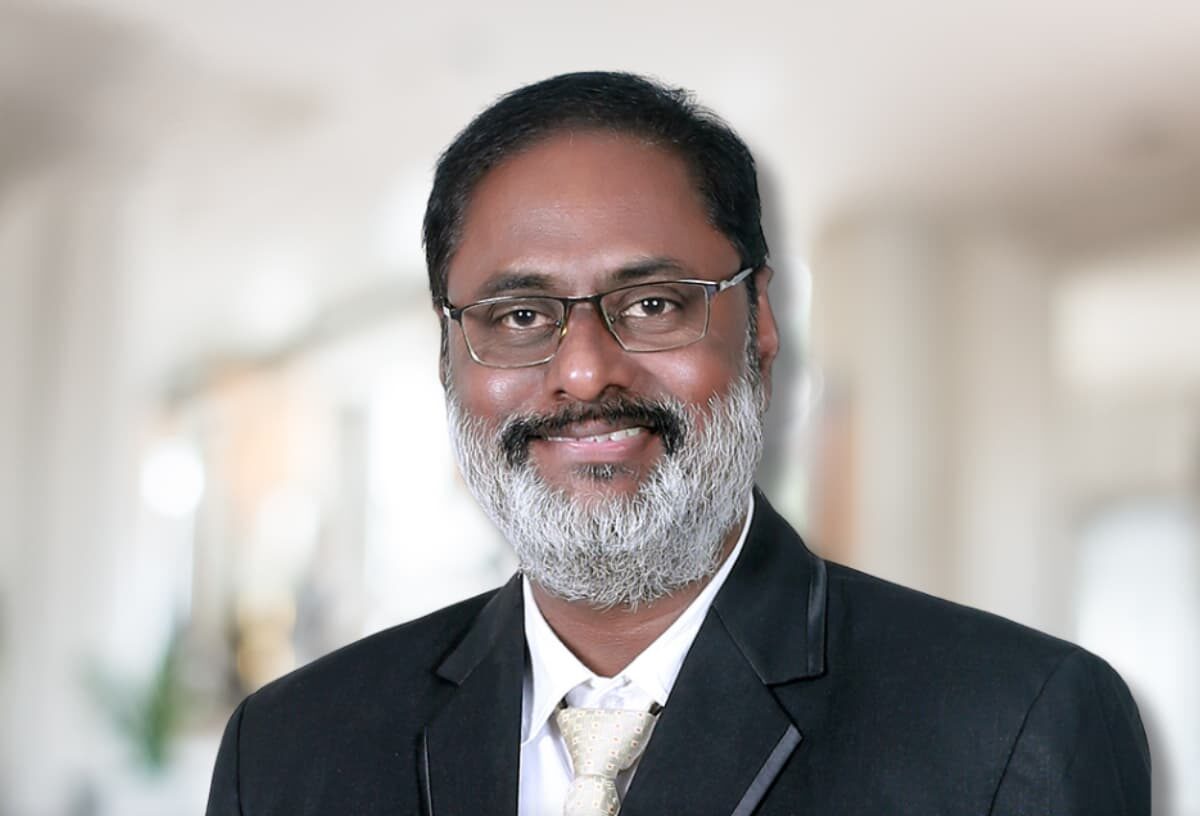
“Families do not need sympathy. They need pathways. Screening that is timely, assessments that are accessible, intervention that is evidence-based.”
– Prof (Dr) Mallikarjuna Rao Dubisetty
“Trust is the infrastructure. Without trust, adoption fails, and even the best innovations become unusable.”
There are technologists who build systems. And then there are those rare few who pause long enough to ask: who are these systems actually built for? Prof (Dr) Mallikarjuna Rao Dubisetty, known professionally as Prof (Dr) Mallick, has spent 28 years doing both. Across landmark organizations including IBM, Kyndryl, Accenture, and Apollo Hospitals, he has designed and modernized some of the most complex healthcare technology ecosystems in the world. Yet it is not the scale of his work that defines him. It is the conviction running beneath it: that innovation only matters when it expands dignity, access, and measurable outcomes for patients, caregivers, and the workforce.
That conviction did not emerge from a boardroom. It was forged in the far more demanding school of fatherhood.
A CAREER SHAPED BY PATTERNS, AND A LIFE SHAPED BY PURPOSE
Prof (Dr) Mallick’s entry into digital transformation was driven by something he kept witnessing across every role he stepped into: the most painful failures in healthcare were rarely technology failures. They were human ones. Fragmented systems. Disconnected decisions. A persistent gap between what people needed and what processes actually delivered.
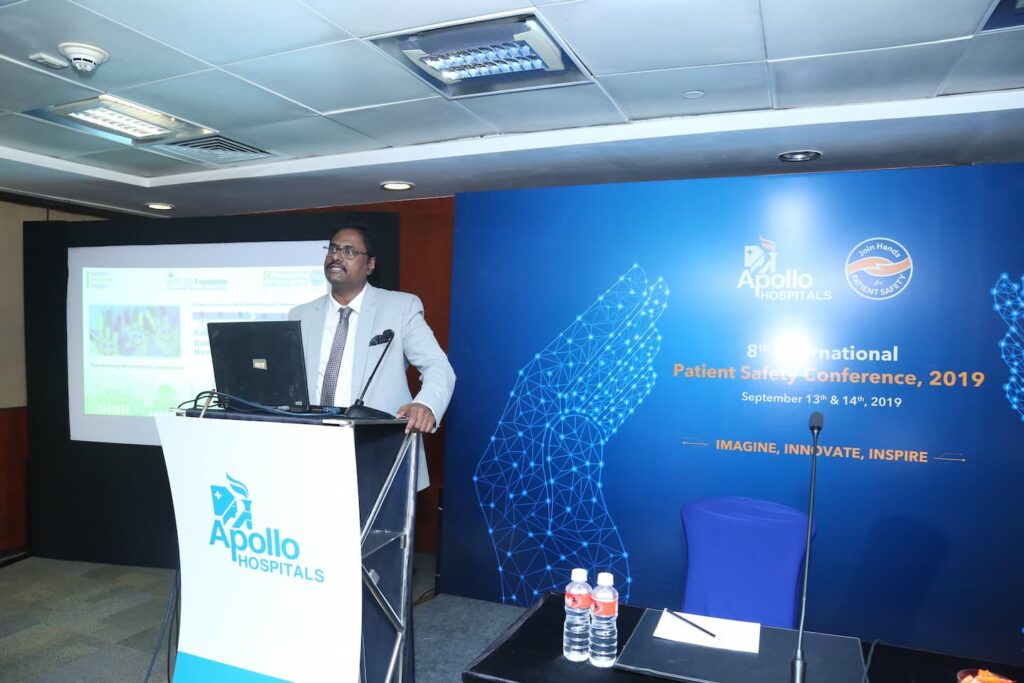
His early grounding in telecommunications gave him the discipline of designing for scale, uptime, and security. When he moved into hospital ecosystems, he saw clinicians working heroically within the constraints of legacy infrastructure and non-interoperable records. “Digital cannot be an overlay,” he observed early in his career. “It must re-architect the end-to-end patient and provider journey.”
That perspective matured further through work in GxP-compliant global programs, where he understood that architecture is not only a blueprint. It is accountability. But the turning point that would ultimately reshape the entire meaning of his work came not from a professional milestone. It came from home.
PARENTHOOD AS A LENS FOR SYSTEMS THINKING
Advocating for an autistic child teaches you urgency, patience, and systems thinking all at once. Prof (Dr) Mallick speaks of this experience with clarity and without sentimentality. What he witnessed as a parent was not a medical challenge in isolation. It was a system failing families at every connection point: delayed screenings, inaccessible assessments, uncoordinated therapies, and schools that were not prepared to receive children who learned differently.


“Families do not need sympathy,” he reflects. “They need pathways.” That insight became the engine behind his parallel life as an advocate, founding the Smiles Foundation and its AutismHelp and P2GLife initiatives, taking on the Chairpersonship of the World Autism Society, and leading True Ability KIN 2025. His guiding principle is as practical as it is powerful: in early childhood, early intervention is half the cure.
This lived experience now shapes how he approaches every platform and program he designs professionally. He looks for ways to shorten the distance between a family’s first concern and their first meaningful support. He insists on treating parents as partners in the care team, not as outsiders navigating a maze.
TRUE ABILITY: A PHILOSOPHY, NOT A SLOGAN
At the center of Prof (Dr) Mallick’s advocacy is a concept he calls True Ability, a reframing so fundamental it changes the entire architecture of how organizations and societies think about people with disabilities and neurodivergent individuals.
Traditional systems define people through their limitations, their diagnoses, their deficits, what they cannot do in an environment that was never designed with them in mind. True Ability flips that question entirely: what strengths emerge when the environment becomes genuinely supportive?
In a corporate context, this means inclusive hiring pathways, job carving, assistive technology, sensory-considerate workspaces, and managers trained in inclusion. It means measuring inclusion outcomes with the same rigour as revenue and risk, because exclusion carries a cost and inclusion carries a capability. In society, it means moving beyond charity to dignity, where early intervention is treated as a public good, and where schools, transport, healthcare, and digital services are designed with universal access as the baseline, not the exception.
“True Ability is not a slogan,” Mallick says plainly. “It is an architecture for equal participation.”
TRANSFORMING HEALTHCARE THROUGH INTELLIGENT ARCHITECTURE
Across his work with global enterprises, Prof (Dr) Mallick has consistently focused on converting healthcare from reactive to proactive, and from siloed to coordinated. Using analytics maturity models, he has helped organizations move from descriptive reporting toward predictive and prescriptive decision support, enabling earlier identification of clinical risk, readmission patterns, and high-cost utilization. Cloud computing has provided the scalability and governance infrastructure these ambitions require, particularly in multi-site hospital networks and global life sciences programs.
Yet for all its technical sophistication, his approach to digital transformation remains anchored in a simple discipline: governance by design, privacy by design, and ethics by design. He views compliance and patient privacy not as constraints on innovation but as its most essential design requirements. “Trust is the infrastructure,” he says. “Without trust, adoption fails, and even the best innovations become unusable.”
This philosophy positions him distinctively among healthcare technology leaders who sometimes treat ethics as a regulatory checkbox. For Prof (Dr) Mallick, it is the foundation.
INCLUSION EMBEDDED IN DIGITAL STRATEGY
When Prof (Dr) Mallick speaks to healthcare CIOs and organizational leaders about digital strategy, he consistently challenges them to treat accessibility and neuro-inclusion as core product requirements rather than CSR additions. The practical implications are substantial: accessible-by-default platforms, assistive-technology compatibility, simplified interaction modes, and AI models that are auditable for bias so that automated systems do not quietly screen out the very talent organizations claim to welcome.
He is equally direct about the ABDM framework in India, which he views as a generational opportunity to make health data exchange secure, patient-controlled, and genuinely interoperable across a system of enormous complexity and diversity. When implemented well, with the right attention to ABHA workflows, consent-driven exchange, and security by design, ABDM can shift India’s healthcare ecosystem from fragmented and episodic toward continuous and connected care.
THE LEGACY OF SYSTEMS DESIGNED WITH EVERYONE IN MIND
If there is a single thread running through Prof (Dr) Mallick’s career as a technology architect, a changemaker, and an advocate, it is this: he refuses to accept that systems cannot be designed to include everyone. Not as an aspiration, but as a requirement.
The organizations that will define the next era of healthcare technology, he believes, are those that treat inclusion, ethics, and outcomes as one integrated strategy rather than three separate initiatives. Accessibility will become a competitive advantage. Responsible AI will move from experimentation to governance-driven deployment. And the workforce that builds tomorrow’s health systems will increasingly include neurodiverse professionals who bring perspectives and capabilities that homogenous teams simply cannot replicate.
“If the next generation of parents finds faster support, if more neurodiverse professionals find meaningful work without masking who they are, and if more healthcare systems deliver connected care with compassion,” Prof (Dr) Mallick says, “then I will consider my work well spent.”
That is not a modest ambition. It is a blueprint. And Prof (Dr) Mallick has spent 28 years learning exactly how to build one.