There’s something delightfully ironic about Dr. Tony McCaffrey’s career trajectory. Here’s a man who studied artificial intelligence, got frustrated with it, left the field entirely, became a cognitive psychologist, developed a groundbreaking theory on human creativity… and then came back to AI with insights that are reshaping how we think about the relationship between human and machine intelligence.
But we’re getting ahead of ourselves. Let’s start with Columbo.
“When I was young, I watched the TV detective show, Columbo, every chance I could get,” McCaffrey recalls. Not exactly the origin story you’d expect for someone pioneering computational creativity theory. “He would notice the smallest thing and build upon it to prove a person was guilty of murder.”
That childhood fascination wasn’t just entertainment. It was planting seeds for what McCaffrey would later formalize as The Obscure Features Hypothesis. The idea? Every innovation, every creative breakthrough, builds on at least one obscure, rarely noticed or completely new feature of the problem at hand. Not the obvious stuff. The tiny detail everyone else walks past.
Which brings us back to that early disappointment with AI. “I was studying AI before Generative AI existed, but I was very disappointed by AI’s inability to be creative,” he explains. So he did what most people don’t do when frustrated with a field: he went deeper, switching to cognitive psychology to understand the very nature of creativity itself.
His doctorate work led him to articulate the common ways humans get stuck while trying to be creative and, more importantly, to craft techniques that help people get unstuck. Along the way, he discovered something fascinating. Computers and humans? They get stuck in remarkably similar ways.
WHEN ANTS INSPIRE INNOVATION (AND SILENCE BEATS SHOUTING)
The creation of BrainSwarming came from watching ants, which tells you something about McCaffrey’s approach to problem solving. “BrainSwarming was inspired by how a swarm of ants leave chemical traces on their trails back from finding food. Other ants can follow these trails back to the food source.”
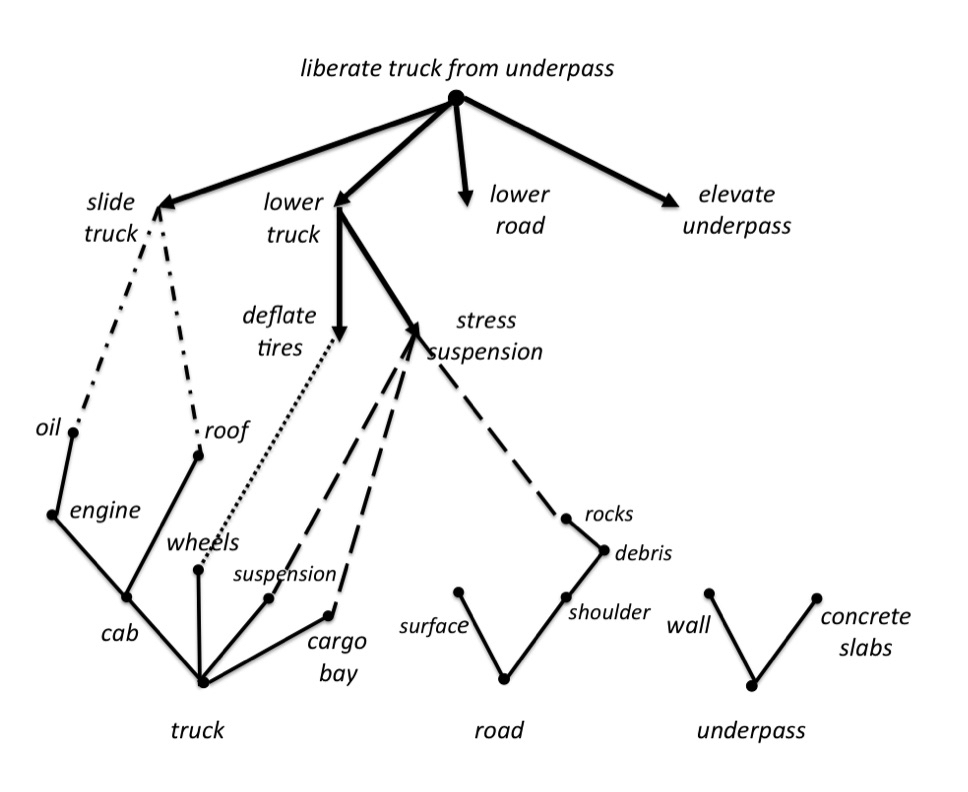
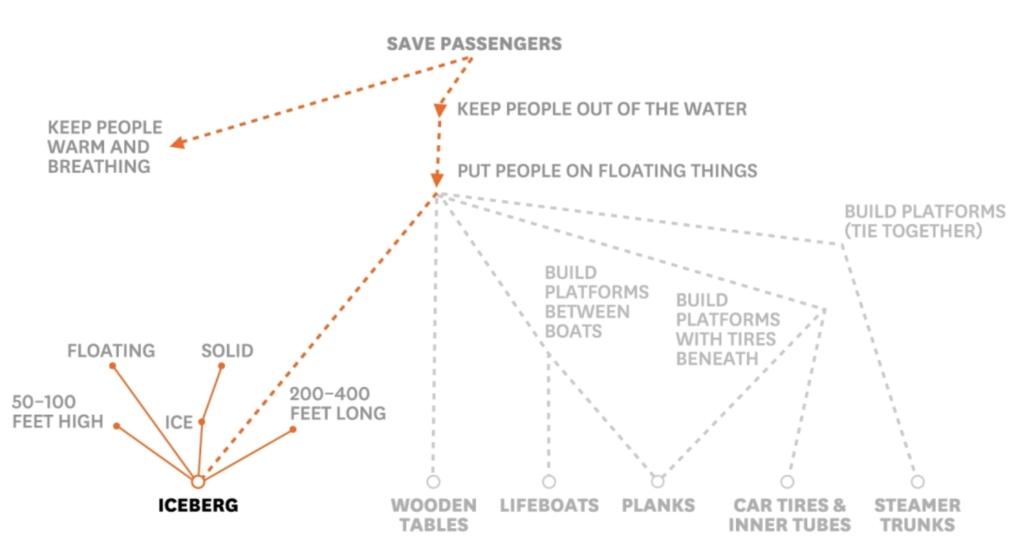
He imagined people doing the same thing, leaving traces of their ideas on a whiteboard that would form trails connecting toward solutions. What emerged was a methodology that turns traditional brainstorming completely inside out.
First rule of BrainSwarming? No talking. At all.
Everyone shares ideas simultaneously using sticky notes and markers. The ideas stay organized visually. And here’s what happens: more ideas flow than when people take turns talking, sharing one thought at a time. But there’s something else, something that matters more than efficiency. Introverts who normally struggle to speak up in groups suddenly have an effective way to contribute.
Think about how many brilliant insights have been lost because the person who had them couldn’t get a word in edgewise during a meeting. BrainSwarming solves that. The platform has evolved from physical whiteboards to sophisticated online tools, but the core remains. Ideas building on ideas, trails forming connections, problems getting solved through collective intelligence rather than whoever talks the loudest.
SPACE JUNK, FACEHUGGERS, AND SLAP BRACELETS WALK INTO NASA
Want to see BrainSwarming in action? McCaffrey and his students from Eagle Hill School tackled the space junk problem. Not a small challenge, considering there’s an increasing amount of debris orbiting Earth that poses risks to satellites and spacecraft.
They started exploring what causes movement in space. Among the various possibilities, someone noticed that solar sail technology had never been applied to space junk removal. First obscure feature identified. To make it work, they’d need to attach a highly reflective surface to large pieces of debris like dead satellites or rocket stages.
So they looked for unusual ways to fasten things together. This is where it gets interesting. The teenagers in the group drew inspiration from the facehugger monster in the Alien movies. Those arms wrapping around something. But how do you make that gripping mechanism actually work?
A slap bracelet. You know, that toy that snaps around your wrist when you give it enough momentum.
Three obscure features, solar sail tech, alien monster mechanics, toy bracelet physics, combined into a single innovative design. An aerospace engineer’s response? “A fantastic concept. You should submit to NASA.” They’re currently in talks with NASA about developing the idea further.
This isn’t just a cool story. It’s proof of concept for McCaffrey’s entire thesis. Innovation doesn’t come from the obvious connections. It emerges when you notice what everyone else misses and have the framework to connect those obscure features into something new.
THE RENTAL CAR PROBLEM (OR WHY CHATGPT CAN’T THINK LIKE YOU)
Here’s where McCaffrey’s work gets really interesting for anyone paying attention to the AI revolution we’re living through. He’s identified a fundamental weakness in how Large Language Models like ChatGPT actually work.
“ChatGPT is a Large Language Model and is trained by learning what word most commonly follows another word in a sentence,” he explains. “Consequently, it embodies the common associations between words.”
The problem? Creativity requires associations that are obscure but semantically close. LLMs are trained on one measure: the commonality of association. Creativity needs to take into account two different measures that ultimately target uncommon associations that are semantically close.
McCaffrey demonstrates this with a practical problem he had to solve in 2023: “You urgently need a rental car and there are none available in your area. What do you do?”
In 2023, ChatGPT suggested a few things but overlooked probably the simplest solution. McCaffrey guided himself to this solution and then later guided ChatGPT to the solution using the same technique. Move from specific to generic. What’s a more generic description of a car? A vehicle. Are there rental vehicles besides cars? Yes… U-Haul vans at $19.95 a day, cheaper than most rental cars.
In 2025, ChatGPT now comes up with the U-Haul van solution but not because it solved the problem on its own. That solution is now popular enough on the internet that it added it to its list of answers. And here’s the kicker: “ChatGPT cannot solve any of the creativity problems I use whose solutions either are not on the internet or they are on the internet but not popular.”
That sentence should make anyone rethinking their assumptions about AI pause. These systems are incredibly powerful at recombining existing information. But true creativity, the kind that generates solutions not already documented somewhere? That’s still uniquely human territory.
THE MATH THAT PROVES MACHINES HAVE LIMITS
McCaffrey hasn’t just observed these limitations. He’s proven them mathematically. The logic is elegant.
No human or machine can know all the features of an object. Period. How many features does an object have? The number is, in McCaffrey’s words, astronomically large and growing every day.
He defines a feature as an effect of an interaction between an object and one or more other objects, forces, energies, materials, textures, liquids, gases, whatever. New inventions happen daily. The US Patent Office alone holds over ten million patents. Any object can potentially interact with all of those inventions. Plus combinations of those inventions. Each interaction produces unique effects.
The math is straightforward and devastating to any notion that computers will eventually know everything. Today’s number of potential features is already beyond comprehensive cataloging. Tomorrow’s number will be larger. The day after, larger still.
This mathematical reality establishes boundaries for computational creativity while highlighting why human insight remains necessary. Not because humans are magical, but because we approach problems differently than machines built on statistical patterns of existing knowledge.
THE FIVE WAYS YOUR BRAIN BETRAYS YOUR CREATIVITY
Through his research, McCaffrey has mapped the specific obstacles that block creative thinking. Understanding these isn’t just academic. It’s practical.
Functional fixedness happens when you can only see an object’s intended purpose. A brick is for building. Except it’s also a doorstop, a paperweight, a weapon, a bookend. Your brain fixates on function and misses alternatives.
Design fixation occurs when you borrow features from solutions you’ve seen before. Past examples constrain future possibilities. You’re trying to create something new but you keep importing elements from what already exists.
Goal fixedness emerges from how problems get phrased. If someone says “clamp these together,” you fixate on clamps and binder clips. Change it to “fasten these together” and suddenly your mind explores dozens of attachment methods.
Analogy blindness makes it hard to adapt solutions across contexts. A violin company developed techniques to reduce excess vibration, creating purer sound. A ski company adapted the same idea to make skis that vibrate less, letting skiers turn sharply at higher speeds. The connection seems obvious in hindsight. But spotting it requires seeing past surface differences.
Assumption blindness prevents you from noticing the assumptions built into your approach. Want to adhere two things together? You’re unconsciously assuming two things are involved, the adherence is permanent, and the items touch directly. Become aware of those assumptions and you can bypass them. Doubting permanence led to sticky notes.
Each obstacle has counter techniques. McCaffrey’s book “Overcome Any Obstacle to Creativity” walks through them systematically. The key insight? These aren’t character flaws. They’re predictable patterns. Which means they can be systematically overcome.
THE ARROGANCE PROBLEM AND THE ABDICATION PROBLEM
Integrating human and machine intelligence faces obstacles that are more about psychology than technology. McCaffrey has identified two opposing problems.
“Honestly, some people’s arrogance leads them to overestimate their own creative abilities. Consequently, they will resist trying out my techniques and working with a machine.”
On the flip side? “Some people will too easily relinquish their agency to a machine. They may believe that the machine must be more creative than they are.”
Both miss the point entirely. This isn’t about human superiority or machine superiority. It’s about synergy. Each contributes what they do best. Humans for breakthrough insights that don’t yet exist anywhere. Machines for verification, elaboration, and connecting new ideas to existing knowledge.
The mathematicians McCaffrey knows who use ChatGPT in their work have figured this out. The human generates a truly original idea. The machine verifies it’s original by checking against essentially everything known. Then the machine helps flesh out connections between that big idea and established knowledge.
That’s the model. Not replacement. Not competition. Collaboration between different types of intelligence.
WHAT MATH PRODIGIES REVEAL ABOUT MACHINE LIMITATIONS
McCaffrey’s work mentoring mathematical prodigies has crystallized something important about the nature of human creativity versus machine processing.
“It makes it crystal clear to me that machines cannot come up with the big original ideas I see coming from these human math prodigies,” he reflects. Why? “The prodigies can barely put into words what they are envisioning and usually it takes a great deal of effort to translate their intuition into diagrams, words, formulas, and equations.”
They work at a level of intuition and imagery that comes before language. Machines work entirely with words and symbols and how they’re commonly used together. The big breakthrough happens in that pre-verbal space. Only later, with effort, does it get translated into the language that machines can process.
This isn’t mystical thinking. It’s an observation about how human cognition operates at its most creative. And it suggests something profound about the division of labor between humans and AI going forward.
BRAINSWARM AI: THE NEXT EVOLUTION
The platform McCaffrey is building integrates AI into creative collaboration in two sophisticated ways.
First, AI becomes an actual team member contributing ideas from a particular expertise or perspectives. Working on 3D printing for housing but don’t have a contractor on the team? The AI can contribute from a construction expert perspective.
Second, and potentially more powerful, AI guides human contributors through McCaffrey’s techniques to reveal obscure features. The AI becomes a facilitator, systematically helping humans overcome their natural blind spots.
This is where things get interesting for industry applications. Education, healthcare, R&D, anywhere groups need to solve problems together. “Proper AI can help humans overcome their obstacles to creativity. Humans will help AI overcome its obstacles. The synergy will be more creative than either humans or AI working alone.”
CREATIVITY AS SURVIVAL STRATEGY
For McCaffrey, innovation isn’t just his profession. “It is a way of life. Noticing what others overlook and leveraging that into a new story or invention has been my way of operating all of my life. When this process is successful, it gives me a feeling of awe and wonder. That is the best feeling and it sustains me.”
That personal connection fuels his broader vision. “Given the situation of our planet, creativity is our only hope. We need to understand creativity so we can leverage it in a maximal way to get out of the big mess we are in.”
Part of maximizing creativity? “We need to listen to voices and minds that think differently. It could very well lead us to new inventions and discoveries that can heal our planet.”
This isn’t optimistic rhetoric. It follows logically from his research. Breakthrough solutions emerge from noticing obscure features others miss. The people who think differently are exactly those most likely to notice what everyone else overlooks.
QUESTIONS WORTH PURSUING
Looking forward, McCaffrey poses intriguing questions for the next generation. What if you trained an LLM exclusively on text describing inventions and novel ideas rather than general human writing? Would it learn to recognize the obscure features underlying innovation? Could it become more creative?
He also wants to see someone develop ways to quantify big insights versus small insights. Test his hypothesis that humans are needed for highly original breakthroughs while machines can only generate incremental variations. “I do not think they can, but I would like people to test this in a quantitative way.”
This openness to rigorous testing of his own theories reflects the scientific mindset that’s characterized his work. He’s confident in his conclusions but welcomes serious attempts to prove him wrong. That’s how knowledge advances.
THE SYNERGY AHEAD
Dr. Tony McCaffrey’s work provides clarity in a moment when many people feel confused about the relationship between human creativity and artificial intelligence. Some fear AI will replace human innovation. Others dismiss AI’s potential to contribute meaningfully to creative work. McCaffrey’s research and practical tools offer a third path.
His mathematical proof of computational limits doesn’t diminish AI’s value. It clarifies where human insight remains irreplaceable. His identification of specific creative obstacles and systematic counter techniques democratizes innovation. His vision of human-machine synergy shows how both can contribute what they uniquely do best.
The future he’s building through BrainSwarm AI isn’t one where machines replace humans or where humans refuse technological assistance. It’s one where a math prodigy working at the level of intuition and image can partner with an AI that verifies originality and maps connections to existing knowledge. Where a team tackling space junk can combine human noticing of obscure features with machine processing of technical constraints. Where introverts can contribute alongside extroverts in silence that generates more insights than any amount of talking. As McCaffrey continues developing these tools and mentoring the next generation, his work reminds us that creativity isn’t magic or innate talent distributed unequally. It’s a process that can be understood, taught, and systematically improved. In a world facing challenges that existing solutions can’t solve, that might be the most important message of all.