True leadership is not about standing above others, but about creating the conditions in which others can rise and succeed together
–Lakshmi Kern Devadas
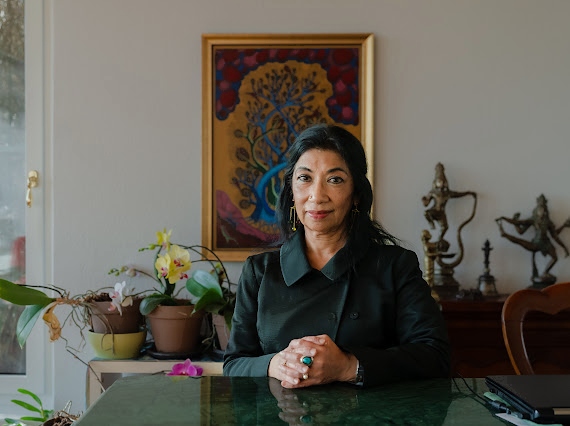
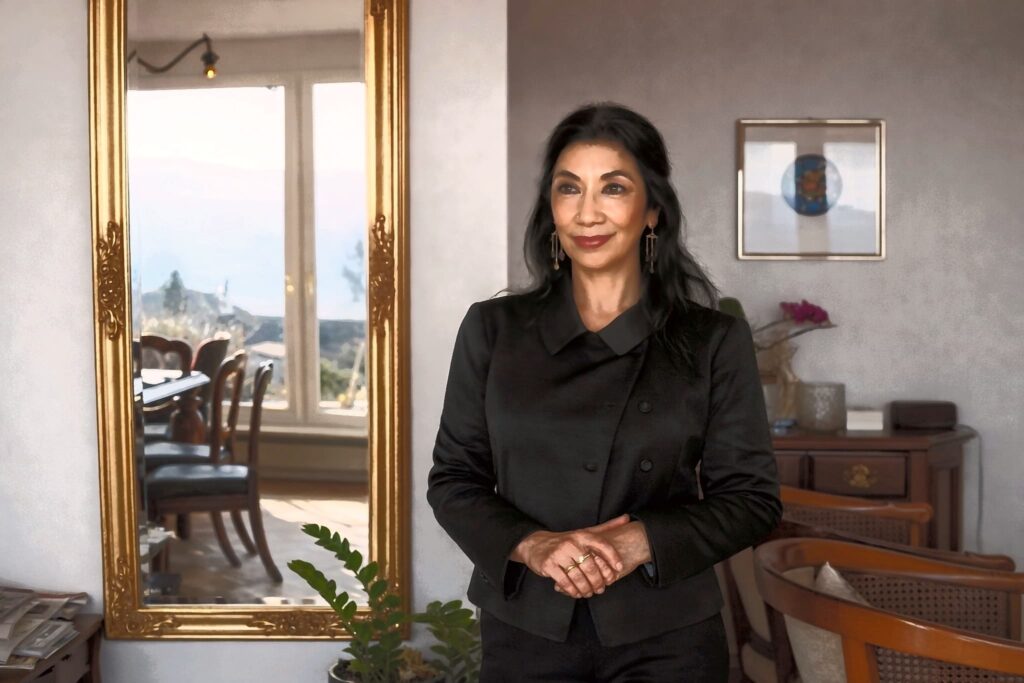
There are leaders who talk about building bridges, and then there are those who actually stand on them, holding two worlds together with nothing but conviction, clarity, and an unyielding belief in what becomes possible when people choose to collaborate over compete. Lakshmi Kern Devadas belongs firmly in the second category.
Co-Founder and Organiser of the International Global SME Forums – Davos Edition, established in December 2025 together with two like-minded partners and headquartered in Switzerland, Lakshmi stands at the forefront of a global movement championing SMEs and innovation.
Over decades, she has navigated continents, cultures, and high-level dialogues that shape the direction of the world’s economic future—building bridges between entrepreneurs, policymakers, and global institutions while advancing platforms that give small and medium enterprises a powerful voice in the global economy. Her story is not simply one of professional achievement. It is a story of what happens when a person recognizes a gap in the world and decides, quietly and purposefully, to fill it.
Her work today sits at the intersection of business, trade, and policy, convening governments, multinationals, SMEs, and innovators around a single shared table. But to understand what drives her, one must go back to the beginning, to a young professional standing at the crossroads of continents, watching the same problems surface in every room she entered.
THE REALIZATION THAT CHANGED EVERYTHING
Lakshmi’s career has taken her across India, Switzerland, Liechtenstein, and North America, each geography offering its own rhythm, its own way of doing business, and its own understanding of what leadership means. What she discovered along the way was not difference, but commonality. The challenges, economic volatility, digital transformation, sustainability pressures, supply chain disruption, did not recognize borders. They arrived everywhere, in every language, in every boardroom.
“What inspired me was realizing that solutions are rarely born within silos,” she reflects. “They emerge when governments, entrepreneurs, investors, and innovators sit at the same table with a shared commitment to purpose.”
That insight became the philosophical foundation of everything she has built since. Global collaboration, for Lakshmi, is not a professional strategy. It is a responsibility. And it is one she has carried with remarkable consistency across four decades of work, long before Global SME Forums gave that responsibility a formal name and address.
LEARNING FROM EVERY LATITUDE
One of the most defining aspects of Lakshmi’s leadership is how deeply her cross-cultural experience has shaped her approach to people, negotiation, and partnership. Each country she worked in taught her something irreplaceable.
In India, she encountered a dynamic entrepreneurial energy, a willingness to iterate rapidly even under resource constraints, and a resilience that could only be born from navigating complexity at scale. In Switzerland and Liechtenstein, she absorbed a reverence for precision, for consensus, for thinking in decades rather than quarters. In North America, she witnessed the boldness of scaling ideas quickly, a results orientation that demanded accountability at every turn.
These were not merely cultural observations. They became the building blocks of what she calls a hybrid leadership model, one that is culturally sensitive, data driven, and outcome oriented all at once. “The most effective leaders I have encountered are those who can bridge cultural norms, foster inclusive dialogue, and create environments where everyone at the table feels empowered to contribute,” she says.
This philosophy now runs through every programme, every partnership, and every forum that Global SME Forums designs. It is leadership not as a fixed style, but as a living, adaptive practice.
TRUST AS THE TRUE CURRENCY OF COOPERATION
In a world growing more fragmented by the day, Lakshmi has arrived at a conviction that shapes every conversation she leads: Trust is the real currency of global cooperation. Not capital, not technology, not even policy. Trust.
She recalls a cross-border roundtable where the opportunity before the room was clear, where the strategy made sense and the numbers aligned. Yet hesitation lingered, not because the plan was flawed, but because confidence in long-term commitment was uncertain. That moment stayed with her.
“Trust isn’t created in a single handshake at a forum,” she reflects. “It’s built in the mechanisms that endure after the headlines fade.”
This understanding has fundamentally shaped how Global SME Forums approaches its work. The organization does not measure success by who attended a summit. It measures success by what was agreed upon, what was acted upon, and whether the relationship survived the transition from aspiration to implementation. In Lakshmi’s world, trust is not a value statement pinned to a wall. It is a design principle built into every partnership architecture.
TURNING DIALOGUE INTO ECONOMIC REALITY
The most common critique of global forums is that they produce conversation without consequence, that the declarations made in polished rooms rarely translate into outcomes for the communities they claim to serve. Lakshmi is acutely aware of this gap, and closing it has become perhaps her most defining professional mission.
At a previous roundtable, SMEs from emerging markets described a painfully familiar problem. Confirmed export demand existed. Buyers were willing. But regulatory fragmentation was blocking the transaction at every turn. Rather than allowing the conversation to close there, Lakshmi convened a focused working group of policymakers, trade finance partners, and entrepreneurs. What followed was a pilot trade alignment framework that delivered real results, faster clearance timelines, reduced compliance burdens, and genuine growth pathways for participating SMEs. This formula is also key for the international Global SME Forums editions.
It is the kind of outcome that does not make front page news. But it is exactly the kind of outcome that changes lives. “That was proof that when dialogue is structured with accountability, it becomes economic opportunity, not just conversation,” she says.
THE ARCHITECTURE OF EXECUTION
Lakshmi has learned, sometimes through painful experience, that the greatest threat to collaboration is not disagreement. It is misalignment. Projects fail not because the idea is weak, but because expectations were never properly built and shared in the first place.
At international editions Global SME Forums, this lesson has been translated into a practical three-part framework that governs how every cross-sector partnership is designed.
The first principle is Shared Value Clarity. Before any leaders are brought together, the organization’s team defines what success looks like for each stakeholder, from governments and corporate to SMEs and civil society. This prevents the kind of vague agreement that feels productive in the room but collapses the moment execution begins.
The second is Commitment Architecture. Partners are asked to articulate clear, time-bound commitments in specific, measurable terms. Not aspirations, but actions. Who will do what, by when, and with what resources.
The third is Iterative Feedback Loops. Checkpoints, data dashboards, scorecards, and review mechanisms are built into the process so that partnerships remain dynamic, learning, and self-correcting rather than static.
Together, these principles transform good intentions into durable outcomes, which is precisely the transformation that the world’s SME communities most urgently need.
INCLUSION BY DESIGN, NOT BY DEFAULT
Growth that benefits only those already at the table is not growth. It is consolidation. Lakshmi holds this conviction firmly, and it shapes every program Global SME Forums creates.
“Inclusive growth must be designed,” she says plainly. “It does not happen by default.”
This means deliberately ensuring that underrepresented SME entrepreneurs have a seat at decision-making tables, not as token participants but as genuine contributors. It means measuring whether opportunity truly widens as a result of any given initiative. It means pairing dialogue with capacity building so that communities do not simply witness global growth, but actively participate in and benefit from it.
In an era where the language of inclusion has become so common as to lose its force, Lakshmi’s approach stands apart precisely because inclusion is not her messaging. It is her method.
LEADERSHIP FOR A POLARIZED WORLD
As she looks toward 2026 and beyond, Lakshmi sees a world in which global collaboration is becoming simultaneously more rationalized and more interconnected. Trade and investment will be increasingly shaped by sustainability standards, resilience focused supply chains, and technology, and protected trusted AI datas, rather than by scale alone. The leaders who will thrive in this environment are those who combine strategic thinking with empathy, cultural intelligence, and a genuine respect for both people and the planet.
And here, Lakshmi offers something that goes beyond the conventional leadership playbook. As someone who values spiritual grounding, she believes that the future of leadership must be guided not only by data and systems, but by emotional intelligence, compassion, and a holistic vision of progress. “The future requires caution against losing humanity in the pursuit of technology,” she reflects, “and instead using innovation to amplify empathy, responsibility, and shared well-being.”
It is a perspective that feels both timely and timeless, a reminder that in all the noise of digital transformation and geopolitical disruption, the most powerful thing a leader can offer is still, simply, wisdom.
THE LEGACY SHE IS BUILDING
When Lakshmi speaks about the legacy she hopes to leave through international Global SME Forums and the Europe Davos edition, she does not reach for grand proclamations. She reaches instead for something more honest and more enduring.
Lakshmi believes that true leadership is not about standing above others, but about creating the conditions in which others can rise and succeed together. For her, leadership is a shared journey—anchored in trust, continuous learning, and the thoughtful nurturing of every partner within a team. It is about cultivating an environment where collaboration flourishes, where ideas are respected, and where individuals feel empowered to contribute to a collective vision.
This philosophy forms the very foundation of her vision for the international editions of the Global SME Forums. She sees these gatherings not merely as events, but as dynamic global platforms where entrepreneurs, innovators, policymakers, and communities come together—not as competitors, but as partners working to shape a more inclusive and resilient global economy.
The legacy Lakshmi is building is one of empowerment, connection, and shared prosperity. Through these forums, she is creating bridges across industries, countries, and cultures—ensuring that SMEs, innovators, and communities are not sidelined in global conversations, but are recognized as essential drivers of growth, innovation, and sustainable progress.
As Lakshmi expresses it with quiet conviction:
“My personal commitment is to devote my fullest effort toward shaping a future in which SMEs, innovators, and communities are not merely observers of global progress, but active architects of it—creating opportunity, dignity, and sustainable prosperity across our shared ecosystems.”
Dignity. It is a word that appears rarely in the vocabulary of global economic forums. Its presence here says a great deal about who Lakshmi Kern Devadas is, and about the kind of world she is working, with quiet determination and profound purpose, to help build.
International editions Global SME Forums, young as an organization but anchored in decades of lived experience, is more than a platform. It is a proof of concept. A demonstration that when the right people are brought together with the right structures and the right values, dialogue does not have to be the endpoint. It can be the beginning.
Widely creative, Lakshmi originally from Coimbatore is a passionate Bharatanatyam dancer and dedicated yoga practitioner, deeply anchored in discipline, grace, and cultural heritage. Guided by her personal philosophy of “Grace in Strength,” she embodies the conviction that true power is expressed through elegance, that authenticity defines impactful leadership, and that inner balance is the foundation of lasting influence.
Her love for travel and immersing herself in new cultures through music, art, design, people, and cuisine continually expands her worldview and fuels her creative spirit. These experiences keep her simultaneously grounded and visionary, enabling her to draw from global perspectives while honoring the profound beauty found in life’s quiet, essential moments.