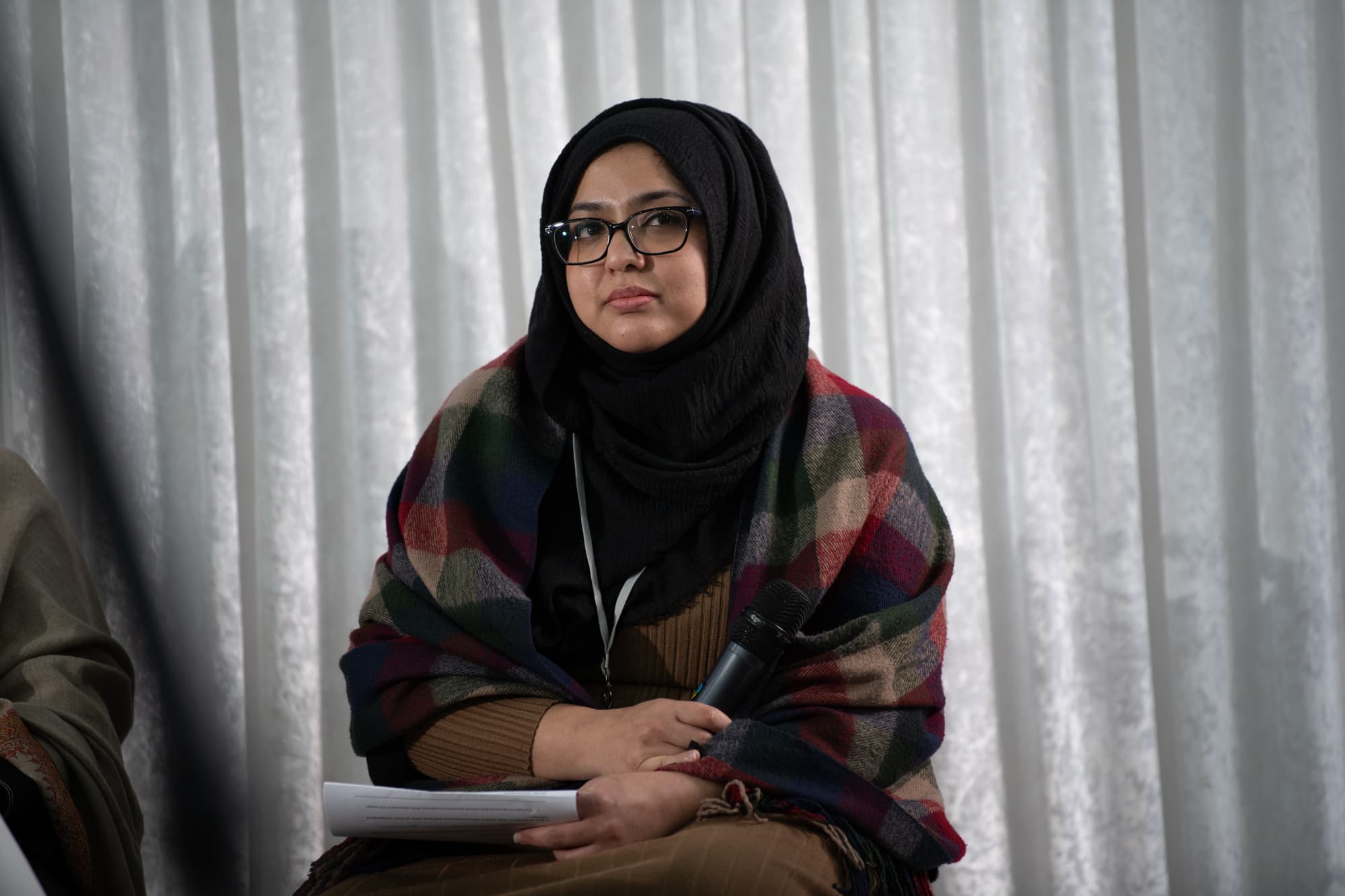
In the concrete and steel landscape of Manchester’s evolving skyline, where every beam placement matters and every design decision reverberates through generations, stands a leader who is redefining what it means to build with both precision and purpose. Najwa Jawahar BEng (Hons.) MEng, CEng, FIStructE, a senior leader in the structural engineering and design management, represents a new generation of engineers who view their craft not merely as technical problem-solving, but as a profound form of service to communities and future generations.
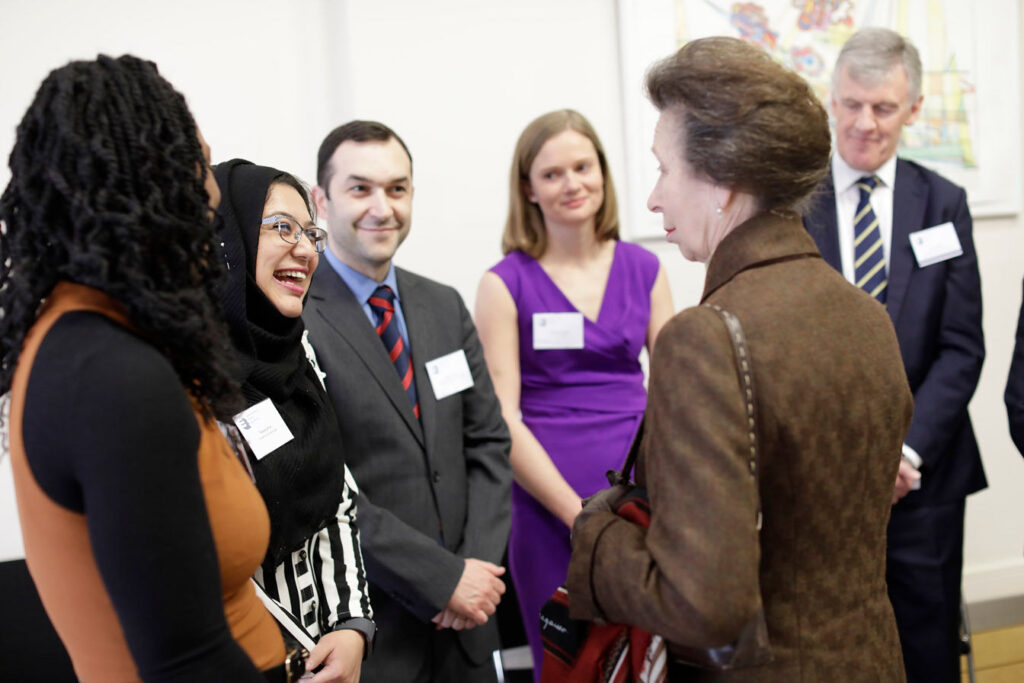
Her journey from a sixteen-year-old adjusting to life in the UK to becoming one of Europe’s most celebrated young engineers illustrates more than professional achievement. It demonstrates how authentic leadership emerges when technical excellence converges with empathy, when individual success transforms into collective empowerment, and when the built environment becomes a canvas for creating lasting positive impact.
Building Foundations Through Cultural Contrasts
Najwa’s path into structural engineering was shaped by the contrast between encouragement and exclamation. On one side of her family, education and technical professions were highly valued, with several engineers providing inspiration. On the other, traditional views about women’s career paths meant that pursuing a profession like engineering was far from expected. From an early age, she learned that possibility and expectation do not always align.
“I grew up around very different perspectives” Najwa reflects. “Some members of my family encouraged education and technical careers, while others did not see this as a likely path for women. Choosing engineering was not the obvious route, but it felt right for me.”
This contrast became a catalyst rather than a constraint. When she moved to the UK at sixteen, still navigating a new culture and education system, a conversation with her A-level physics teacher proved pivotal. Presented with a list of engineering disciplines, she approached the choice with characteristic pragmatism.
“I ruled out what did not interest me and ended up with structural engineering. It combined everything I enjoyed: maths, physics, problem-solving, and creativity. It was technical, but it had a purpose, and I liked the idea of creating something tangible and long-lasting.”
The moment when theory met reality came during a summer placement , working on the roof structure of a major arena project in Leeds. Standing beneath the structure she had helped design, watching lines on drawings transform into spaces that would welcome thousands of people, Najwa experienced what she describes as a defining revelation.
“For the first time, I saw how design comes to life and how lines on a drawing can shape the experience of thousands of people. From that point on, I knew I didn’t just want to be in engineering; I wanted to design.”
Excellence as a Foundation for Leadership
Najwa’s academic success, graduating with first-class honours, was just the beginning of a career defined by continuous learning and adaptation. Her early professional experiences taught her that real expertise develops not in lecture halls but on construction sites, where design decisions face the ultimate test of reality.
One of her earliest defining moments came during her first week as a graduate engineer when she was asked to design a capping beam. Weeks later, standing next to the physical manifestation of her calculations, she felt the weight of responsibility that would shape her entire approach to the profession.
“What was once a line on a drawing had become a structure. I felt the weight of responsibility and the tangible impact of our work in the real world.”
This understanding of engineering as a form of service guided her progression through professional milestones. Achieving Chartered Engineer status gave her confidence in her technical judgment, while becoming a Fellow of the Institution of Structural Engineers, among the youngest women to achieve this distinction, represented recognition of both her technical capability and leadership potential.
The accolades that followed, including being named Best Young Woman Engineer in Europe and recognition among the top 50 rising stars in Science & Engineering, carried deeper meaning than professional achievement. These honours became platforms for broader impact and opportunities to challenge perceptions about who belongs in engineering leadership.
“These awards have meant more to me than recognition,” she explains. “Personally, these have been moments of quiet validation, reminders that I am seen not only for what I do but for how I do it. In a profession where people like me are still in the minority, being recognised at that level reinforced that I do not need to mould myself to fit the norm to succeed.”
Design Management as Strategic Leadership
In her role as a design management leader, , Najwa operates at the intersection of technical expertise, strategic thinking, and human leadership. Her work exemplifies the complexity of modern engineering projects, where success depends as much on coordination and communication as on technical proficiency.
“Design management sits at the crossroads of strategy, technical delivery, and people leadership,” she explains. “I work across a range of complex projects, often with competing priorities, tight programmes, and multiple stakeholders involved.”
Her approach to managing multidisciplinary teams reflects a philosophy that views diversity of perspective as a strength rather than a challenge . Bringing together architects, engineers, MEP consultants, contractors, and clients requires what she describes as creating “shared understanding” while steering decisions toward optimal outcomes.
“Everyone comes to the table with different priorities. Architects, engineers, MEP consultants, contractors, and clients all have valid viewpoints, but part of my role is to create shared understanding and steer decisions that work for everyone.”
The most rewarding aspect of her leadership style emerges when teams move from fragmentation to alignment. She describes witnessing “the shift that occurs when a team feels supported and aligned” as one of the most satisfying elements of her work. This transformation happens when people understand expectations, feel heard, and have space to focus on quality delivery.
Her leadership philosophy extends beyond project management to encompass what she calls “bringing calm to the chaos.” This involves maintaining focus on the project’s purpose while making complex processes feel manageable for all involved. It represents a form of leadership that prioritises clarity, support, and collective success over individual authority.
Pioneering Inclusive Excellence
Operating in a field where women remain significantly underrepresented, particularly in leadership positions, Najwa has developed strategies for navigating professional challenges while using her position to create opportunities for others. Her approach recognises that technical competence, while essential, represents only part of effective leadership.
“Early in my career, I realised that being technically strong was only part of the equation. I also had to build confidence, advocate for myself, and navigate assumptions about who is seen as a leader.”
Rather than conforming to existing leadership models, she has developed an authentic approach that leverages her strengths in listening, empathy, and collaborative problem-solving. Her philosophy challenges conventional ideas of presence and authority.
“For me, being a woman in leadership does not mean being the loudest. It means listening deeply, speaking up when it matters, and using my position to lift others. That is the kind of leadership I believe in: one that makes space, not just statements.”
This commitment to inclusive leadership extends through her mentoring work, public speaking engagements as a STEM ambassador, and active participation in professional organisations. Her outreach efforts focus on a fundamental challenge: helping young people, particularly women and those from underrepresented backgrounds, see themselves in engineering careers.
“Growing up, I rarely saw people who looked like me in the field of engineering. That absence left a gap, not just in representation, but in belief. It took time to imagine myself in this space and even longer to feel like I belonged.”
Her mentoring approach focuses on building confidence and capability while challenging limiting assumptions about who can succeed in technical fields. She emphasises that engineering represents a “creative, impactful, and deeply human profession” rather than merely a technical discipline.
Sustainable Design as Moral Imperative
Najwa’s approach to structural design integrates environmental consciousness not as an additional consideration but as a fundamental responsibility. Her philosophy views sustainability as inherent to good design rather than an external constraint or optional enhancement.
“For me, good design is intentional. It responds to context, purpose, and the people involved. Sustainability is not an add-on; it is part of the responsibility we hold as designers. We are shaping the built environment for generations to come, and every decision matters.”
Her leadership in sustainable design emphasises holistic thinking that considers material sourcing, adaptability, longevity, and environmental integration. She advocates for innovation through simplification, seeking solutions that achieve efficiency, elegance, and endurance simultaneously.
“I believe innovation often lies in simplicity, in stripping back what is unnecessary, and in designing solutions that are efficient, elegant, and enduring.”
This philosophy extends to her collaborative approach, encouraging early integration across disciplines to challenge assumptions and explore more effective solutions. She views design leadership as creating space for “thoughtful debate” while guiding teams toward solutions that balance performance with purpose.
Projects That Transform Communities
The projects Najwa takes the greatest pride in reflect her values-driven approach to engineering. Rather than focusing solely on scale or visibility, she emphasises work that creates meaningful impact for communities and advances industry practice.
One standout project involved a complex city-centre refurbishment that required investigative problem-solving to adapt designs to existing structural realities. The project exemplified her approach to thorough, careful work that builds long-term trust and value.
“We investigated and adapted the design to suit what was actually there, protected the structural integrity, and avoided costly issues during construction. It was a reminder that doing the right thing, even when it takes longer, builds trust that lasts.”
Her work on residential developments in communities demonstrates her commitment to engineering as community service. These projects required collaboration with broader teams to ensure developments met residents’ functional needs while also supporting “their dignity and sense of belonging.”
Beyond individual projects, her contributions to professional development through service on the IStructE Yorkshire and Humber Committee and various Institution panels represent her commitment to advancing industry practice. Her involvement focuses on engaging younger engineers, promoting inclusion, and evolving professional standards.
Leadership Philosophy Rooted in Trust
Najwa’s approach to leadership in engineering emphasises creating environments where people can contribute their best work rather than commanding through authority or control. Her philosophy recognises that in complex, multidisciplinary fields, success depends on collective intelligence and collaborative problem-solving.
“Leadership in engineering is not just about having the right answers; it is about creating an environment where people can ask the right questions, challenge ideas, and bring their strengths to the table.”
Her leadership model prioritises trust-building, understanding individual motivations, and providing appropriate support for optimal performance. This approach enables effective guidance through high-pressure situations while maintaining team momentum and morale.
“I believe in leading through trust. I make an effort to understand the people I work with, what motivates them, and what support they need to do their best work.”
She emphasises that people remember emotional experiences during projects, particularly how leaders respond during challenging moments. Her approach focuses on maintaining calm, offering perspective, and reinforcing purpose during difficult periods.
“When tensions are high, deadlines are tight, or something doesn’t go as planned, leadership is about staying calm, offering perspective, and reminding the team why the work matters.”
Shaping Industry Future Through Digital Integration
Looking toward the future of structural design, Najwa identifies transformative trends that will reshape how engineers work and what they can achieve. Her perspective emphasises integration and human judgment rather than technological replacement of engineering expertise.
She sees off-site construction, modular systems, and platform-based design becoming standard practices that bring improvements in speed, safety, and efficiency while requiring new collaborative approaches and systems thinking.
“These methods bring speed, safety, and efficiency, but they also require early collaboration and a different mindset. Engineers need to think in terms of systems, not just individual components.”
While recognising the potential of digital tools such as AI, data-driven modelling, and generative design, she stresses that these technologies enhance rather than replace fundamental engineering judgment.
“Digital tools, such as AI, data-driven modelling, and generative design, will become increasingly common. They are powerful, but they are only as good as the judgment behind them. Sound engineering principles will remain the foundation.”
For Najwa, sustainability emerges as the most important driver of future industry evolution, with conversations shifting “beyond compliance to meaningful, value-driven decisions” focused on environmental and social impact.
Legacy Built Through People and Structures
Najwa’s vision for her professional legacy extends beyond the physical structures she helps create to encompass the people she influences and the cultural changes she facilitates within the engineering profession. Her goals reflect her understanding of leadership as service and her commitment to creating pathways for others.
“I want to leave behind more than buildings. Of course, I hope the structures I have contributed to will stand the test of time, but the legacy that matters most to me is about people, communities, and the impact we make beyond drawings and concrete.”
Her current roles on the boards of Future of Greater Manchester (FoGM) and the Consortium of Muslim Networks enable her to shape strategic direction and champion inclusion across the profession, extending her influence beyond individual projects to industry-wide transformation.
“Through mentoring, visibility, and intentional leadership, I aim to shift the culture of our industry. These roles enable me to contribute to shaping the industry’s evolution.”
She views engineering fundamentally as “a form of service” where “every drawing and decision is a chance to make life easier, better, or more beautiful for someone else.” This perspective shapes how she approaches daily work and long-term career goals.
Her advice to aspiring engineers, particularly young women, reflects her own journey and the barriers she has worked to overcome: “You belong here. Even if you don’t see people who look like you, your voice and perspective are still needed. Do not wait to feel ready. Take opportunities, speak up, and learn by doing.”
Balancing Excellence with Authenticity
Najwa’s approach to work-life integration reflects her understanding that sustainable high performance requires intentional attention to personal renewal and relationships. Rather than pursuing perfect balance, she focuses on being purposeful with how she invests her time and energy allocation.
“I do not chase perfect balance, and I try to be intentional with my time and energy. Some weeks, work takes priority. Other times, I consciously slow down and make space for family, travel, or simply rest.”
Her recognition that “protecting personal time is not selfish; it’s essential” stems from understanding that creativity, empathy, and resilience depend on stepping back and reconnecting with herself and others. This philosophy enables sustainable leadership and authentic connection with the people she serves.
What continues to inspire her in structural engineering is the balance between analytical rigour and creative possibility. She describes the field as enabling work “with numbers and equations but also design spaces that carry meaning and serve people.”
Her sources of inspiration extend beyond engineering to include travel, architecture, and poetry, reflecting her belief that diverse perspectives enhance technical work. This broad engagement with ideas and experiences informs her approach to problem-solving and design innovation.
Najwa Jawahar represents a fresh paradigm in structural engineering leadership, one that seamlessly integrates technical excellence with emotional intelligence, individual achievement with collective empowerment, and professional success with authentic service. Through her mentoring efforts, and her leadership in professional organisations, she continues building not just structures but pathways for others to follow.
Her story demonstrates that the future of engineering belongs to leaders who can hold complexity with grace, who view diversity as strength, and who understand that the most enduring structures are often the relationships, opportunities, and cultural changes we create for those who come after us.