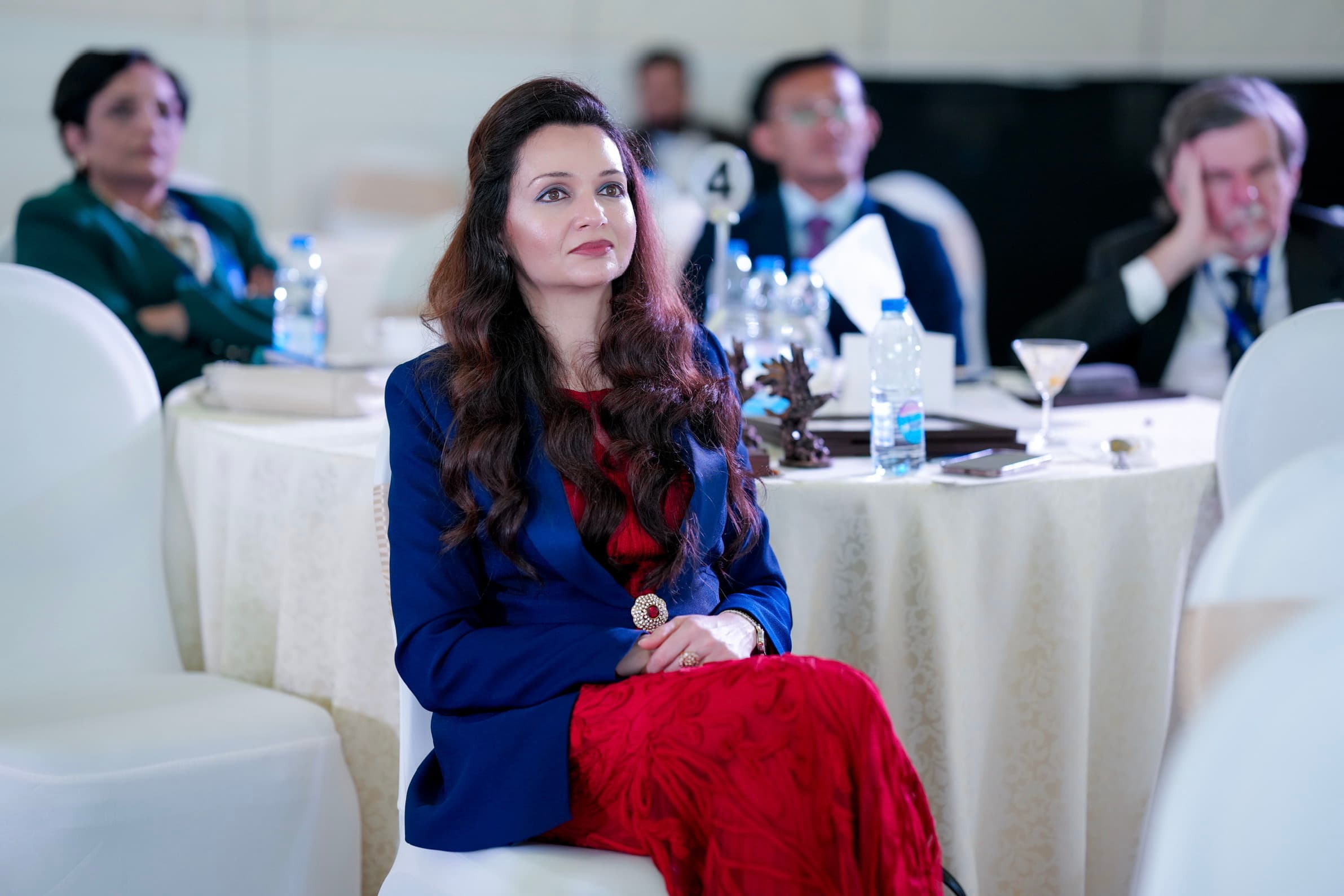
In the landscape of autism care and education, where systemic gaps often leave families stranded and vulnerable individuals underserved, one woman has emerged as a transformative force by refusing to accept the status quo. Faria Arsh stands at the intersection of profound personal experience and exceptional professional expertise, channeling the challenges of raising a daughter with severe autism into a movement that is reshaping how society supports its most vulnerable members.
Her journey is not one of overnight success or sudden revelation. It is a story of a mother who, faced with a healthcare system unable to provide the support her daughter Afiyah desperately needed, chose to become the solution herself. What began as a personal quest to understand and support her three-year-old daughter through an autism diagnosis has evolved into the Autism Foundation C.I.C., a multi-award-winning social enterprise that is bridging critical gaps in the UK care system while impacting thousands of families globally.
“All good things start from a personal journey, and that’s exactly how Autism Foundation started,” Faria reflects. This personal foundation has become her greatest strength, enabling her to see the autism care ecosystem from multiple vantage points simultaneously: as a mother navigating daily challenges, as a professional developing evidence-based interventions, and as an advocate fighting for systemic change.
THE DUAL LENS: WHEN PERSONAL AND PROFESSIONAL EXPERTISE CONVERGE
When Afiyah received her autism diagnosis at age three, Faria made a decision that would define her life’s trajectory. Rather than simply accepting limited professional guidance, she immersed herself in understanding autism and disability, taking a position at a special school to deepen her knowledge. This wasn’t just about career development; it was about becoming the expert her daughter needed.
The synergy that emerged from this dual role proved transformative. At work, Faria brought insights gleaned from her experiences at home with Afiyah, who has severe autism, ADHD, severe learning difficulties, and epilepsy. At home, she applied professional strategies and methodologies to support her daughter more effectively. This constant cross-pollination of personal and professional knowledge created something rare: a comprehensive understanding that most single-perspective professionals simply cannot achieve.
“At work, I brought my personal experience from home, and at home, I used my professional expertise to support Afiyah better,” Faria explains. This integration allowed her to develop specialized expertise in communication and behavioral analysis, recognizing that these elements are inextricably linked to understanding and supporting autistic individuals.
Her approach to behavioral challenges exemplifies this multifaceted perspective. “Behaviour has several layers, and to understand them, you need a more profound knowledge, which I gained as a parent and a professional,” she notes. When confronted with challenging behaviors, Faria could analyze them from multiple angles, understanding not just the clinical aspects but the lived reality of families dealing with these situations daily.
Communication became another focal point of her expertise. Recognizing it as a primary driver of challenging behaviors, Faria mastered various communication modalities including picture and symbol systems, communication devices, and sign language. This comprehensive skill set enabled her to help disabled pupils express themselves in ways traditional methods had overlooked.
The impact of this dual perspective on the Autism Foundation’s mission cannot be overstated. “I understand not just the needs of a disabled person, but I also understand the needs of their parents and caregivers,” Faria emphasizes. This holistic view allows her to identify systemic gaps that single-perspective professionals might miss and develop strategic solutions that address the full spectrum of needs within the autism community.
FROM BESTSELLER TO BREAKTHROUGH: BUILDING AN EMPIRE OF IMPACT
The catalyst for the Autism Foundation’s formation came from an unlikely source: a toilet training book. Yet this seemingly simple resource would become a testament to Faria’s ability to identify critical unmet needs and create practical solutions that work in real-world settings.
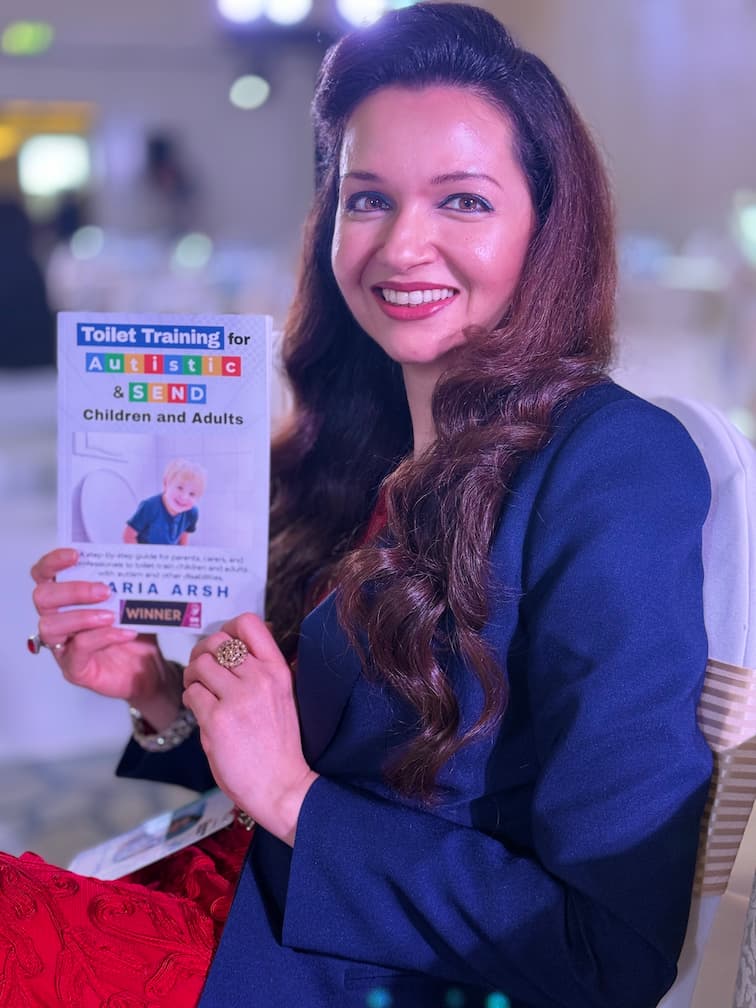
The book emerged from necessity. When Faria sought to toilet train Afiyah, she encountered a shocking reality: no organization or professional could help her. “Not because they didn’t want to, but they didn’t know how to,” she explains. Medical professionals, health visitors, and educators alike lacked effective methods for supporting someone with severe, complex needs through this fundamental developmental milestone.
Refusing to accept this gap, Faria developed her own method, drawing on both her professional training and her intimate understanding of Afiyah’s specific needs. The success was remarkable, not just for Afiyah but for others who later applied the approach. This prompted Faria to document her methodology in “Toilet Training for Autistic & SEND Children and Adults,” which would become a bestseller on multiple platforms.
The book’s organic spread surprised even Faria. “I knew this book was needed, but I was surprised by how widely and quickly it spread organically,” she recalls. Families around the world began implementing her methods, finding success where traditional approaches had failed. The testimonials and success stories poured in, validating what Faria had known instinctively: the existing resources simply weren’t meeting real-world needs.
This success opened new doors. Organizations began requesting autism training from Faria, recognizing the practical applicability of her approach. She developed comprehensive training programs that quickly gained popularity, leading to the formalization of these initiatives under the Autism Foundation banner in April 2023.
What distinguishes the Foundation from other training providers is its grounding in lived experience. “The book resonates with parents and professionals because I understand their perspective,” Faria explains. “I can see what the disabled person needs, I know where a parent is coming from and what kind of support they need in order to support their children better, and I also understand what it is like to be a professional working with autistic and disabled people.”
This three-dimensional understanding sets Faria apart in a field often dominated by either clinical detachment or purely experiential knowledge. She bridges both worlds, creating solutions that are evidence-based yet practically applicable, theoretically sound yet emotionally intelligent.
The Foundation has since expanded beyond training to include advocacy services, helping families navigate the complex bureaucratic systems that govern special education and disability services in the UK. Recognition has followed impact: the organization has garnered multiple awards, establishing itself as a social enterprise known for “bridging the gap between what is needed most and finding solutions which have a real-life impact.”
THE ENVIRONMENTAL IMPACT NOBODY SAW COMING
While the primary focus of Faria’s toilet training work centers on improving quality of life for autistic individuals and their families, an unexpected dimension of impact has emerged: environmental sustainability on a massive scale.
The numbers tell a compelling story. With 933 documented success stories globally, the Autism Foundation’s toilet training method is saving approximately 1.7 million nappies per year. For context, each person successfully toilet trained saves an average of five nappies per day, creating both financial relief for families and services and significant environmental benefits through reduced waste.
“The environmental and financial impact of this toilet training method, book and training is bigger than anyone can imagine,” Faria notes with justified pride. “We have reduced carbon footprint and saved people and services money on nappies.”
This unintended consequence demonstrates how addressing core quality-of-life issues can create ripple effects across multiple dimensions of social impact. What began as a mother’s determination to help her daughter achieve independence has become a global movement affecting environmental sustainability, family finances, and service delivery costs.
CONFRONTING A BROKEN SYSTEM: THE UK CARE CRISIS
Faria’s expanding influence has brought her face to face with systemic failures that extend far beyond toilet training challenges. Her assessment of the UK’s current care system is unflinching: “The current care system in the UK is broken.”
The problems she identifies are both structural and ethical. Funding constraints have stretched resources dangerously thin, while the privatization of care provision has created perverse incentives. “The private care providers are only after making a profit rather than providing high-quality care,” Faria observes. This profit-driven approach has led to the hiring of inadequately trained staff, which in turn has resulted in documented cases of abuse and neglect of the most vulnerable individuals in society.
These aren’t abstract concerns for Faria. As a mother of a severely autistic daughter, she confronts these realities personally. “I don’t want to send my daughter Afiyah to a care facility where there is a risk of abuse due to a lack of management and training within the staff,” she states plainly. “No parent should be put in a situation like this.”
The gap between what families need and what the system provides is stark. Families require reliable assurance that their loved ones will be safe and well cared for when they can no longer provide that care themselves. The current system fails to provide this fundamental security, leaving families in a state of perpetual anxiety about their children’s futures.
This systemic critique isn’t merely rhetorical for Faria; it has spurred concrete action. The Autism Foundation is developing new Respite & Care Home Facilities designed to demonstrate an alternative model, one where quality of care takes precedence over profit maximization.
DECODING BEHAVIOR: THE LANGUAGE NOBODY ELSE SPEAKS
As an ADOS-2 Assessor and specialist in autism communication and behavioral analysis, Faria brings scientific rigor to her understanding of autism. She recognizes that communication and behavior are central to both diagnosis and daily support of autistic individuals.
Her fundamental principle challenges common assumptions: “Behaviour is a language.” This reframing transforms how caregivers and professionals interpret challenging behaviors, shifting from viewing them as problems to be suppressed to recognizing them as attempts at communication that must be decoded.
“Whenever we see challenging behaviours, they are often trying to communicate something,” Faria explains. Since all autistic people, regardless of where they fall on the spectrum, have communication difficulties, understanding behavior becomes essential to understanding needs. “Autism, challenging behaviours and communication go hand in hand.”
The complexity deepens when considering that behaviors may stem from multiple sources. What appears to be deliberate defiance might actually reflect communication difficulties or sensory impairments. “Often, people misunderstand behaviours and label them as something else when they may be stemming from communication difficulties or even sensory impairments,” Faria notes.
Her role involves detective work: identifying the core reason behind every behavior to provide appropriate support to the autistic person. This requires looking beyond surface manifestations to understand underlying causes, a skill she teaches to parents and professionals through her training programs.
This approach contrasts sharply with traditional behavior management techniques that focus on suppression rather than understanding. By teaching others to recognize behavior as communication, Faria empowers them to respond more effectively and compassionately.
REIMAGINING TRAINING: WHY TEXTBOOKS AREN’T ENOUGH
Faria’s critique of traditional training models centers on a fundamental disconnect between theory and practice. “Traditional training models are outdated, as they have been created from textbooks rather than lived experiences,” she argues. While books provide valuable information, they cannot capture the nuances and challenges of real-world application.
“If you haven’t tried that method in real life, then you’ll never know whether the method works or not,” Faria emphasizes. This practical limitation renders many traditional techniques ineffective when families and professionals attempt to implement them in actual home and educational settings.
The Autism Foundation’s training approach offers a different paradigm. While still grounded in research and evidence-based practices, Faria has adapted methodologies to real-life settings by incorporating both her professional knowledge and her personal experience. The training doesn’t just explore autism, behavioral analysis, and communication in abstract terms; it addresses the practical needs of parents and professionals trying to apply strategies in their specific contexts.
Most importantly, Faria’s methods come with documented success rates. “I have several case studies of successful toilet training and behavioural training, along with reviews and feedback,” she notes. These aren’t untested theories but tried-and-tested methods validated by thousands of users worldwide.
The digital revolution has amplified the reach of this training approach. Online learning has enabled parents, caregivers, and professionals from remote areas across the globe to access specialized training that would otherwise be unavailable to them. “I have had parents and professionals from most remote areas of Africa,” Faria notes. “This was only possible because of digital learning.”
FIGHTING FOR FAMILIES: ADVOCACY IN AN ADVERSARIAL SYSTEM
For parents of autistic children, navigating the UK’s educational and support systems often feels like an uphill battle. Funding crises have left families struggling largely on their own, and despite being the best experts on their own children, parents frequently find their voices marginalized by authorities.
“As a parent, everything is an uphill battle,” Faria states plainly. The challenge intensifies when parents must advocate for their children while simultaneously managing the demanding daily realities of caregiving. Understanding the bureaucratic requirements of Education, Health and Care Plans (EHCPs), preparing for school meetings, and negotiating with local authorities requires knowledge and energy that exhausted parents often lack.
Faria’s professional experience working in special schools has equipped her with insider knowledge of these systems. She has helped parents write EHCP plans and, crucially, assisted them at school meetings to identify children’s needs and secure appropriate support. “This is the kind of support parents need, and that’s what we provide at the Autism Foundation,” she explains.
This advocacy work recognizes a fundamental truth: parents shouldn’t have to become experts in bureaucratic processes and legal frameworks simply to secure the support their children are entitled to receive. By providing knowledgeable guidance through these systems, the Foundation removes barriers that prevent many families from accessing necessary services.
THE CARE FACILITY REVOLUTION: BUILDING WHAT SHOULD ALREADY EXIST
The Autism Foundation’s most ambitious initiative addresses the care system failures Faria has witnessed firsthand. The planned Respite & Care Home Facilities represent a fundamental reimagining of what autism care can and should be.
What distinguishes this initiative from existing care facilities? Faria identifies several critical differences. Traditional centers often “lack compassion and, most importantly, the expertise it requires to care for an autistic and disabled individual.” The profit-driven model of most private providers creates misaligned incentives where cost-cutting compromises care quality.
The Autism Foundation’s approach centers on a different business model rooted in its Community Interest Company (C.I.C.) structure. While acknowledging that financial sustainability requires profitability, Faria emphasizes that “as a C.I.C., all our funds are transparent, and most of the profits will go toward further developing our services.”
The investment strategy reflects this different philosophy. Rather than minimizing labor costs, the Foundation plans to “invest deeply in our carers who have direct contact with service users with autism and other disabilities.” This means providing high-quality training, hiring experienced staff, and implementing close monitoring of care facilities.
“So far, in the UK, there isn’t a care provider that is a C.I.C., and this shows our commitment towards the quality of care,” Faria notes. This structural distinction isn’t merely technical; it represents a fundamental commitment to prioritizing care quality over profit maximization.
The initiative has faced the predictable challenge of fundraising. Social impact projects, particularly those that prioritize care quality over financial returns, struggle to attract capital in traditional markets. Yet Faria remains resolute. “I am very optimistic that we will reach our goal soon,” she states.
Her confidence stems from understanding that many people simply lack awareness of the current crisis in the care sector. “Knowledge is power,” she emphasizes, and as awareness grows, she believes support will follow. Her personal experience through Afiyah has given her clarity about what’s needed and where existing systems are failing.
THE DRIVING FORCE: TURNING STRUGGLE INTO PASSION
What sustains someone through the demanding work of building a social enterprise, writing books, delivering training, advocating for families, and raising funds for ambitious new projects, all while caring for a severely disabled daughter?
For Faria, the answer lies in transforming personal struggle into purpose-driven passion. “My motivation comes from personal struggle and what I have witnessed through other parents, too,” she explains. “I have always turned my struggle into passion, and that’s been my most significant driving force.”
This isn’t about toxic positivity or denying the genuine difficulties of the autism parenting journey. Faria is clear-eyed about the challenges: “Having a child with autism or disability is one of the most challenging journeys a parent will ever go through, and sadly, due to the lack of support, it doesn’t get any easier with time.”
Yet acknowledging difficulty doesn’t mean accepting defeat. The need for high-quality care facilities is greater than ever, and Faria refuses to let obstacles deter her from this mission. “Nothing is stopping us from achieving our goal,” she states with conviction.
This determination is supported by a network of people who enable Faria to balance her multiple roles. She credits her parents, Azra and Fariduddin, her daughter Faiza, and exceptional carers like Bernie and Rahena who help look after Afiyah when needed. This support system allows Faria to extend her impact beyond her immediate family to the broader autism community.
BUILDING A LEGACY BEYOND METRICS
When asked about the legacy she hopes to create, Faria thinks beyond traditional measures of organizational success. “The toilet training book is a legacy in itself,” she acknowledges, recognizing that the thousands of families impacted by this single resource represent lasting change.
Yet her vision extends further. The planned care facilities offer an opportunity to create systemic change at scale, demonstrating an alternative model that prioritizes compassion and quality. “I want to create a bigger legacy with our care facilities and lead my team with compassion and empathy,” Faria explains.
This leadership approach recognizes that changing the care sector’s ethos must begin internally. “I’ll have to start within my team and lead them in a direction that instils compassion for every service user,” she notes. The goal isn’t simply to create one exemplary organization but to demonstrate what becomes possible when care quality takes precedence over profit maximization, potentially inspiring broader industry transformation.
For women leaders in care, education, and social impact, Faria’s example offers a powerful template: expertise matters, but lived experience provides irreplaceable insights. Professional credentials open doors, but authentic connection to the communities being served creates truly transformative solutions. And perhaps most importantly, the challenges that seem most personal and isolating can become the foundation for movements that change systems and improve countless lives.
THE PATH FORWARD: EXPANDING IMPACT GLOBALLY
The Autism Foundation’s trajectory points toward continued expansion and deepening impact. While the care facility project remains the primary focus, Faria is simultaneously developing new training programs specifically for CQC-registered care facilities. “I am determined to change the ethos of every care provider, as I have the knowledge and skills to do that,” she states. “It’ll be one organisation at a time, and it is possible.”
This approach acknowledges that systemic change happens incrementally, through persistent effort that transforms one organization, one family, one professional at a time. The Foundation’s growing global presence provides a platform for this expanded influence, with digital learning enabling reach that transcends geographic boundaries.
For families currently struggling with their autism journeys, Faria offers both acknowledgment and solidarity. She doesn’t minimize their challenges or offer false reassurance that everything will become easier. Instead, she emphasizes the importance of community: “Parents and families need to support each other through this time. It doesn’t have to be just physical support; moral support can also make a huge difference.”
This message reflects Faria’s understanding that while systemic change is essential, immediate support comes from connection with others who truly understand the journey. The Autism Foundation works on both levels simultaneously: addressing systemic gaps while providing practical support to families navigating difficult circumstances today.
A REVOLUTION ROOTED IN COMPASSION
Faria Arsh represents a new paradigm in autism care and advocacy: leaders who refuse to separate professional expertise from personal experience, who translate individual struggles into systemic solutions, and who measure success not just in organizational metrics but in lives genuinely improved.
Her journey from a mother seeking help for her daughter to the CEO of a multi-award-winning social enterprise demonstrates what becomes possible when someone channels frustration into action and transforms personal challenges into professional mission. The thousands of families helped by her toilet training method, the professionals trained in more effective approaches, and the future care facilities that will provide genuinely compassionate support all represent ripples from that original decision to become the expert Afiyah needed.
As the autism community continues advocating for better support and recognition, leaders like Faria provide not just services but hope: hope that systems can change, that quality care is possible, that expertise born from lived experience has value, and that one person’s determination to create better outcomes for their child can spark movements that transform communities.
“Everything is possible, and all we need to do is change our mindset to initiate change,” Faria concludes. In her work, this isn’t empty rhetoric but a proven principle. She has changed her own mindset, transformed her personal struggle into purposeful action, and created an organization that is genuinely revolutionizing autism care and education. The revolution she leads isn’t loud or flashy; it’s rooted in compassion, grounded in expertise, and focused relentlessly on making life better for the most vulnerable members of society and the families who love them.
LinkedIn: www.linkedin.com/in/faria-arsh
Website: https://www.autismfoundation.co.uk/
Instagram: https://www.instagram.com/autism_foundation1/
GoFundMe: http://gofund.me/929b750ab
Toilet Training Book: https://amzn.eu/d/eSrYoUB
TrustPilot Reviews: https://uk.trustpilot.com/review/autismfoundation.co.uk