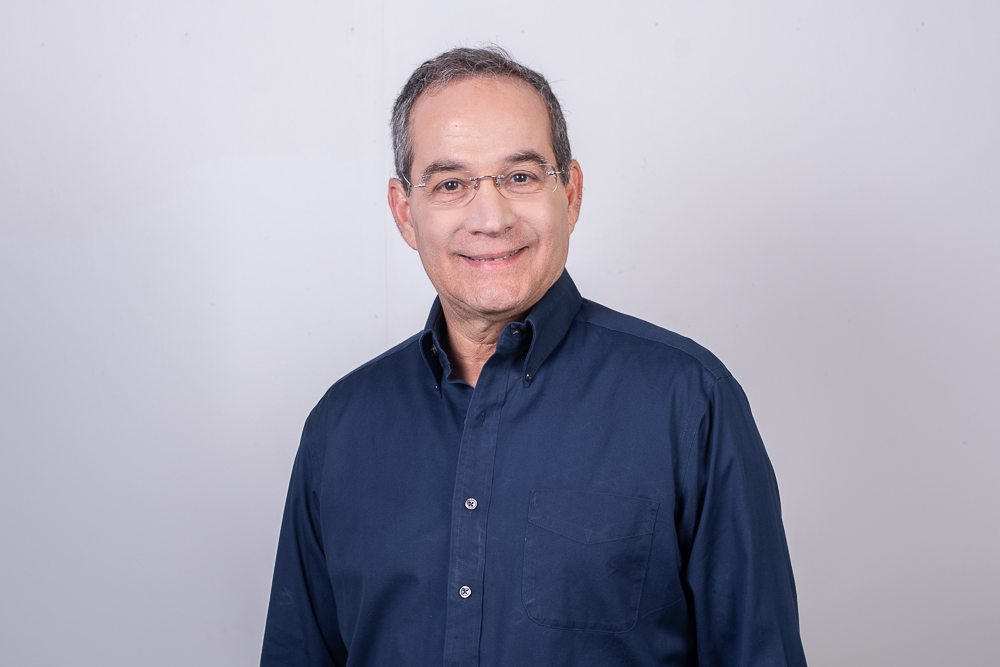
“Policies and projects often manage poverty, but rarely create the conditions for families to exit poverty with dignity and agency. That is why, institutionally and personally, I insist on elimination rather than incremental reduction or alleviation as the goal.”
-Dr. Martín Burt
In the landscape of global development, where billions of dollars flow through institutions claiming to fight poverty, one man dared to ask a fundamentally disruptive question: Who actually owns poverty? For Dr. Martín Burt, this question was not academic rhetoric but the foundation of a lifetime dedicated to dismantling one of humanity’s most persistent challenges.
His journey began in the mid-1980s with a simple yet powerful conviction: poverty is not a destiny but a solvable systems problem. Together with a group of businessmen and professionals, Martín founded Fundación Paraguaya as Paraguay’s first development organization. The initial mission focused on expanding economic opportunity through entrepreneurship and inclusive market participation, but direct work with families would soon reveal a truth that traditional development refused to acknowledge.
“Policies and projects often manage poverty, but rarely create the conditions for families to exit poverty with dignity and agency,” Martín reflects. This realization became the catalyst for a radical departure from conventional approaches. While the development industry spoke comfortably about poverty reduction or alleviation, Martín insisted on something far more ambitious: elimination.

This distinction is not semantic. It represents a fundamental shift in moral commitment, design philosophy, and measurement systems. Reduction accepts poverty as permanent, something to be managed incrementally. Elimination demands solutions that enable families to cross the threshold permanently, with dignity intact and capabilities strengthened.
THE EDUCATION OF A SYSTEMS THINKER
Martín’s worldview was shaped across three distinct arenas, each contributing essential perspectives to his eventual methodology. Public service as Mayor of Asunción and Vice Minister of Commerce taught him about scale, constraints, and what he calls “the moral hazards of distance from citizens.” In government corridors, he witnessed how bureaucratic silos and procurement systems could either enable or suffocate innovation.
Social enterprise leadership taught him iteration, accountability, and the necessity of measurement that actually matters to the people whose lives institutions claim to improve. Academia provided research methods, rigor, and access to diverse theoretical frameworks. Yet across these varied experiences, one premise crystallized: durable development requires that families become protagonists of their own progress, not objects of institutional plans.
“Scale is not only replication; it is institutionalization,” Martín explains, drawing on his public service experience. This insight would later prove crucial in designing the Poverty Stoplight to be adoptable by governments, NGOs, and businesses across radically different contexts, while keeping families at the center of the model.
THE MULTIDIMENSIONAL REVELATION
Working directly with families made visible what income metrics systematically conceal. A household could cross an income threshold and still lack safety, health access, education pathways, civic voice, or psychological well-being. This revelation was not abstract theory but lived reality witnessed in countless family conversations.
“The shift matters because sustainability is not only about short-term consumption; it is about capabilities, resilience, and the institutional and relational conditions that prevent backsliding,” Martín emphasizes. When poverty is treated as merely an income gap, interventions overfit to money flows. When poverty is treated as multidimensional, solutions become more precise and durable.
This understanding led to a profound critique of traditional measurement systems. Martín observed that conventional poverty reduction systems do three things poorly: they define poverty externally, they extract data from families rather than returning value to them, and they produce reports that help institutions more than households.
At Fundación Paraguaya, the team wanted desperately to help their clients escape poverty. They were providing access to low-interest credit, yet they weren’t seeing the progress they assumed would follow. The evaluation revealed the multidimensional nature of poverty, but it also exposed something even more fundamental: the problem of ownership.
CREATING A TOOL MADE FOR THE PEOPLE, BY THE PEOPLE
The Poverty Stoplight emerged from this crucible of frustration and revelation. Martín wanted a tool where families participate in defining indicators, self-assess directly, and then use the results to plan change. The innovation was both a measurement system and a coaching methodology that turns diagnosis into action at the household level.
Most importantly, because it is a self-assessment, the Stoplight incorporates subjective indicators such as motivation, self-esteem, and control of emotions that in many cases are as important as objective indicators. Traditional extractive questionnaires and interviews cannot capture these emotional dimensions.
“Self-awareness converts poverty from an abstract label into a concrete, navigable map of constraints and opportunities,” Martín explains. Families see a visual dashboard with red, yellow, and green indicators, interpret it themselves, and decide which areas to address first. That process matters psychologically and practically. It increases self-efficacy and shifts development from compliance with external programs to goal-setting grounded in a family’s own aspirations and priorities.
The approach embodies what the Skoll Foundation describes as the essential development sequence: awareness, understanding, and action. By making poverty visible in its multidimensional reality, families gain the understanding necessary to take meaningful action.
THE DIGNITY DIMENSIONS: WHAT INSTITUTIONS MISS
Through implementation across more than 59 countries, a pattern emerged consistently. The most overlooked dimensions of poverty are the subjective ones: dignity, self-perception, motivation, hope, and a sense of agency. Policymakers and institutions tend to prioritize what is easiest to measure, such as income, housing materials, or access to services, while undervaluing how people experience their own lives and possibilities.
“Yet our work consistently shows that these subjective dimensions are often decisive,” Martín notes. “When people believe they have choices, feel respected, and can envision a better future, they are far more likely to take sustained action.”
The Poverty Stoplight deliberately includes indicators related to self-esteem, social participation, and aspirations because poverty is not only a lack of resources but also a condition that can erode confidence and voice. Making these dimensions visible does not weaken rigor; it strengthens it, because it aligns measurement with the real drivers of long-term change that families themselves identify as essential to escaping poverty.
ADAPTATION WITHOUT COMPROMISE
Implementing the Poverty Stoplight across 59 countries required navigating vast cultural, social, and economic differences while preserving core values of dignity, agency, and family-centered decision-making. The solution lies in the participatory design process itself.
Adaptation begins with the indicators, which must be locally relatable, relevant, and aspirational while remaining measurable. Future users are involved from the outset through focus groups, interviews, and participatory research that help define what poverty and non-poverty mean in their specific context.
The implementing organization leads this process, drawing on local knowledge to review existing indicators, conduct fieldwork, and develop a complete indicator set with definitions, calibrated levels, life-map labels, and culturally appropriate images. The Stoplight team provides close technical accompaniment to ensure rigor and consistency. Typically, this process takes three to six months and involves families experiencing poverty, operational staff, local poverty experts, and researchers.
This approach ensures the tool remains locally meaningful while the methodology remains universal. Families everywhere become protagonists. Measurement everywhere returns value to households. Progress everywhere is defined by those experiencing it.
THE INTEGRATED MODEL: EDUCATION, ENTERPRISE, AND EMPOWERMENT
Fundación Paraguaya’s impact stems from recognizing that poverty is multidimensional and interactive. Credit without skills can be fragile. Education without livelihoods can be disillusioning. Entrepreneurship without supportive ecosystems can stall. The organization’s model developed precisely to link financial inclusion and human development, including self-sustaining educational innovations.
The Self-Sustaining Agricultural School model exemplifies this integration powerfully. When Fundación Paraguaya was entrusted with a bankrupt agricultural school in rural Paraguay, they transformed it into a financially self-sufficient boarding school where young people from low-income communities learn through direct participation in real, revenue-generating enterprises.
Students combine academic study with hands-on experience in agriculture, livestock, and entrepreneurship, running on-campus businesses that cover the school’s operating costs. This model ensures education is affordable, practical, and relevant, while equipping students with marketable skills, financial literacy, and entrepreneurial confidence.
“By learning how to produce, manage, and sell in real conditions, students graduate not only with formal education but with the capability to create livelihoods, strengthen rural economies, and break intergenerational cycles of poverty,” Martín explains.
This is entrepreneurship taught not just as a business discipline but as a life skill for resilience and self-reliance. By framing it as problem-solving under constraint rather than only venture creation, entrepreneurship becomes learning to set goals, mobilize networks, manage risk, and iterate. Learning laboratories matter because students and families gain competence through real decisions with real consequences, supported by mentoring.
FROM DEPENDENCY TO INDEPENDENCE: THE VISIBILITY OF PROGRESS
A fundamental question haunts development work: how do you ensure initiatives foster independence rather than long-term dependency? For Martín, the answer lies in understanding and visibility.
Time and again, the Poverty Stoplight demonstrates that when families can clearly understand their situation, recognize what they are already doing well, and identify where change is needed, their motivation increases significantly. Progress becomes visible through simple but powerful visual logic: every movement from red to yellow, or from yellow to green, is concrete evidence of advancement.
These small, incremental changes are deeply motivating because they transform poverty reduction from an abstract objective into a series of achievable steps. This visibility matters because it reinforces agency rather than dependency. Families are not waiting for solutions to arrive from outside; they are actively setting priorities, tracking their own progress, and celebrating gains along the way.
The process builds confidence and reinforces the belief that change is possible, which is essential for sustained action. By combining self-diagnosis with ongoing reflection and accompaniment, poverty eradication becomes a capability-building process rather than a service delivered indefinitely, allowing families to move forward with autonomy and resilience rather than reliance on external support.
REDEFINING EXPERTISE: WHO KNOWS POVERTY BEST?
International development has traditionally relied on top-down solutions designed by credentialed experts in distant capitals. Martín’s challenge to this paradigm is direct and unapologetic. The shift toward family-centered approaches requires changing what counts as expertise.
“Families living in poverty are experts in the constraints they face and the trade-offs they navigate,” he insists. The second requirement is ensuring data flows back to households as a usable tool, not only up to institutions as a report. Global development becomes family-centered when households are decision-makers who co-produce the diagnosis and co-author the plan.
This is the heart of what Martín explores in his book “Who Owns Poverty?” The concept of ownership is not about blaming the poor for poverty. It is about returning authorship. When institutions own poverty, they define it, measure it, and prescribe solutions while families become passive recipients. When families own poverty, they define what it means not to be poor, interpret their own data, and set priorities aligned with their values and aspirations.
“That shift is fundamentally about dignity, because dignity requires agency,” Martín states with clarity that cuts through decades of development orthodoxy.
THE ROLE OF GOVERNMENT AND COMMUNITY
Martín’s public service experience shaped his understanding of appropriate roles for different actors in poverty elimination. Governments should set enabling conditions: legal identity, basic services, safe infrastructure, and policy coherence across agencies. But they should also proactively try to help families turn their reds and yellows into greens.
Communities and social enterprises often lead best on experimentation, trust-building, and personalized accompaniment. The Stoplight approach intentionally avoids top-down prescription. Families define priorities while mentors and institutions align resources to those priorities rather than imposing them.
This division of labor respects what each actor does well while ensuring families remain at the center of decision-making. It is a practical manifestation of subsidiarity, where solutions happen at the most local level possible, with higher-level institutions providing support rather than control.
LESSONS FROM LATIN AMERICA’S DEVELOPMENT JOURNEY
Global leaders and institutions should pay closer attention to specific lessons from Latin America’s development experience. One lesson is that inequality and exclusion are not peripheral; they are structural. Another is that macroeconomic progress can coexist with persistent household vulnerability if institutions fail to deliver safety, quality education, and pathways to formal opportunity.
Latin America has also produced a deep tradition of social innovation that blends market mechanisms with strong community logic and dignity-based practice. This synthesis offers alternatives to both pure market approaches and state-centered models, demonstrating how entrepreneurship and solidarity can reinforce rather than contradict each other.
TECHNOLOGY, DATA, AND THE ETHICS OF AI
As digital tools, data, and AI increasingly influence development models, Martín sees transformative potential if these technologies are used ethically and in service of people rather than institutions. Digital tools make it possible for families to capture the multidimensional nature of poverty, move beyond income-based proxies, and generate insights that are more precise and actionable at the household level.
When designed well, technology can help families disaggregate their problems and issues into small achievable and actionable indicators. Technology helps families understand their situation more clearly, set priorities, and track progress over time, turning complex data into a practical roadmap for change rather than an abstract assessment.
AI and advanced analytics also create opportunities to improve targeting, coordination, and learning across systems. By identifying patterns across large datasets, technology can help institutions better understand which interventions work, for whom, and under what conditions, while allowing resources to be aligned more efficiently with families’ self-identified needs.
“Ethical use requires that data remains a tool for empowerment rather than control, with families retaining visibility and ownership of their information,” Martín cautions. When combined with human accompaniment and local knowledge, technology and AI can significantly enhance the effectiveness, scalability, and sustainability of poverty eradication efforts.
A FUTURE MEASURED AT THE HOUSEHOLD LEVEL
Martín envisions a future of global development that is more precise, more humane, and more accountable. Macroeconomic indicators are necessary but insufficient for targeting the lived constraints that keep families trapped. Household-level approaches produce actionable specificity: which barriers are most binding, which can be solved locally, and which require institutional reform.
When you aggregate household realities upward, you also get better policy, because you see the why, not just the how many. This inversion of traditional development logic places lived experience at the foundation of policy design rather than treating it as anecdotal evidence to be filtered through expert interpretation.
THE EVOLVING ROLE OF SOCIAL ENTREPRENEURS
Looking ahead, Martín sees social entrepreneurs increasingly becoming translators between sectors, aligning business incentives with public goods and ensuring community-defined realities shape institutional responses. They will also need to become more literate in data governance, ethical technology, and systems change, because the frontier is no longer only pilot projects but scalable legitimacy and trust.
This evolution requires social entrepreneurs to operate across multiple registers simultaneously: understanding household realities, navigating institutional constraints, leveraging market mechanisms, and advocating for policy reform. The complexity demands both deep expertise and broad systems thinking.
LEARNING FROM RESILIENCE
Throughout his career as economist, innovator, public servant, and author, Martín has learned the most about human resilience from working alongside families. Human resilience is not abstract; it is the capacity to plan, hope, and persist under constraint.
“The Stoplight’s most important contribution may be that it makes resilience visible as a set of choices, supports, and capabilities that can be strengthened,” he reflects. This practical understanding of resilience differs sharply from romanticized narratives that celebrate suffering. Instead, it recognizes resilience as something that can be systematically supported through better tools, clearer information, and aligned resources.
ESSENTIAL LEADERSHIP QUALITIES
When working with vulnerable communities while preserving dignity, agency, and hope, certain leadership qualities become essential. Humility matters because the community holds knowledge you do not. Patience matters because capability-building is slower than service delivery.
The combination is what makes family-centered development credible. Families co-define the framework, interpret their own dashboard, and decide priorities, while institutions align support rather than impose it. This requires leaders who can subordinate their expertise to community wisdom, who can measure success by family progress rather than institutional metrics, and who can maintain commitment through the slow work of systemic change.
THE AUDACIOUS LEGACY
When asked about the legacy he hopes the Poverty Stoplight and Fundación Paraguaya will leave for future generations, Martín’s response reveals the audacity that has driven his life’s work.
“Well, first and foremost we plan to eliminate poverty in our lifetime!” he declares. Beyond this ambitious goal, he hopes for a reframing: that poverty is solvable when families are treated as protagonists and when measurement becomes a tool for action, not classification.
“I hope the legacy is methodological and moral: a practical way to eliminate poverty at household level, and a cultural shift away from paternalism toward shared responsibility grounded in dignity.”
This dual legacy addresses both the how and the why of development. The methodology provides replicable tools that work across contexts. The moral dimension challenges the fundamental assumptions that have allowed poverty to persist despite abundant resources and knowledge.
A MESSAGE TO EMERGING LEADERS
For emerging global leaders who aspire to create meaningful impact but feel constrained by traditional systems, Martín offers guidance forged through decades of innovation against resistance.
“Start where legitimacy begins: with the people who live the problem. If you want to change systems, build a model that returns value to families first, and only then to institutions.”
He urges clarity of purpose, noting that “reduce poverty” and “eliminate poverty” lead to different designs, different metrics, and different moral commitments. The language matters because it shapes ambition, strategy, and accountability.
And perhaps most importantly: “Do not wait for permission from tradition. The most durable innovations often begin as a refusal to accept that the status quo is the best we can do.”
This is the essence of Dr. Martín Burt’s contribution to global development. He refused to accept that poverty was inevitable, that families were objects rather than protagonists, that measurement served institutions rather than households. From that refusal emerged a methodology now implemented across 59 countries, a foundation that has transformed countless lives, and a vision of development grounded in dignity rather than charity.
The Poverty Stoplight illuminates not just the multidimensional nature of poverty but the path forward for a development industry willing to cede control to the very families it claims to serve. In doing so, it offers something rare in global development: a genuine methodology for elimination rather than management, for empowerment rather than dependency, for dignity rather than paternalism.
As the world grapples with persistent poverty amid unprecedented wealth, Martín’s work demonstrates that solutions exist when we start with the right question. Not how can we help the poor, but how can we enable families to help themselves? The answer transforms everything.