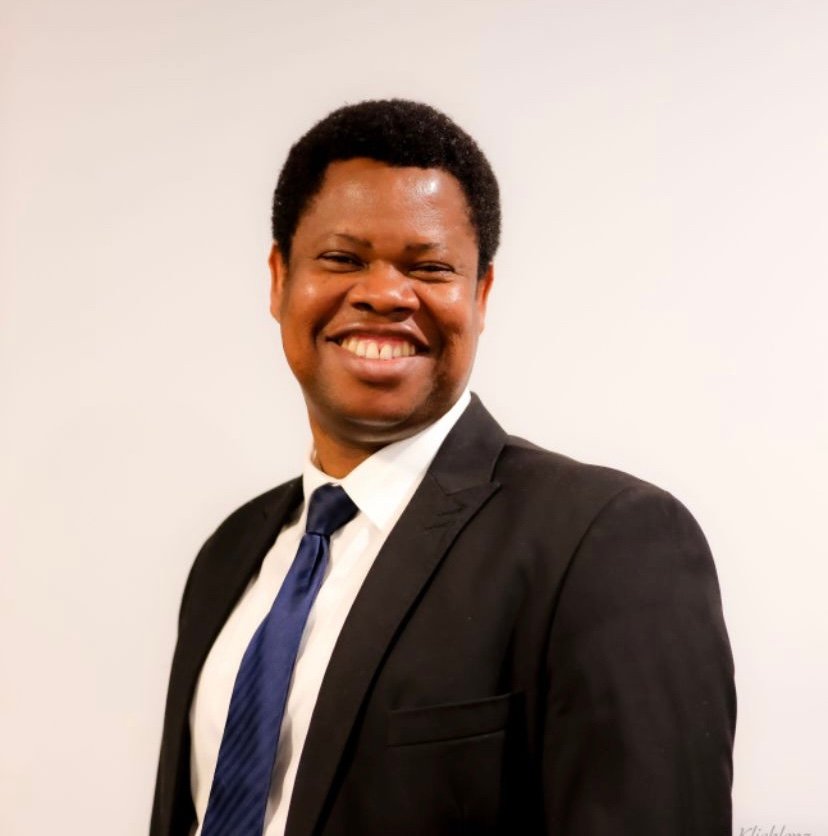
“Many businesses had ambitious visions but lacked the structured execution and leadership cohesion needed to realize them.”
– Matthew Ogieva
A FOUNDATION BUILT ON MOVEMENT
Every great strategic mind has an origin story rooted in something concrete. For Matthew Ogieva, that foundation was the shipping and logistics sector, an environment where efficiency is not an aspiration but a survival requirement, where decisions must cross borders in real time, and where the cost of misalignment between operations and leadership is immediately and visibly felt.
Those early years gave Ogieva something that no MBA curriculum can manufacture: an instinctive understanding of how complex systems either hold together or fall apart under pressure. As he moved into leadership roles, responsible not just for execution but for guiding teams and driving performance, a pattern began to emerge that would eventually shape his entire consulting philosophy.
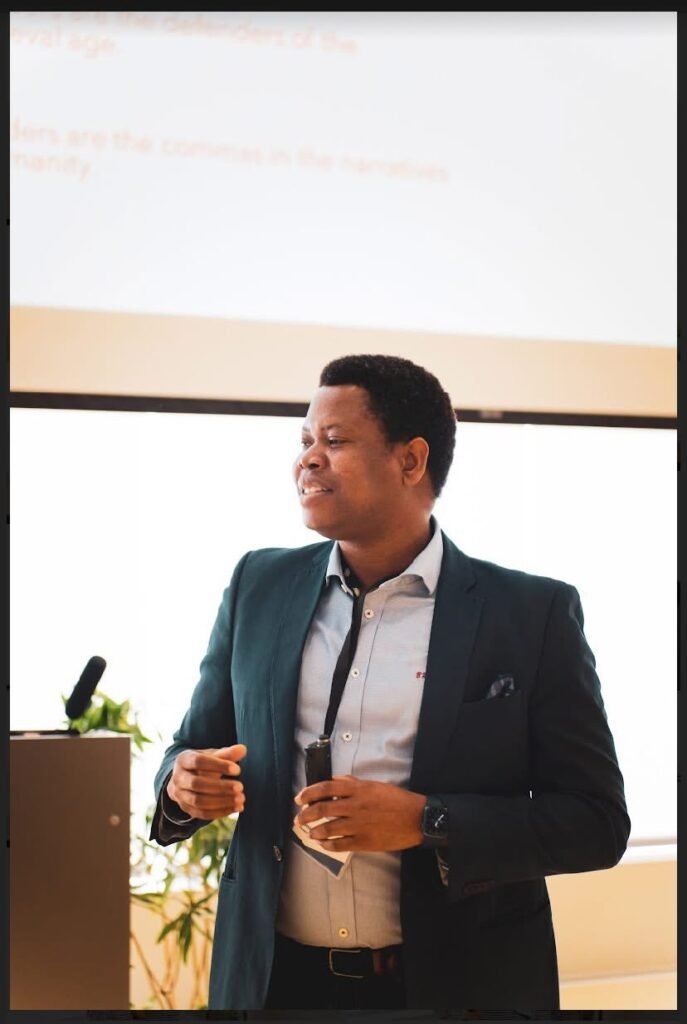
“From Logistics to Leadership: The Strategic Mind Reimagining How Businesses Grow”
“Many businesses had ambitious visions,” he observed, “but lacked the structured execution and leadership cohesion needed to realize them.” That gap, stubborn and recurring across industries and geographies, became the founding premise of Business Reimagined Incorporated. The name is not metaphorical. It is a literal commitment: to help organizations rethink, at a structural level, how they grow, lead, and scale in a world that rarely cooperates with static plans.
RESILIENCE AS STRATEGY, NOT SENTIMENT
In conversations about organizational resilience, the word is often used loosely, as a general endorsement of toughness or adaptability. Ogieva uses it precisely. For him, resilience is built on three specific and interdependent foundations: operational agility, leadership adaptability, and scenario-based planning.
Operational agility means that systems, processes, and supply chains can adjust quickly to disruption without compromising performance. Leadership adaptability means that the people at the top can make informed decisions under uncertainty while maintaining clarity and confidence across their teams. And scenario-based planning moves organizations away from the dangerous comfort of single-path thinking, preparing proactive responses to multiple futures rather than scrambling to react to one.
Together these three create something more valuable than any individual capability: a dynamic organizational system that evolves with market conditions rather than resisting them. “Resilience is about maintaining continuity while positioning the organization to capitalize on change,” Ogieva explains. That framing matters. Resilience, in his practice, is not defensive. It is a competitive posture.
THE LEADERSHIP GAP THAT SINKS TRANSFORMATIONS
Ogieva is direct about where transformation most commonly fails. It is not in strategy design. It is not in the quality of the data. It fails in the space between strategy and execution, and specifically in the leadership capable of bridging that space.
The principles he emphasizes with clients, clarity of vision, emotional intelligence, accountability, and adaptability, are not soft leadership ideals. They are the specific capabilities that determine whether a transformation takes hold or quietly dissolves into a series of well-intentioned initiatives that change nothing. Emotional intelligence allows leaders to manage conflict, build trust, and understand team dynamics during periods of disruption. Accountability ensures that strategic decisions translate into operational reality. Adaptability allows leaders to pivot without losing the thread of momentum.
“Transformation fails when leadership is detached from execution,” he says plainly, “but it succeeds when leaders actively engage at both the strategic and operational levels.” In practice, this means Ogieva works not just on organizational systems but on the leaders who must animate those systems. The two are inseparable.
DATA THAT DRIVES ACTION, NOT JUST REPORTING
In an era where organizations are drowning in data and starving for insight, Ogieva’s approach to analytics is refreshingly practical. Data, in his framework, is only valuable when it drives action. The goal is not better dashboards. It is better decisions made more quickly and with greater confidence.
His methodology combines performance dashboards providing real-time visibility into key metrics, predictive analytics anticipating trends before they fully materialize, and process optimization grounded in what the data actually shows rather than what leadership assumes. But he pairs this rigorously empirical approach with something equally important: strategic intuition. Data provides clarity; leadership judgment ensures that decisions align with broader organizational goals. Neither alone is sufficient.
This balance, between the precision of analytics and the wisdom of experienced judgment, is what distinguishes truly high-performing organizations from those that are merely well-instrumented.
GLOBAL EXPANSION: WHERE AMBITION MEETS COMPLEXITY
International expansion is where the gap between organizational ambition and operational reality becomes most painfully visible. Ogieva has guided businesses through exactly that terrain. In one notable engagement, a mid-sized firm preparing for international growth faced overlapping challenges: operational inefficiencies, unclear leadership roles, and an unstructured market entry strategy. Working across all three dimensions simultaneously, Ogieva’s team redesigned the operating model, clarified leadership accountability, and implemented a phased market entry plan supported by performance tracking across regions.
Within twelve months, the company had accelerated its expansion timeline, achieved stronger market penetration, and improved profitability. The result demonstrated something Ogieva returns to consistently: that aligning strategy, operations, and leadership in concert, rather than sequencing them, is what creates transformation that is both fast and durable.
The challenges of international expansion in 2025 are considerable. Regulatory environments are tightening and diverging across regions. Cultural differences create misalignment in communication and customer expectations when not properly understood. Supply chain volatility, geopolitical tension, and currency fluctuation add further layers of uncertainty. His response to all of it is the same: invest in local insight while maintaining global consistency, and understand not just the target market but the broader political, economic, and social ecosystem surrounding it.
BUILDING WHAT LASTS
Looking ahead, Ogieva’s vision for Business Reimagined Incorporated is expansive but grounded. He wants to grow its global presence as a trusted advisory partner for organizations navigating transformation, developing innovative frameworks, building leadership capacity, and supporting sustainable growth across industries and geographies.
The ambition, characteristically, extends beyond commercial success. “The vision is not just to help companies succeed,” he says, “but to position them as leaders within their industries: resilient, adaptable, and prepared for the future.” In a world where disruption has become the baseline condition rather than the exception, that combination of strategic discipline and human-centered leadership is precisely what separates organizations that endure from those that simply react.
Matthew Ogieva built his career understanding how things move across borders. Now he is in the business of ensuring that the organizations he advises move with equal purpose.