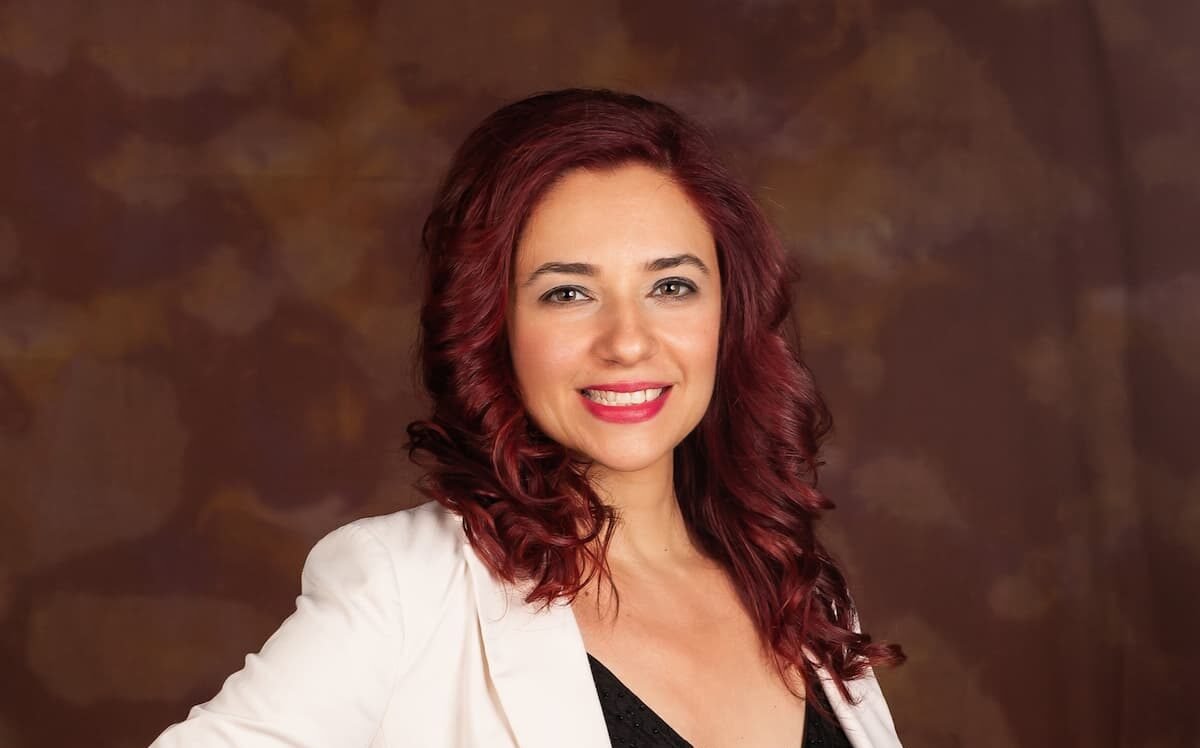
Education is the most powerful tool to transform lives. Talent is universal, but opportunity is not. My mission is to make quality education accessible to every child, regardless of their background
-Dr. Rania Lampou
Dr. Rania Lampou’s journey into education began not with ambition for recognition, but with a conviction born from lived experience: education is the most powerful tool to transform lives.
Growing up in Greece and facing challenges from an early age, she learned firsthand that knowledge opens doors, creates opportunities, and brings hope even in difficult circumstances. This belief has remained steady throughout her career, even as it has been tested and refined through decades of teaching, research, and humanitarian work.
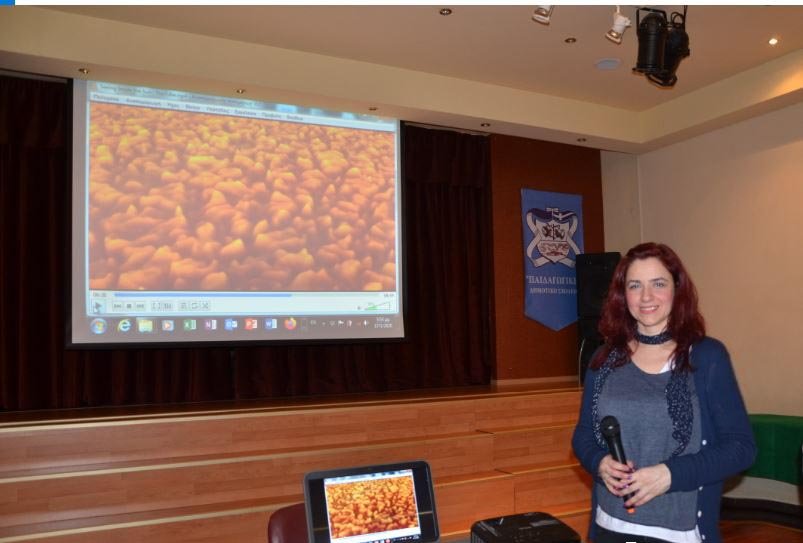
She began as a secondary education teacher, working within traditional systems. But a defining moment redirected her entire professional trajectory. When she participated in CERN’s pioneering “Playing with Protons” initiative, organized by the CMS experiment, something fundamental shifted in her understanding of how learning happens.
“Through this unique STEAM program, my students explored particle physics through hands-on projects, and I witnessed how experiential learning could ignite children’s love for science,” she recalls. In that moment, she understood that effective teaching requires more than subject expertise. It requires activating curiosity, wonder, and the joy of discovery.
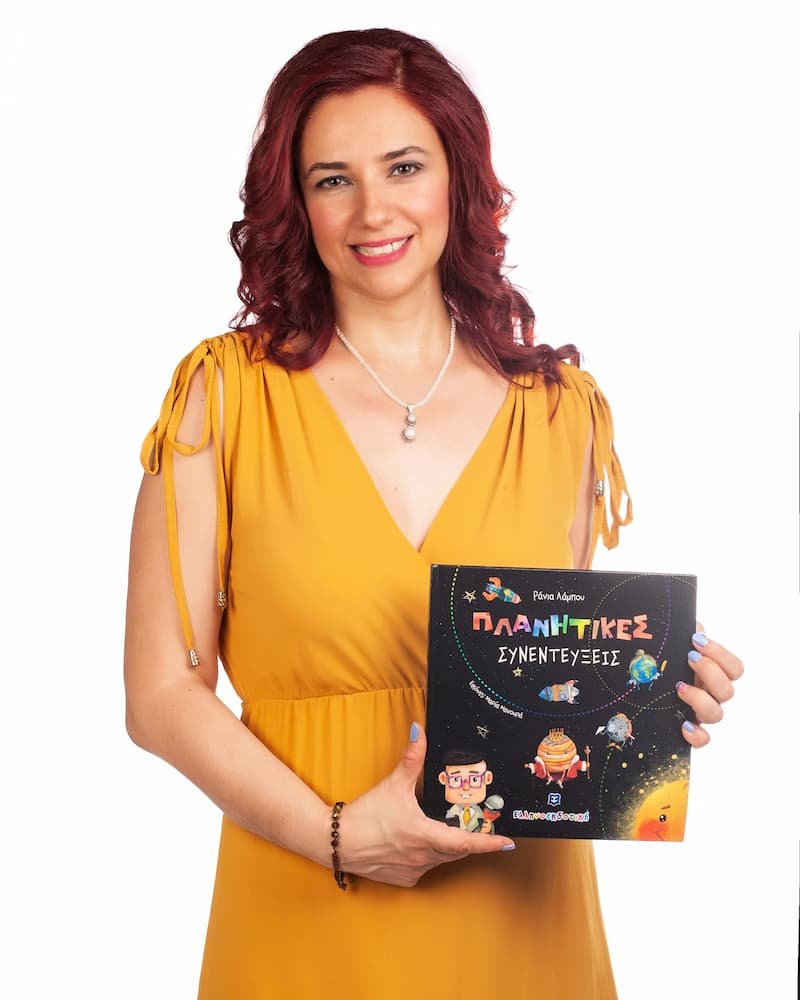
EVOLVING A PHILOSOPHY
From that experience, Dr. Rania committed to understanding how the brain actually learns. She began integrating STEM not merely as a subject, but as a way of thinking. She pioneered interdisciplinary approaches, combining STEM with arts, astronomy, and even foreign language teaching.
Through her work at the Greek Ministry of Education in the Directorate of Educational Technology and Innovation, she designed transformative projects integrating educational technology into classrooms. But her most distinctive contribution emerged from studying cognitive neuroscience and neuroscience-driven learning approaches.
She became fascinated by fundamental questions: How do emotions influence learning? What role does empathy play in engagement? How can teaching leverage how individual brains actually work?
“I studied how curiosity activates learning, how emotional safety enhances creativity, and how personalized, brain-based teaching methods can unlock every learner’s potential,” she explains. By blending neuroscience with STEM education, she discovered how to create learning experiences that are academically effective, emotionally meaningful, and inclusive.
Today, after delivering over 4,000 lectures and training sessions globally, her mission remains clear: transform education into a human-centered, innovative experience where knowledge and compassion converge.
WHEN RECOGNITION BECOMES RESPONSIBILITY
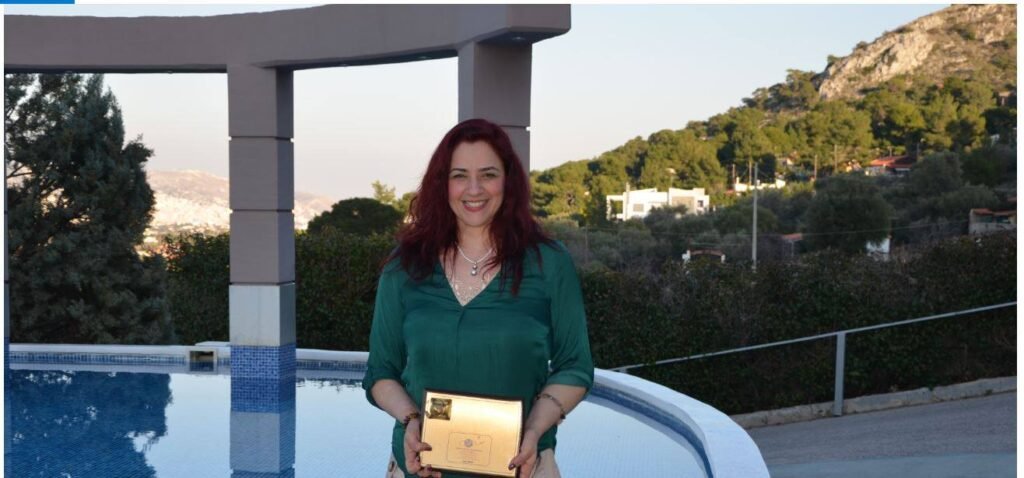
Dr. Rania is a Global Teacher Award winner (2020, 2021, 2022) and Varkey Foundation Global Teacher Prize finalist. She has received over 200 national and international awards. Yet she reframes recognition entirely.
“Awards are not trophies to me; they are reminders of responsibility,” she states. Rather than viewing awards as validation, she sees them as invitations to wider responsibility and platforms to amplify her mission.
Each recognition motivates her to work harder, reach further, and empower more communities. Regarding the 200+ international awards, she explains: “I see each recognition not as a personal achievement alone, but as a reflection of the lives touched through education, innovation, and service.”
What matters most to her are not the accolades themselves, but the stories behind them. “The greatest reward is not the award itself, but the stories: the child in a refugee camp who discovers hope through learning, the girl who dares to dream of becoming a scientist, the community in Malawi that gains access to clean water, or the teacher who transforms their classroom.”
THE NEUROSCIENCE OF EFFECTIVE LEARNING
Dr. Rania’s approach integrates neuroscience principles into classroom practice. One of the most important principles is the connection between emotion and learning. “Students learn best when they feel safe, valued, and emotionally connected,” she emphasizes. She creates inclusive, supportive classrooms where empathy and positive relationships are central.
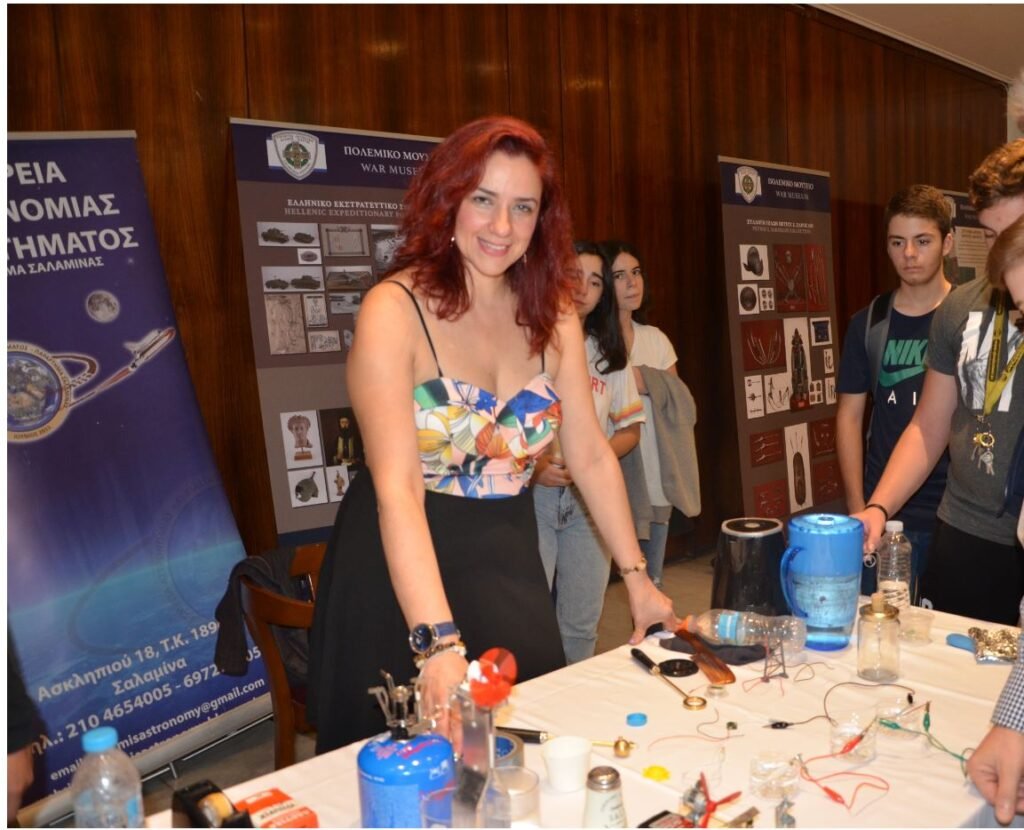
She emphasizes curiosity-driven and inquiry-based learning, recognizing that brains respond strongly to novelty and exploration. Through STEM and STEAM activities, project-based learning, and hands-on experiments, students ask questions, investigate real-world problems, and actively discover knowledge.
Multisensory learning represents another key principle. She integrates visual, auditory, and kinesthetic strategies into lessons. In astronomy workshops, for instance, students observe through telescopes, create models, use digital simulations, and discuss concepts collaboratively, engaging multiple neural pathways.
She also focuses on attention and cognitive load, breaking complex concepts into manageable parts and using scaffolding. She personalizes instruction, differentiating to match learning styles and interests, and incorporates metacognition, teaching students to understand how they think and learn.
MAKING COMPLEXITY ACCESSIBLE
For young primary students, Dr. Rania transforms complexity into adventure. She simplifies ideas by connecting them to everyday experiences and using age-appropriate language and storytelling. When teaching astronomy, she might explain the solar system as a “cosmic family,” making abstract concepts concrete and memorable.
She emphasizes hands-on learning, transforming students into young scientists and explorers. Through experiments, model-building, robotics, and coding, they learn by doing rather than passively receiving information.
She integrates arts into STEM, creating STEAM experiences where creativity helps children understand and express scientific ideas meaningfully. Technology amplifies her approach—educational apps, simulations, augmented reality, and interactive platforms bring distant phenomena closer to students in visual, exciting ways.
Gamification proves especially effective. She uses science games, competitions, and missions to motivate students. “Most importantly, I create an emotionally safe environment where students feel free to ask questions, make mistakes, and experiment.”
GLOBAL TRENDS AND EDUCATOR ROLES
As an expert columnist at K12 Digest Magazine, Dr. Rania observes transformative trends. Artificial Intelligence and personalized learning are reshaping education, yet she emphasizes that “AI should not replace teachers, it should empower them. The future lies in hybrid models where technology handles personalization while teachers provide empathy, mentorship, and emotional intelligence.”
Education is shifting from content-based to skills-based learning. Schools increasingly focus on critical thinking, creativity, collaboration, communication, and problem-solving. Social-emotional learning gains prominence as educators recognize that emotional safety and belonging directly connect to academic success.
Interdisciplinary and experiential learning grow increasingly important. Traditional subject silos fade as schools adopt STEAM and project-based approaches. Digital equity and inclusive education prove critical, ensuring equal access for refugees and underserved communities.
Sustainability and global citizenship become central themes. “Education is no longer only about academic achievement, it is about preparing compassionate, responsible global citizens who can solve humanity’s greatest challenges.”
THE EDUCATOR’S ROLE IN CLIMATE ACTION
As a member of UNaccc (Unity of Nations Action for Climate Change Council), Dr. Rania champions educators as essential climate action agents. She advocates integrating climate education across all subjects, not just science. Through interdisciplinary approaches, students see climate’s connections to economics, health, ethics, language, and arts.
She promotes project-based learning where students design water filtration systems, build solar-powered models, create recycling initiatives, and develop sustainability campaigns. Schools become living laboratories through gardens, energy conservation, and eco-friendly practices.
She emphasizes teaching climate justice and global citizenship, helping students understand how climate change disproportionately affects vulnerable communities. Through her humanitarian projects such as “Water, Life Giver and Threat” and “Food for Thought,” she demonstrates how education directly addresses environmental issues.
“Instead of teaching fear alone, we must teach solutions, resilience, and innovation. We must empower students to believe that their ideas, actions, and voices matter.”
ADDRESSING GLOBAL STEM CHALLENGES
Dr. Rania identifies critical barriers in global STEM education. Inequality in access represents the greatest challenge. Millions of students in rural areas, developing countries, and underserved communities lack technology, internet connectivity, and trained teachers.
The gender gap persists. Girls remain underrepresented due to stereotypes and limited encouragement. As Country Ambassador for Mission ShakthiSAT, she actively challenges stereotypes and creates supportive environments where girls confidently explore STEM.
Outdated teaching methods remain common. STEM is often taught through memorization rather than inquiry and hands-on exploration. Teachers lack sufficient professional development in emerging technologies such as AI, robotics, and coding. Curricula cannot keep pace with rapid technological advancement.
Finally, STEM must address real-world challenges. “Students should apply concepts to solve authentic problems, building both technical skills and social responsibility.”
FOSTERING GLOBAL CITIZENS
Dr. Rania fosters creativity, critical thinking, and global citizenship by placing students at the center of exploration. Through STEAM activities and project-based learning, students create rather than consume knowledge. Digital tools expand their ability to express ideas dynamically.
Critical thinking develops through inquiry-based learning where students ask meaningful questions, analyze evidence, and solve authentic problems. She integrates digital literacy, guiding students to assess source credibility and become responsible digital citizens.
Global citizenship develops through international collaborations and virtual exchanges. Connections to UN Sustainable Development Goals encourage students to think about global challenges such as climate change, clean water access, and gender equality.
A MESSAGE FOR ASPIRING EDUCATORS
Dr. Rania’s advice to educators seeking global impact emphasizes beginning with purpose. “A global impact in education does not start with titles or recognition, it starts with a deep belief that every child can learn, grow, and succeed when given the right support.”
She advocates lifelong learning and embracing innovation. “Do not be afraid to move beyond traditional methods. Use hands-on learning, inquiry-based projects, STEAM approaches, storytelling, and real-world problem-solving.”
Most importantly, she emphasizes teaching with empathy. “A child who feels safe, valued, and supported will always learn better. Build classrooms where kindness, encouragement, and inclusion are fundamental.”
She urges thinking globally and actively empowering underrepresented groups. “Never underestimate your influence. Teachers are mentors, role models, and change-makers. Your words can shape a child’s identity, and your encouragement can change the direction of a life.”
She summarizes her philosophy: “Teach with knowledge, lead with empathy, and inspire with vision. When these three come together, an educator does not just teach a subject—they help shape the future of humanity.”
THE LEGACY OF A GLOBAL EDUCATOR
Dr. Rania Lampou’s career demonstrates what becomes possible when an educator combines deep expertise with genuine empathy and integrates emerging neuroscience understanding with compassionate teaching wisdom. Through 4,000 lectures, humanitarian projects, advocacy for girls in STEM, and leadership in global forums, she continues proving that education, when taught with knowledge and empathy and inspired by vision, becomes a force for transformation.
The true measure of her impact lies not in accolades but in the student discovering hope through learning, the girl daring to become a scientist, the community gaining clean water access, the teacher transforming their classroom.
In an increasingly complex world facing urgent global challenges, educators like Dr. Rania Lampou represent hope for transformation. She proves that one passionate educator, armed with knowledge, compassion, and vision, can indeed spark a global movement.