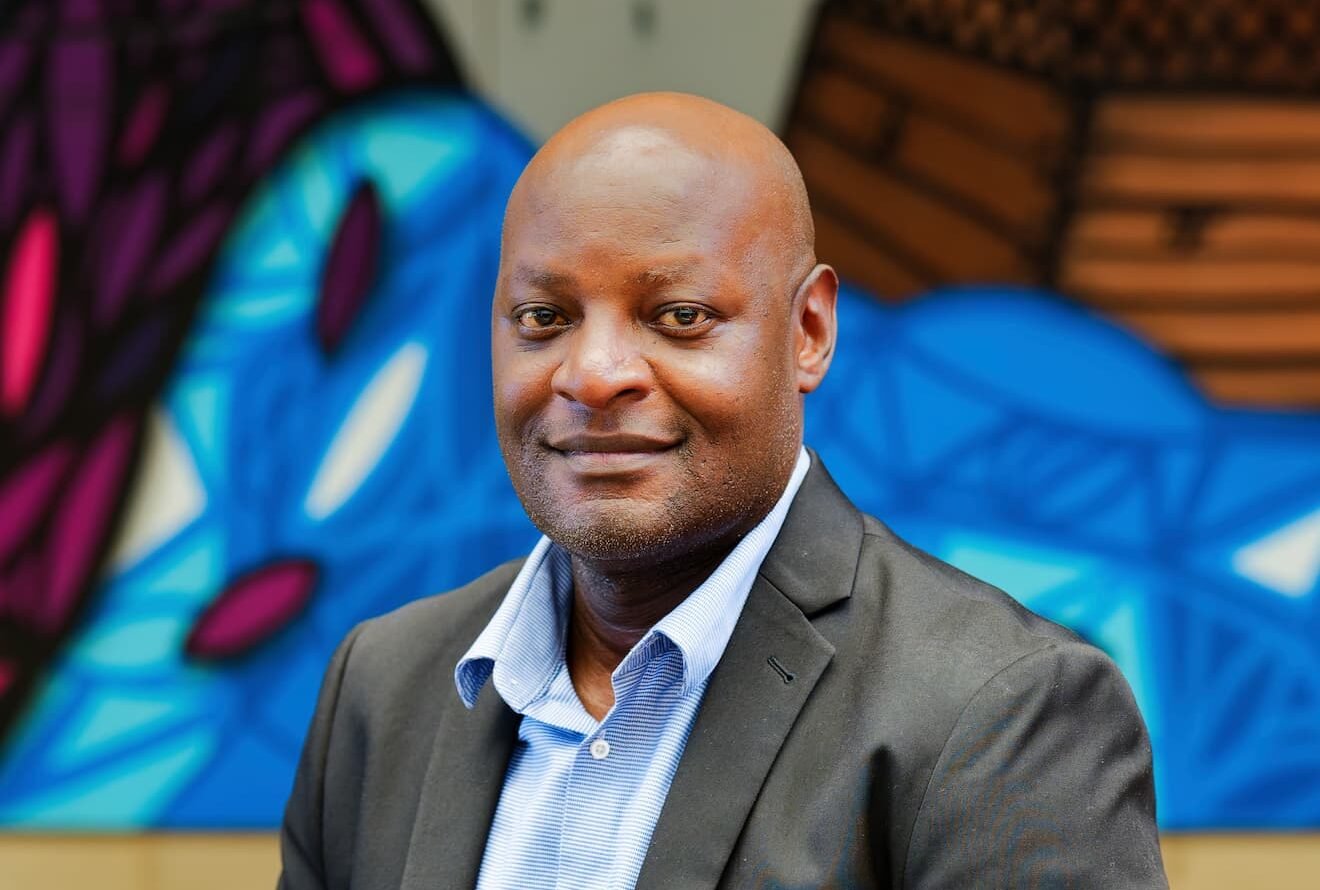
From the lecture halls of Curtin University to the boardrooms of Dubai, Hong Kong, and Zambia, Cranston Haankwenda has spent his career proving that the most powerful business strategy is also the most human one.
There is a particular kind of business leader who sees the world not as a collection of separate markets but as a single, interconnected system of opportunities waiting to be unlocked. Cranston Haankwenda, PhD, Founder and Lead Business Development Consultant at Consult Cranston Global, is precisely that kind of leader. Operating across the Asia-Pacific, the Gulf Cooperation Countries, and Central Southern Africa, he has spent his career engineering what he calls commercial corridors: structured, resilient partnerships between continents that generate growth no single market could produce alone.
His path into business development was shaped by an unlikely starting point. Working within Curtin University’s Centre for Aboriginal Studies in Australia, he was immersed daily in frameworks of cultural intelligence, inclusive pedagogy, and socio-economic equity. For most academics, these concepts would remain within the institution. For Cranston, they became the missing ingredients he had been looking for in traditional business development practice.
“True, sustainable growth is never a zero-sum game,” he reflects. “It requires building complex, cross-border ecosystems.” That conviction led him to found Consult Cranston Global and to develop what he calls the Golden Triangle strategy: a tri-continental framework linking Perth, Dubai, and Zambia into a unified commercial infrastructure capable of generating exponential value for all parties involved.
Scholar, Practitioner, Frontier Visionary
What distinguishes Cranston’s approach from conventional business development consultancy is the deliberate integration of academic rigour with hands-on commercial execution. He describes himself as a scholar-practitioner, and the title is earned. His academic research into tort law and corporate negligence, for instance, did not remain in the library. It shaped a foundational principle of how he approaches market expansion: you cannot design an aggressive growth strategy if it is not legally defensible and structurally sound.
His analysis of the global expansion of major conglomerates such as the Tata Group deepened this perspective further. Business, he came to understand, does not happen in a vacuum. It is shaped by the tectonic shifts of global politics and regional trade agreements. Every strategy his firm develops is stress-tested against the political and regulatory realities of the target jurisdiction before a single sales call is made.
“My approach to business development always balances micro-level sales execution with macro-level market intelligence.”
This combination of forensic strategic thinking and practical execution has earned Consult Cranston Global recognition across three continents, including Business Elite of the Year honours in Hong Kong and leadership accolades in Singapore and Dubai. The awards reflect something more significant than achievement: they reflect a methodology that actually works across the full complexity of global markets.
The Structural Challenges Holding SMEs Back
Much of Cranston’s work is focused on helping SME owners strengthen their strategic thinking and modern selling capabilities. And in that work, he consistently encounters the same pattern: brilliant entrepreneurs who have built successful domestic operations but struggle to scale because their business models lack what he calls structural scaffolding.
He describes this as founder-dependency, the condition in which a business’s success is so tied to its founder’s personal involvement that any attempt to expand, delegate, or cross borders causes the internal system to fracture. Compounding this is a reliance on outdated selling methods that treat customer acquisition as a series of isolated transactions rather than the relationship ecosystems that modern markets require.
The opportunity Cranston identifies for these businesses is significant. Most SMEs are sitting on valuable internal data and cultural intelligence that they have never thought to treat as scalable digital assets. They compete on volume and price when they could be leveraging what he terms curated scarcity: highly tailored value propositions that differentiate through depth rather than scale.
Institutional Anchoring: Partnerships Built to Last
When it comes to building long-term partnerships, Cranston’s philosophy challenges one of the most persistent assumptions in the business world: that relationships are sustained through goodwill and communication alone. His experience has taught him otherwise.
Passive agreements and traditional memorandums of understanding, he argues, rarely survive market shifts. What makes a partnership genuinely resilient is institutional anchoring, embedding your organisation so deeply into the functional workflow of your partner that the relationship becomes structural rather than optional.
Consult Cranston Global demonstrates this principle through its management of the digital infrastructure for bilateral organisations such as the Australia Zambia Business Council. By building and operating the platforms, trade pipelines, and communication systems that connect these international markets, the firm moves from being an external vendor to becoming the scaffolding that facilitates the partnership’s daily operations. It is a distinction that matters enormously when market conditions shift and transactional relationships dissolve.
“Long-term value is generated when you move from being an external vendor to becoming the structural scaffolding that facilitates the partnership’s daily operations.”
Cultural Intelligence as Commercial Currency
Differentiation in 2026, Cranston argues, requires something that most businesses have not yet figured out how to operationalise: genuine cultural intelligence. The global market is saturated with homogenised products and automated outbound sales sequences. Cutting through that noise requires demonstrating a deep, authentic understanding of a customer’s specific ecosystem, not just their purchasing preferences.
His joint venture project NsimaBeats illustrates this principle with clarity. Rather than building another large, generic audio library, the enterprise music licensing platform focuses specifically on premium, culturally protected African audio heritage, routing revenue directly back to the source communities whose creative work underpins the platform. The commercial model is inseparable from the cultural and community model. That integration is precisely what makes it distinctive.
“Companies create meaningful connections when they prove their business model integrates commercial profit with community development and cultural integrity,” Cranston explains. “Authenticity, backed by ironclad operational compliance, is the ultimate modern currency.”
This is not simply a marketing philosophy. It is a structural one. And it reflects the same principle that runs through every aspect of his work: that the most durable commercial relationships are built on genuine value creation for all parties, including the communities that make those markets possible.
De-Risking Market Entry: A Three-Dimensional Framework
For businesses considering cross-border expansion, Cranston offers a framework built around three critical operational dimensions that must be evaluated before any market entry begins. The first is regulatory and legal risk: whether intellectual property is protected and client strategies are insulated against regional liability frameworks. The second is talent decentralisation: whether the business can operate without single points of failure through local, on-the-ground networks that function independently of centralised leadership. The third is financial resilience: whether transactions are structured to protect reserves from local currency fluctuations while maintaining equitable wealth distribution through localised payout protocols.
Together, these three dimensions constitute what he describes as organisational scaffolding: the structural foundation without which any expansion strategy is simply an aspiration waiting to collapse under the weight of real-world complexity.
Three Principles of Enduring Leadership
The leadership philosophy that has guided Cranston’s career across three continents rests on three principles that he has tested in practice across every major market he has entered.
The first is multicultural agility: the ability to navigate and bridge distinct cultural epistemologies. Whether engaging with corporate boards in the Asia-Pacific, investors in the Gulf, or community leaders in Sub-Saharan Africa, matching the local register and genuinely respecting cultural frameworks is not optional. It is foundational.
The second is what he calls the hybrid skillset: the capacity to design the underlying architecture of a complex idea and simultaneously execute its commercialisation. Strategic leaders, in his view, must be able to build a framework in the morning and lead a global brand deployment in the afternoon.
The third principle is one that grounds everything else: grounded service. Never losing touch with your roots, and using international commercial success to uplift and empower home communities and diaspora networks. It is a principle that connects the global ambition of his work to something more personal and more enduring.
“Never view borders as barriers. See them as frontiers for collaboration.”
The Decade Ahead: Indian Ocean Corridors and the Rise of the Global South
Looking ahead, Cranston identifies a defining trend that he believes will reshape the landscape of global business development over the next decade: the formalisation and triangulation of Indian Ocean Rim trade corridors. The economic gravity of the world, he argues, has permanently shifted toward the Asia-Pacific, MENA, and Sub-Saharan African regions. The substantial capital reserves of Gulf Cooperation Countries are increasingly oriented toward high-yield development projects in emerging markets, particularly within Africa’s demographically booming technology, media, and resource sectors.
In this emerging landscape, the role of the strategic business development leader changes fundamentally. They will no longer act as passive observers or intermediaries. They will be the architects who actively build the commercial infrastructure of a new global order: combining corporate strategy, forensic asset protection, and authentic cultural advocacy to transform regional potential into universally accessible global assets.
“We are moving into an era where commercial success and social impact are completely structurally intertwined,” Cranston says. It is a vision that brings his entire career into focus: from the Aboriginal Studies centre in Perth where he first understood the power of cultural intelligence in commerce, to the Golden Triangle strategy connecting three continents, to the platforms and partnerships he is building today.
Cranston Haankwenda has spent his career making the case, through action as much as argument, that the most sophisticated global business strategy and the most grounded human values are not in tension with each other. They are, in fact, the same thing.