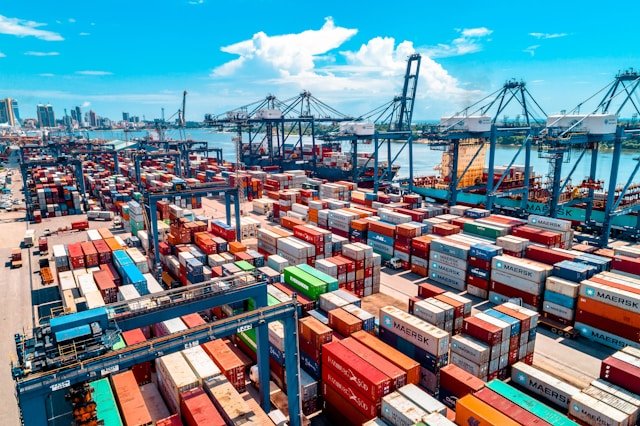
Global trade depends on an enormous network of containers moving between ports, warehouses, rail terminals, distribution centers, and customers. As supply chains become more complex, the traditional container model is being challenged by rising logistics costs, congestion, environmental pressures, and growing expectations for real time visibility.
Smart infrastructure is emerging as an important response. Connected containers, Internet of Things sensors, digital tracking platforms, automated terminals, and data analytics can provide information about location, temperature, movement, and equipment condition. Instead of treating a container as a passive box, modern logistics systems can increasingly treat it as a connected asset within a larger supply chain.
Research published in Transportation Research Part E has highlighted the potential of digital technologies to improve supply chain visibility, coordination, and decision making. Better information allows logistics operators to identify disruptions earlier and coordinate responses across different parts of the network.
The scale of global container transportation makes these improvements particularly significant. According to the United Nations Conference on Trade and Development, around eighty percent of global merchandise trade by volume is transported by sea. This makes the efficiency and resilience of maritime logistics critical to global commerce.
Smart infrastructure can also support sustainability. The International Maritime Organization has established ambitious targets for reducing greenhouse gas emissions from international shipping. Improving container utilization, reducing unnecessary movements, optimizing routes, and strengthening port efficiency can contribute to broader efforts to reduce the environmental impact of global logistics.
Ports are also becoming increasingly digital. Automated handling equipment, artificial intelligence, predictive analytics, and digital twins can help operators understand how infrastructure and equipment are performing. Research published in Maritime Policy and Management indicates that digitalization can improve port efficiency while strengthening the ability of ports to respond to disruptions.
However, technology alone does not create a smart supply chain. Data needs to move between organizations, systems need to communicate with one another, and people need the skills to interpret information and make effective decisions. Cybersecurity and data governance are equally important as logistics networks become more connected.
The container industry is therefore moving toward a model where physical infrastructure and digital intelligence work together. The objective is not simply automation. It is greater visibility, better resource utilization, faster decision making, and stronger resilience.
Smarter infrastructure can transform the container from a simple transport unit into an intelligent part of the global supply chain.
References
United Nations Conference on Trade and Development
https://unctad.org/topic/transport-and-trade-logistics
Transportation Research Part E
Maritime Policy and Management
https://www.tandfonline.com/journals/tmpm20
International Maritime Organization
https://www.imo.org/en/MediaCentre/HotTopics/Pages/Cutting-GHG-emissions.aspx
World Bank