From the banking floors of ICICI to the industrial landscapes of Saudi Arabia, Sandeep Mandapalli has spent nearly two decades proving that the most powerful driver of enterprise performance is not technology or process alone. It is people, placed right and trusted completely.
– Sandeep Mandapalli
Some leaders are drawn to operations because they love efficiency. Sandeep Mandapalli was drawn to it because he understood impact. As General Manager overseeing industrial services and workforce solutions, he has built a career on a conviction that sits at the heart of everything he does: when you align the right processes with the right people, sustainable growth does not have to be forced. It becomes the natural outcome.
His journey began in the banking sector with ICICI Bank in India before a pivotal move to Saudi Arabia in 2008 opened a new chapter entirely. At Al Yamama, he navigated a range of diverse operational roles before stepping into the position of training and outsourcing manager. Each transition added a layer of understanding, not just about how organizations function, but about what causes them to thrive or fracture under pressure.
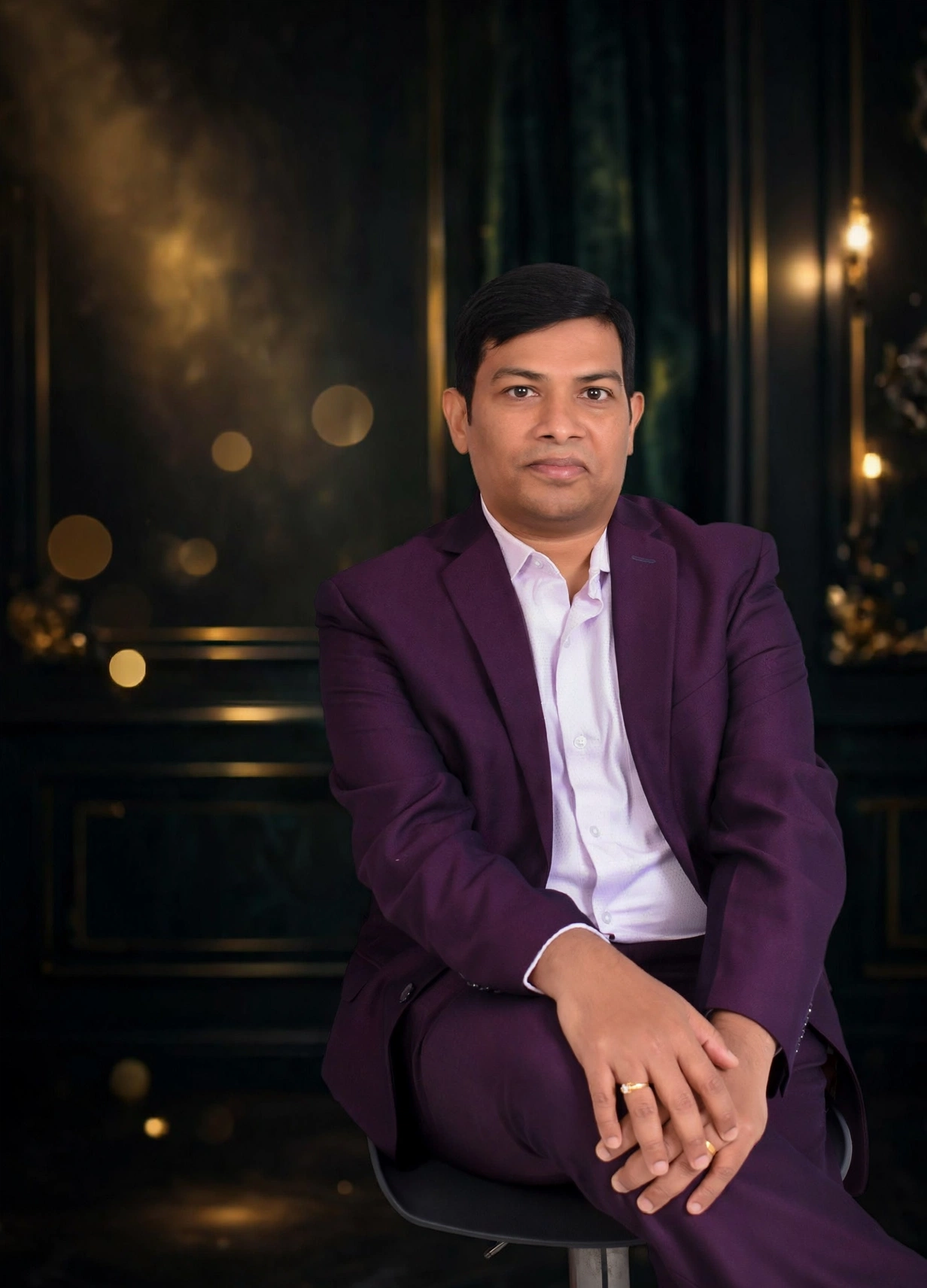
In 2019, he took on what would become one of the defining challenges of his career: establishing and scaling the Industrial Services Division at Nabatat Contracting Company from the ground up. That foundational work led to his appointment as Director of Operations and subsequently to his current role as General Manager. Along the way, he also founded Radiant Solutions to drive advanced industrial technologies and SVENLY JOBS to reshape how recruitment is approached in a competitive regional market.
Each of these chapters has reinforced the same central insight. Operations is the backbone of any enterprise. Get the processes and the people aligned, and growth follows with a kind of natural momentum that no amount of top-down pressure can manufacture.
From Director to General Manager: A Shift in the Lens
The transition from Director of Operations to General Manager marked more than a change in title for Sandeep. It marked a fundamental shift in how he sees the organization itself. Where his previous role required mastery of tactical oversight and departmental efficiency, general management demanded something broader and more complex: holistic enterprise leadership, financial stewardship, and the ability to hold the long-term strategic picture steady while managing the immediate pressures of a dynamic operational environment.
The early lessons that shaped his leadership style were not drawn from management frameworks but from lived experience. He learned early that operational success is never achieved through micromanagement or over-complication. It relies on something far more fundamental: trust, clarity, and simplicity. These principles became what he calls his core success mantra, and they have informed every leadership decision he has made since.
“Keep things simple and ensure the right people are empowered in the right roles. That has always been my core success mantra.”
The challenges he navigated during those early years of general management, steering complex organizational transformations and managing diverse stakeholder expectations across cultural and operational lines, grounded his leadership style in three qualities he now considers non-negotiable: empathy, transparency, and uncompromising accountability.
Excellence as an Organic Outcome
For Sandeep, excellence in both industrial services and human resource management is not something that can be imposed from above. It is something that emerges when the conditions are right. In industrial services, those conditions require precision, rigorous safety compliance, and flawless execution supported by clear operational frameworks, automated workflows, and continuous investment in workforce training.
On the human resource side, the conditions look different but rest on equally clear principles. Teams need clear objectives. They need the autonomy to perform without unnecessary interference. And they need an environment that genuinely supports continuous learning rather than simply talking about it.
“When employees feel supported and see a direct link between their contributions and organizational success,” Sandeep explains, “service excellence becomes an organic outcome.” This is a leadership philosophy that resists the temptation to treat performance as something manufactured through pressure. It understands performance as something cultivated through genuine care for the people doing the work.
Cutting Through Operational Friction
The challenges facing organizations in maintaining operational efficiency are ones Sandeep encounters regularly across the organizations he leads and advises. Siloed communication, resistance to change, and the friction of scaling in highly competitive markets are not abstract problems. They are the daily reality of most enterprises operating at any meaningful scale.
His approach to addressing them is structured around three core priorities: improving service delivery, building optimized resource inventories, and thoroughly documenting working processes. Beneath these priorities sits a philosophy of deliberate simplification. By keeping operations lean, eliminating administrative red tape, and opening genuine communication channels across every level of the organization, he works to minimize the time lost to management friction and maximize the time and energy available for productive work on the ground.
The principle is straightforward in concept and demanding in practice. Bureaucracy rarely announces itself as the enemy of performance. It accumulates gradually, layer by layer, until the weight of process has slowed the very work it was designed to support. Sandeep’s role, as he sees it, is to remain vigilant against that accumulation.
Reimagining Talent Acquisition
Through SVENLY JOBS, Sandeep has brought the same operational discipline that defines his industrial services work to the challenge of talent acquisition. In a market where employers need genuine assurance of candidate capability before deployment, his approach centres on simplified but rigorous sourcing and multi-stage qualification processes aligned directly with actual job competencies rather than proxy credentials.
Whether managing temporary placements, temp-to-hire arrangements, or direct recruitment across clerical, administrative, and technical fields, the underlying commitment is the same: make the selection process transparent, highly structured, and efficient for corporate partners while ensuring that candidates are genuinely prepared for the roles they are placed in.
What distinguishes this approach from transactional recruitment is its orientation toward the long term. “By treating recruitment not as a transactional placement, but as a long-term capability-building partnership,” Sandeep explains, “we ensure that the workforce deployed possesses both the technical competencies and the adaptability required by modern enterprises.” Bridging the skills gap, in his view, is not a one-time exercise. It is an ongoing relationship between employer, candidate, and the organization that connects them.
“Operational performance and employee satisfaction are mutually reinforcing. You cannot sustain long-term business performance without a motivated, engaged workforce.”
Building From the Ground Up: The Nabatat Story
Few experiences in Sandeep’s career illustrate his operational philosophy more concretely than the establishment of the Industrial Services Division at Nabatat Contracting Company. Building the division from scratch and scaling it across multiple specialized fields within three years required exactly the combination of capabilities that define his approach: the ability to design clear structural frameworks, the discipline to streamline deployment workflows, and the foresight to introduce high-efficiency maintenance practices that delivered results not just in the short term but sustainably over time.
The integration of advanced sustainable technologies across Nabatat’s operations, including specialized industrial cleaning methods and resource recovery systems, delivered a dual benefit that Sandeep particularly values. These innovations simultaneously lowered environmental exposure and accelerated project turnaround times for major clients, demonstrating that operational efficiency and environmental responsibility are not competing priorities. Managed well, they reinforce each other.
Technology as a Catalyst, Not a Substitute
Sandeep is clear-eyed about what technology can and cannot do in operations and recruitment. In industrial services, data analytics, cloud computing, and automated monitoring tools have genuinely transformed the speed and accuracy of decision-making. In talent management, digital platforms have made it possible to source, vet, and match candidates with a precision and efficiency that was simply not available a decade ago.
But technology, in his view, is a catalyst rather than a replacement for the human judgment and relational intelligence that effective leadership requires. Embracing digital tools ensures that organizations stay ahead of market shifts and enhance both client engagement and operational visibility. What technology cannot do is substitute for the clarity of purpose, the quality of trust, and the depth of empathy that determine whether an organization’s people are genuinely engaged in the work they are doing.
A Vision Built on People, Purpose, and Progress
Looking ahead over the next five to ten years, Sandeep sees the defining trend of the industry not in any single technology or market shift, but in the convergence of three forces: sustainability, advanced automation, and human-centric leadership. The organizations that will lead in this environment will not be those that simply adopt the latest tools. They will be those that build cultures of continuous innovation grounded in integrity and purpose.
His vision is to scale tech-enabled, eco-conscious business models that drive operational excellence while keeping people genuinely at the centre of every decision. It is a vision that reflects the full arc of his career: from the banking floors of India through the industrial landscapes of Saudi Arabia, through the founding of two enterprises and the scaling of a division from nothing to a functioning, multi-field operation.
At every stage, the throughline has been the same. Operations works when people are trusted. Growth follows when complexity is turned into clarity. And the most enduring enterprises are those built not just on efficient systems, but on the genuine belief that the people running those systems are the organization’s greatest asset.
“By fostering a culture of continuous innovation, integrity, and purpose-driven leadership, we can build resilient enterprises equipped to meet the evolving demands of the global industrial landscape.”