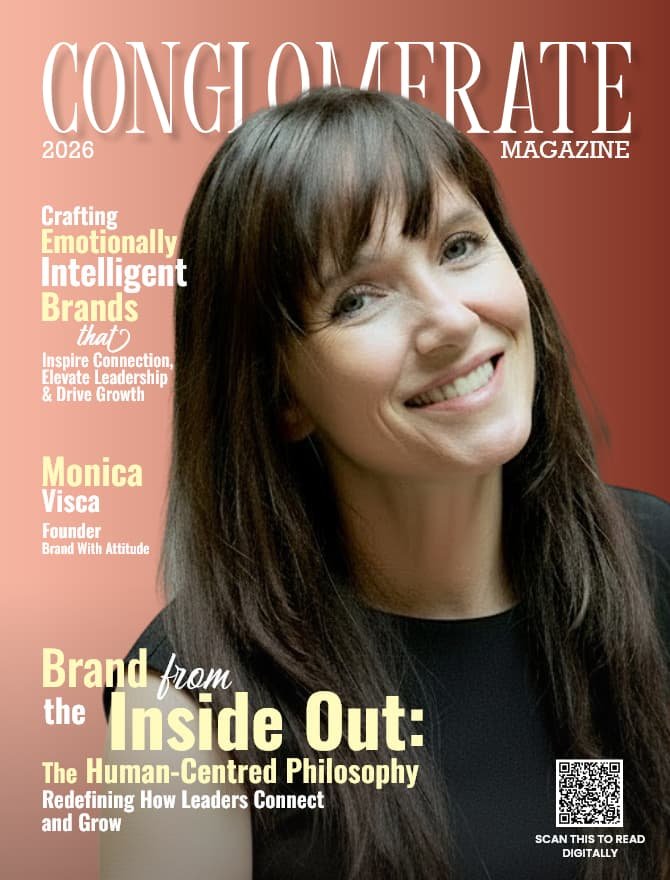
The Human-Centred Philosophy Redefining How Leaders Connect and Grow
Leadership is being tested in a more personal way. Employees want clarity from senior teams, but they also expect to be heard. Customers judge businesses by the experience they create, while investors increasingly examine how companies manage culture, talent and long-term resilience.
That pressure is moving human-centred leadership from a soft ideal to a practical management discipline. The philosophy begins with a simple premise: organisations perform through people, and people do their best work when leaders understand the conditions that shape their decisions, motivation and sense of belonging.
This does not mean avoiding difficult targets or uncomfortable conversations. It means approaching them with a fuller view of the people responsible for delivering results.
What human-centred leadership means in practice
A human-centred leader pays attention to the experience behind the outcome. When a project falls behind, the first question is not automatically who is responsible. It may be what information was missing, which process created friction, or whether priorities changed without reaching the people doing the work.
This way of thinking has parallels with human-centred design, an approach that places people’s needs and experiences at the centre of problem-solving. The IDEO Design Kit offers a useful introduction to that method. Applied to leadership, the principle encourages executives to observe carefully, ask better questions and test assumptions before committing to a solution.
The result is a more grounded form of management. Leaders still set direction, allocate resources and make decisions. They simply recognise that policy becomes reality through thousands of human interactions.
Connection is built through attention
Many organisations invest in communication platforms while overlooking the quality of communication itself. A town hall, employee survey or weekly meeting has limited value if people do not believe that their views influence decisions.
Connection grows through consistent attention. Leaders can explain why a decision was made, identify what remains uncertain and acknowledge the trade-offs involved. They can create room for disagreement without turning every debate into a contest of authority.
Listening is especially important during periods of restructuring, technological change or cross-border expansion. Employees may experience the same decision differently depending on their location, role, language and proximity to power. A global leadership team that relies only on headquarters’ perspective risks mistaking visibility for understanding.
Practical habits matter. Leaders might hold small-group conversations rather than relying solely on large presentations. They may review recurring employee concerns at executive meetings, publish clear follow-up actions and return to staff with an explanation of what changed. These actions turn listening from a ceremonial exercise into part of governance.
Growth requires psychological room
Human-centred leadership also changes how organisations think about development. Training programmes can provide knowledge, but growth depends on whether people have opportunities to apply it, receive useful feedback and recover from mistakes.
A manager who treats every error as a personal failure may create cautious employees who avoid raising risks. A manager who examines the conditions surrounding the error can preserve accountability while improving the system. The balance is important: compassion without standards becomes vague, while standards without empathy can suppress initiative.
The Center for Creative Leadership’s work on leadership development reflects the broader view that leadership capability develops through experience, reflection and feedback. For companies, that suggests development should not sit apart from everyday work. Stretch assignments, mentoring, peer learning and candid reviews can all become part of the leadership pipeline.
Employees also need agency in defining their development. A single career model will not suit every market or life stage. Some people may seek managerial responsibility; others may want deeper expertise, mobility across functions or more predictable working arrangements. Human-centred organisations make space for different forms of contribution while remaining clear about performance expectations.
Technology makes the philosophy more urgent
Artificial intelligence and automation are changing the relationship between people and work. Leaders now have to decide which tasks should be automated, how new tools will be governed and what employees need in order to adapt.
A human-centred approach resists the temptation to treat adoption as a purely technical exercise. It asks how a tool will alter judgement, workload, accountability and trust. It also recognises that efficiency gains may be distributed unevenly across teams.
This is where transparent decision-making becomes essential. Employees do not need every internal calculation, but they do need to understand the purpose of change, the safeguards in place and the support available to them. Businesses that make these questions part of their transformation planning are better positioned to identify unintended consequences before they become operational problems.
From leadership style to operating principle
Human-centred leadership has little value if it depends on the personality of one empathetic chief executive. To endure, it must be reflected in systems: how managers are selected, how incentives are designed, how complaints are handled and how strategic decisions are communicated.
Boards can ask whether culture indicators receive the same seriousness as financial and operational measures. Executive teams can examine who is absent from important discussions. Managers can be evaluated on their ability to develop people, not only on their delivery of immediate results.
For readers exploring the wider relationship between culture and performance, our coverage of modern leadership strategies and building trust at work provides further context.
The human-centred philosophy is ultimately a discipline of attention. It asks leaders to see the organisation as people experience it, then use that knowledge to make sharper decisions. In a business environment defined by uncertainty, that perspective can strengthen execution because it brings strategy closer to reality.