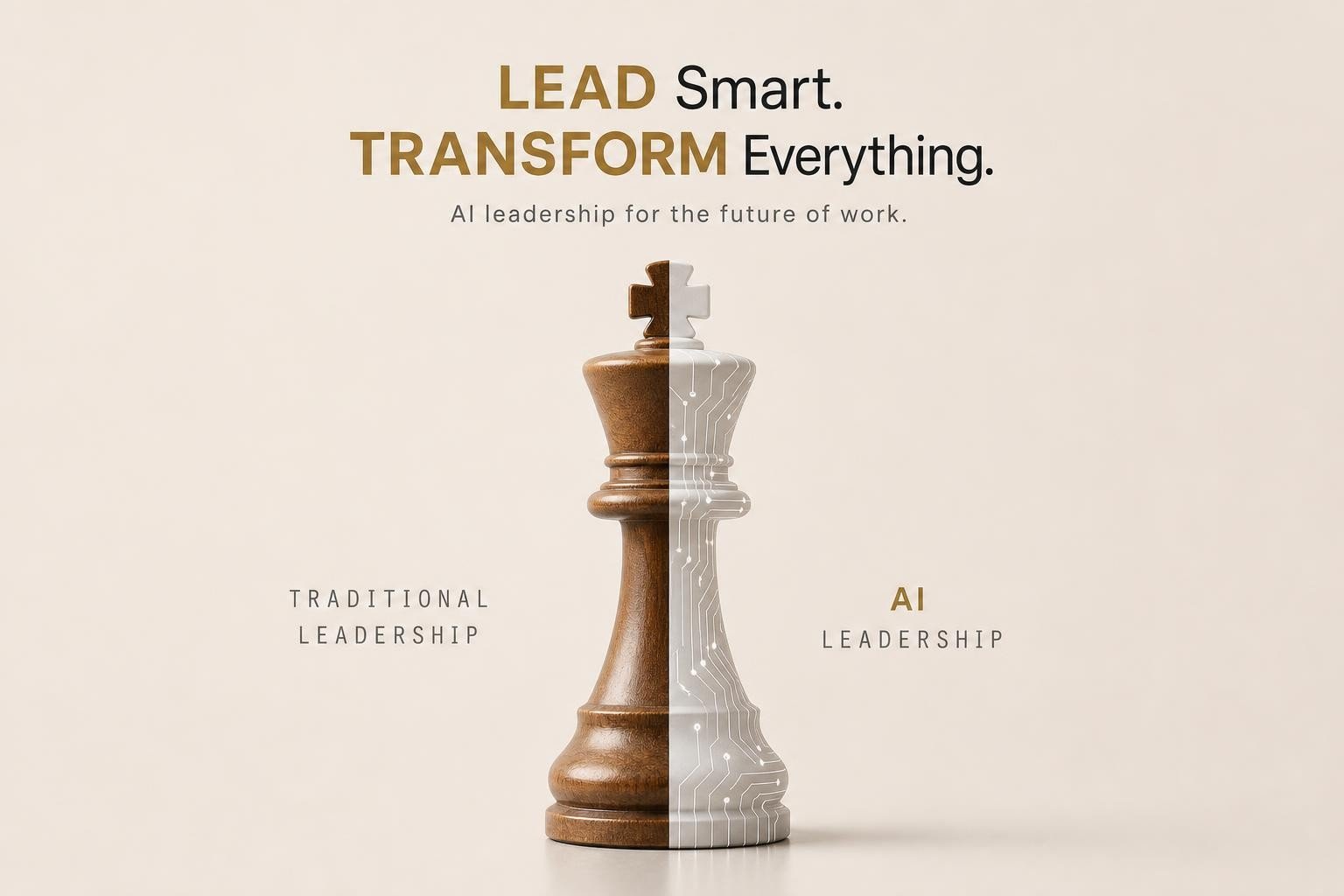
Artificial intelligence is changing more than how work gets done. It is challenging the assumptions that have supported many leadership models for decades.
Managers who relied on information control, slow decision-making or positional authority are facing a more demanding environment. Employees can now access analysis, draft strategies and test ideas with tools that were once available mainly to senior specialists. That shift reduces the value of hierarchy when hierarchy is not matched by judgment.
The result is a significant threat to weak leadership and to traditional styles that depend on command rather than credibility. AI does not remove the need for leaders. It makes the weaknesses of some leaders easier to see.
AI is weakening the information advantage of hierarchy
In many organizations, managers historically held an information advantage. They controlled reports, approved access to expertise and acted as the main channel between executives and employees. AI tools are narrowing that gap.
A team member can use an approved system to summarize documents, compare options, prepare questions for a client meeting or identify inconsistencies in a proposal. The quality of the output still depends on the quality of the inputs and human review, but the barrier to producing useful analysis has fallen.
That creates pressure on leaders whose authority depends mainly on knowing more than their teams. Employees may not expect a manager to have every answer, but they will expect the manager to frame the right question, assess risk and make a responsible decision.
For organizations reviewing this shift, the modern leadership strategies shaping trust, accountability and performance offer useful context.
Command-and-control styles face a credibility test
Traditional leadership is not automatically ineffective. Clear roles, disciplined execution and decisive action remain valuable, particularly during crises. The problem arises when control is treated as a substitute for competence or communication.
AI can expose that weakness quickly. When employees can challenge a plan with alternative analysis, unexplained instructions become harder to sustain. A leader who rejects evidence without explaining the reasoning may appear less authoritative, not more.
This does not mean every AI-generated recommendation should influence a business decision. AI systems can produce inaccurate, biased or incomplete results. Leaders remain responsible for validating information, protecting confidential data and understanding the consequences of action. The NIST AI Risk Management Framework provides a practical reference for organizations building processes around those risks.
The leadership test is therefore two-sided. Managers need enough confidence to question automated outputs, but enough openness to let evidence change their view. Both qualities are difficult to fake.
The new leadership advantage is judgment
As routine analysis becomes easier to automate, leadership value moves toward areas that require context and responsibility. These include setting priorities, resolving competing interests, protecting standards and deciding when not to act.
That shift can benefit leaders who build trust through transparency. They can explain what an AI system was used for, where its limits lie and who remains accountable for the final decision. They can also create conditions in which employees report errors instead of hiding them.
Weak leaders often respond to uncertainty by adding approvals. That approach may create the appearance of control while slowing the organization and encouraging employees to work around formal systems. A stronger response is to establish clear boundaries: which tools are permitted, what data may be used, when human review is mandatory and how decisions can be challenged.
These questions are becoming part of wider discussions about responsible business and workforce change. The OECD AI Principles set out internationally recognized guidance on human-centered and trustworthy AI, while companies must translate broad principles into rules that fit their own operations.
Employees will judge leaders by how they manage the transition
AI adoption can create anxiety even when executives present it as a productivity initiative. Employees may worry about job security, surveillance, changing performance standards or being held accountable for systems they do not control.
Silence from leadership leaves those concerns to speculation. Overconfident promises create a different problem if the technology fails to deliver. Credible leaders explain what is known, what is still being evaluated and how affected employees will be supported.
They also involve people who use the tools in daily work. Front-line employees often understand process weaknesses better than senior decision-makers. Their experience can reveal where automation creates value, where it introduces risk and where a human conversation remains essential.
For further perspective, our coverage of AI in the workplace examines how technology is reshaping operating models and professional roles.
What organizations should expect from leaders
The strongest leaders in an AI-enabled organization will not necessarily be the most technically experienced. They will be the ones who can connect technology with business purpose and human consequences.
That requires a move away from authority based solely on position. Leaders must be willing to show their reasoning, invite informed disagreement and accept responsibility when automated recommendations prove wrong. They also need to distinguish experimentation from deployment, especially where decisions affect customers, employees or public trust.
AI will not eliminate traditional leadership overnight. Many established practices will remain useful when they provide clarity and discipline. But styles built on secrecy, inflexibility or personal certainty are becoming harder to defend.
The technology is acting as a stress test. Leaders who learn, listen and make accountable decisions can use it to strengthen their organizations. Those who depend on hierarchy alone may find that their authority has been automated out of the room.