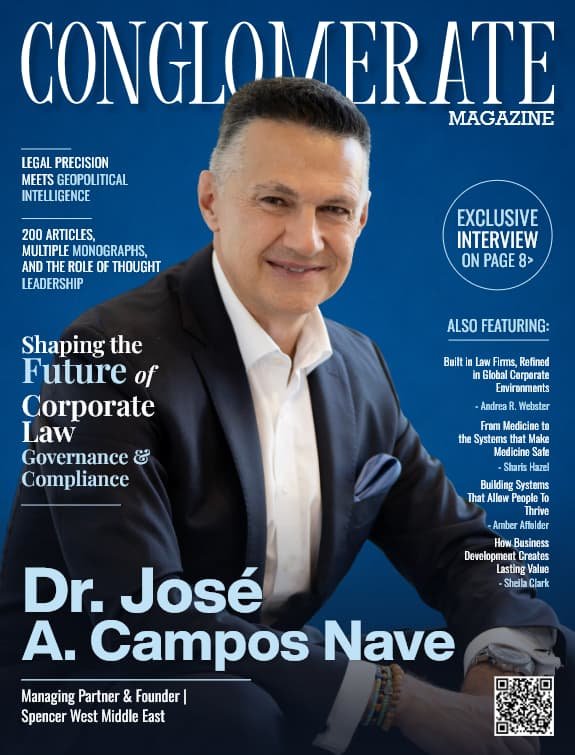
. “Sustainable innovation happens when people, process, technology, and trust move together.”
– Andrea R. Webster
The most consequential shift in corporate legal practice over the past two decades has not been any single technology or regulatory development. It has been a reorientation of what legal departments are fundamentally for. For Andrea R. Webster, Associate Director of Legal Innovation and Operations at Novartis, that reorientation is not an abstract trend. It is the animating purpose behind a career that has moved from the discipline of law firm client service into the strategic heart of global in-house legal operations, always guided by the same conviction: that legal teams, when properly led and properly designed, do not merely manage risk. They create value, drive efficiency, and serve as genuine partners to the business.
BUILT IN LAW FIRMS, REFINED IN GLOBAL CORPORATE ENVIRONMENTS
Webster’s foundation in law firm practice gave her something that purely in-house careers rarely provide: a rigorous understanding of how legal work is produced, priced, and valued from the outside. Law firm environments teach precision, responsiveness, and the discipline of client service under sustained pressure. Those qualities did not become less important when she transitioned to global in-house leadership. They became more important, because the standard she had internalised gave her a clear-eyed view of what excellent legal partnership actually looked like.
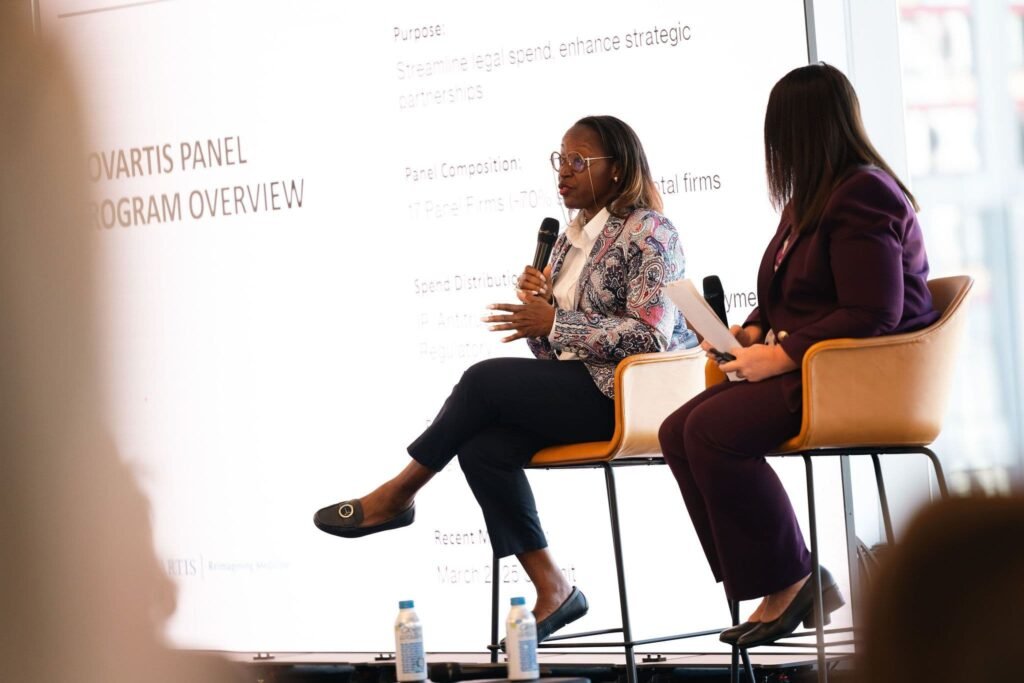
“The most meaningful careers are built when your success opens doors, creates opportunities, and leaves the path stronger for those who follow.”
What the transition into corporate legal teams revealed was a different and equally demanding skill set: the ability to influence across functions, align diverse stakeholders, navigate complex organisational change, and balance legal priorities against business strategy, budget realities, and operational scale. Understanding both worlds, she argues, is precisely what allows her to bridge expectations effectively, strengthen relationships with outside counsel, and focus relentlessly on solutions that create measurable value rather than simply resolving legal problems in isolation.
THE REAL BARRIER TO LEGAL MODERNISATION IS NOT TECHNOLOGY
Ask Webster about the biggest challenge legal departments face when modernising, and her answer cuts past the obvious. The barrier is rarely the technology. It is change management. Most legal teams understand at an intellectual level that modernisation is necessary. The genuine obstacles are different: teams stretched too thin to absorb disruption to familiar workflows, pressure to implement tools before addressing the underlying processes those tools are meant to support, and fragmented data landscapes that make coherent measurement and improvement difficult.
Her formulation of this challenge is precise and worth holding onto: technology should strengthen sound processes, not speed up broken ones. Departments that skip the process assessment step and move directly to tool implementation routinely find themselves with faster versions of the same problems they started with. The legal departments that achieve genuine transformation are those that begin with clear objectives, practical use cases, and visible leadership commitment before any technology decision is made. Success, in her experience, follows from that sequence, not from the sophistication of the tools selected.
PEOPLE, PROCESS, TECHNOLOGY, AND TRUST: THE FOUR THAT MOVE TOGETHER
Webster’s framework for sustainable legal innovation rests on four elements she insists must move together: people, process, technology, and trust. Pull any one of them out of alignment and the others begin to fail. Operational excellence provides the structure and measurable standards that allow a department to function coherently. Collaboration creates the alignment and interpersonal trust that allow difficult changes to be absorbed without fracturing team cohesion. Innovation drives the continuous improvement that keeps the department relevant and responsive as the business around it evolves.
The practical expression of this framework in her own leadership includes a consistent focus on clarity of goals, transparent communication across all levels of the organisation, and deliberate creation of space for ideas from the people closest to the actual work. Some of the best operational innovations she has seen came not from consultants or technology vendors but from team members whose daily experience revealed friction points that leadership had not yet noticed. That attentiveness to frontline insight is not an optional feature of her leadership style. It is structural.
OUTSIDE COUNSEL, GOVERNANCE, AND STRATEGIC PARTNERSHIP
Among the concrete examples of measurable improvement Webster points to is her work leading initiatives to strengthen outside counsel management and global legal operations performance. By improving governance frameworks, enhancing rate and budget discipline, and setting clearer expectations for panel firms, the work produced stronger value outcomes alongside deeper collaboration rather than at the expense of it. The shift she engineered was not simply about cost control. It was about transforming vendor relationships into genuine strategic partnerships, elevating conversations around innovation and accountability, and building the kind of financial stewardship discipline that gives legal leadership credibility in business conversations.
The measurable impact included stronger financial stewardship, improved responsiveness from external partners, and better alignment between legal activity and business priorities. It is an example of the broader principle she returns to consistently: that operational excellence and strategic partnership are not competing goals. Properly designed, they reinforce each other.
MENTORSHIP, REPRESENTATION, AND THE UNEVEN DISTRIBUTION OF OPPORTUNITY
Webster’s leadership philosophy extends well beyond operational design into a conviction about equity that she does not treat as separable from organisational performance. Talent, she observes, is everywhere. Opportunity is not always evenly distributed. Leaders have a responsibility to open doors, share insight, and advocate for others in the rooms where decisions are made. This responsibility is particularly acute for women in legal environments, where contributions can be systematically overlooked despite demonstrable excellence.
Representation matters. Sponsorship matters. Visibility matters. These are not soft sentiments for Webster: they are operational commitments embedded in how she leads. She has seen what becomes possible when talented people are given genuine access, honest encouragement, and meaningful opportunity. Those experiences have reinforced her belief that leadership is not about position alone. It is about elevating performance while uplifting people, and that the most durable organisational improvements come from environments where both are treated as equally serious professional obligations.
THE FUTURE: PRACTICAL AI, PREDICTIVE ANALYTICS, AND THE LEADERS WHO WILL SHAPE IT
Looking ahead, Webster is most energised by the practical application of artificial intelligence and predictive analytics in legal operations, not as theoretical capabilities but as working tools that allow legal professionals to redirect their attention from routine processing toward higher-value judgment and strategy. She is equally focused on data-driven decision-making as a discipline: the belief that what gets measured can be improved, and that legal departments have historically under-invested in the measurement infrastructure needed to demonstrate and grow their value.
Her advice to emerging leaders in legal operations reflects the full integration of these priorities. Master both relationships and results. Learn the business deeply, understand financial drivers, and build a reputation for delivering on commitments. Develop emotional intelligence and the ability to unite people around solutions rather than just identifying problems. Do not wait for permission to lead. Solve problems, create value, and become known as someone who improves what you touch. And stay committed to service: the most meaningful careers are built when personal success consistently opens doors and creates opportunities for those who follow.