Compliance becomes leadership when it is treated not as a minimum requirement, but as a strategic framework.
–Eng. Dana Kamal
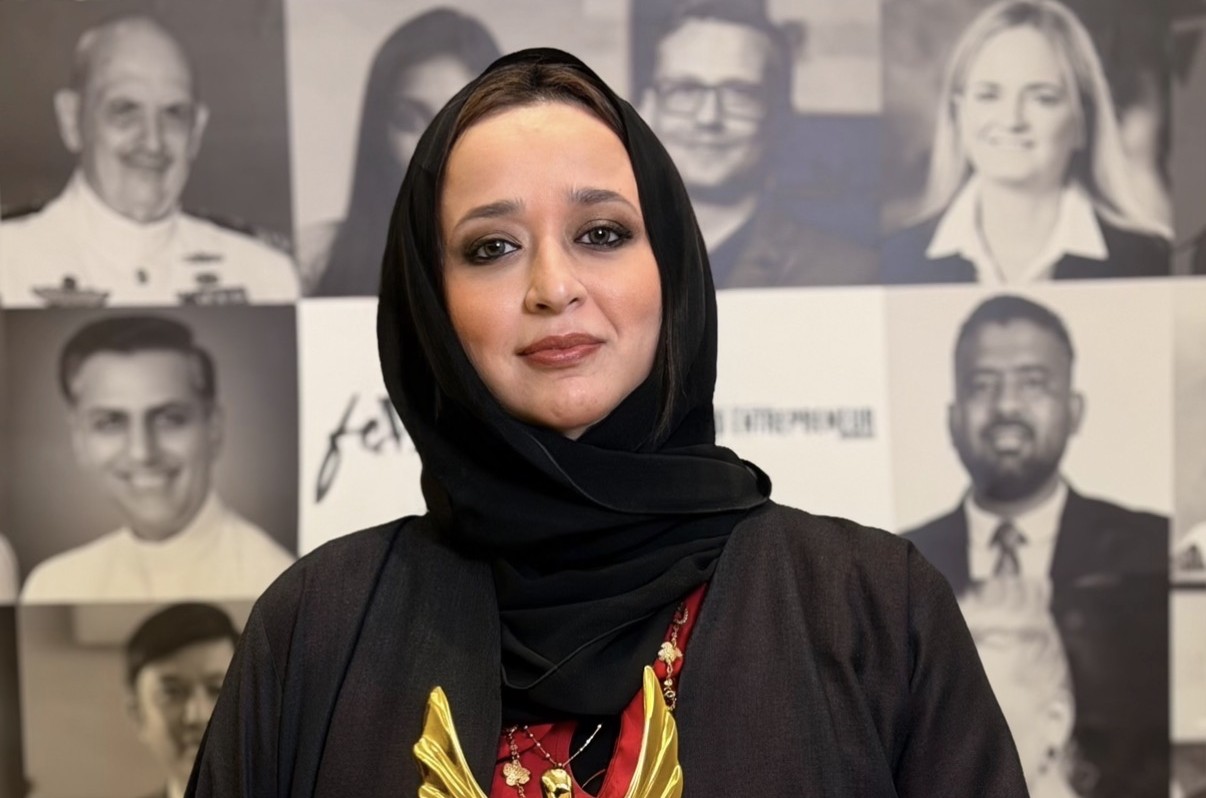
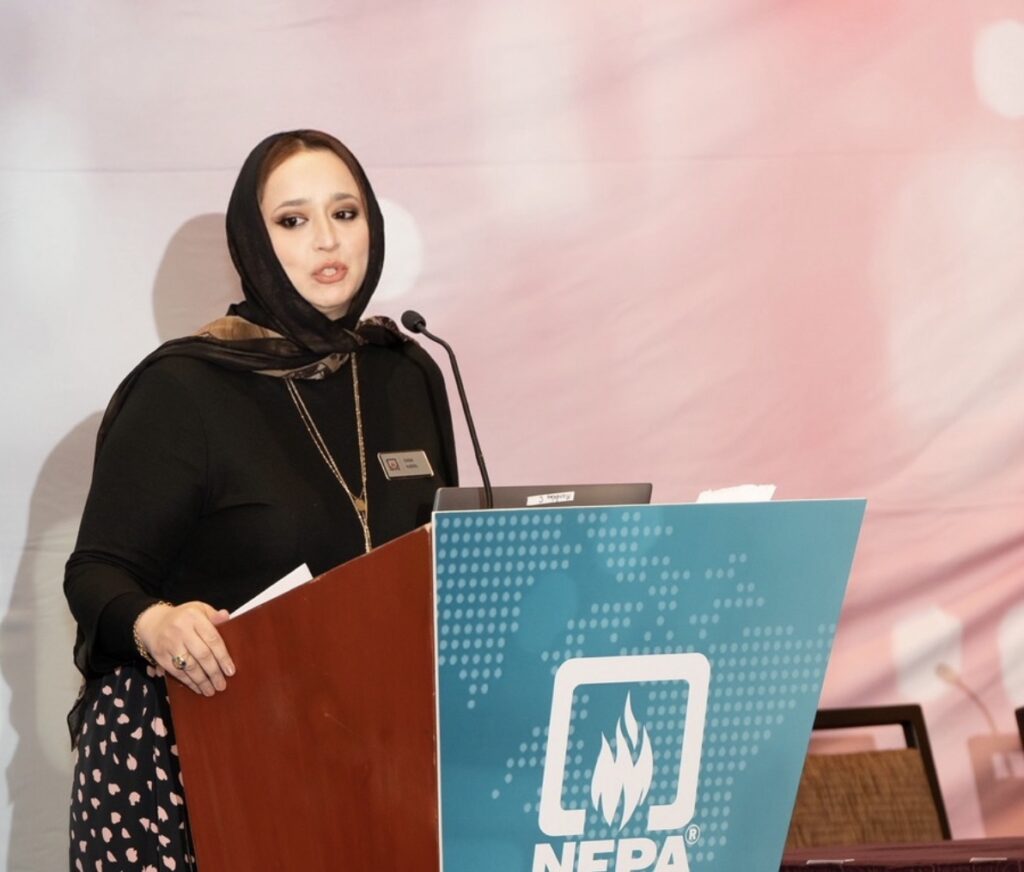
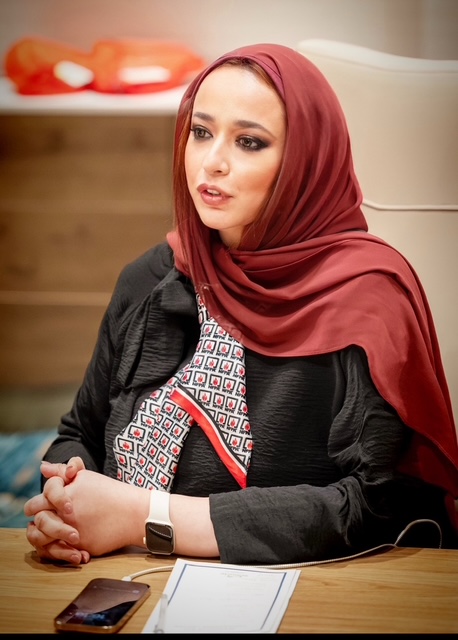
In a region building some of the world’s most ambitious cities, where skylines are rising at a pace few places on earth can match, the question of who keeps people safe inside those towers, hospitals, and mega-developments is not an abstract one. It is a question with a human answer. For Eng. Dana Kamal, Director of International Development for the MENA region at the National Fire Protection Association, life safety has never been about codes and checklists. It has always been about people. That conviction, formed early in a healthcare engineering career and sharpened across decades of regional engagement, is now driving one of the most consequential efforts to embed genuine safety culture across the Middle East and North Africa.
WHERE THE COMMITMENT BEGAN: LESSONS FROM HEALTHCARE
Dana’s path into fire and life safety did not begin with buildings. It began with patient’s journey in healthcare facilities; Her early career in healthcare engineering placed her inside environments where the margin for failure is effectively zero, where a compromised safety system does not produce a report or a penalty notice but a human consequence that cannot be undone. That experience changed how she thinks about risk entirely.
Healthcare environments demand a particular discipline: proactive thinking, integrated systems, and an assessment of risk viewed always through the lens of continuity, redundancy, and human impact. Dana carried those instincts out of the hospital setting and into every built environment she has worked in since. Whether the context is a high-rise residential tower, a logistics facility, or a critical infrastructure project, the question she asks remains the same: what happens to the people inside when this system is tested?
THE NFPA MISSION IN MENA: TRANSLATING STANDARDS INTO LIVING CULTURE
The National Fire Protection Association, founded in 1896, is among the world’s oldest and most respected authorities on fire and life safety. Its codes and standards form the backbone of building safety frameworks across more than one hundred countries. Dana’s mandate is to bring that global authority into meaningful, regionally grounded dialogue with the governments, regulators, and industries of the MENA region, and to do so in a way that goes beyond technical compliance.
Her professional mission, as she describes it, is to translate NFPA’s globally recognised standards into practical, regionally relevant solutions that protect lives while supporting growth and innovation. That translation is not a simple matter of language or geography. It requires building strong partnerships, navigating regulatory diversity, and helping organisations move from a posture of minimal compliance toward something far more durable: a genuine safety culture embedded in how decisions are made every day.
THE COMPLEXITY OF REGIONAL ALIGNMENT: HARMONY WITHOUT UNIFORMITY
The MENA region is not a single regulatory environment. It is a collection of nations with distinct legal frameworks, infrastructure maturity levels, enforcement capacities, and risk profiles, each shaped by geography, population density, economic activity, and technological readiness. For anyone attempting to advance unified safety standards across this landscape, the challenge is not technical. It is systemic.
Dana’s approach rests on a distinction she draws clearly: alignment is not uniformity. The goal is never to impose a single template but to preserve the core life-safety intent of global standards while adapting their application thoughtfully to local context. This philosophy has yielded concrete results. Every Civil Defense authority across the GCC is now an NFPA partner, united by a shared mission to protect lives and assets, while each country continues to prioritise its safety goals according to its own specific circumstances. It is a model of collaborative governance that demonstrates what principled flexibility can achieve.
FAST-GROWING CITIES AND THE STAKES OF GETTING SAFETY RIGHT
Few regions on earth are building at the pace of the Middle East. Mega-projects of extraordinary scale and ambition are reshaping urban landscapes across the Gulf, often within compressed timelines and under intense economic pressure. For Dana, this growth is not a backdrop to her work. It is the central reason her work matters.
Rapid growth increases complexity and risk in equal measure. The systems that protect human life inside a building must be designed, integrated, and maintained with the same ambition that drives the building’s conception. Global standards provide proven, science-based frameworks that help cities scale safely, attract international investment, and deliver ambitious developments sustainably. The moment safety is treated as a downstream concern, a detail to be resolved after the architectural vision is settled, the risk profile of everything that follows is elevated. Dana’s advocacy is for early integration: life safety as an enabler of ambition, not an obstacle to it.
FROM COMPLIANCE TO LEADERSHIP: WHAT SEPARATES THE TWO
One of Dana’s most consistent arguments is that compliance and leadership are not the same thing, and that confusing the two produces organisations that pass audits but fail communities. Compliance, in her framing, becomes leadership only when it is treated not as a minimum requirement but as a strategic framework. True leaders invest in people, systems, and continuous learning. They anticipate risk rather than reacting to incidents, and they embed safety into governance and planning rather than reserving it for inspection cycles.
Partnerships are what transform standards into systems, and systems into safer communities
She is equally direct about where organisations most frequently underestimate risk. The danger points, in her experience, are rarely the initial design phase. They are the interfaces: renovations, occupancy changes, technology integrations, operational expansions. These are the moments when systems meet human behaviour under pressure, and when the gap between documented compliance and lived practice becomes most visible. Leadership means closing that gap before an incident makes it impossible to ignore.
TECHNOLOGY, DATA, AND THE SHIFT FROM REACTIVE TO PREDICTIVE SAFETY
Dana is a measured but committed advocate for the role of technology in advancing life safety across the region. Through NFPA’s regional partnerships, data-driven tools and AI-enabled platforms are increasingly being embraced to support prevention, preparedness, emergency response, and decision-making across the full safety ecosystem. The shift this technology enables, from reactive management to predictive risk intelligence, is among the most significant changes reshaping the profession.
Digital twins, real-time monitoring systems, and AI-assisted compliance tools allow organisations to identify vulnerabilities before they become incidents. Performance-based design, supported by robust data, enables buildings to be assessed against outcomes rather than prescriptive rules alone. For a region building infrastructure intended to last generations, this evolution in how safety is measured and managed is not optional. It is foundational.
And yet Dana is equally insistent on what technology cannot do. No matter how intelligent the systems become, they must be matched by strong planning, regular practice, human readiness, and enforced regulations. Preparedness, she argues, remains the foundation of resilience. The sophistication of the tools is irrelevant if the people using them are not prepared to act when they matter most.
WOMEN IN SAFETY LEADERSHIP: EMOTIONAL INTELLIGENCE AS STRATEGIC ADVANTAGE
Dana speaks about women’s leadership in safety and engineering with the authority of someone who has lived it, not simply observed it. Her view is direct: women can lead, and they do so effectively by combining technical capability, strategic thinking, and emotional intelligence in ways that the profession increasingly recognises as essential rather than exceptional.
In high-risk and highly regulated environments, the ability to remain composed under pressure, make sound decisions with incomplete information, and maintain sight of human impact while navigating complex systems is not a soft skill. It is a strategic advantage. Dana’s argument is that emotional intelligence strengthens collaboration, builds the kind of trust that sustains long-term partnerships, and supports the inclusive decision-making that complex safety challenges require. These are not qualities that happen to be useful in safety leadership. They are qualities that define it at its highest level.
PARTNERSHIPS AS THE ARCHITECTURE OF A SAFER REGION
If there is a single thread running through every aspect of Dana’s work, it is the conviction that safety cannot be achieved in isolation. Governments, regulators, industry, standards organisations, professional associations, and communities each hold a piece of the solution. The challenge is ensuring those pieces are coordinated rather than fragmented, and that the considerable efforts being made across the region add up to a unified ecosystem rather than a collection of parallel silos.
She describes the ideal relationship between the private sector and regulators as one built on early engagement, transparency, and shared responsibility. When private organisations view regulators as partners rather than enforcers, safety ecosystems become stronger and more sustainable. When governments mandate up-to-date codes and the private sector invests in business continuity and risk management, the gap between policy and practice narrows. Partnerships, she concludes, are what transform standards into systems, and systems into safer communities.
A LEGACY BUILT SLOWLY, PURPOSEFULLY, AND TOGETHER
When Dana reflects on the legacy she hopes to leave, the language she uses is notable for its patience. She speaks of change that takes time, commitment, and collective effort. She speaks of locating global standards intelligently within regional realities, of building partnerships on trust, of creating space for innovation and capacity-building for future generations. She does not describe a monument. She describes a foundation.
In a region where ambition often measures itself in records broken and deadlines met, Dana Kamal represents a different kind of leadership: one that measures itself in lives protected, cultures shifted, and systems built to outlast any single person’s tenure. That, she says simply, is a legacy worth building.