“Most supply chains know how to move goods. Far fewer know how to move decisions.”
– Dhritiman Chakraborty
“Future ready is not a technology state. It is an operating habit.”
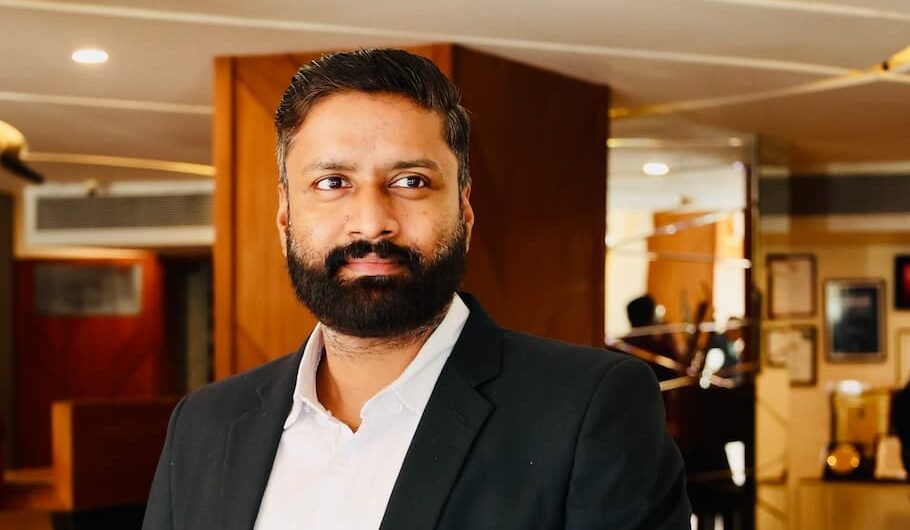
With more than 25 years of experience spanning pharma, FMCG, chemicals, life sciences and IT distribution, Dhritiman Chakraborty has developed a distinctive perspective on supply chain leadership. His career has taken him across industries with vastly different operational requirements, yet one principle has remained constant: effective supply chains are built not simply on the movement of goods, but on the quality and speed of decisions behind that movement.
“When I started out, I thought supply chain leadership was about moving goods efficiently,” Dhritiman reflects. Over time, however, his understanding evolved. He learned that while full trucks, controlled costs and tight schedules remain important, the real weaknesses in a supply chain often emerge elsewhere.
“A decision that stays open too long, a handoff nobody owns, or a signal from the floor that never reaches the people who can act on it” can create disruption long before a dashboard reveals the problem.
This insight has shaped his transformation philosophy around three principles: listening to the frontline, recognising that transformation begins with behaviour, and questioning what operational numbers may be hiding.
BUILDING THE FUTURE READY SUPPLY CHAIN
For Dhritiman, a future ready supply chain is not necessarily the most automated one. It is one that can see risks early, make decisions quickly and recover effectively when disruption occurs.

“The next advantage will not come from moving faster alone. It will come from deciding better, earlier, and together.”
He identifies five essential characteristics: early visibility, clear decision rights, trusted data, tested resilience and a strong understanding of supply chain economics.
This means organisations must develop systems that capture weak signals from suppliers, customers, transportation networks and frontline teams before those signals become major escalations. Decision rights must be clearly defined, while critical data requires common definitions and clear ownership.
Resilience, meanwhile, cannot exist only in a presentation. Alternative suppliers need qualification, routes need costing, documentation needs preparation and decision owners need to be identified.
“Future ready is not a technology state. It is an operating habit,” he explains.
TURNING EFFICIENCY INTO CUSTOMER VALUE
Dhritiman challenges the idea that efficiency and service quality must always be competing priorities. In his experience, the perceived trade off often appears because organisations measure what is convenient internally rather than what the customer actually experiences.
His approach begins with measuring service from end to end through indicators such as on time delivery, in full performance and first time right execution.
He advocates fixing operational flow before adding capacity, stabilising near term planning, examining internal movement between facilities and understanding cost to serve across customers and lanes.
For him, true efficiency cannot simply shift costs elsewhere.
“Efficiency that the customer feels as a delay is not efficiency; it’s cost moved to someone else.”
This philosophy has helped him connect operational improvements with measurable business outcomes by establishing clear baselines, identifying hidden costs such as expedited freight and rework, and treating recurring exceptions as design problems rather than opportunities for repeated firefighting.
TECHNOLOGY THAT ENABLES BETTER DECISIONS
Digitalisation, analytics, automation and AI are transforming supply chain operations, but Dhritiman believes their greatest value lies in accelerating the journey from information to action.
At Ingram Micro, he sees this through Xvantage, an AI enabled platform connecting data, tools and workflows for customers, partners and teams. The Xvantage Integration Hub and Model Context Protocol Server further enable partners to connect disparate systems, workflows and AI assistants, creating a more connected digital ecosystem.
Yet technology cannot compensate for weak data or unclear accountability. Dhritiman believes the strongest operating models allow technology to handle routine activities while people concentrate on decisions, exceptions and problem solving.
Technology can reveal what is going wrong. Strong operating discipline determines what happens next.
DESIGNING FOR DIFFERENT INDUSTRIES
Dhritiman’s cross industry experience has taught him that supply chain principles may remain consistent, but the consequences of failure vary significantly.
In pharma, integrity, traceability and documentation are fundamental. In chemicals, safety, compliance and supplier qualification take priority. FMCG and food businesses must manage freshness, distribution reach and availability, while IT distribution faces challenges such as obsolescence, price erosion, inventory quality and shipment security.
His approach begins with a simple question: “What does failure cost here?”
Rather than applying a standard global playbook everywhere, he believes organisations should align where appropriate while adapting to local market realities.
MAKING SUSTAINABILITY PART OF BUSINESS
As an APAC ESG Lead, Dhritiman sees sustainability as most effective when integrated into everyday business decisions rather than treated as a separate initiative.
Better routes can reduce fuel consumption and empty kilometres. Higher load factors can improve freight economics while reducing emissions. Smarter packaging can improve space utilisation and reduce waste, while energy efficient warehouses can lower operating costs over time.
Where genuine trade offs exist, he advocates making them visible and measurable rather than hiding them inside sustainability reporting.
For Dhritiman, sustainability must survive difficult business conditions to become a genuine strategy.
RESILIENCE THROUGH PREPARATION AND DECISIVE ACTION
Supply chain disruption has become a continuing reality, making resilience a fundamental operating requirement. Dhritiman believes organisations must look beyond immediate disruption and prepare for the recovery period that follows.
This requires understanding exposure across countries, suppliers and transportation corridors, testing alternative routes and suppliers, reducing decision latency and building strong supplier relationships before disruption occurs.
He also considers cyber risk an operational risk. Organisations need to know whether critical shipments can continue if systems become unavailable.
Customer communication is equally important. “Customers forgive delays far more easily than they forgive surprises,” he observes. Early and honest communication can protect trust when circumstances change.
DEVELOPING THE NEXT GENERATION
Beyond corporate leadership, Dhritiman is an author, speaker, guest lecturer and executive coach. His focus on developing people reflects his belief that supply chain leadership requires much more than technical knowledge.
Judgement, communication, cross functional influence and the confidence to raise bad news early are skills developed through mentoring, experience and honest feedback.
His books, including Be Seen Be Heard Be You and Build by Feedback, reflect this broader philosophy of professional growth. He believes that as AI increasingly handles routine work, organisations must deliberately create new ways for emerging professionals to develop judgement and practical experience.
THE NEXT ADVANTAGE: DECIDE BETTER, EARLIER AND TOGETHER
Looking toward 2026 and beyond, Dhritiman identifies several forces reshaping supply chains: AI moving from insight toward action, geopolitics becoming part of everyday planning, India moving from logistics capacity toward capability, increasing security risks and operating model transformation.
His message to business leaders is clear: understand where decisions become stuck, clarify ownership, test alternatives, embed sustainability and resilience into daily operations, and invest in people who can think, communicate and decide.
“The next advantage will not come from moving faster alone. It will come from deciding better, earlier, and together.”